Applying math skills Worksheets for Ages 5-7
3 filtered results
-
From - To
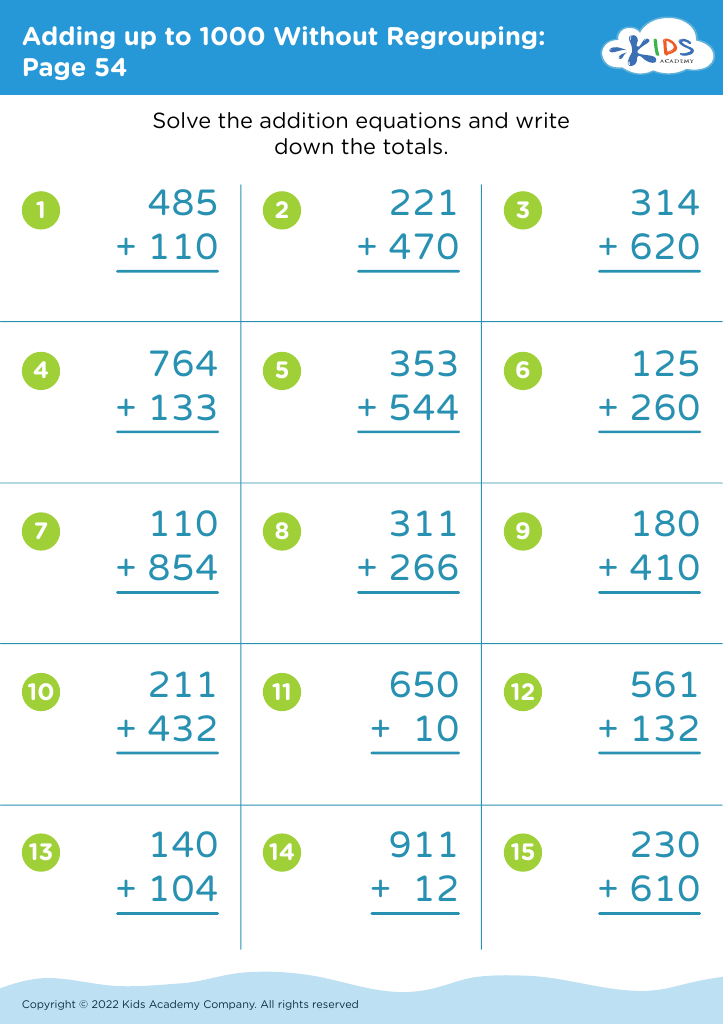
Enhance your child’s mathematical abilities with our "Applying Math Skills" worksheets designed specifically for ages 5-7. These engaging and interactive printables encourage young learners to apply essential math concepts in real-world situations. With a range of activities focused on addition, subtraction, number recognition, and problem-solving, students will develop their confidence and fluency in mathematics. The worksheets promote critical thinking and creativity while providing a fun break from traditional learning methods. Perfect for at-home practice or classroom use, these resources support young learners in building a strong mathematical foundation essential for future success. Explore our collection today for effective learning!
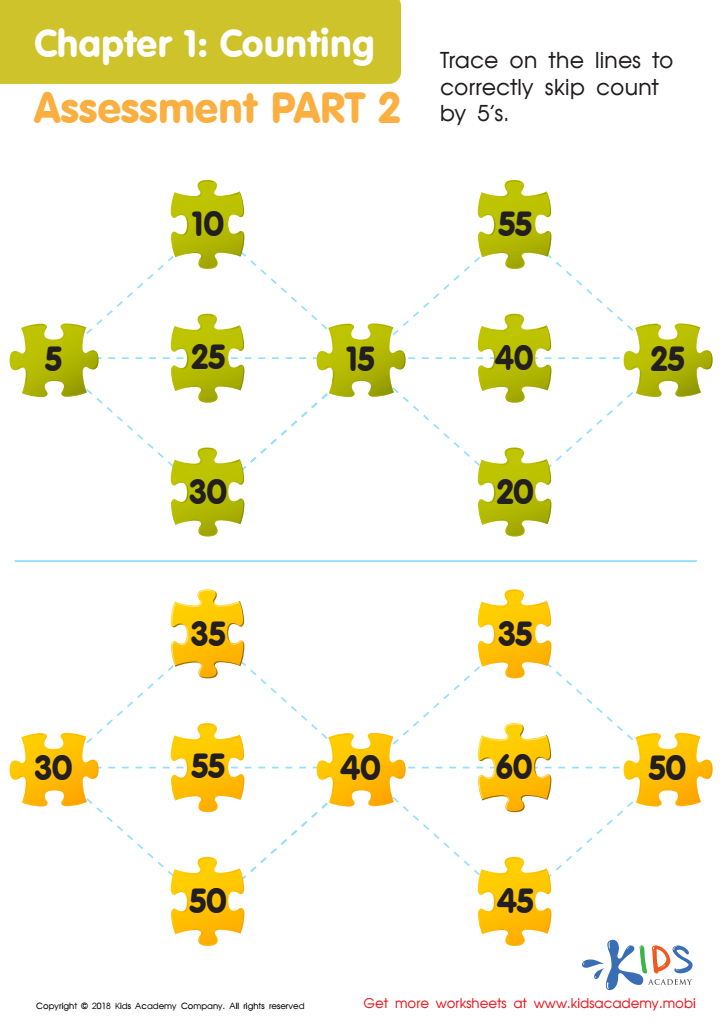
Counting: Assessment 2 Worksheet
 Assign to My Students
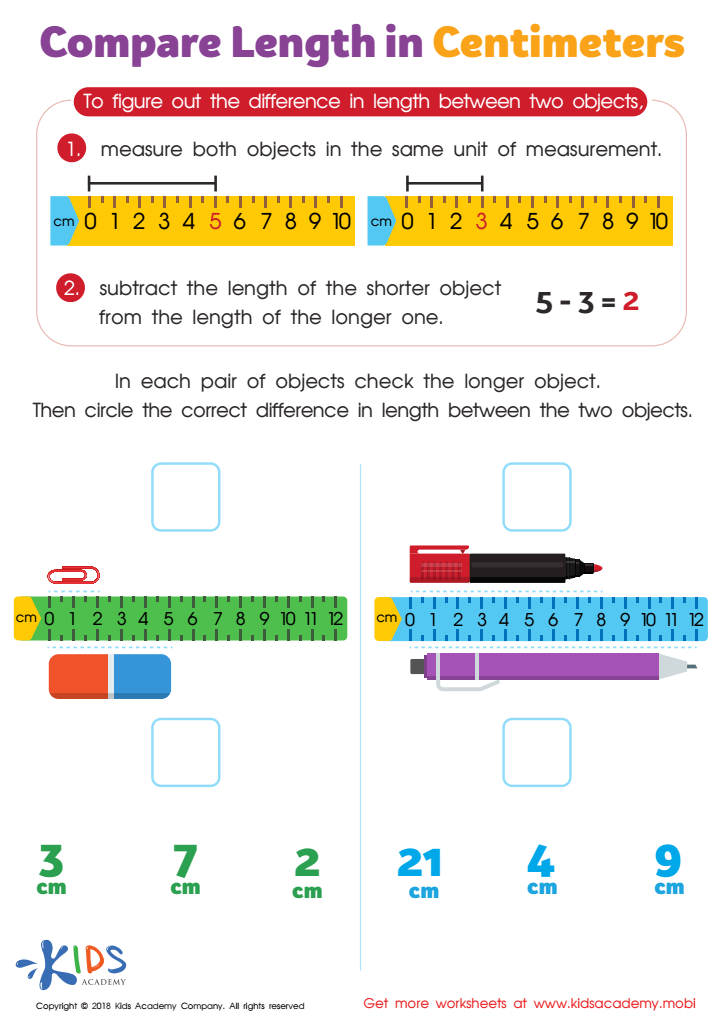
Compare Length in Centimeters Worksheet








Applying math skills at ages 5-7 is crucial for several reasons. First, this developmental stage is pivotal for building a strong mathematical foundation. During these years, children enhance their understanding of basic concepts such as numbers, shapes, measurement, and simple addition and subtraction. Mastery of these skills will not only support future mathematical learning but also improve problem-solving abilities.
Additionally, engaging with math in real-life contexts helps children connect abstract concepts to tangible experiences. It fosters critical thinking and encourages them to explore and question. For instance, cooking with parents can introduce measurements, while shopping can teach counting and currency handling. These practical applications show children the relevance of math in daily life, making learning enjoyable and meaningful.
Furthermore, early exposure to math can reduce anxiety about the subject as children grow. Positive experiences in applying math not only boost confidence but also foster a lifelong appreciation for the subject, encouraging future academic success. By recognizing the importance of these skills and their applications, parents and teachers can help lay the groundwork for children's analytical thinking and life skills, equipping them for challenges beyond the classroom.








