Basic arithmetic understanding Worksheets for Ages 5-7
7 filtered results
-
From - To
Discover our collection of Basic Arithmetic Understanding Worksheets designed specifically for children ages 5 to 7. These engaging and interactive worksheets help young learners develop foundational math skills, including addition, subtraction, counting, and number recognition. Each activity is crafted to make learning fun and accessible, ensuring that kids grasp essential concepts through visually stimulating exercises. Our worksheets encourage critical thinking and problem-solving, setting the stage for confident math learners. Perfect for home or classroom use, these resources are a valuable tool for early education, helping children build a strong arithmetic foundation they can build on as they progress. Get started today!
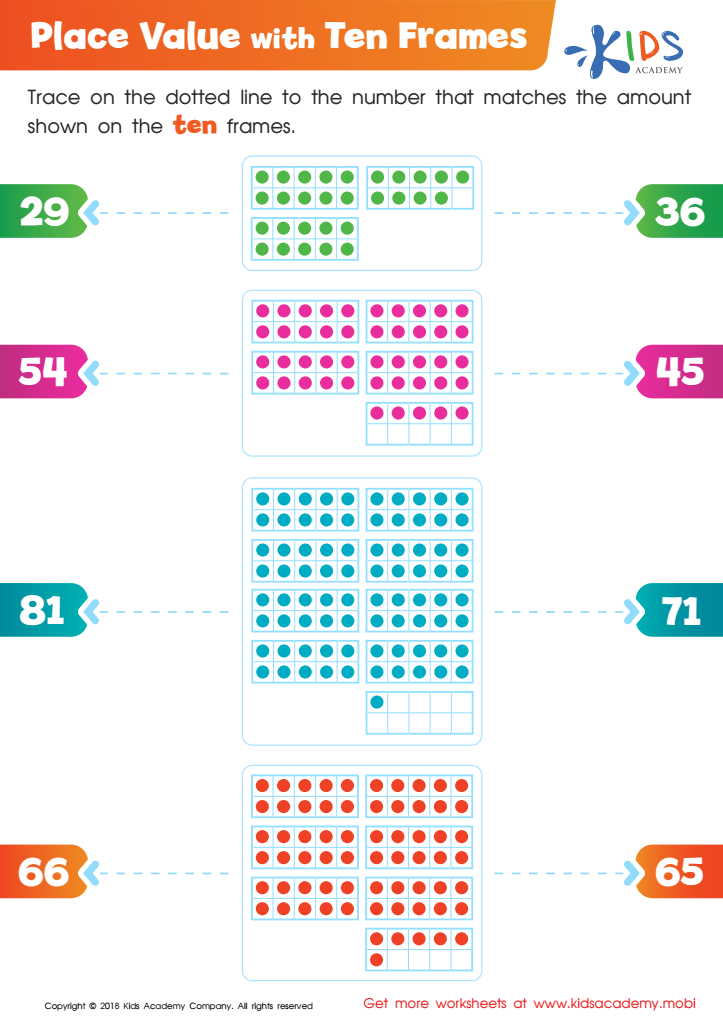
Place Values with Ten Frames Worksheet
 Assign to My Students
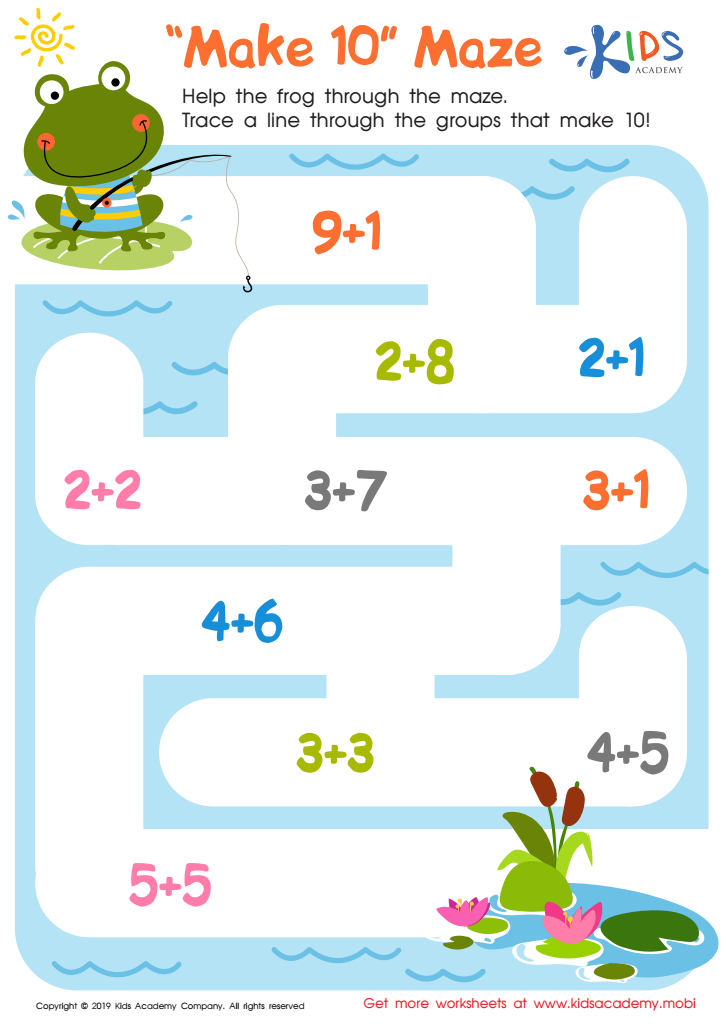
Make 10 Maze Worksheet






Basic arithmetic understanding is crucial for children aged 5-7 as it lays the foundation for future learning and problem-solving skills. At this developmental stage, children are naturally curious and eager to explore concepts, making it an ideal time to introduce fundamental mathematical ideas such as addition, subtraction, and number recognition.
First, early arithmetic skills foster cognitive development. Engaging in math activities helps children develop critical thinking, pattern recognition, and logical reasoning, which are essential skills for academic success across various subjects. Understanding arithmetic also enhances a child's ability to tackle real-life situations, such as telling time, counting money, or managing quantities during play.
Moreover, a strong grasp of basic math instills confidence, encouraging children to tackle more complex subjects as they progress. Teachers and parents should provide supportive environments rich in positive reinforcement and practical applications, ensuring children excel not merely in calculations, but in a love for learning.
Finally, early arithmetic education promotes social interaction through cooperative learning exercises, enhancing communication and teamwork. By emphasizing the importance of basic arithmetic in early years, parents and teachers can equip children with essential skills to thrive both in school and beyond.








