
Basic math abilities Worksheets for Ages 5-7
3 filtered results
Difficulty Level
Grade
Age
-
From - To
Subject
Activity
Standards
Discover our "Basic Math Abilities Worksheets" designed specifically for children ages 5-7. These engaging and colorful worksheets focus on essential math skills such as counting, number recognition, basic addition and subtraction, and more. Our carefully crafted activities foster a fun learning environment, helping young learners develop confidence in their math abilities. Each worksheet encourages critical thinking and problem-solving, ensuring that kids enhance their foundational skills while enjoying the learning process. Perfect for homeschooling or supplementary practice, our worksheets provide an interactive way for children to build a solid mathematics foundation, setting them up for future academic success. Download and print today!
Favorites
With answer key
Interactive
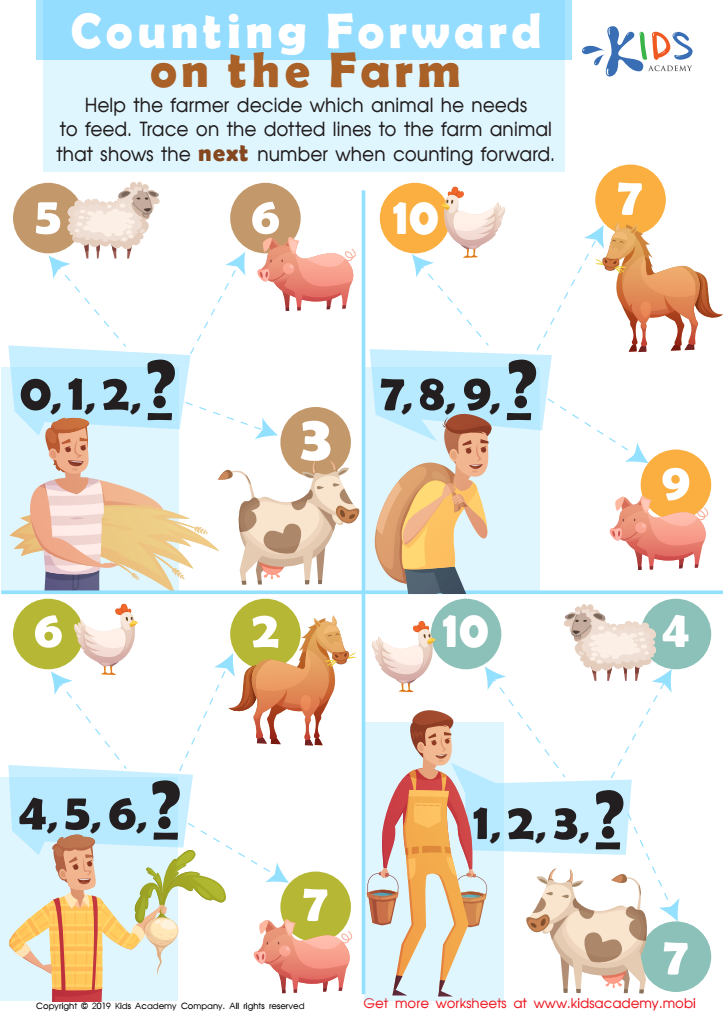
Counting Forward On the Farm Worksheet
Help your child practice counting with this fun worksheet. Have them help a farmer feed the right animal by counting on from a starting point. This activity will help them build number line thinking and refine fine motor skills.
 Assign to My Students
Counting Forward On the Farm Worksheet
Worksheet
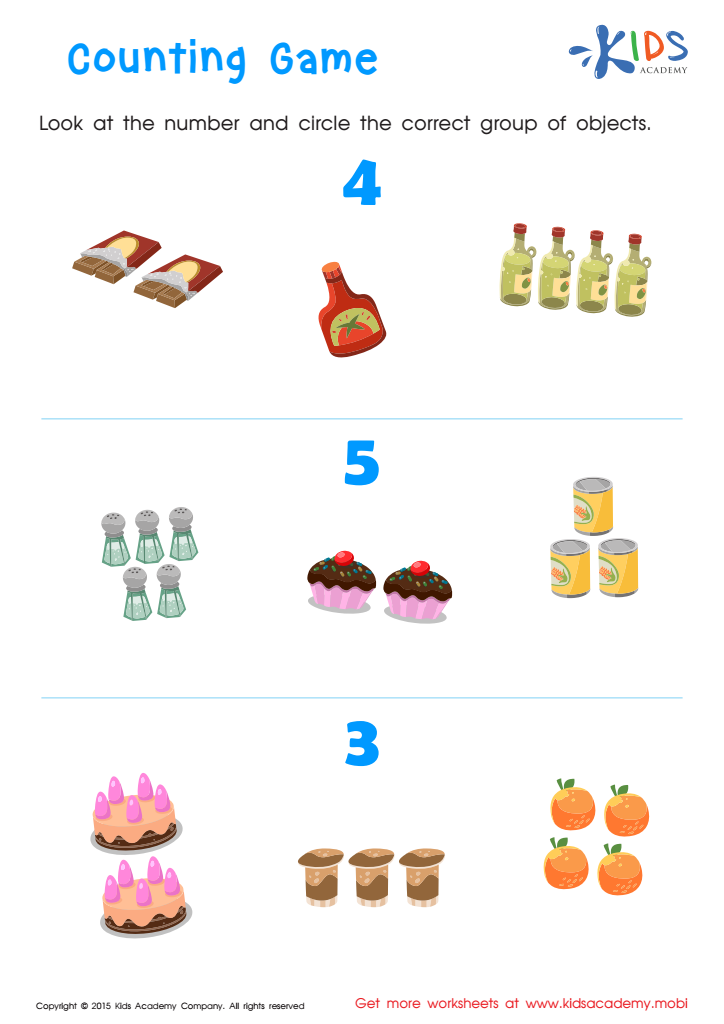
Counting Worksheet
Kids can connect printed numbers to groups of objects on this worksheet, helping them learn math by visually seeing item groups. Give your preschooler a fun, interactive way to learn counting!
Counting Worksheet
Worksheet
Join Kids Academy for Free
Who is primarily going to use this learning content?


.jpg)





Basic math abilities for children ages 5-7 lay the foundation for future academic success and critical thinking skills. At this age, children are rapidly developing cognitive capacities, and early exposure to math concepts such as counting, simple addition and subtraction, and pattern recognition enhances their reasoning abilities. When parents and teachers prioritize these foundational skills, they help children build confidence and a positive attitude toward math, setting the stage for more complex math concepts in later years.
Moreover, basic math skills are not only academic; they play a vital role in everyday life. Understanding concepts such as quantity, measurement, and time allows children to navigate their world more effectively. These skills encourage curiosity and problem-solving abilities, essential for their overall cognitive development.
Furthermore, involvement from parents and teachers fosters a supportive learning environment. Collaborative activities, such as counting objects during play or exploring shapes while drawing, can reinforce these skills in enjoyable ways. Ultimately, nurturing basic math abilities during early childhood equips children with essential tools they will use throughout their education and everyday life, making it imperative for adults to actively support this critical learning phase.








