
Basic Mathematics Worksheets for Ages 5-7
8 filtered results
Difficulty Level
Grade
Age
-
From - To
Subject
Activity
Standards
Welcome to our collection of Basic Mathematics Worksheets for Ages 5-7! Designed to reinforce foundational math skills, these engaging worksheets help young learners develop essential concepts in addition, subtraction, counting, and number recognition. Featuring colorful illustrations and interactive activities, each worksheet makes learning fun and accessible. Tailored to align with early educational standards, our materials support classroom learning and at-home practice. Perfect for preschoolers and early elementary students, these worksheets foster a love for math while building confidence in their abilities. Browse through our extensive library and watch your child's mathematical skills grow with each engaging activity!
Favorites
With answer key
Interactive
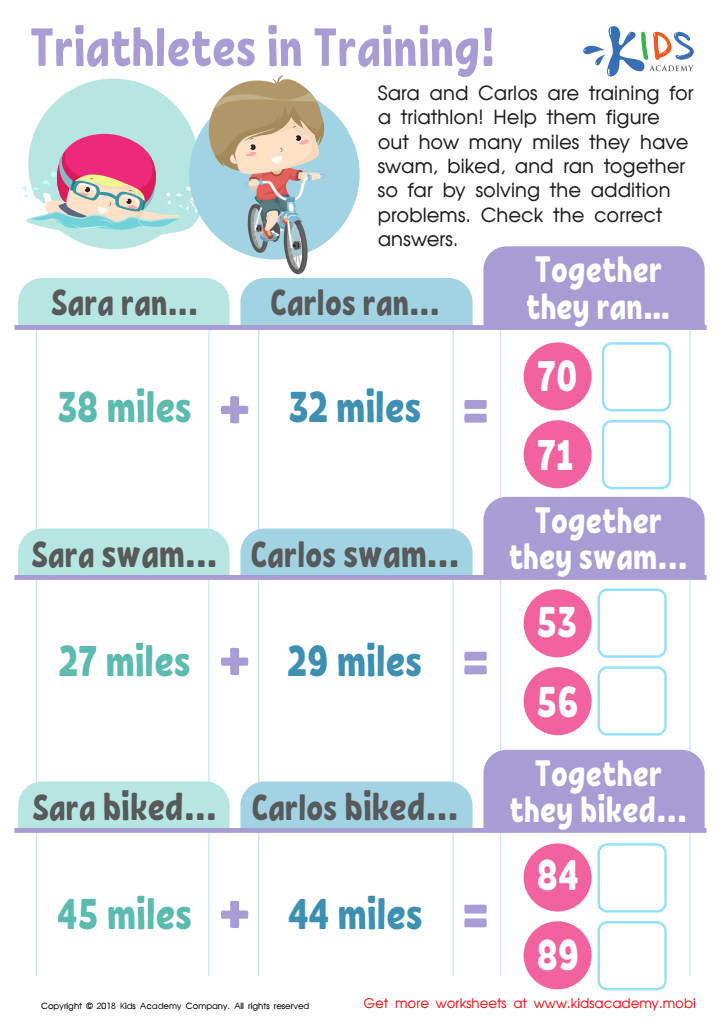
Triathletes in Training Worksheet
Sara and Carlos are training for a triathlon and need your child's help! They must solve the addition problems to figure out how many miles they've swam, ran, and biked. Help your kid check the answers and get them ready for the triathlon!
 Assign to My Students
Triathletes in Training Worksheet
Worksheet
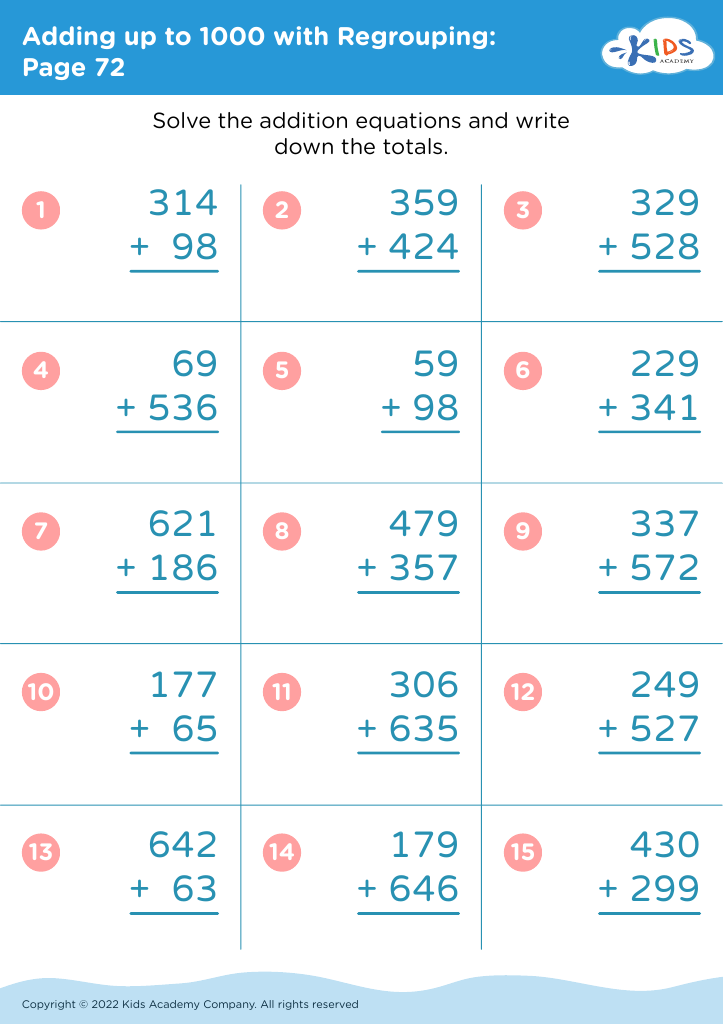
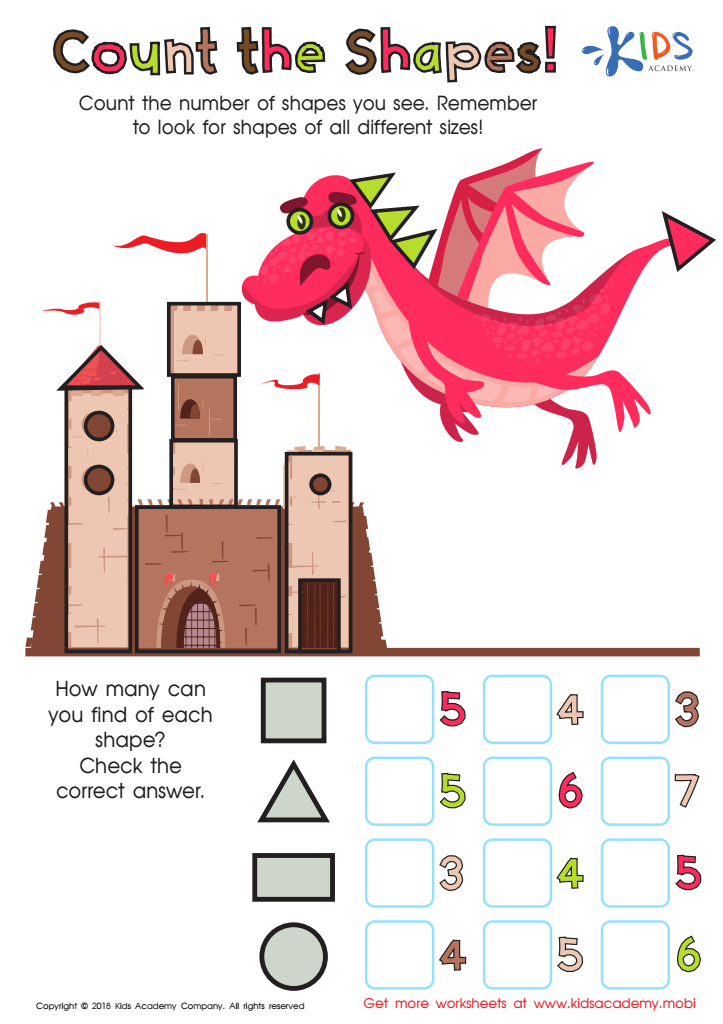
Count the Shapes Worksheet
This fun and learning worksheet is perfect for sharpening visual discrimination skills. Kids search a castle picture featuring a dragon and identify shapes, counting circles, squares, triangles and rectangles. Checking the correct box beside the number, they practice shape identification and counting. Download now and get started!
Count the Shapes Worksheet
Worksheet
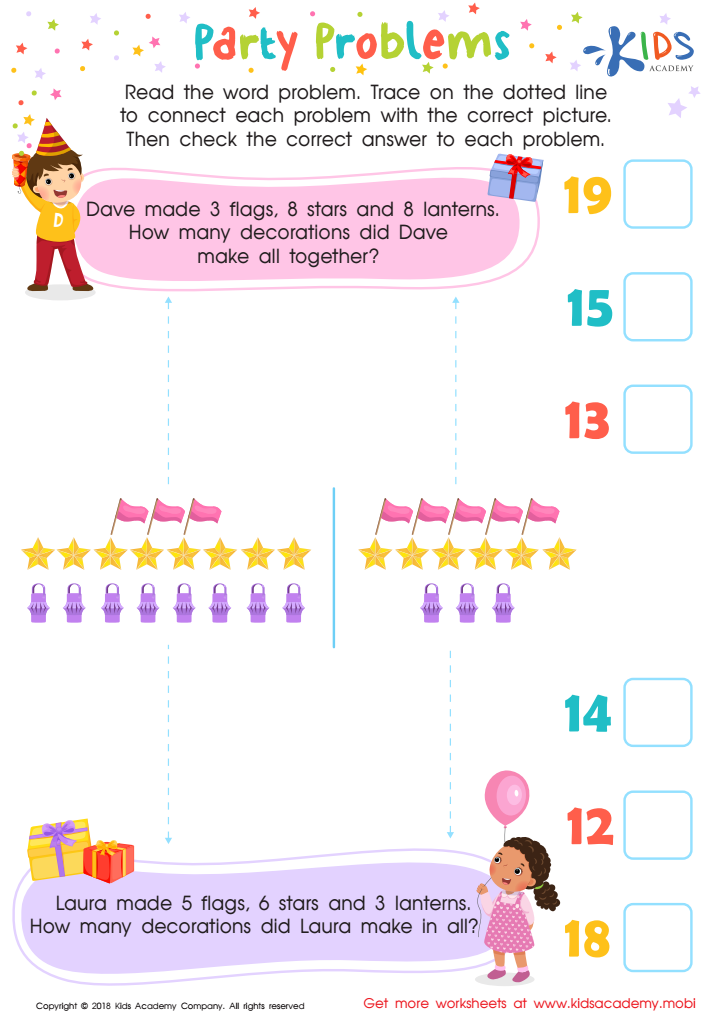
Party Problems Worksheet
Problems at parties? No problem! With this engaging PDF worksheet, your student can connect word problems to pictures, check correct answers, and find the sum of 3 addend problems. They'll be a party-saving hero in no time!
Party Problems Worksheet
Worksheet
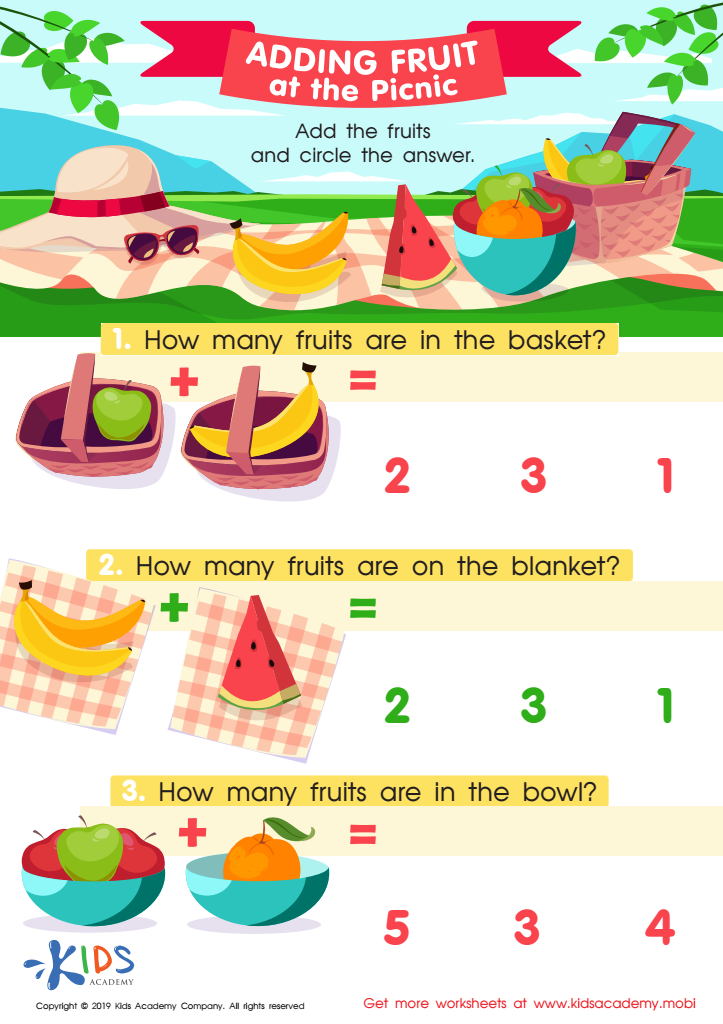
Adding Fruit at the Picnic Worksheet
Picnics are a great way for the family to enjoy a fun day in the sun! Get your kids involved by having them help load the picnic basket and do this worksheet to practice their math skills while they get ready. Identify the fruits in the picture, add them up, and circle the correct answer.
Adding Fruit at the Picnic Worksheet
Worksheet
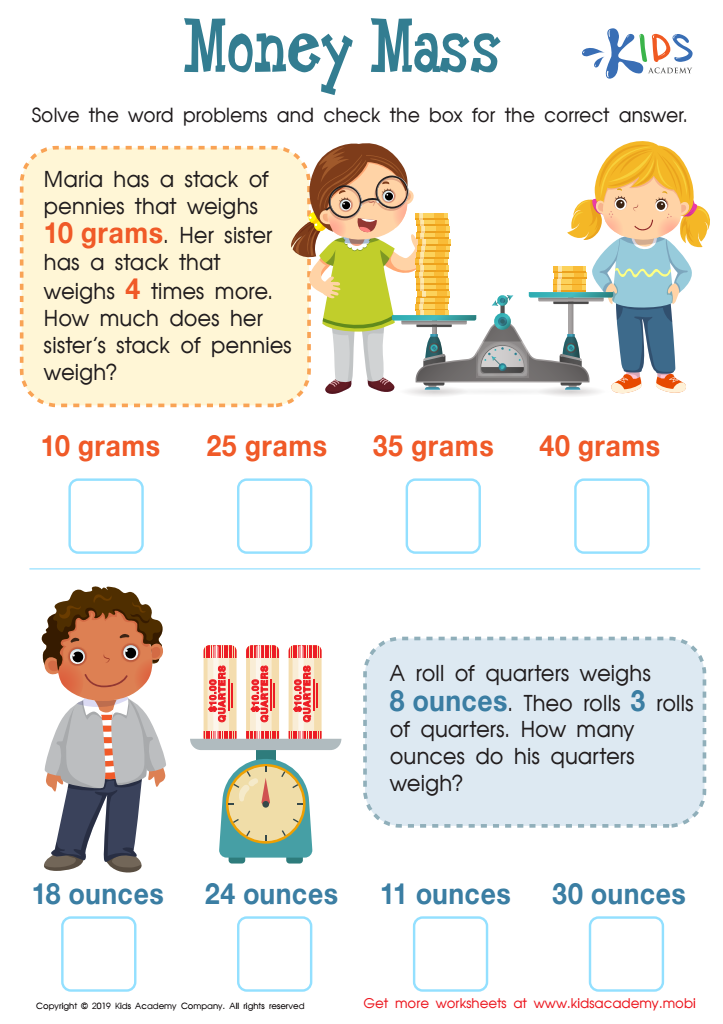
Money Mass Worksheet
By regularly working on math with your kids, they will become more confident. Ensure they understand the word problems in this printout, and help them solve it. Check the box for the correct answer of each to verify their work. With this practice, they will gradually get used to math and make progress.
Money Mass Worksheet
Worksheet
Join Kids Academy for Free
Who is primarily going to use this learning content?








Basic mathematics for ages 5-7 serves as the foundational building block for a child’s cognitive development, problem-solving skills, and overall academic success. During these early years, children develop numeracy skills critical for everyday activities, such as counting, adding, and measuring, which build their confidence and independence.
Parents and teachers should prioritize basic mathematics as it fosters logical thinking and encourages children to explore patterns, relationships, and concepts like time and money. Engaging in mathematical activities not only enhances a child's analytical skills but also boosts their curiosity and creativity. Furthermore, early exposure to math lays the groundwork for later STEM (science, technology, engineering, and mathematics) learning opportunities, equipping children with essential skills for future coursework and careers.
Moreover, integrating math into daily routines, such as cooking or shopping, makes learning enjoyable and relevant. It provides real-life applications, helping children understand math’s importance beyond the classroom. Supporting basic mathematics also strengthens the parent-child or teacher-student bond through interactive learning experiences. In sum, cultivating a strong early foundation in mathematics is critical for nurturing capable, confident learners who embrace challenges and excel academically.








