Discover engaging worksheets focused on basic measurement concepts, specifically designed for children ages 5-7. Our expertly crafted activities help young learners grasp essential skills like comparing lengths, identifying weights, and understanding volume. Through fun and interactive tasks, kids build a solid foundation in early math, fostering a love for learning and boosting their confidence. Perfect for classroom use or homeschooling, these worksheets provide hands-on experience and real-world examples. Empower your child with the tools they need to excel in measurement concepts while having fun. Start their educational journey today with our comprehensive and kid-friendly printable resources!

Check out this FREE "Basic measurement concepts" Trial Lesson for age 5-7!

Name the Shape Regardless of Size

Favorites
With answer key
Interactive
  • 5-7
  • Basic measurement concepts
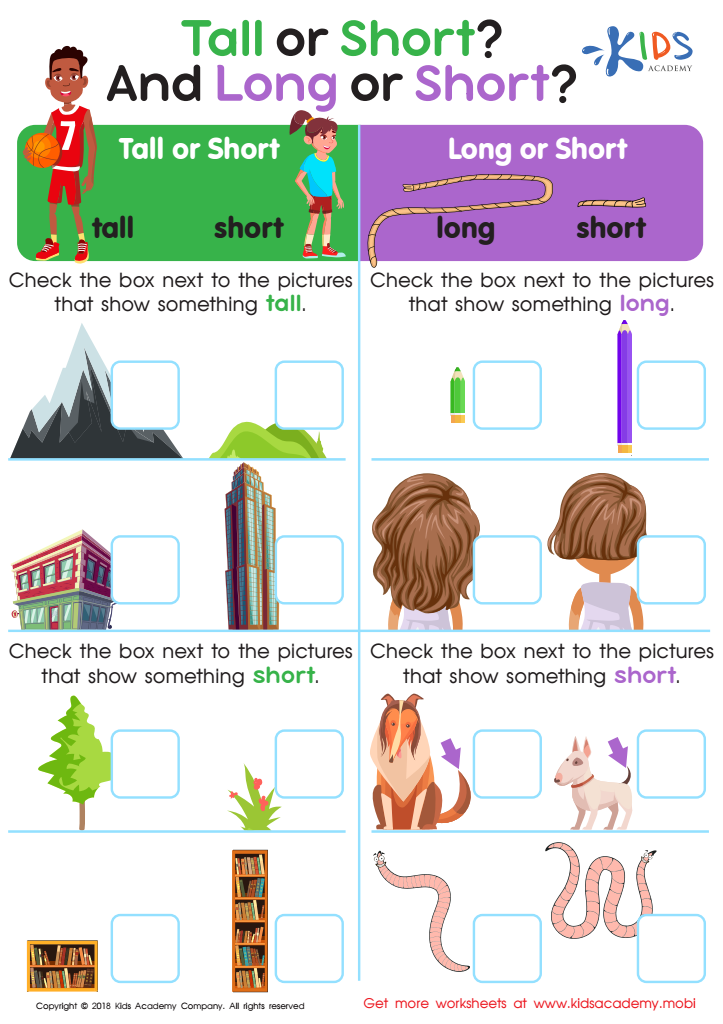
Tall or Short and Long or Short? Worksheet

Tall or Short and Long or Short? Worksheet

This worksheet is fun and helpful for kids to understand the difference between height and length. With pictures of familiar objects, they can compare and choose the box with the right answer. This helps them gain skills and a better foundation for future measuring.
Tall or Short and Long or Short? Worksheet
Worksheet
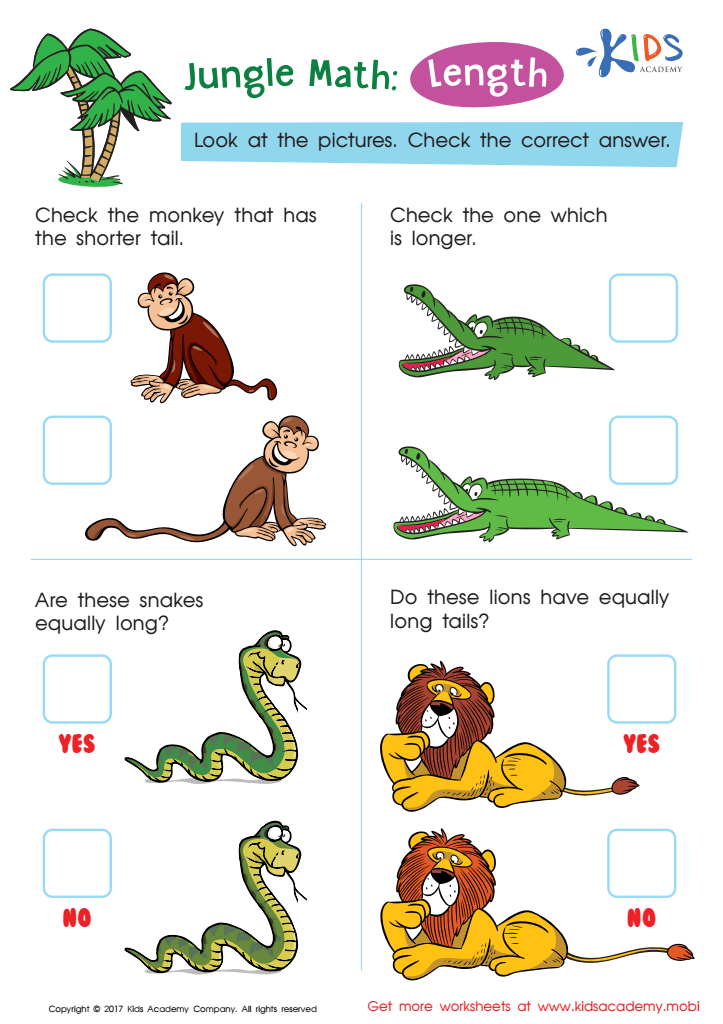
Which one is longer - length worksheet

Which One Is Longer - Length Worksheet
Let's go to the jungle - kids get excited to practice math with animal-filled worksheets! This one is sure to have your pupil mastering length in no time.
Which One Is Longer - Length Worksheet
Worksheet
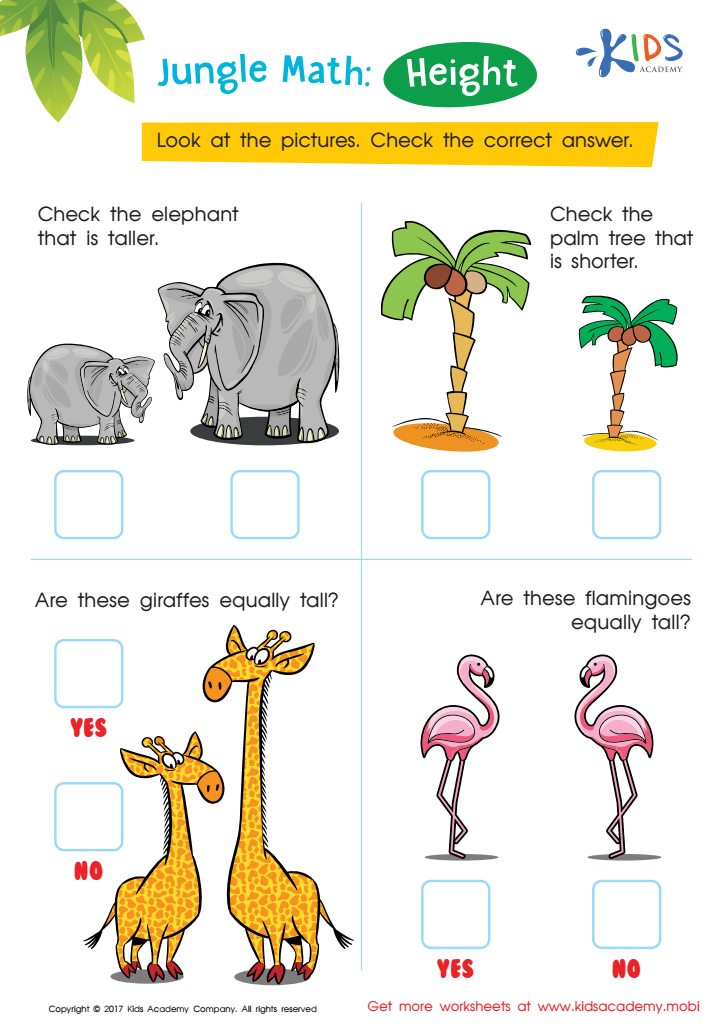
Which is taller worksheet

Which Is Taller Worksheet

Help your kindergartner learn about height with this fun worksheet! They'll love comparing zoo animals and deciding which are taller, shorter, or equal. It's a great way to practice math and have fun!
Which Is Taller Worksheet
Worksheet
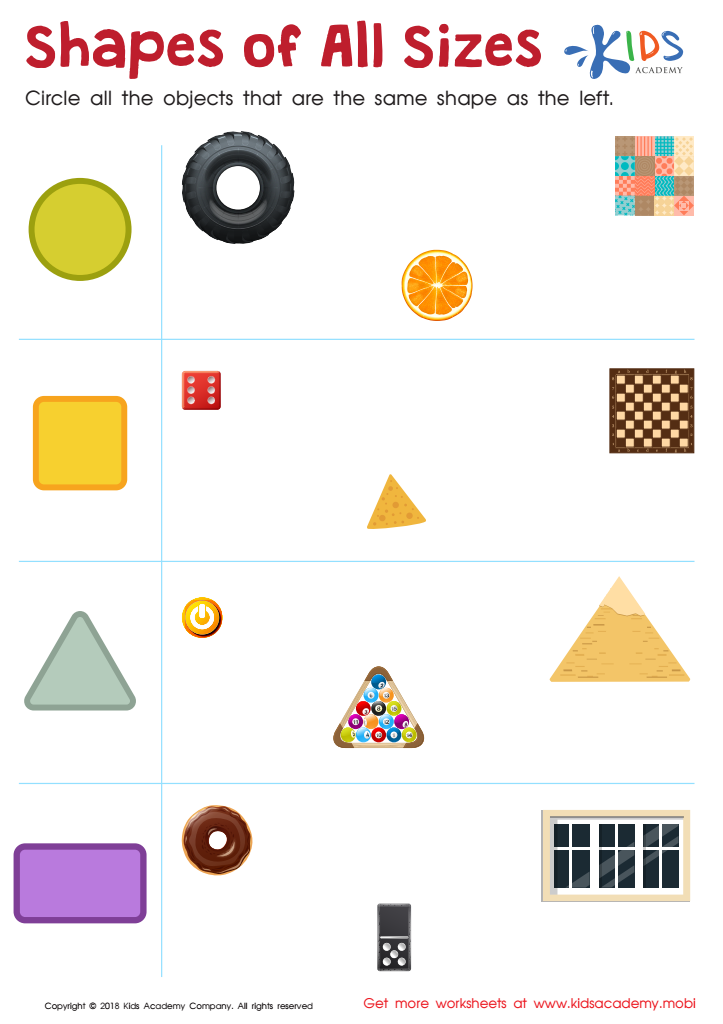
Shapes of All Sizes Worksheet

Shapes of All Sizes Worksheet

Students will have fun comparing basic shapes to familiar objects with this worksheet. It's an excellent way to help them recognize similarities in geometric shapes, building strong foundations for understanding congruence and similarity.
Shapes of All Sizes Worksheet
Worksheet
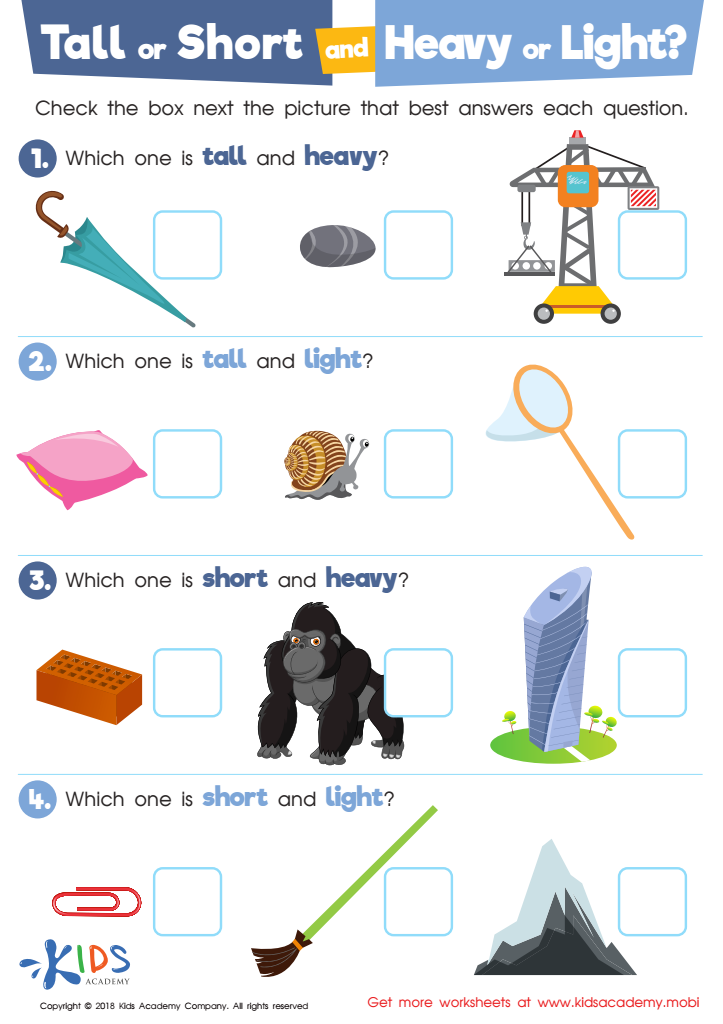
Tall or Short and Heavy or Light? Worksheet

Tall or Short and Heavy or Light? Worksheet

Young children can find basic measurement concepts tricky. This PDF introduces them to the appropriate vocabulary for describing heavy, light, tall and short items, by using familiar pictures. It helps them accurately select which items fit each category.
Tall or Short and Heavy or Light? Worksheet
Worksheet
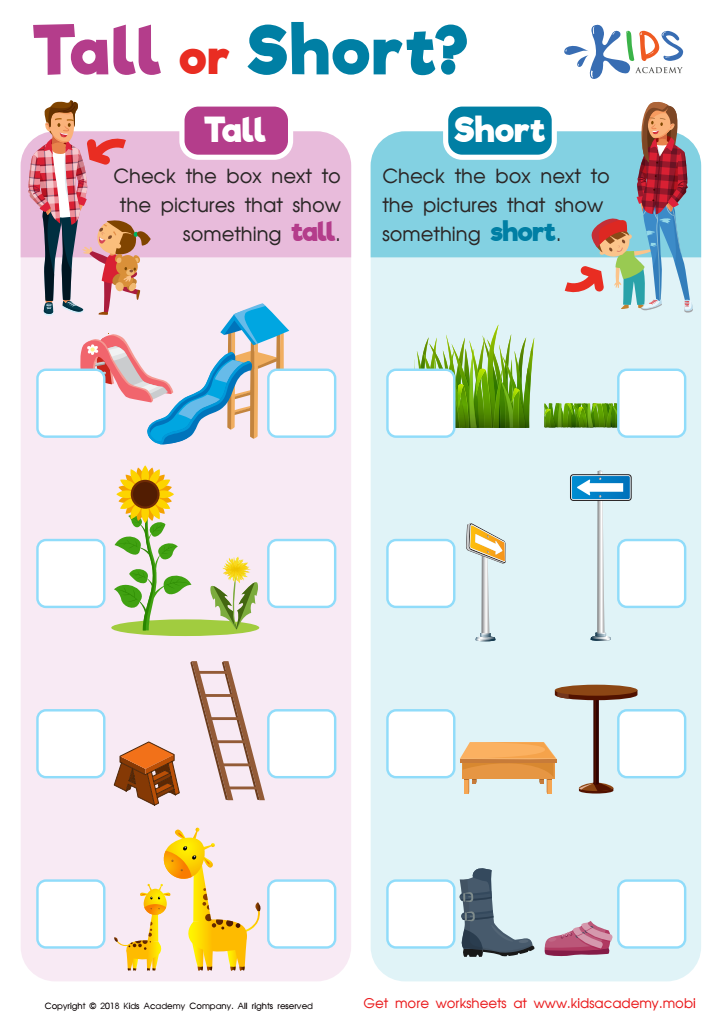
Tall or Short? Worksheet

Tall or Short? Worksheet

Comparing tall and short objects is an early math skill. Our free worksheet uses fun colors and pictures to help kids practice. This will give them a head start for higher-level measurement skills, and they'll remember tangible objects for comparison.
Tall or Short? Worksheet
Worksheet
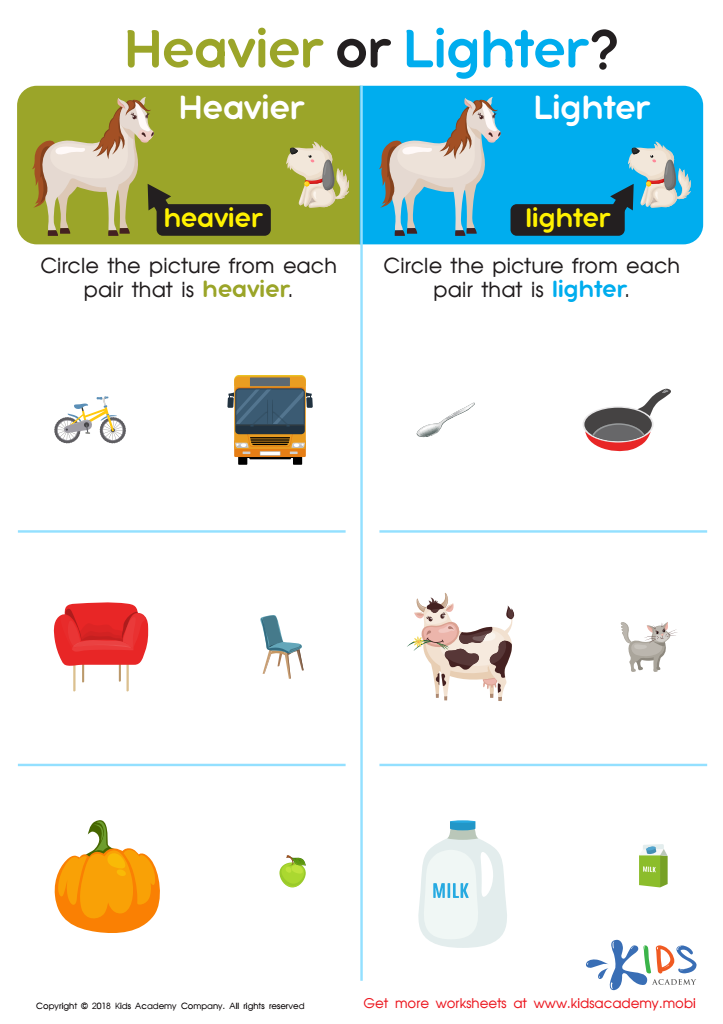
Heavier or Lighter? Worksheet

Heavier or Lighter? Worksheet

This PDF provides children an opportunity to practice concepts of heavier and lighter with familiar pictures. They must use fine-motor skills to circle the heavier or lighter item in each pair. Picture clues help build a foundation for future, harder concepts. Kids will love this fun worksheet!
Heavier or Lighter? Worksheet
Worksheet
Which holds more- capacity worksheet

Which Holds More: Capacity Worksheet

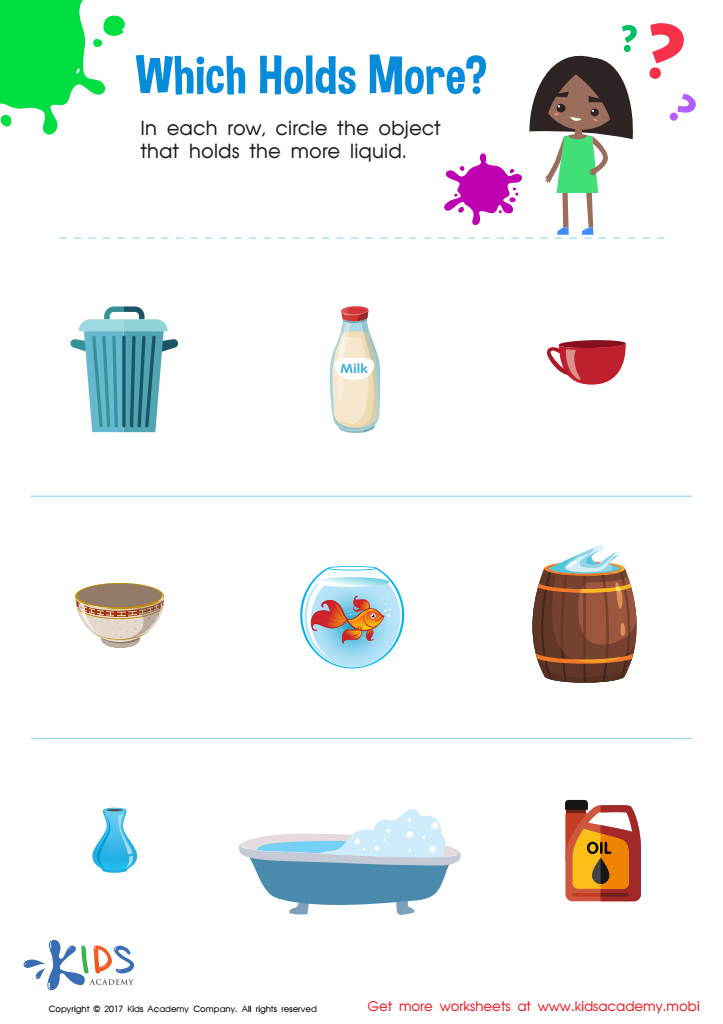
Kids learn volume with containers of different capacities, such as mugs and barrels, and understand which can hold more liquid. A fun and interactive way to teach essential math concepts.
Which Holds More: Capacity Worksheet

Worksheet


Parents and teachers play a crucial role in introducing basic measurement concepts to children aged 5-7. At this developmental stage, kids are naturally curious and starting to understand the world around them. Understanding measurement helps lay the foundation for mathematical thinking and builds skills that are essential in daily life.

Firstly, learning basic measurement concepts such as length, weight, volume, and time enhances cognitive development. It encourages children to think critically, compare objects, and make quantitative evaluations. These skills are not only fundamental for mathematics but also for subjects like science, arts, and technology.

Secondly, early mastery of measurement helps improve problem-solving abilities. For instance, when children learn to measure ingredients for a recipe or time spent on a task, they develop practical skills and logical thinking. These are valuable life skills that promote independence and confidence.

Additionally, understanding measurements can aid in social development. Cooperative activities involving measurement, such as building blocks or timed games, foster teamwork and communication skills.

Parents and teachers should provide interactive and engaging activities to help children grasp these concepts. Simple tools like rulers, measuring cups, and clocks can turn everyday moments into educational opportunities.

Investing time in teaching basic measurement concepts at an early age sets the stage for lifelong learning and equips children with essential skills to navigate their world more effectively.