
Chess piece identification Worksheets for Ages 5-7
3 filtered results
Difficulty Level
Grade
Age
-
From - To
Subject
Activity
Standards
Introduce your little strategist to the fascinating world of chess with our Chess Piece Identification Worksheets designed for ages 5-7. These engaging, easy-to-follow worksheets help young learners recognize and name each chess piece, laying a strong foundation in chess concepts. Through fun activities like coloring, matching, and labeling, children will improve their attention to detail, fine motor skills, and cognitive abilities. Perfect for beginners, this collection of worksheets ensures your child starts their chess journey with confidence. Turn playtime into a valuable learning experience today with our expertly crafted chess resources at Kids Academy!
Favorites
With answer key
Interactive
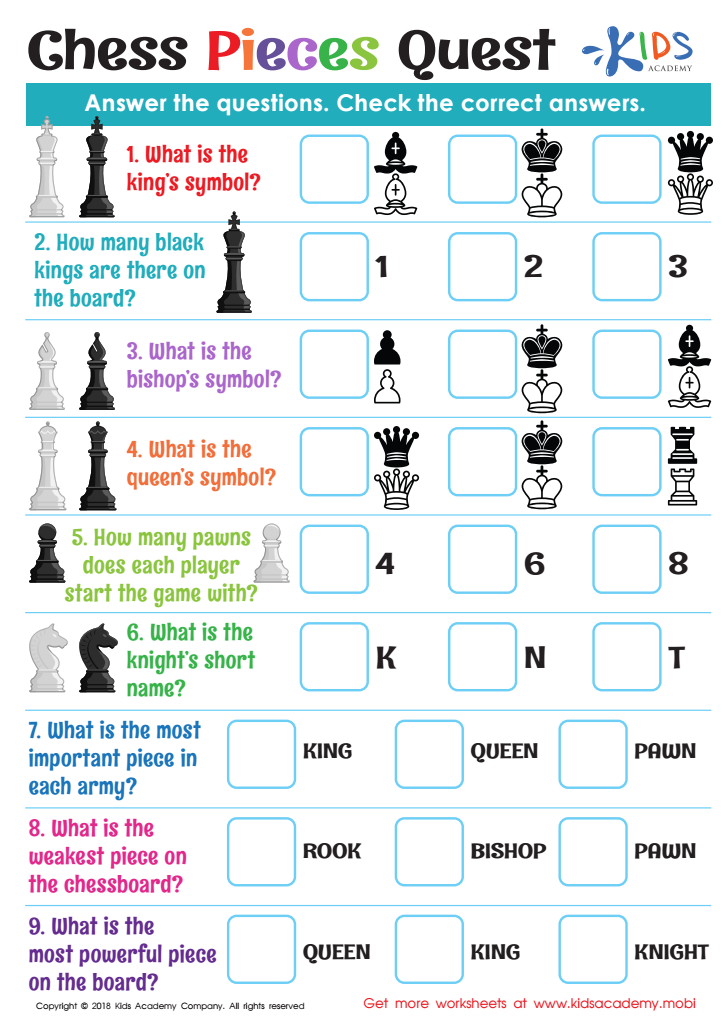
Chess Pieces Quest Worksheet
Help your child prepare for the chess quest by refreshing their knowledge of the symbols and characteristics of each chess piece. Then, have them try the 9 questions on this worksheet. These questions will assess their understanding of the symbols and how many pieces each player starts with.
 Assign to My Students
Chess Pieces Quest Worksheet
Worksheet
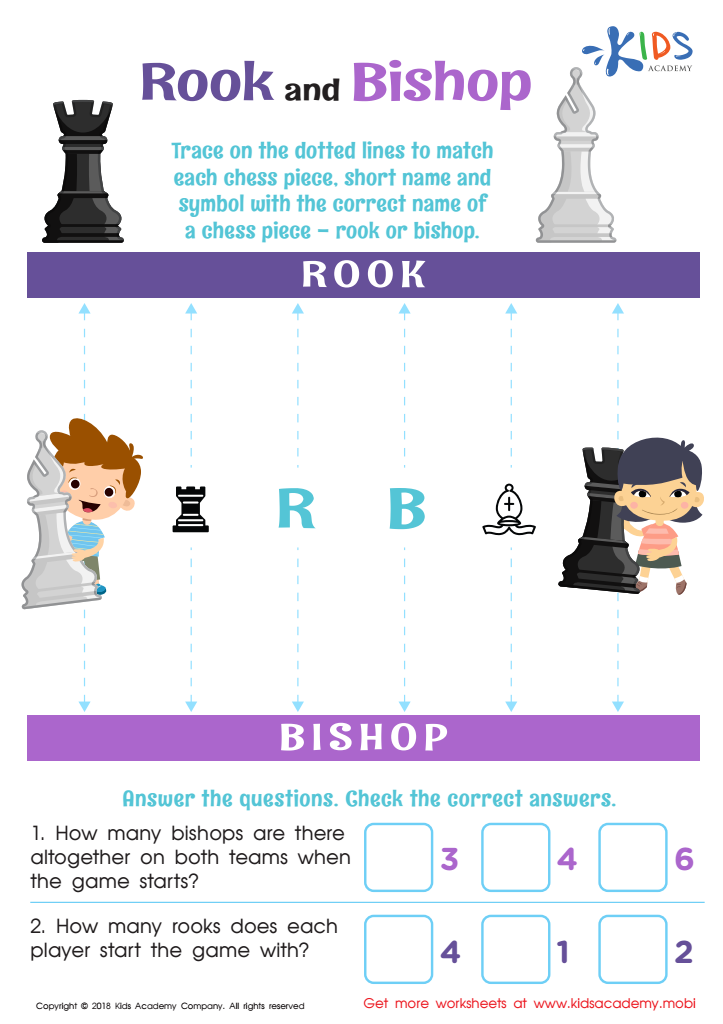
Rook and Bishop Worksheet
This tracing sheet helps your child learn chess pieces by matching each piece, short name and symbol to the correct name. After tracing, have them answer the questions and check their answers. It's a great way for them to become familiarized with chess.
Rook and Bishop Worksheet
Worksheet
Join Kids Academy for Free
Who is primarily going to use this learning content?




.jpg)

.jpg)

Introducing chess piece identification to children ages 5-7 can have remarkable benefits, making it well worth the attention of parents and teachers. At this developmental stage, children's brains are particularly receptive to learning, and chess offers an engaging and fun way to enhance cognitive skills. Learning to identify chess pieces involves recognizing shapes, symbols, and names, thereby improving memory and visual processing. Additionally, the game's strategic nature facilitates problem-solving skills, encouraging children to think ahead and consider the consequences of their actions—a foundational aspect of critical thinking.
Moreover, chess can boost concentration and patience, as kids must focus on the game and wait for their turn. Early exposure to chess can strengthen these attributes, which are essential for succeeding in academic settings and beyond. Language development is also supported, as children learn specific vocabulary associated with the game. Socially, playing chess can teach valuable lessons in sportsmanship and turn-taking, fostering respect for opponents and graciousness in both victory and defeat. Most importantly, chess is an inclusive activity that children of various backgrounds can enjoy, promoting a sense of community and shared interest. Thus, incorporating chess piece identification into early education sets the stage for a plethora of long-lasting cognitive and social benefits.








