Chess strategy learning Worksheets for Ages 5-7
10 filtered results
-
From - To
Discover the perfect introduction to the exciting world of chess for young minds with our Chess Strategy Learning Worksheets for Ages 5-7. Expertly designed, these engaging, printable worksheets help children develop critical thinking, patience, and concentration while having fun. Through interactive puzzles and exercises, kids learn the basics of chess, from piece movement to beginner strategies. Ideal for enhancing cognitive skills, our resources make the complex game accessible and enjoyable. Lay the foundation for lifelong strategic thinking and problem-solving with these comprehensive and easy-to-follow worksheets. Start your child’s chess journey today!
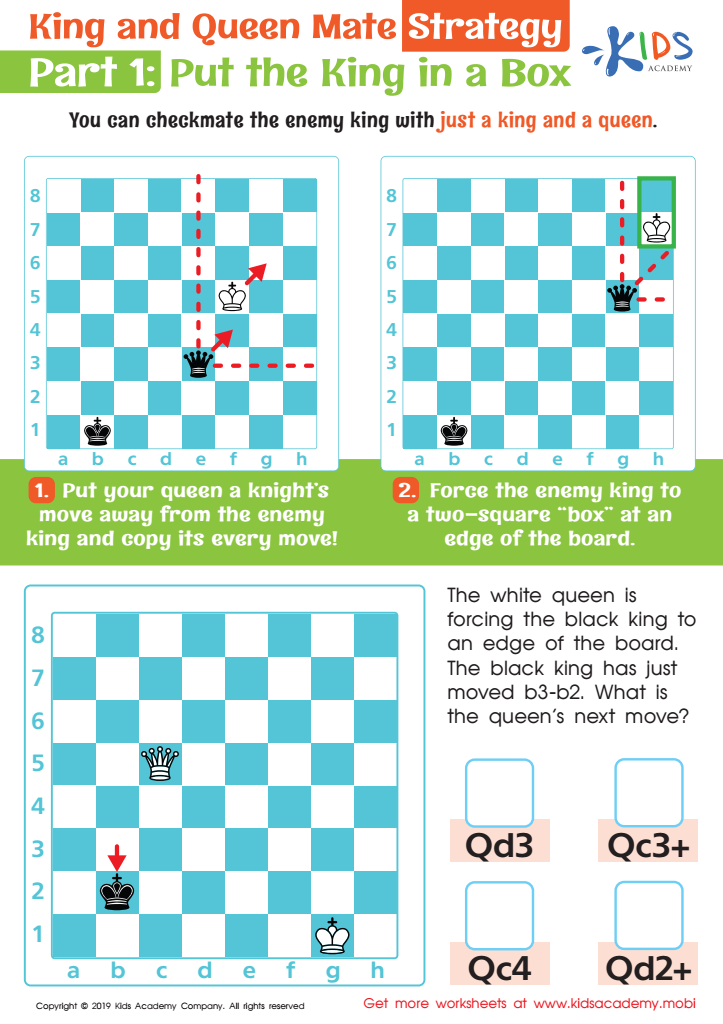
King and Queen Mate Strategy: Part 1 Worksheet
 Assign to My Students
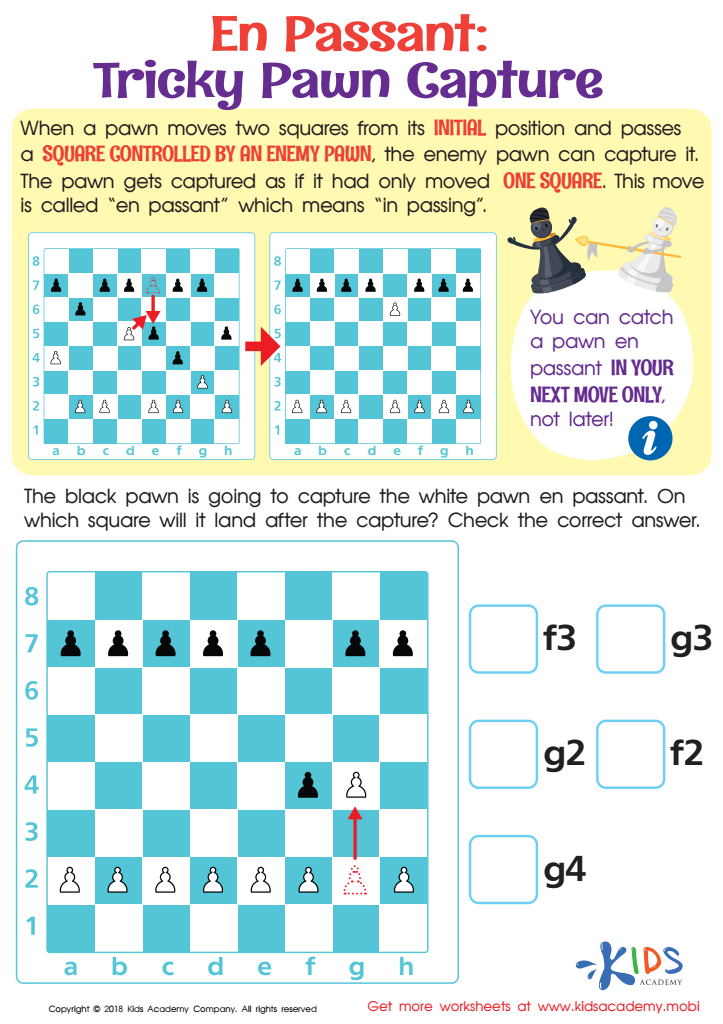
En Passant: Tricky Pawn Capture Worksheet
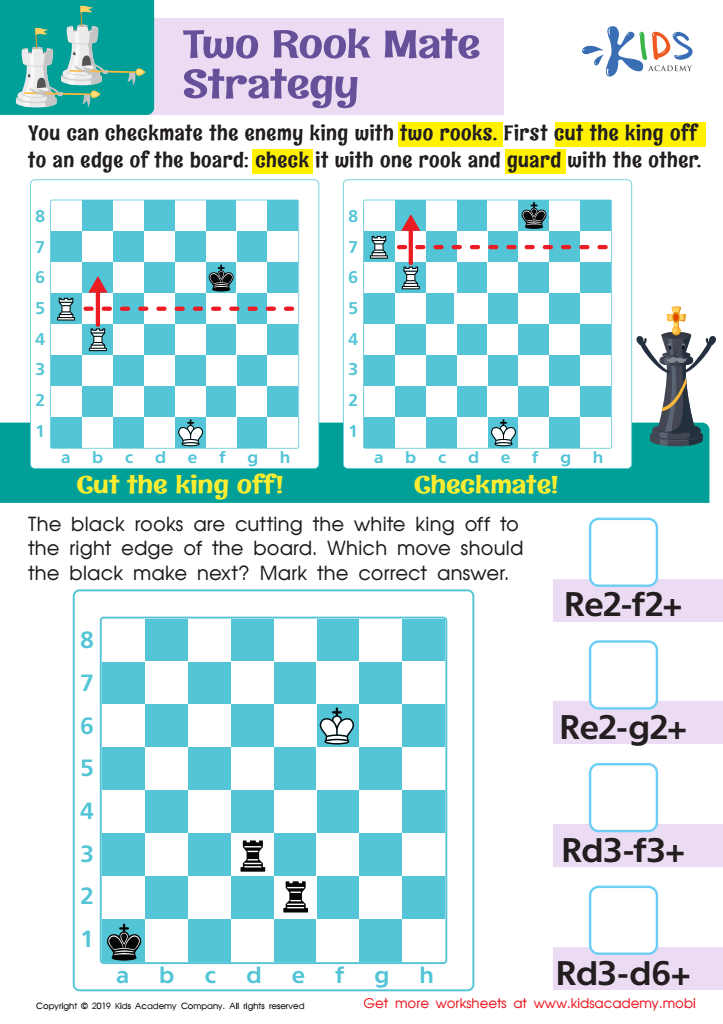
Two Rook Mate Strategy Worksheet
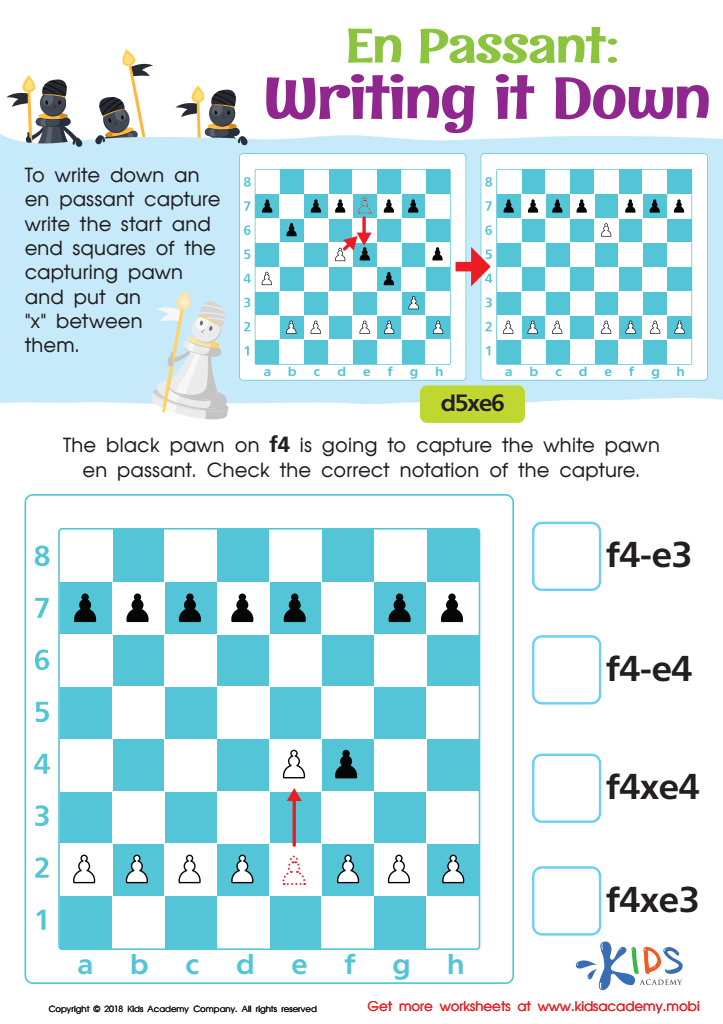
En Passant: Writing it Down Worksheet
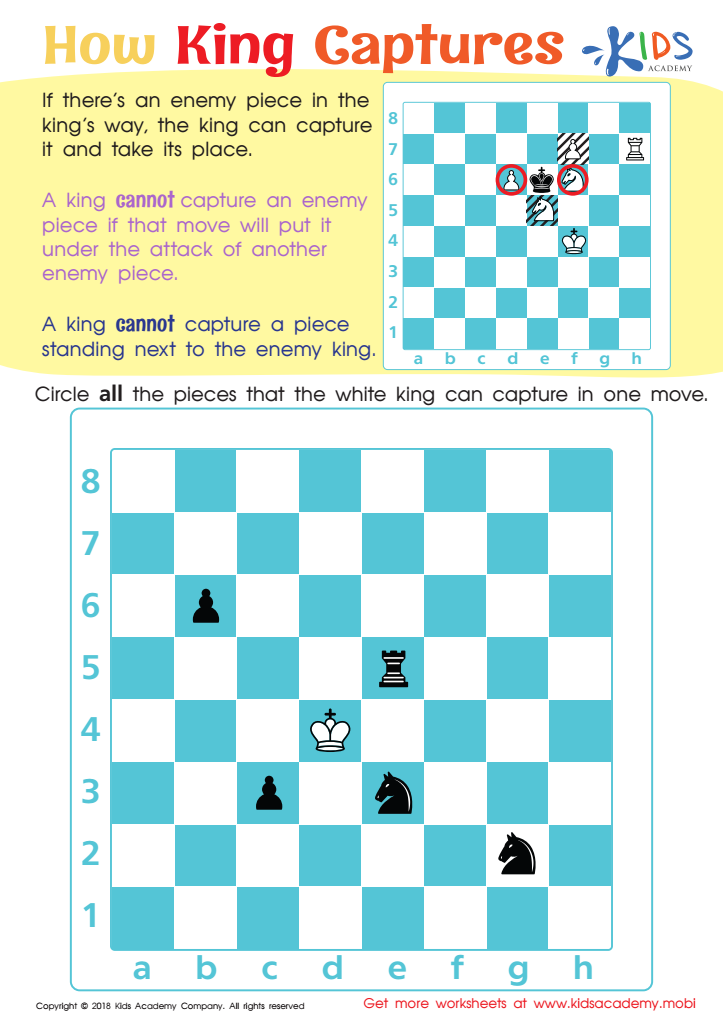
How King Captures Worksheet
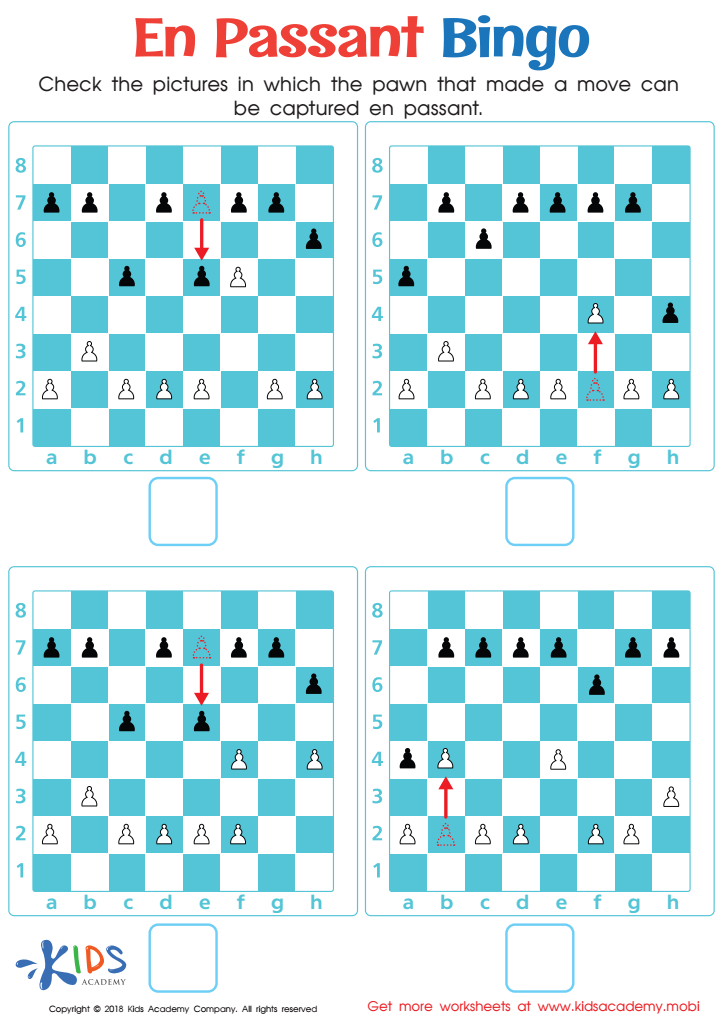
En Passant Bingo Worksheet
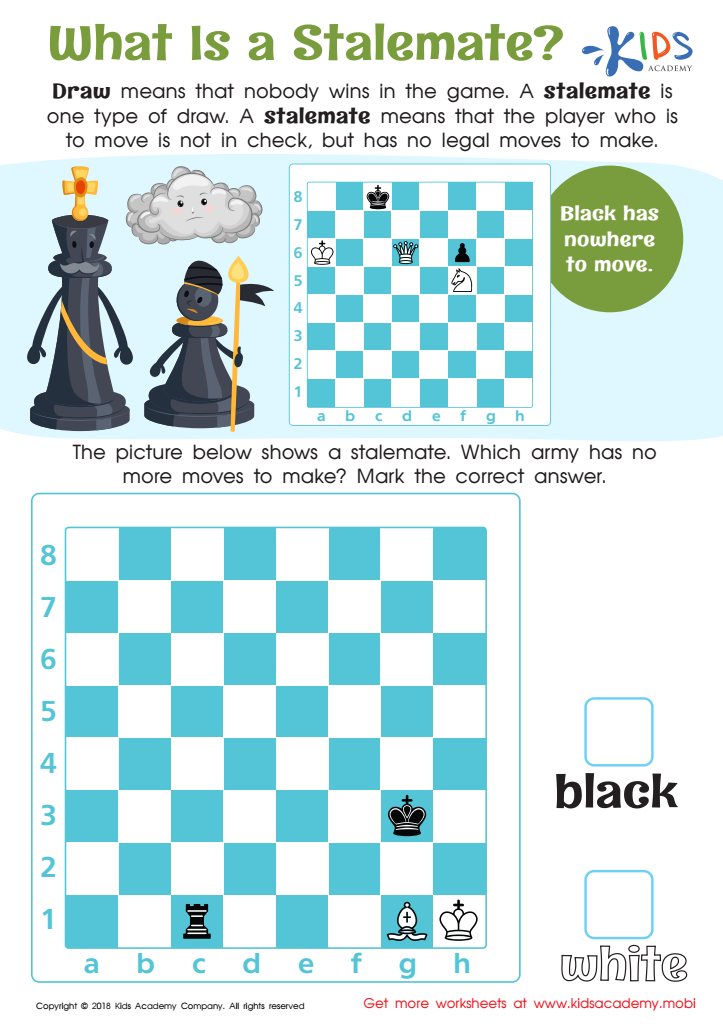
What Is a Stalemate? Worksheet
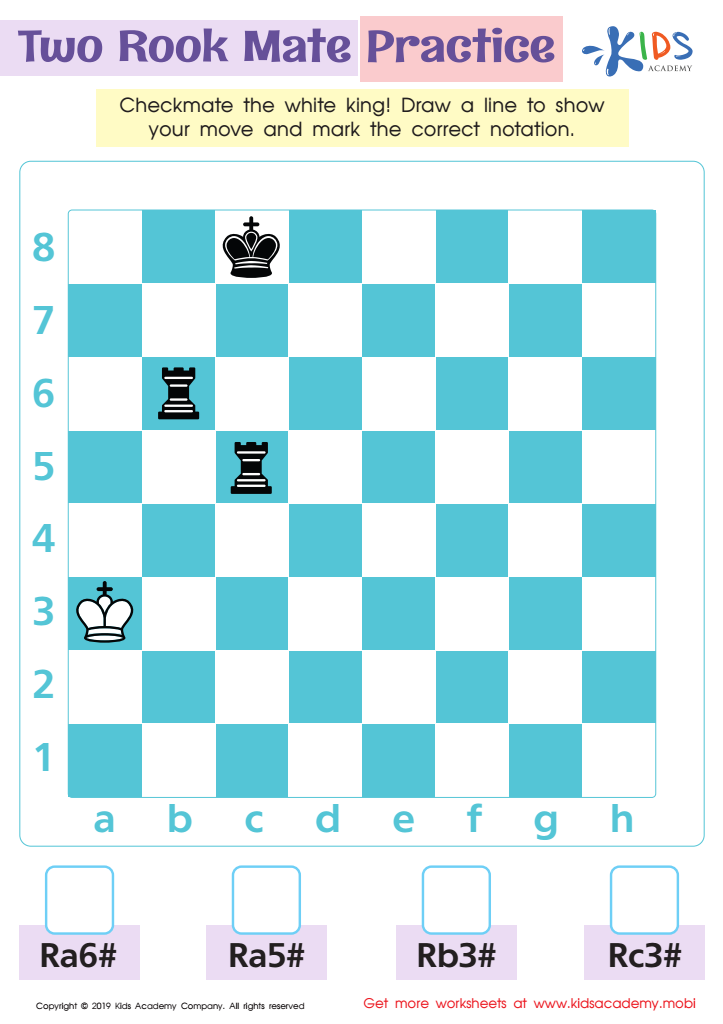
Two Rook Mate Practice Worksheet
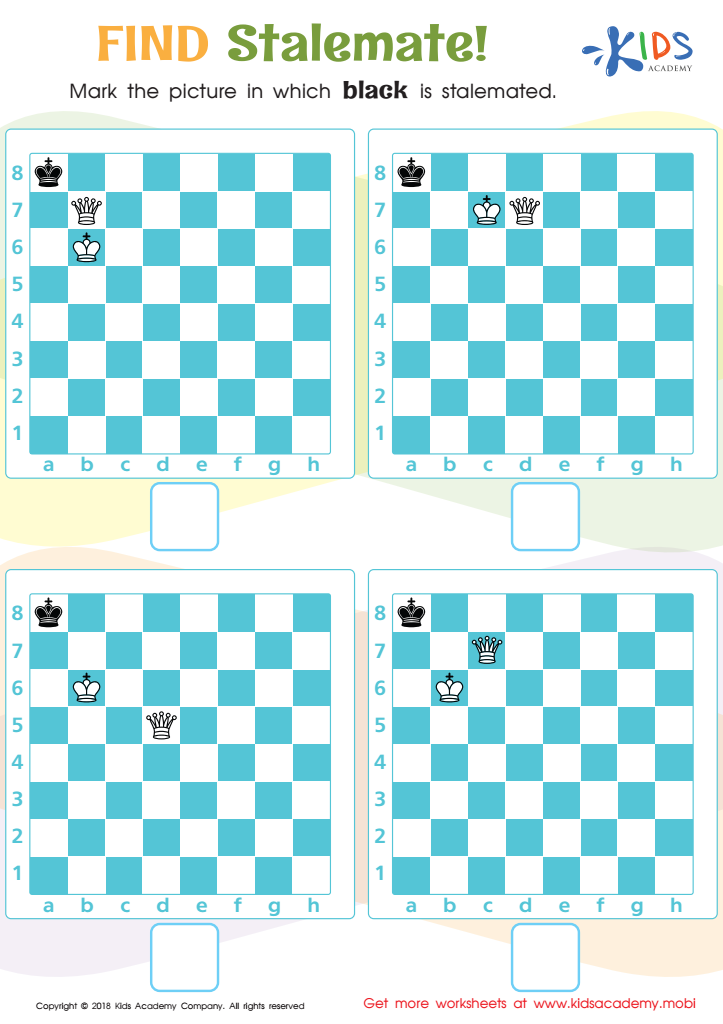
Find Stalemate! Worksheet
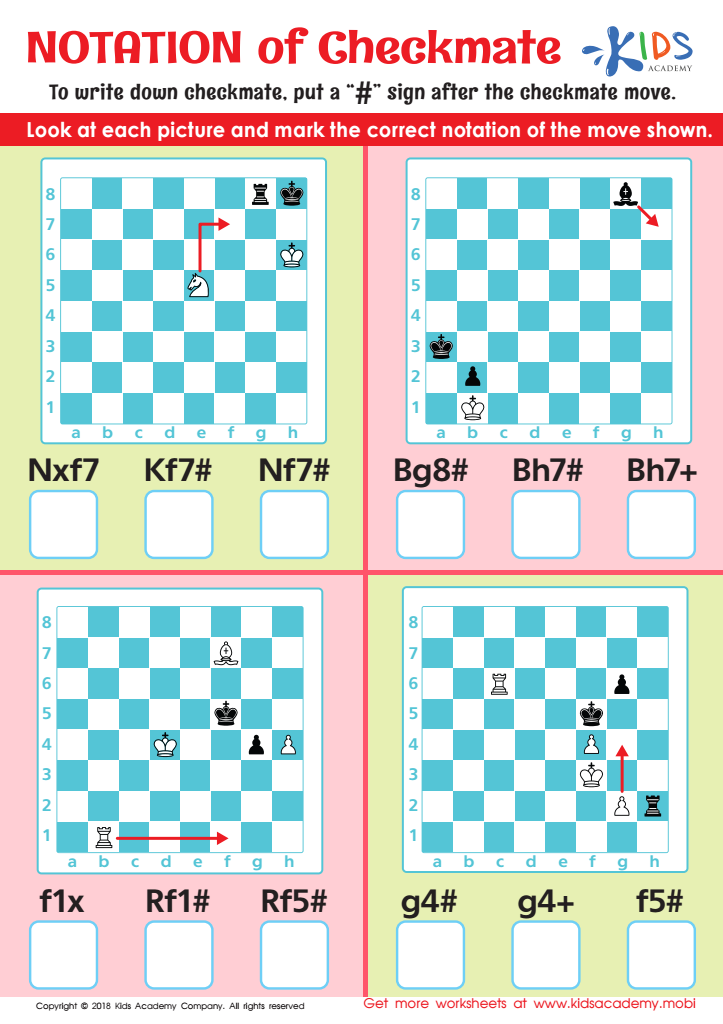
Notation of Checkmate Worksheet





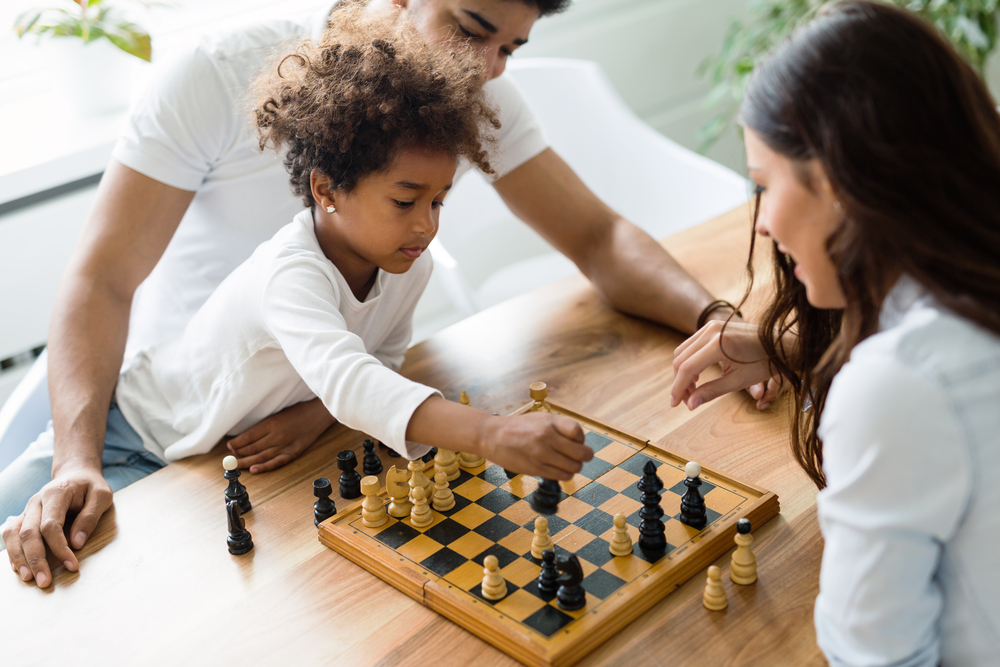
Teaching chess strategy to children aged 5-7 offers numerous cognitive, emotional, and social benefits. At this formative age, children’s brains are exceptionally absorbent, and learning chess can profoundly shape their development. Chess enhances critical thinking, problem-solving, and decision-making skills. Each move in chess requires foresight, planning, and strategy, helping young kids develop logical and analytical thinking early on.
Concentration and attention to detail are other significant benefits. A child focusing on the game learns to concentrate deeply and recognize patterns, which can improve academic performance and attentiveness in classroom settings.
Moreover, chess teaches patience and perseverance. Young children often experience immediate outcomes in daily activities, but chess requires slower, staged progression, which helps them understand the value of sustained effort. This patience can be transferred to other domains of life, such as long-term projects or goals.
Socially, chess provides a structured activity for developing interpersonal skills. Playing with peers or adults fosters sportsmanship, respect for others, and the ability to handle wins and losses gracefully. Children learn to attribute their outcomes to their own choices, which instills a sense of accountability.
In conclusion, chess is not simply a game; it's a dynamic educational tool fostering cognitive and socio-emotional growth in young children, thus making it a worthwhile pursuit for parents and teachers to encourage.








