Community awareness Worksheets for Ages 5-7
5 filtered results
-
From - To
Explore our engaging Community Awareness Worksheets designed for children aged 5-7! These creative resources help young learners understand their community and the importance of social interactions. With activities that promote empathy, sharing, and teamwork, your child will develop essential skills to navigate social environments effectively. Each worksheet features colorful illustrations and easy-to-follow instructions, making learning fun and accessible. Perfect for home or classroom settings, these worksheets encourage discussions about community roles, helping kids recognize their value within a group. Foster your child's understanding of community dynamics while enhancing their critical thinking and communication skills with our thoughtfully designed materials!
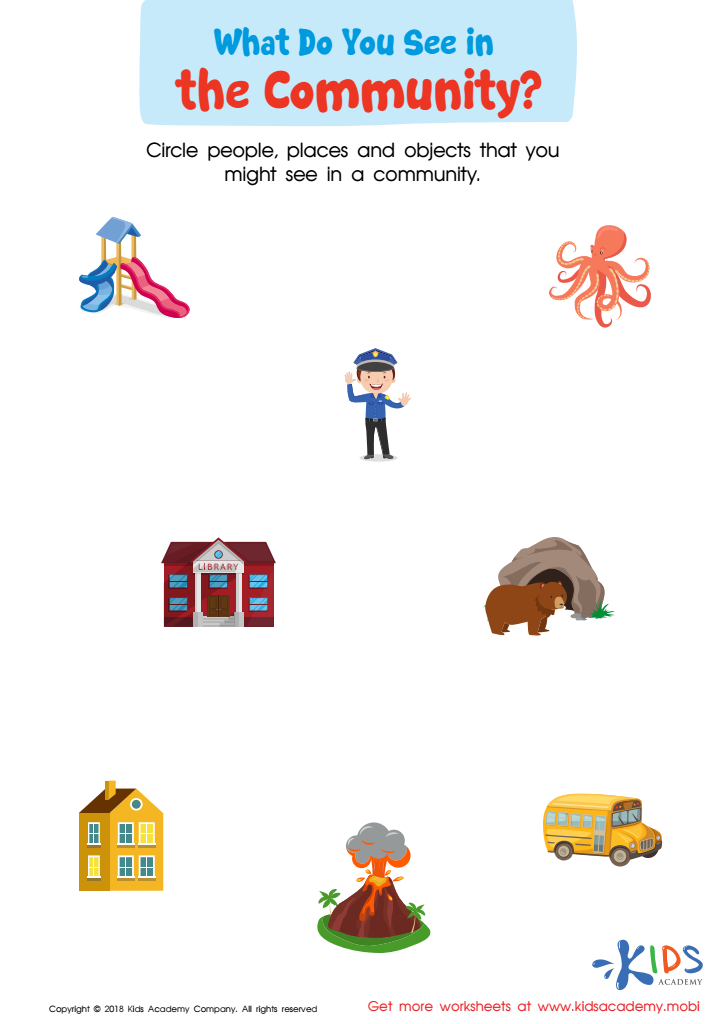
What Do You See in the Community Worksheet
 Assign to My Students
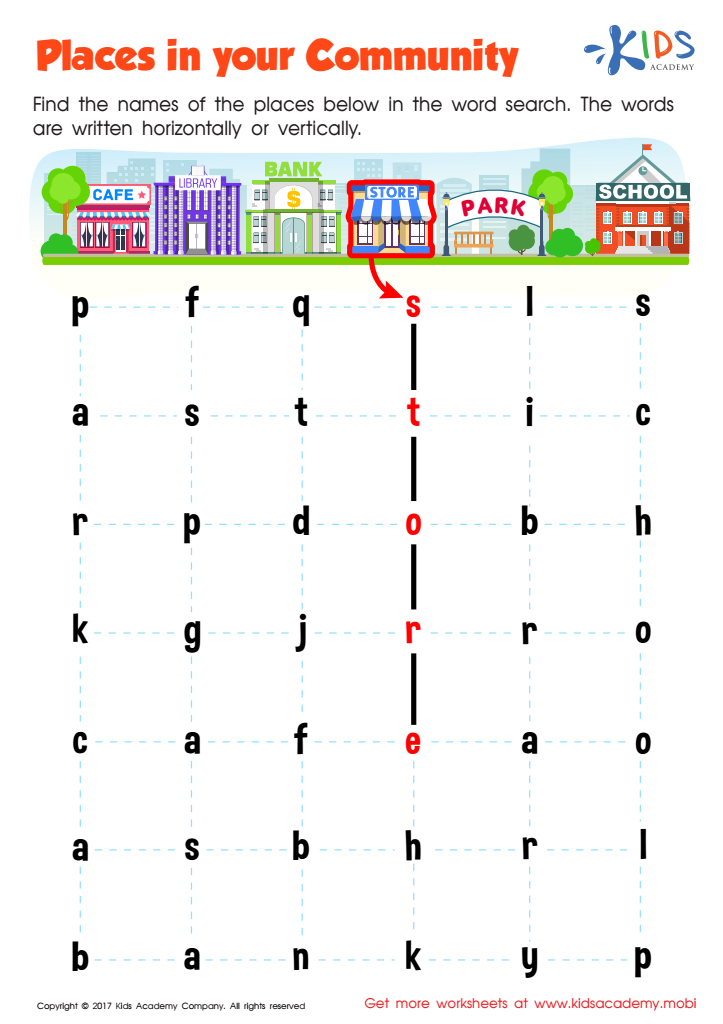
Places in Your Community Worksheet
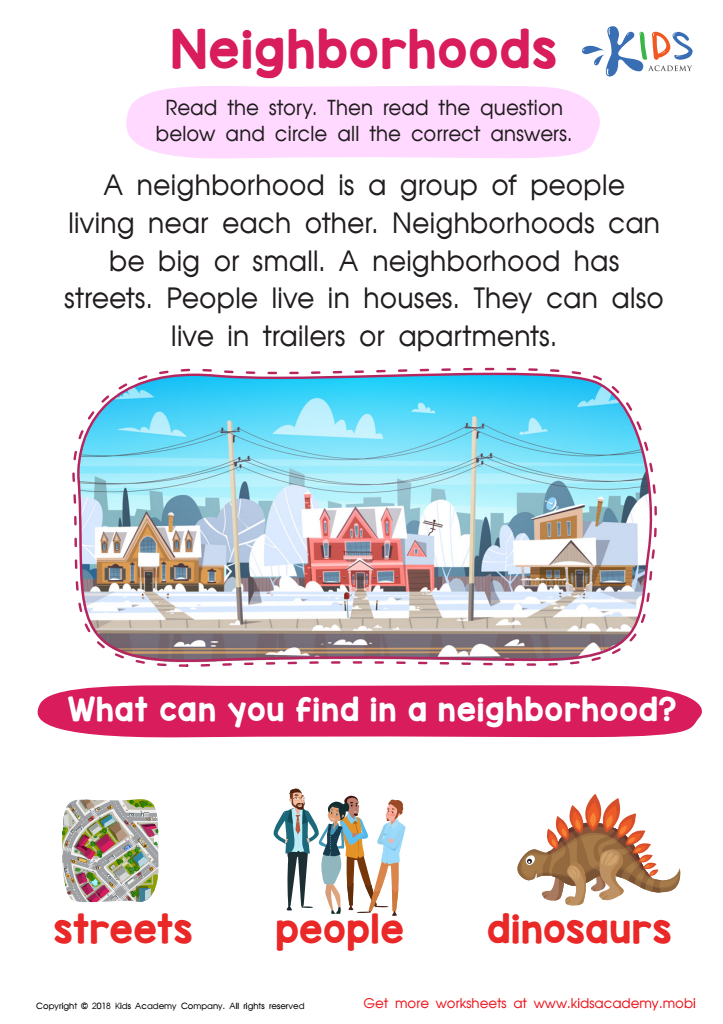
Neighborhoods Worksheet
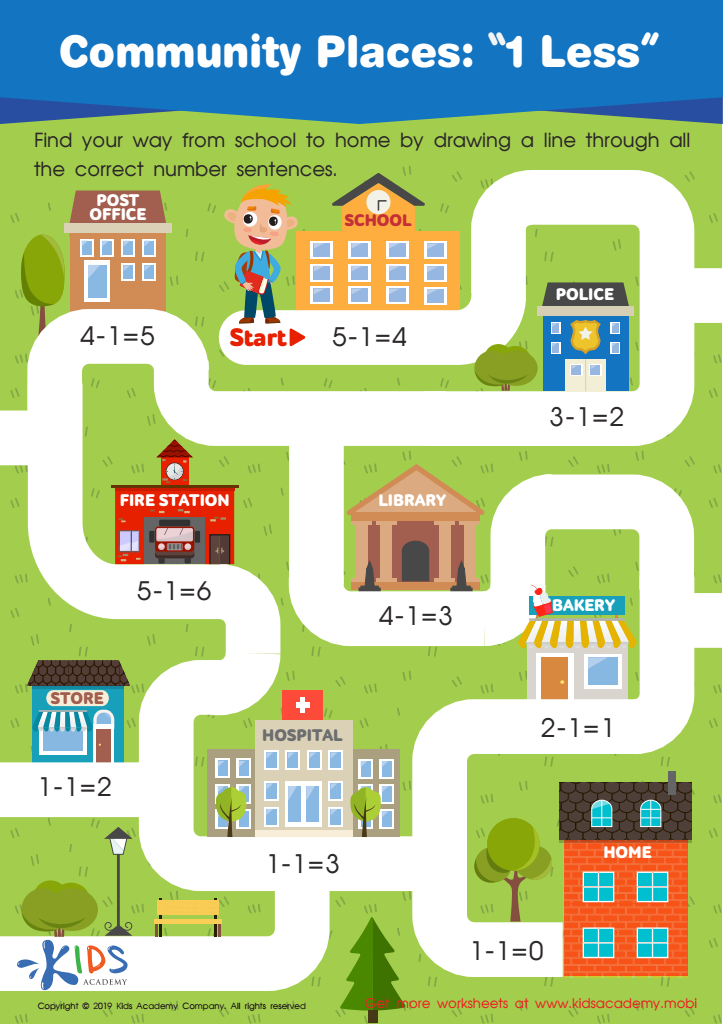
Community Places: 1 Less Worksheet
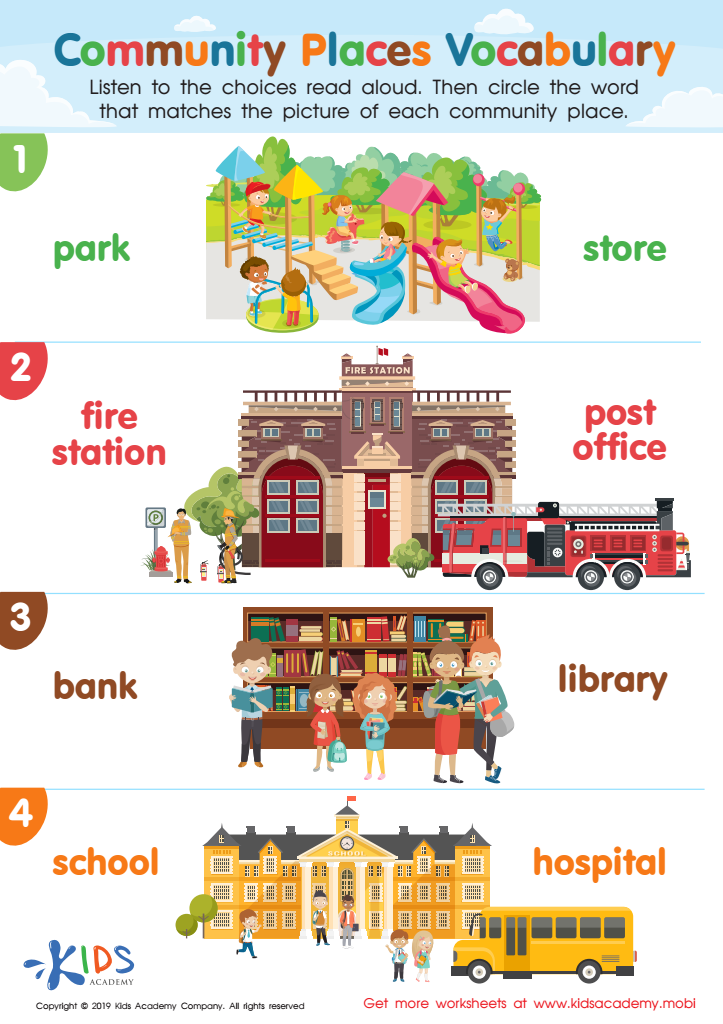
Community Places Vocabulary Worksheet







Community awareness is vital for children aged 5-7 as it lays the foundation for responsible citizenship. At this age, children are naturally curious and begin to understand their environment, making it an ideal time to encourage awareness of their community. This understanding fosters a sense of belonging and helps children develop social skills like empathy and cooperation.
Incorporating community awareness in education enables children to explore their neighborhoods, recognize local landmarks, and appreciate diverse cultures and practices within their community. Engaging with local events and history also broadens their perspectives, teaching them the importance of respect and inclusion. Additionally, when parents and teachers highlight community engagement, children learn the impact of their actions, including how they can contribute positively to society through volunteering and participating in local initiatives.
As children develop community awareness, they build strong social networks, boosting their confidence. This awareness nurtures critical thinking and problem-solving skills by encouraging them to discuss and address community issues. Ultimately, fostering community awareness equips young learners with the knowledge and skills they need to become active, engaged, and compassionate members of society, creating a brighter future for all.








