Check out this FREE "Critical thinking skills" Trial Lesson for age 5-7!

Behavioral Adaptations

Favorites
With answer key
Interactive
  • 5-7
  • Critical thinking skills
Healthy Eyes Worksheet

Healthy Eyes Worksheet

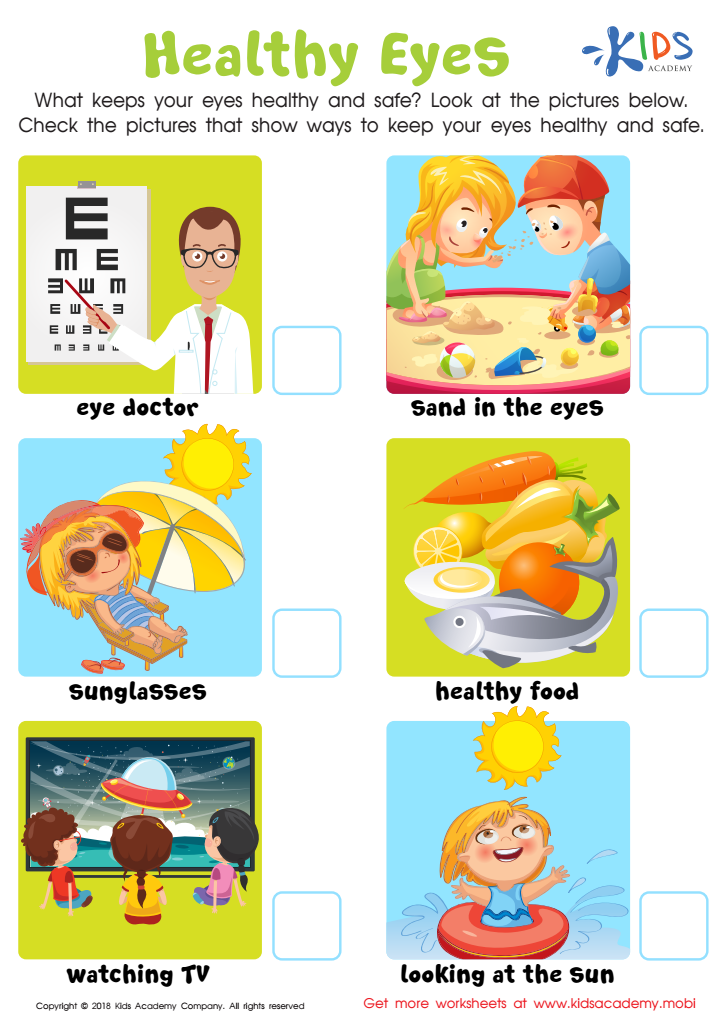
Does your child know how to care for their eyes? Help them understand with this worksheet. Look through the pictures together and discuss the different ways to keep the eyes healthy and safe. These include visits to the doctor, wearing sunglasses, and eating healthy food.
Healthy Eyes Worksheet
Worksheet
Marine Self-Defence Worksheet

Marine Self-Defence Worksheet

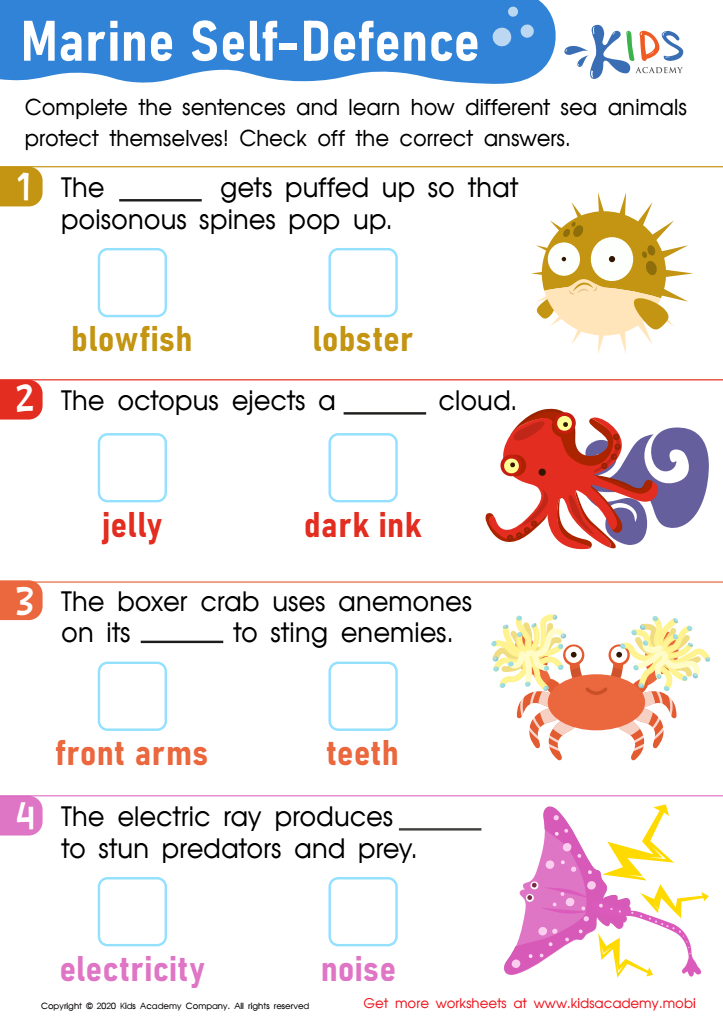
Kids will love discovering the ingenious ways sea creatures protect themselves from predators such as sharks and whales! Let them explore the strategies with this fun science worksheet, which features vibrant illustrations. Have them fill in the blanks with each creature's defense strategy, such as shells, spikes, ink, or even electricity!
Marine Self-Defence Worksheet
Worksheet
Exploring Outer Space Worksheet
Exploring Outer Space Worksheet
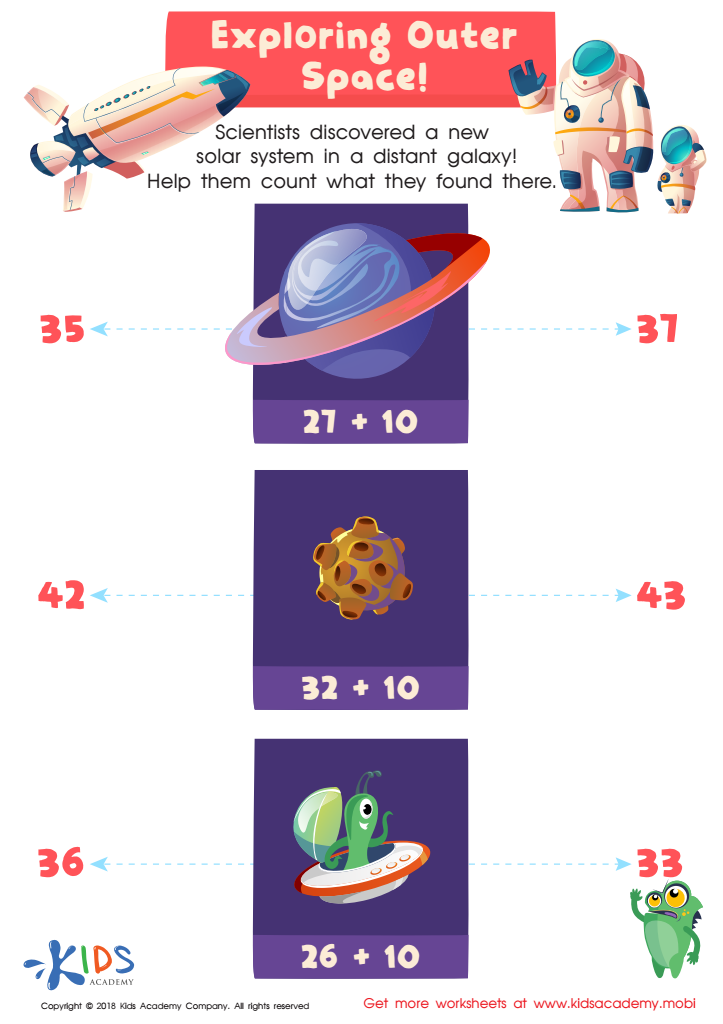
Outer space is an intriguing world. Physics behave differently than on Earth, and much remains to be uncovered. In this worksheet, scientists have located a new solar system in a distant galaxy. Explain to your kids what these two things are, then have them help count the findings. Solve the math problems, then link the lines to the right answer.
Exploring Outer Space Worksheet
Worksheet
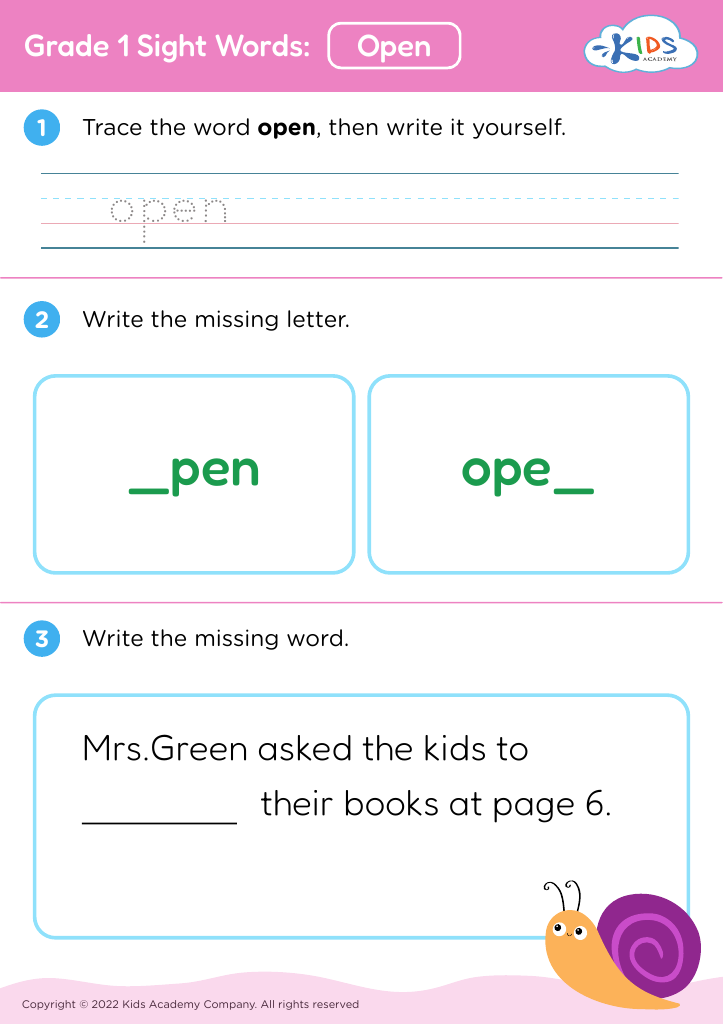
Grade 1 Sight Words: Open

Grade 1 Sight Words: Open

Grade 1 Sight Words: Open
Worksheet
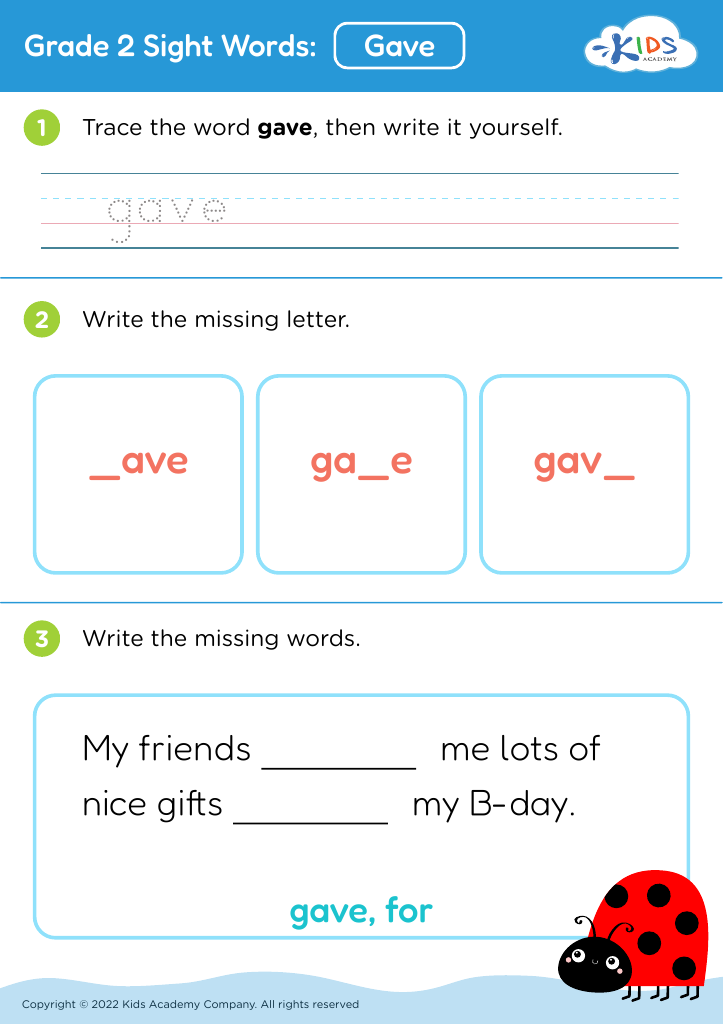
Grade 2 Sight Words: Gave

Grade 2 Sight Words: Gave

Grade 2 Sight Words: Gave
Worksheet
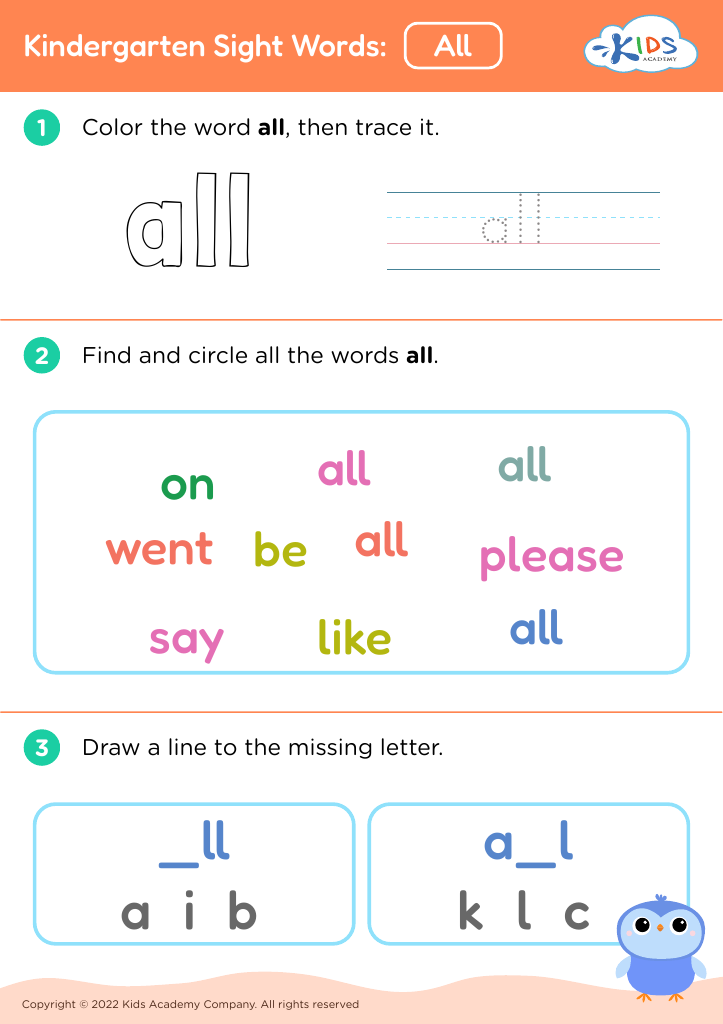
Kindergarten Sight Words: All

Kindergarten Sight Words: All

Kindergarten Sight Words: All
Worksheet


Critical thinking skills are essential for children aged 5-7, as this is a foundational period for cognitive development. At this age, children begin to make connections, ask questions, and form basic reasoning skills. By nurturing critical thinking, parents and teachers help children learn to analyze situations, solve problems, and make decisions independently. These skills are not only vital for academic success but also for everyday life.

When children engage in critical thinking, they learn to evaluate information critically, separate fact from opinion, and consider multiple perspectives. This intellectual engagement fosters curiosity and motivates them to explore their environment. Additionally, critical thinking nurtures creativity, enabling children to come up with innovative solutions to challenges they encounter.

Moreover, teaching critical thinking at an early age builds their confidence and encourages a growth mindset. Children learn that making mistakes is a part of the learning process and that perseverance is key. For parents and teachers, fostering these skills is crucial as they equip children to navigate an increasingly complex world, setting the stage for lifelong learning and informed decision-making. In today's digital age, where misinformation is prevalent, cultivating critical thinkers is more important than ever.