Identify colors Worksheets for Ages 5-7
4 filtered results
-
From - To
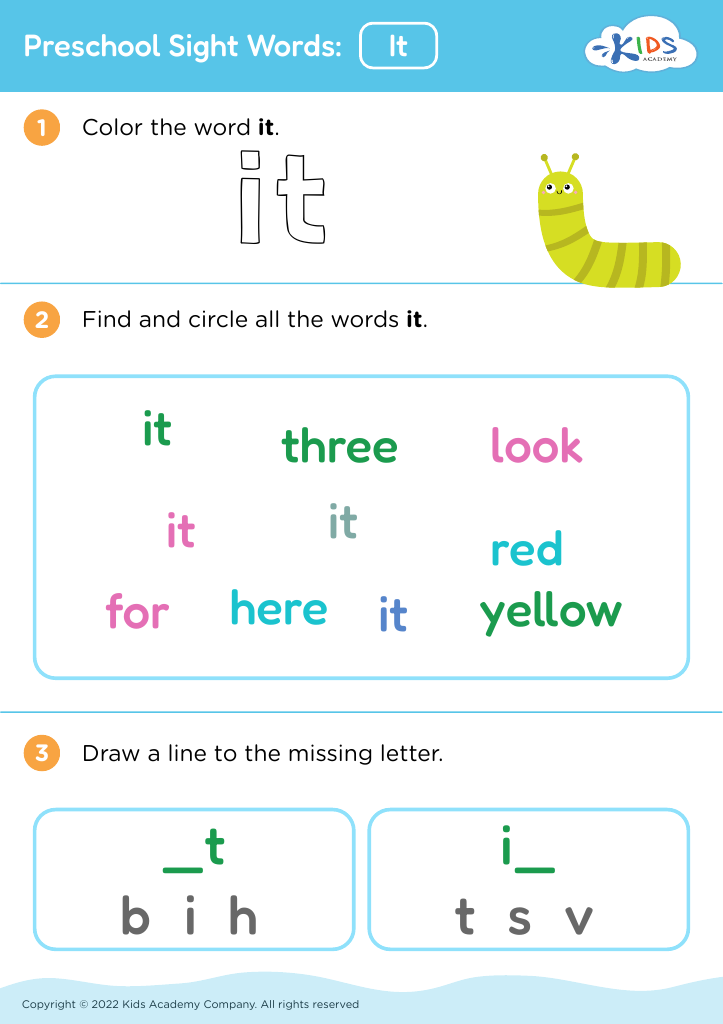
Unlock your child’s creativity and learning with our "Identify Colors Worksheets" designed for ages 5-7! These engaging printable worksheets help young learners master color recognition while having fun. Each activity is crafted to enhance observational skills and encourage artistic expression through various vibrant color exercises. From matching colors to coloring activities, your child will enjoy exploring the world of colors in a playful and interactive way. Perfect for both classroom use and at-home learning, our worksheets are an excellent resource for parents and educators looking to enrich early education. Download now and watch your child’s confidence in colors grow!
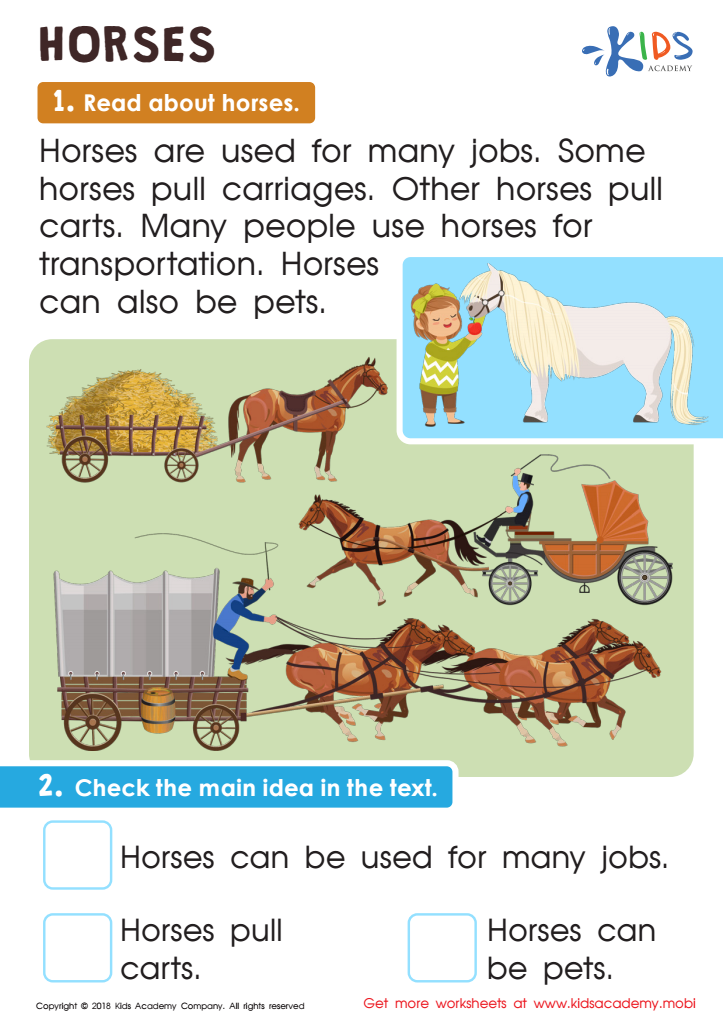
Horses Worksheet
 Assign to My Students







Identifying colors is a foundational skill for children aged 5 to 7, and it holds significant developmental importance that parents and teachers should recognize. First, color recognition enhances cognitive development; it helps children differentiate objects and understand their environment. When children learn to associate colors with things they see daily—like green for grass or red for apples—they build vocabulary and communication skills.
Moreover, color identification promotes creativity. It allows children to express themselves through art and play, enhancing fine motor skills and imaginative thinking. Recognizing colors can also bolster social interactions, as children engage in cooperative activities, describing and choosing colors together.
Additionally, the ability to identify colors taps into the early math skills that children will use later. For example, sorting objects by color introduces fundamental concepts of classification and comparison.
Finally, beyond cognitive and creative aspects, addressing color recognition fosters emotional intelligence. When children learn to appreciate the beauty in colors, they connect more deeply with their feelings and those of others. It’s crucial for parents and teachers to incorporate color-related activities, ensuring children advance not only academically but also socially and emotionally within their formative years.








