Improving mathematical skills Worksheets for Ages 5-7
5 filtered results
-
From - To
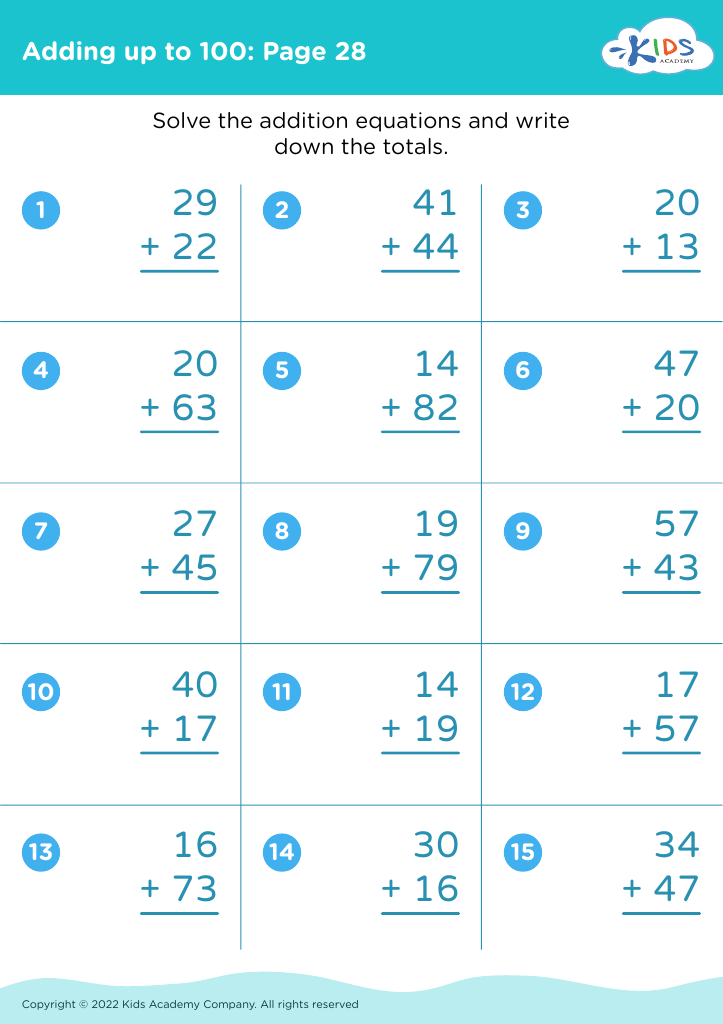
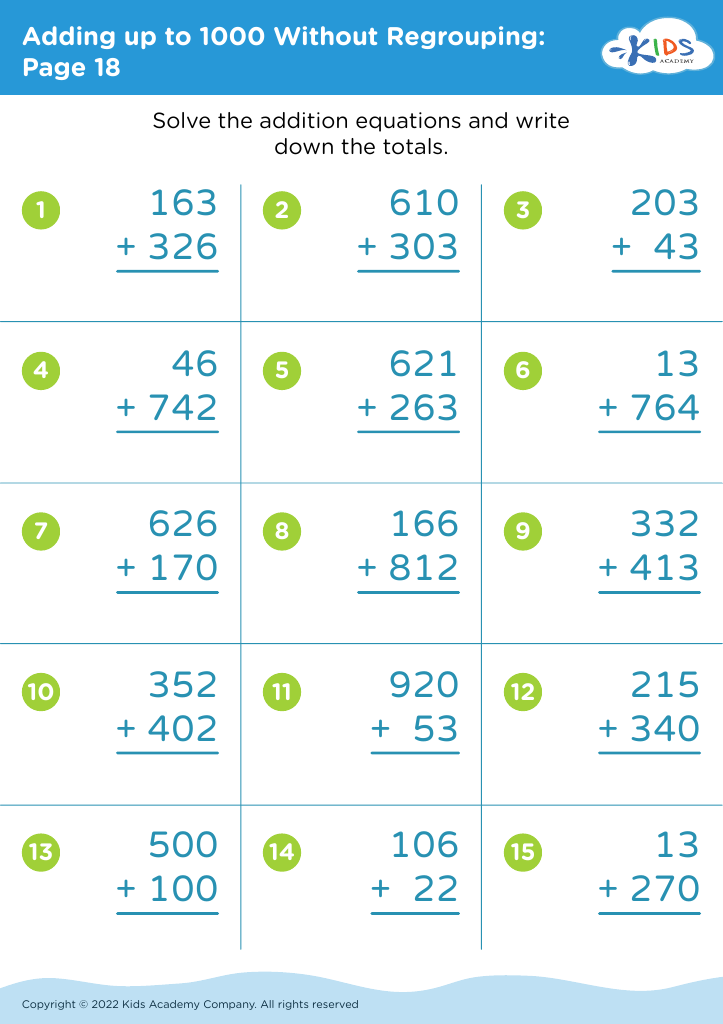
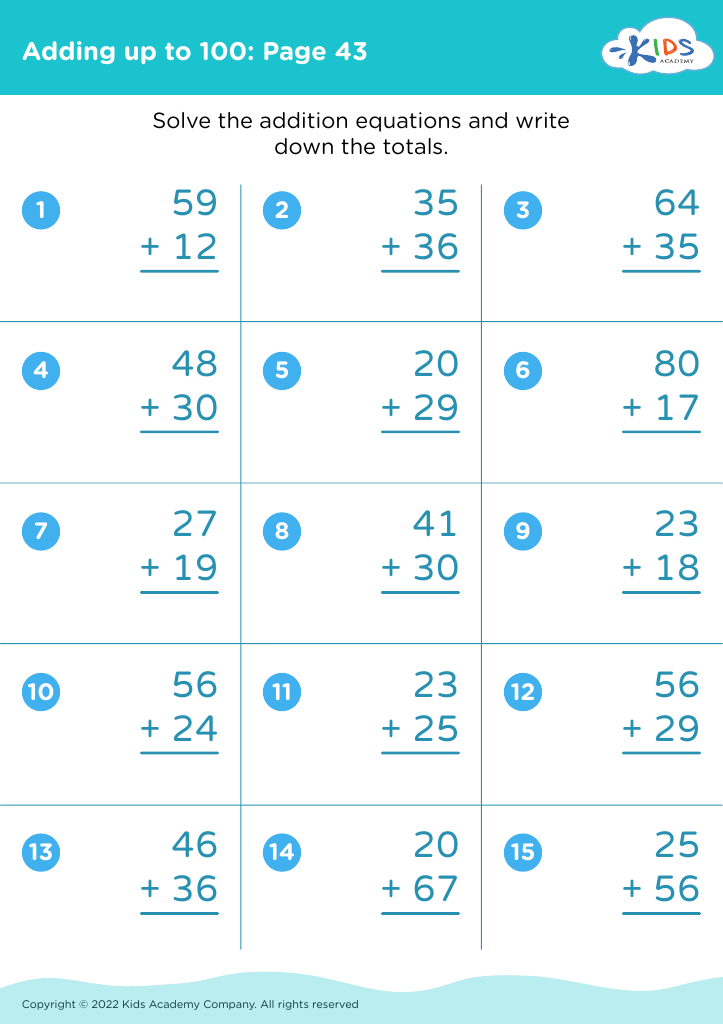
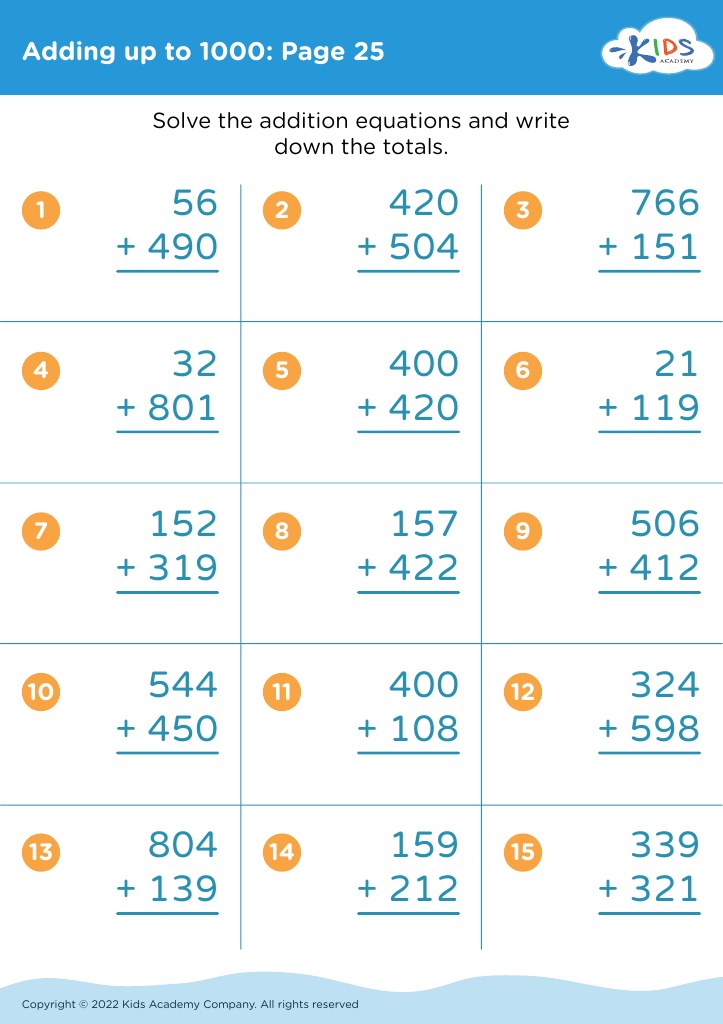
Unlock your child’s mathematical potential with our engaging and fun worksheets, designed specifically for ages 5-7. Our worksheets focus on building essential math skills, such as addition, subtraction, number patterns, and shape recognition. Each activity promotes critical thinking and problem-solving in a playful and educational format. Tailored to suit young learners, our worksheets ensure that mastering math becomes an enjoyable journey. Ideal for both classroom use and home practice, these resources are perfect for supporting your child’s learning and boosting their confidence in math. Explore now to give your child the foundation they need to excel in mathematics.
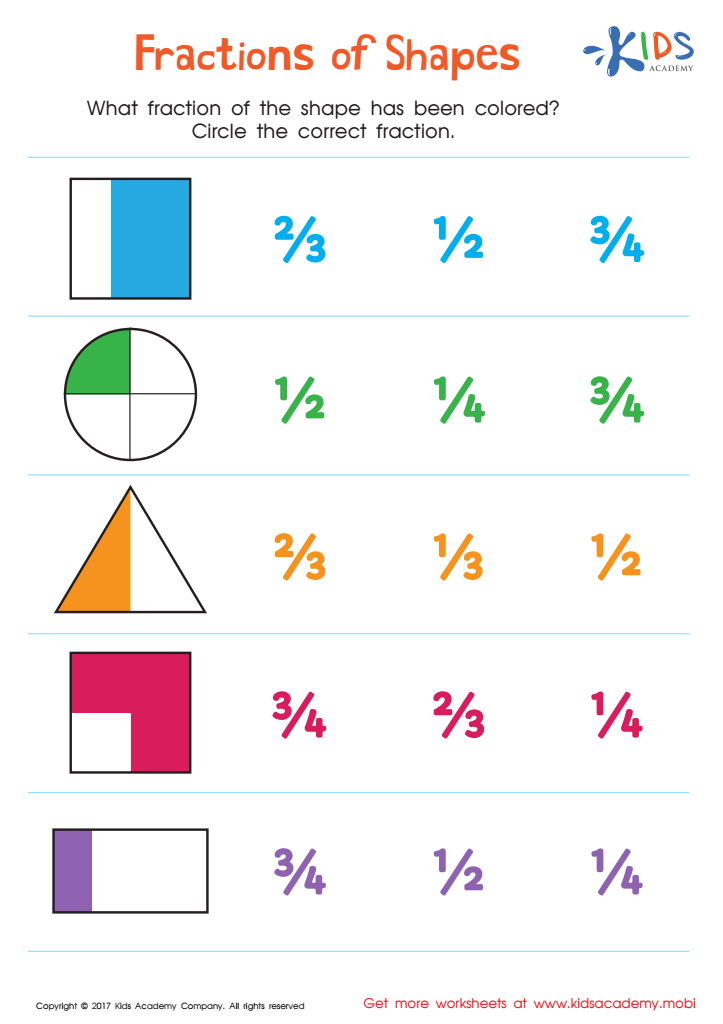
Fractions of Shapes: Math Concept Worksheet
 Assign to My Students








Improving mathematical skills for children ages 5-7 is crucial for building a strong foundation for future learning. During these early years, children's brains are highly receptive and capable of absorbing new concepts, making it an ideal time to introduce basic mathematical ideas. Math skills at this stage help in developing critical thinking and problem-solving abilities, which are not only essential for future academic success but also for everyday tasks.
Mastering early mathematical concepts such as counting, addition, and subtraction can boost a child's confidence and foster a positive attitude towards learning. These early experiences play a significant role in shaping a child's long-term academic trajectory. When parents and teachers emphasize the importance of math, children ideally see math as a fun and integral part of daily life.
Moreover, mathematical aptitude is foundational for future subjects like science, technology, engineering, and mathematics (STEM). Early proficiency in math can open doors to a wide range of educational and career opportunities.
Parents and teachers often serve as role models and primary sources of encouragement. By offering engaging activities and praising efforts and achievements in math, adults can instill a lifelong enthusiasm for the subject. Thus, investing in early math education is essential for nurturing well-rounded, capable, and resilient individuals.








