Introduction to mathematics Worksheets for Ages 5-7
3 filtered results
-
From - To
Welcome to our "Introduction to Mathematics Worksheets" for children ages 5-7! These engaging and interactive worksheets are designed to lay a solid foundation in early math concepts. Our resources cover essential skills such as number recognition, basic addition and subtraction, shapes, and simple problem-solving. Crafted with colorful visuals and playful themes, these worksheets aim to make learning math fun and enjoyable. Whether you're a teacher or parent, you'll find a variety of activities that foster critical thinking and boost confidence in young learners. Explore our collection and inspire a love for mathematics in your child today!
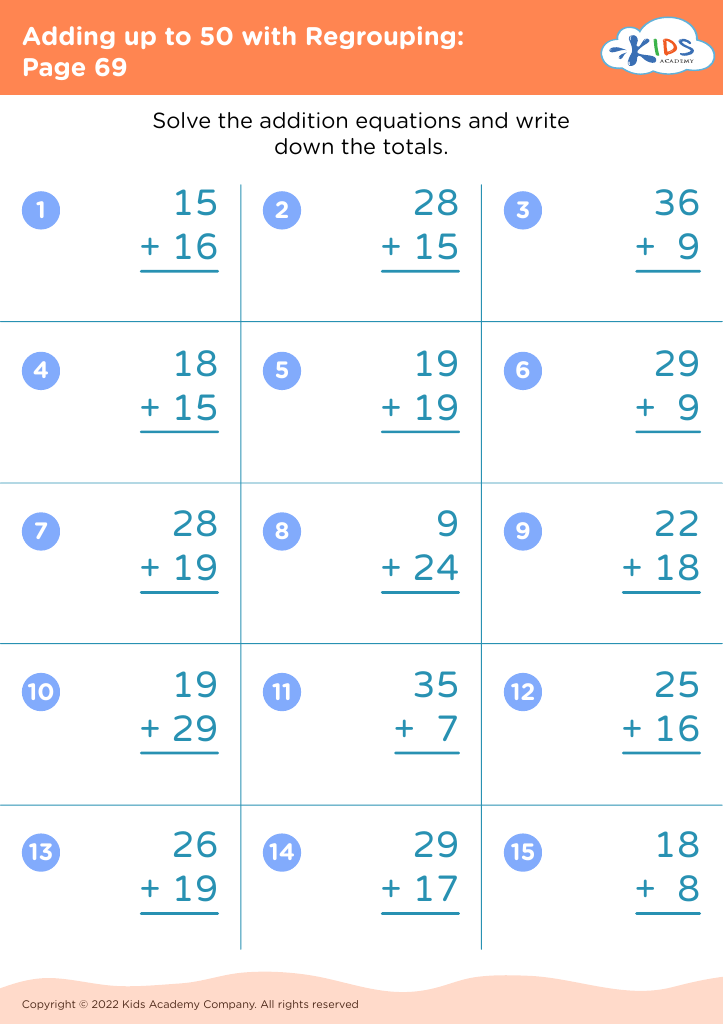
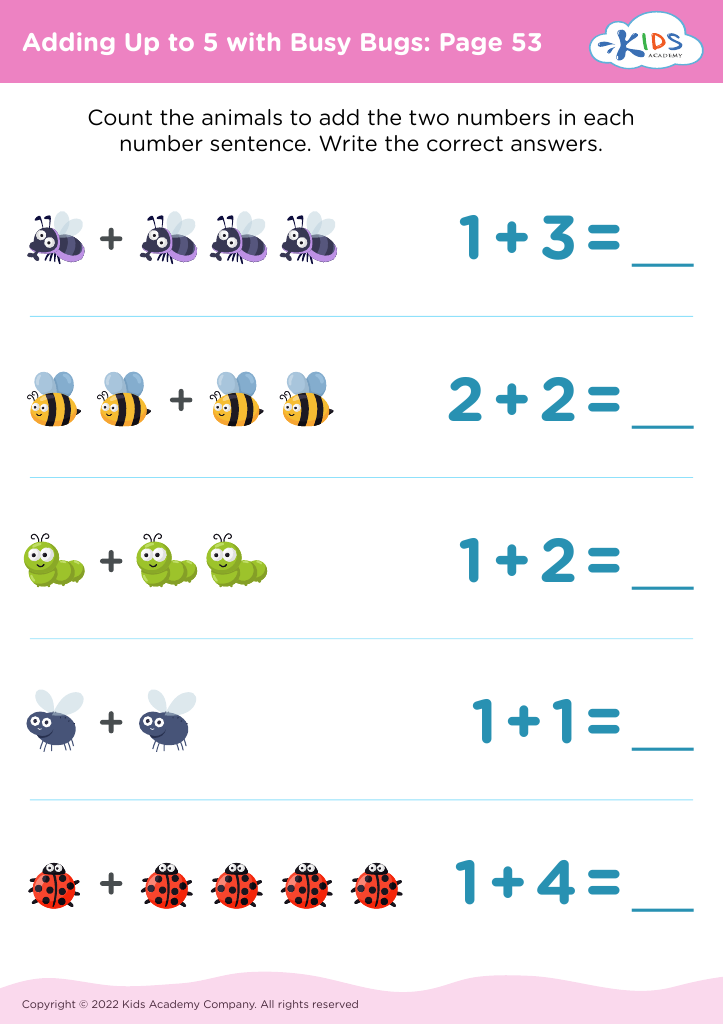
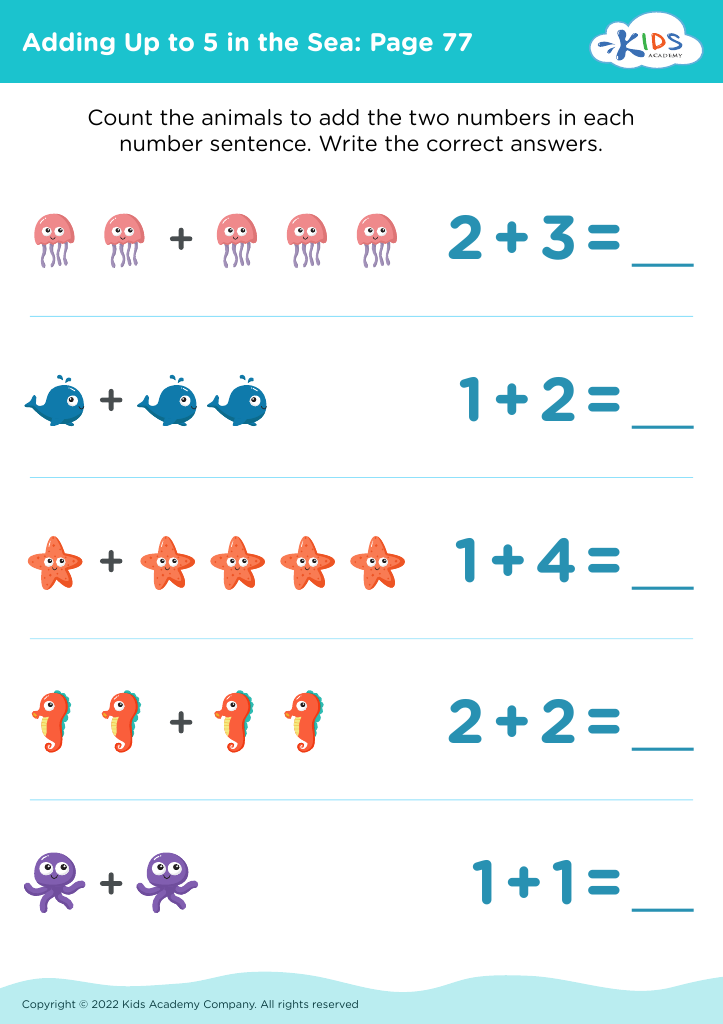








Introduction to mathematics for ages 5-7 is crucial for a child's cognitive development and future learning. At this early stage, children develop foundational skills that significantly influence their understanding of more complex mathematical concepts later on. By engaging young learners in introductory math, parents and teachers lay the groundwork for critical thinking, problem-solving, and early numeracy skills.
This age group typically shows curiosity and enthusiasm for learning, making it the perfect time to nurture their mathematical understanding. Early exposure to concepts like counting, patterns, shapes, and basic operations fosters a positive disposition toward mathematics, helping to combat math anxiety that can develop later.
Additionally, math is interconnected with other disciplines; it lies at the heart of science, technology, engineering, and even art. Proficient mathematical skills empower children to excel in varied subjects and real-life situations, enhancing their overall problem-solving abilities.
Furthermore, supporting young learners in mathematics at home and in school fosters collaborative learning experiences, strengthening parental involvement and reinforcing the importance of education. Overall, investing in early math education equips children with essential life skills and sets them on a path toward academic success and lifelong learning.








