
Learning scientific vocabulary Worksheets for Ages 5-7
3 filtered results
Difficulty Level
Grade
Age
-
From - To
Subject
Activity
Standards
Discover our engaging "Learning Scientific Vocabulary Worksheets" designed for children ages 5-7. These interactive resources help young learners explore the exciting world of science through age-appropriate vocabulary activities. Each worksheet is crafted to enhance reading comprehension and scientific understanding while making learning enjoyable. From matching terms to fun illustrations and simple definitions, children will develop their language skills in a playful manner. Perfect for both classroom and home use, these worksheets empower kids to confidently describe scientific concepts and engage with the natural world around them. Start your child's scientific journey today with these captivating learning tools!
Favorites
With answer key
Interactive
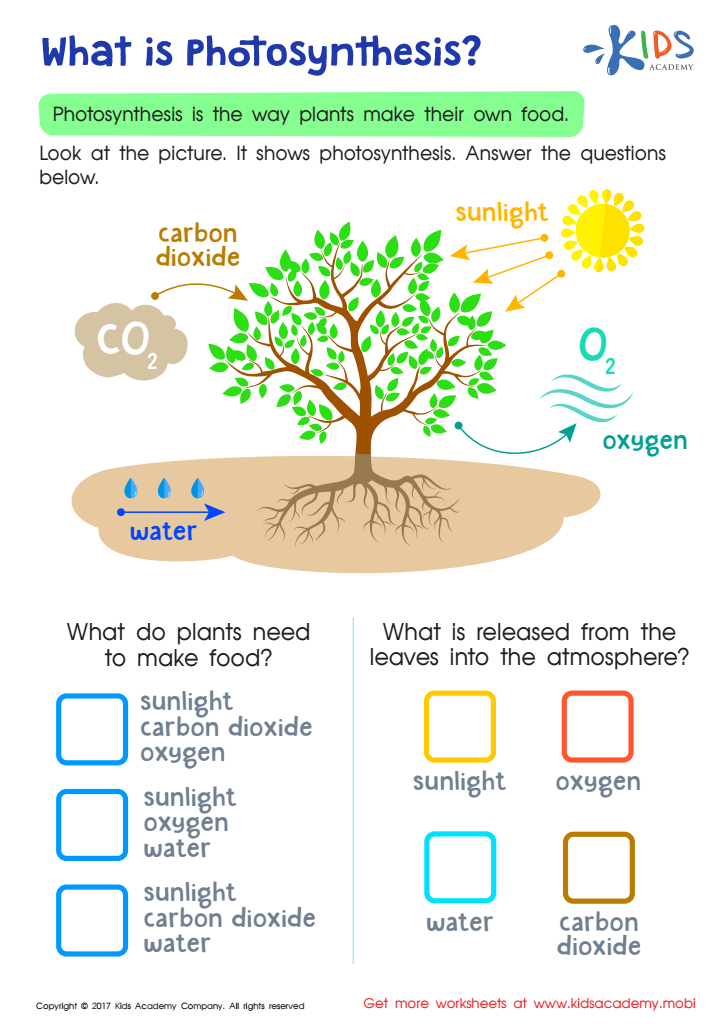
What is Photosynthesis Printable
Plants need to eat too; they make their own food from the air. Introduce them to photosynthesis with this fun worksheet!
 Assign to My Students
What is Photosynthesis Printable
Worksheet
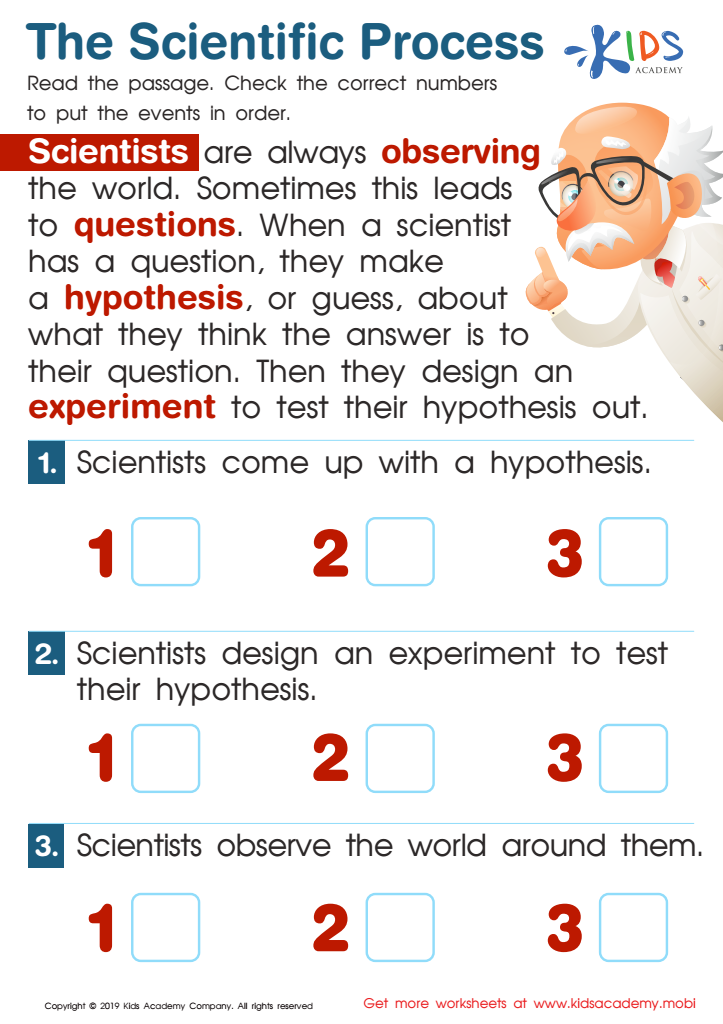
The Scientific Process Worksheet
Help your kids read the passage, then ask them to explain what they've learnt. Ask the questions and help put the events in order. Through this worksheet, your kids will learn more about science and practice reading skills. It's a fun way to explore science! (80 words)
The Scientific Process Worksheet
Worksheet
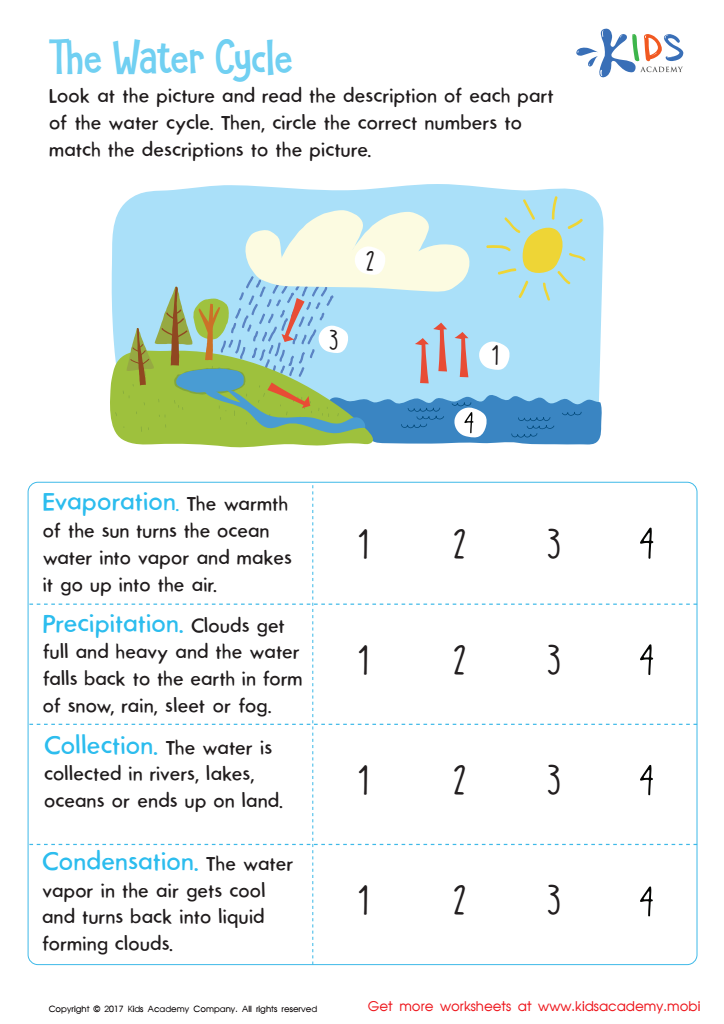
The Water Cycle Worksheet
Kids love science because it sparks their curiosity, so use this worksheet to introduce them to earth science and build a strong foundation for future learning.
The Water Cycle Worksheet
Worksheet
Learning Skills
Join Kids Academy for Free
Who is primarily going to use this learning content?








Learning scientific vocabulary for children ages 5-7 is crucial for several reasons, making it an important focus for both parents and teachers. First, acquiring a strong vocabulary in science helps young learners understand and express complex ideas about the world around them. This foundational knowledge enhances cognitive development and critical thinking skills, which are essential in all areas of learning.
Second, scientific vocabulary fosters curiosity and engagement. When children grasp key terms, they are more likely to ask questions, explore concepts, and communicate their thoughts, making science more relatable and accessible. This encouragement promotes a lifelong interest in exploration and discovery.
Furthermore, exposure to scientific vocabulary early on prepares students for more advanced concepts in later grades. As the curriculum becomes more challenging, students who are comfortable with terminologies are less likely to struggle with comprehension, promoting academic success.
Lastly, involving parents and teachers in this learning process supports a consistent reinforcement of vocabulary at home and school. Parents can engage children in simple discussions about everyday scientific phenomena, while teachers can create fun activities that emphasize vocabulary through play, experiments, and interactive learning. Together, they cultivate an environment that nurtures young scientists, empowering them to articulate their observations and ideas confidently.








