
Letter Tracing Practice Worksheets for Ages 5-7
14 filtered results
Difficulty Level
Grade
Age
-
From - To
Subject
Activity
Standards
Welcome to our Letter Tracing Practice Worksheets for Ages 5-7! Our engaging resources are designed to help young learners develop essential handwriting skills through fun and interactive tracing activities. Each worksheet features uppercase and lowercase letters, allowing children to practice strokes, letter formation, and improve their fine motor skills. Our printable worksheets are perfect for home or classroom use, providing endless opportunities for letter recognition and handwriting improvement. Ideal for early graders, these worksheets promote confidence and proficiency in writing. Download our letter tracing practice worksheets today and watch your child's writing skills flourish!
Favorites
With answer key
Interactive
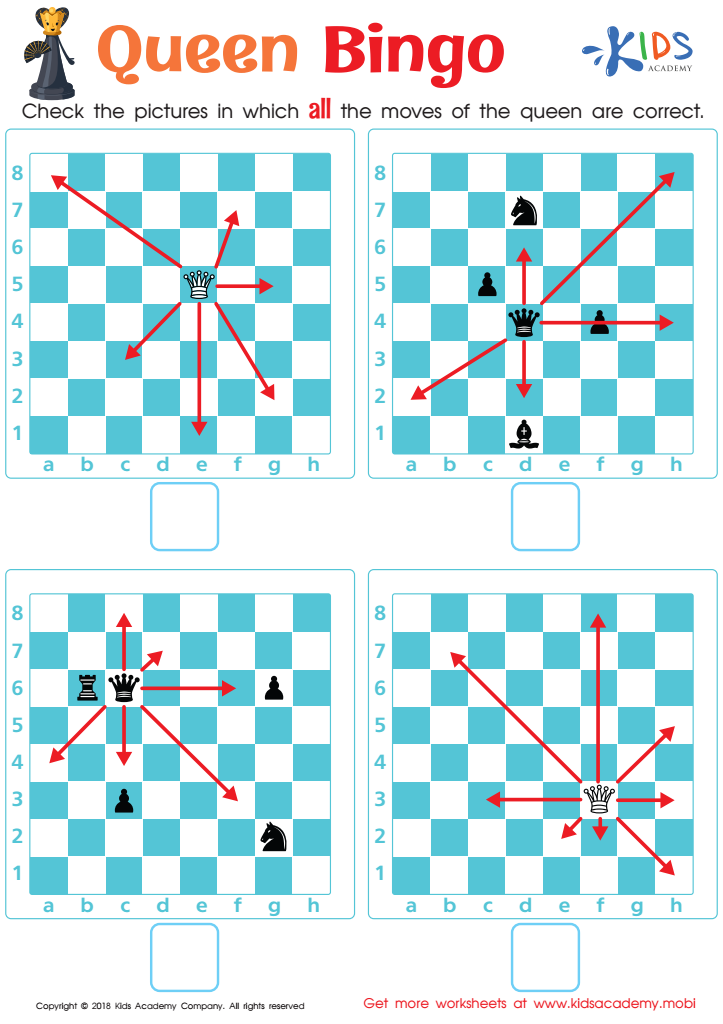
Queen Bingo Worksheet
Test your child's knowledge of chess rules and moves with this free worksheet! Kids look at four pictures and must decide if the queen moves are correct. This exercise helps hone your little one's chess skills!
Queen Bingo Worksheet
Worksheet
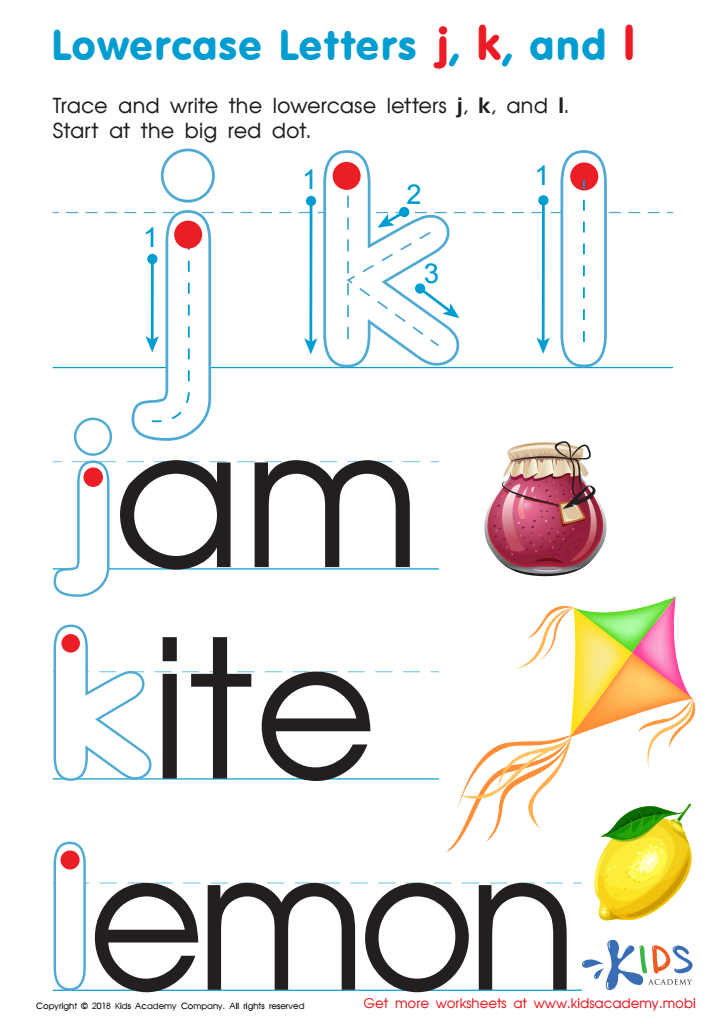
Lowercase Letters j k l Worksheet
Teach your child the difference between uppercase and lowercase letters. Have them trace and write the lowercase letters j, k, and l, starting at the red dot. Guide your child's hand to form the letters correctly.
Lowercase Letters j k l Worksheet
Worksheet
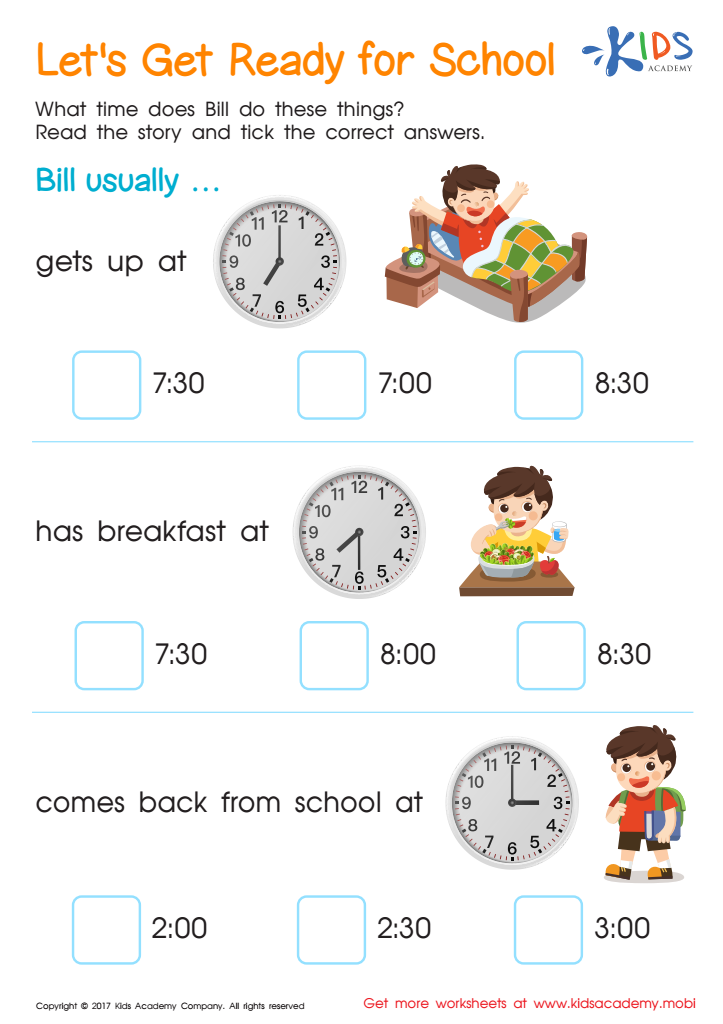
Lets Get Ready For School Time Printable
Believe it or not, kids today are struggling with reading traditional clocks. This vital skill shouldn't be lost, so why not try this fun telling time worksheet to get ready for school? Don't miss out!
Lets Get Ready For School Time Printable
Worksheet
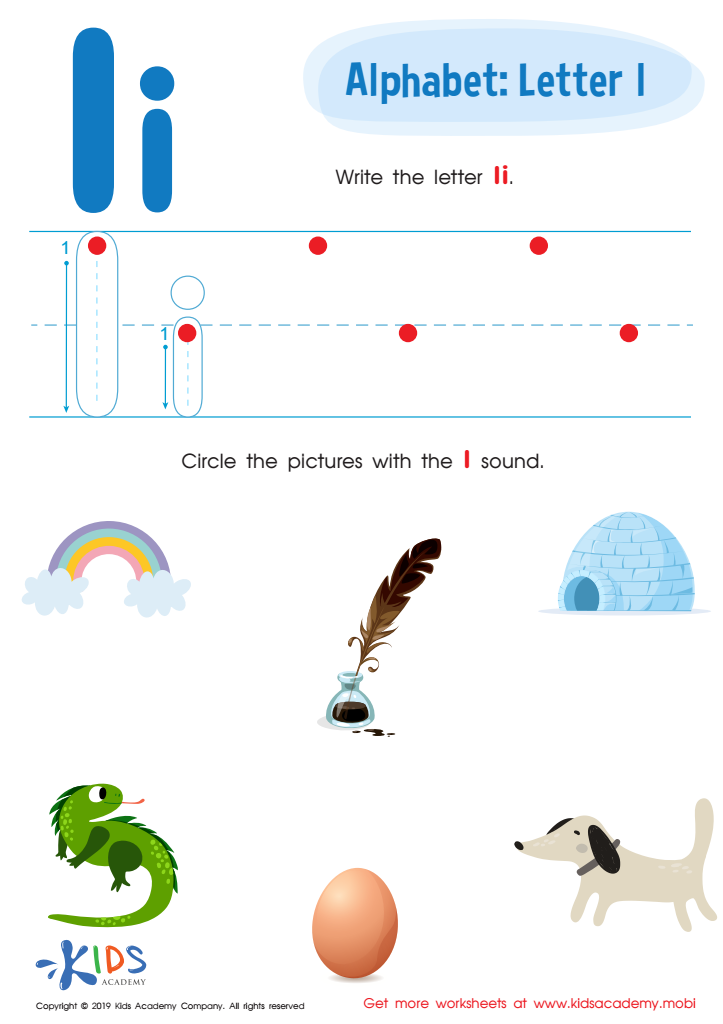
Letter I Tracing Worksheet
Kids can hone tracing, writing and identifying skills for the letter 'I' with this worksheet. Whether visual or reading/writing learners, every child can benefit from the tasks - tracing, writing and circling objects beginning with 'I'. This free sheet will soon get preschoolers confident with the 'I' letter!
Letter I Tracing Worksheet
Worksheet
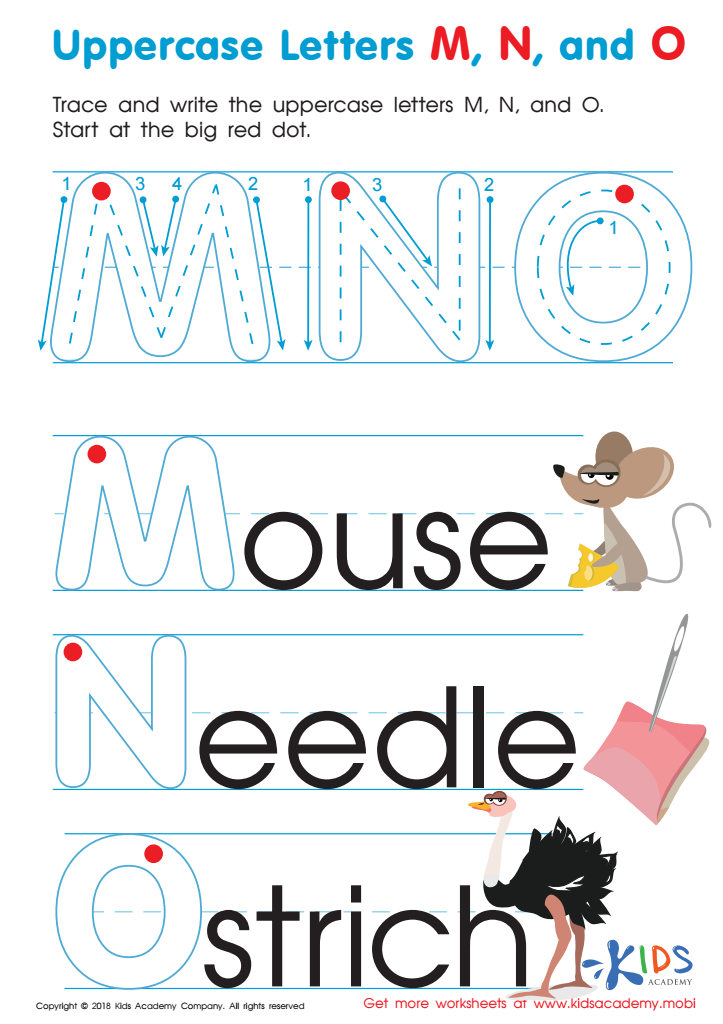
Uppercase Letters M, N, and O Worksheet
Download our easy-to-understand worksheet to help kids write M and N with ease! They'll trace dotted lines and follow arrows as they fill in the letters using a big red dot as a guide. The cute graphics will help them remember sounds too! Get your child writing quickly and confidently with this fun activity.
Uppercase Letters M, N, and O Worksheet
Worksheet
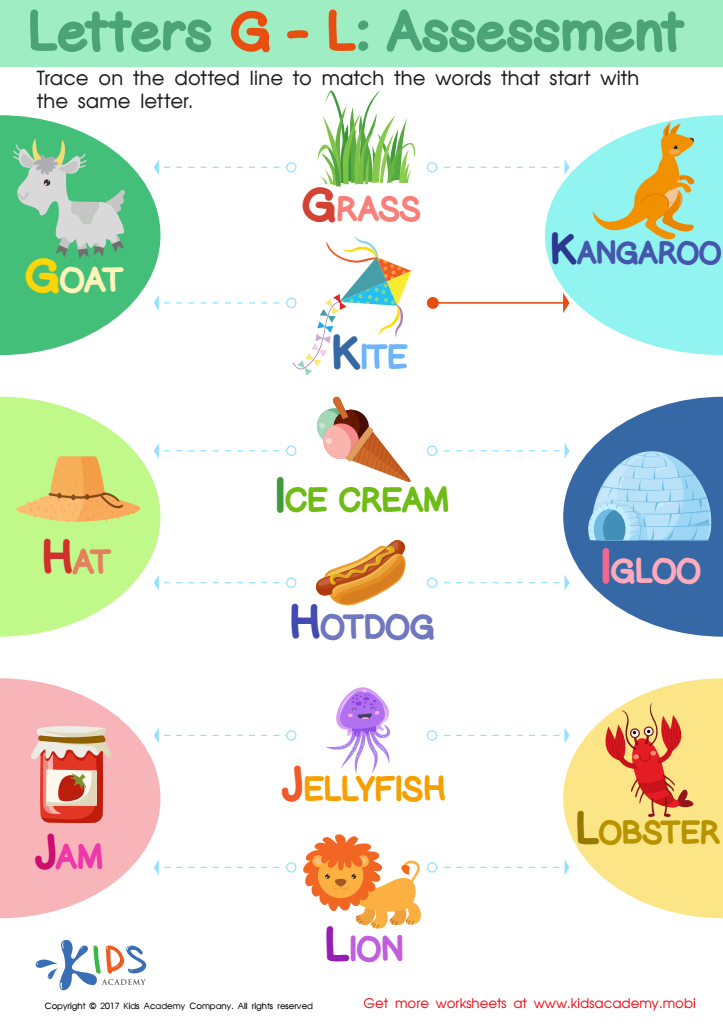
Letters G-L Worksheet
This fun worksheet helps preschoolers develop reading and phonics skills. It gets kids to match G-L words that start with the same letter, making it engaging and educational.
Letters G-L Worksheet
Worksheet
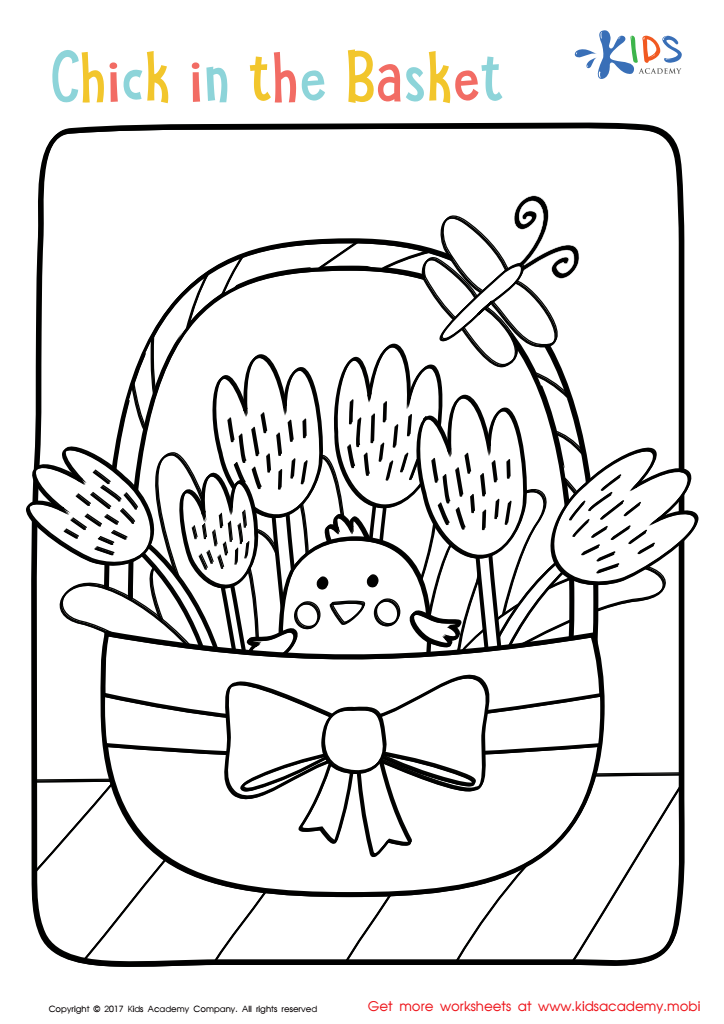
Easter: Chick in the Basket Worksheet
Kids love Easter morning when they wake up to a basket full of goodies! Let them get creative and learn something new with this Easter chick coloring page! It's perfect to use while they wait for the Easter bunny, and talk about the symbolism of chicks and baskets. They'll have fun learning and creating a wonderful image to decorate!
Download (PDF)
 Assign to My Students
Assign to My Students
Easter: Chick in the Basket Worksheet
Worksheet
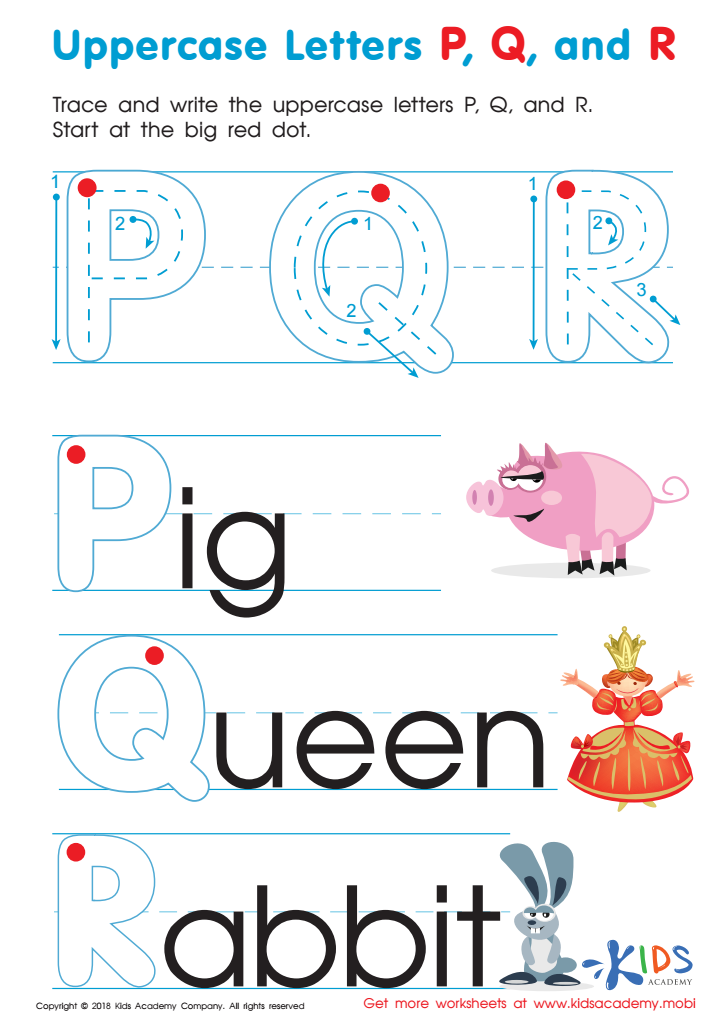
Uppercase Letters P, Q, and R Worksheet
Cute images of a pig, queen and rabbit make it fun to learn letter sounds. Follow the arrows to learn the strokes, then trace each letter from the big red dot. Perfect for kids to learn how to read and write P, Q, and R!
Uppercase Letters P, Q, and R Worksheet
Worksheet
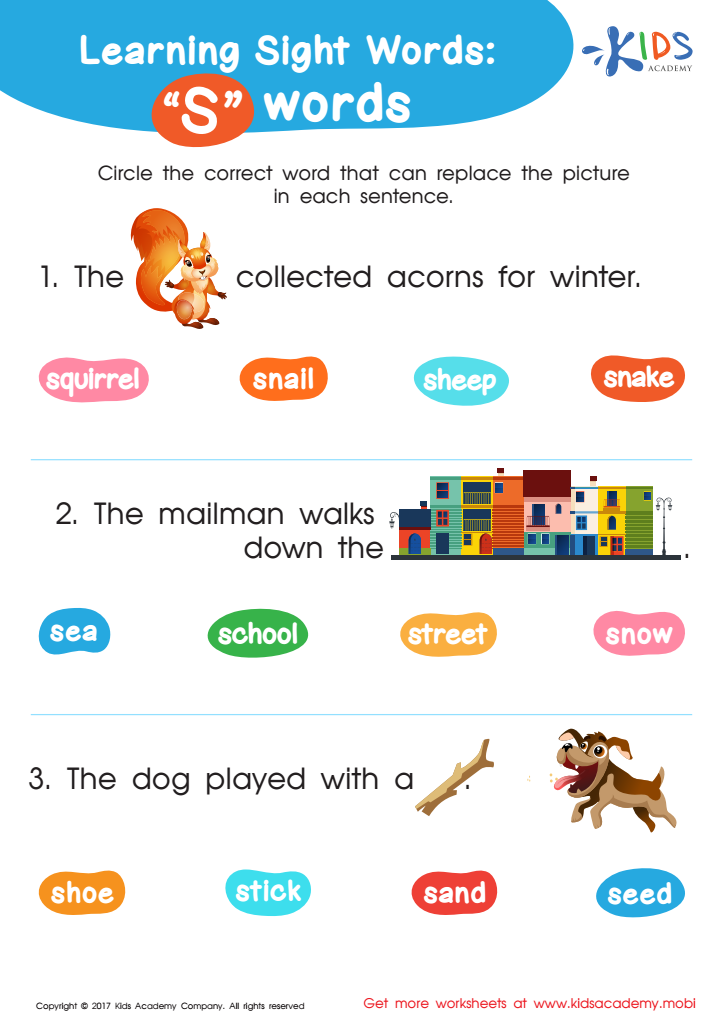
S Words Sight Words Worksheet
This 2nd grade worksheet encourages kids to practice using context clues when identifying sight words that begin with 's'. Engage them with colorful pictures to enhance the learning, helping them to understand the context of each sentence and choose the correct word.
S Words Sight Words Worksheet
Worksheet
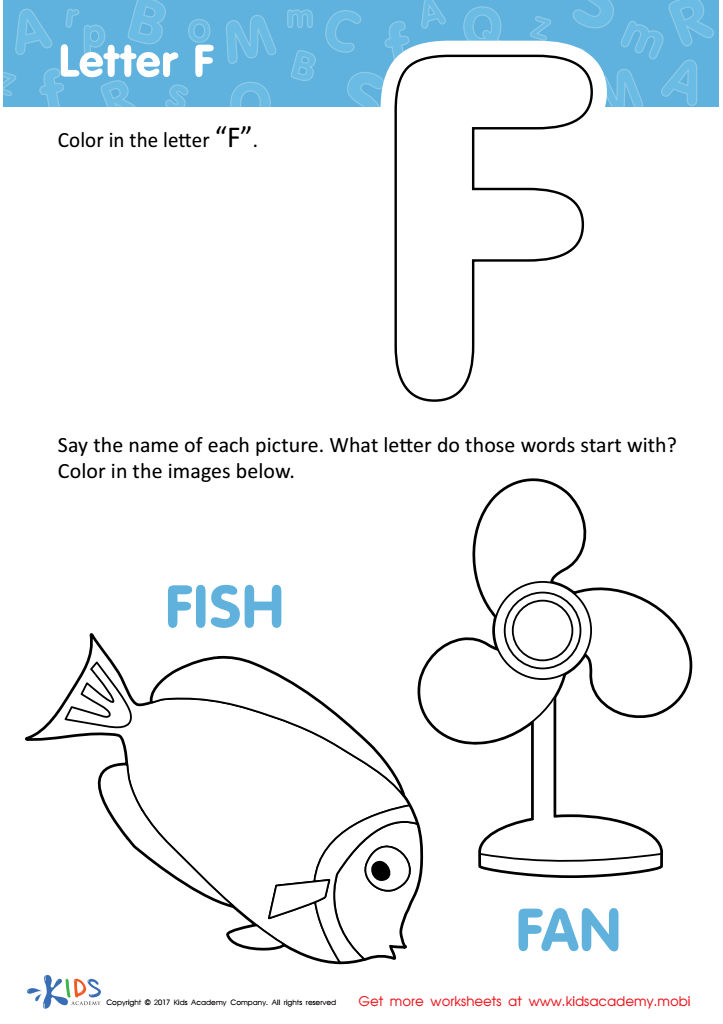
Letter F Coloring Sheet
Coloring pages help kids learn to recognize letters and sounds. Our "F" page has kids color a fish and a fan. It's a great way to introduce them to the letter "F" using words they already know.
Download (PDF)
Assign to My Students
Assign to My Students
Letter F Coloring Sheet
Worksheet
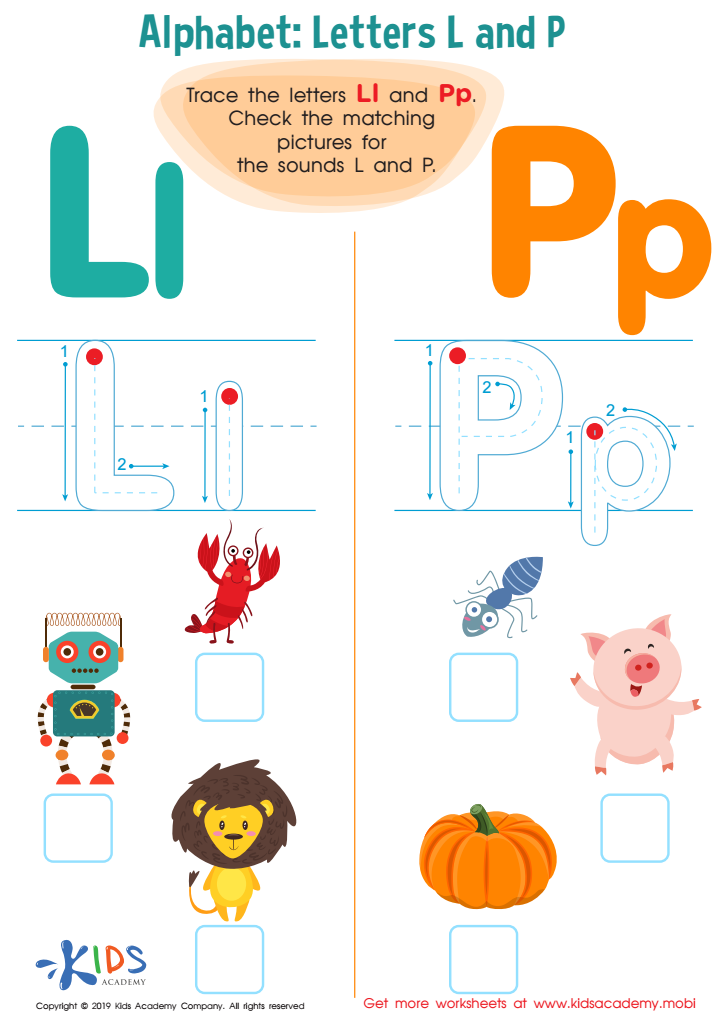
Letter L and P Tracing Worksheet
This traceable worksheet can motivate your students to learn and practice core skills. They'll trace the letters 'L' and 'P' and identify the pictures next to them. With this exercise, they'll unlock their learning abilities and excel in the subject!
Letter L and P Tracing Worksheet
Worksheet
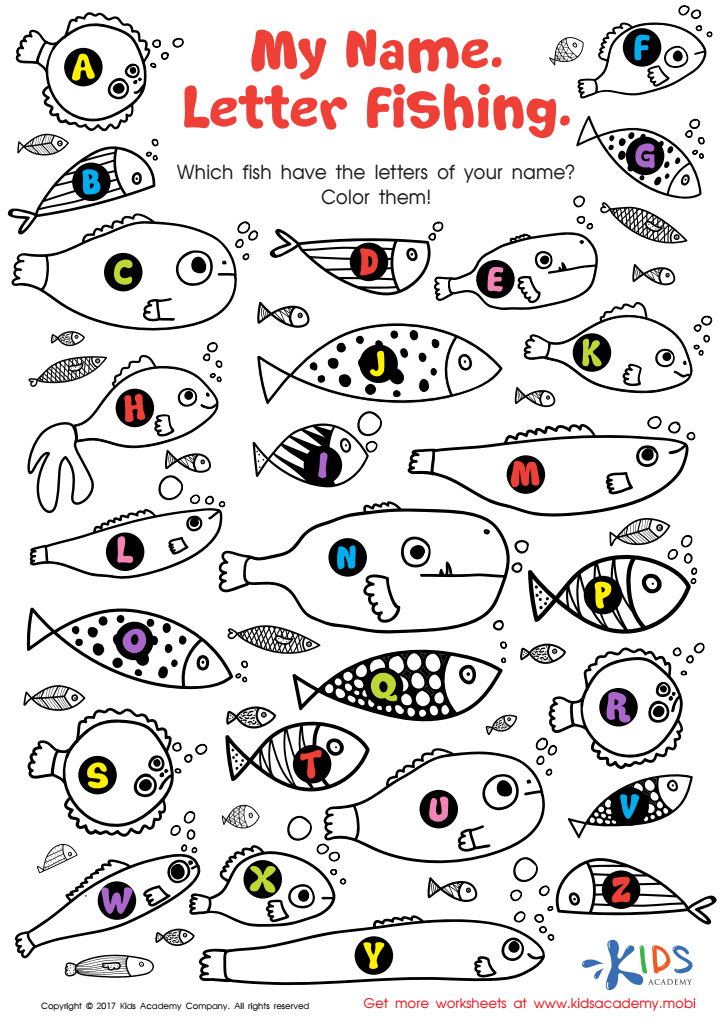
My Name: Letter Fishing Worksheet
Dive into the deep sea and search for fish with a letter on them. Can you find all the letters from your name? Color your favorite fish with crayons and be creative! On the other side, use the letters you found to write your name. Have fun coloring and finding the letters of your name! (80 words)
Download (PDF)
Assign to My Students
Assign to My Students
My Name: Letter Fishing Worksheet
Worksheet
Join Kids Academy for Free
Who is primarily going to use this learning content?








Letter tracing practice is essential for children aged 5-7 as it lays the foundation for successful literacy and writing skills. During these formative years, children develop fine motor skills necessary for holding a pencil, forming letters, and eventually writing words. Tracing helps them understand the shapes and structures of letters, reinforcing their recognition and recall.
Moreover, letter tracing builds confidence in young learners. When children can effectively trace letters, they feel a sense of achievement, which motivates them to engage further with writing and literacy activities. This practice also enhances cognitive development, as children learn the visual and spatial aspects of letters.
Parents and teachers should also recognize the link between letter tracing and greater phonetic awareness. As children trace letters, they learn to associate the shapes with sounds, creating a stronger connection to language. This can significantly boost their reading skills as they progress.
Furthermore, incorporating letter tracing into fun and engaging activities can make learning enjoyable, fostering a positive attitude toward education. Overall, supporting letter tracing practice equips children with crucial skills that not only benefit their writing abilities but also shape their lifelong learning experiences. All these reasons make it a valuable activity for both teachers and parents to encourage.








