Money management Worksheets for Ages 5-7
4 filtered results
-
From - To
Welcome to our Money Management Worksheets for Ages 5-7! These engaging and interactive worksheets are designed to introduce young learners to the basics of currency and financial literacy. Our resources include fun activities that teach children how to identify coins and bills, understand their values, and make simple transactions. With colorful illustrations and age-appropriate exercises, kids will develop essential money management skills while enjoying the learning process. Perfect for classroom settings or at-home practice, these worksheets help to lay a solid foundation for responsible financial habits. Start your child's money management journey today with our fun and educational worksheets!

Grocery Store Worksheet
 Assign to My Students
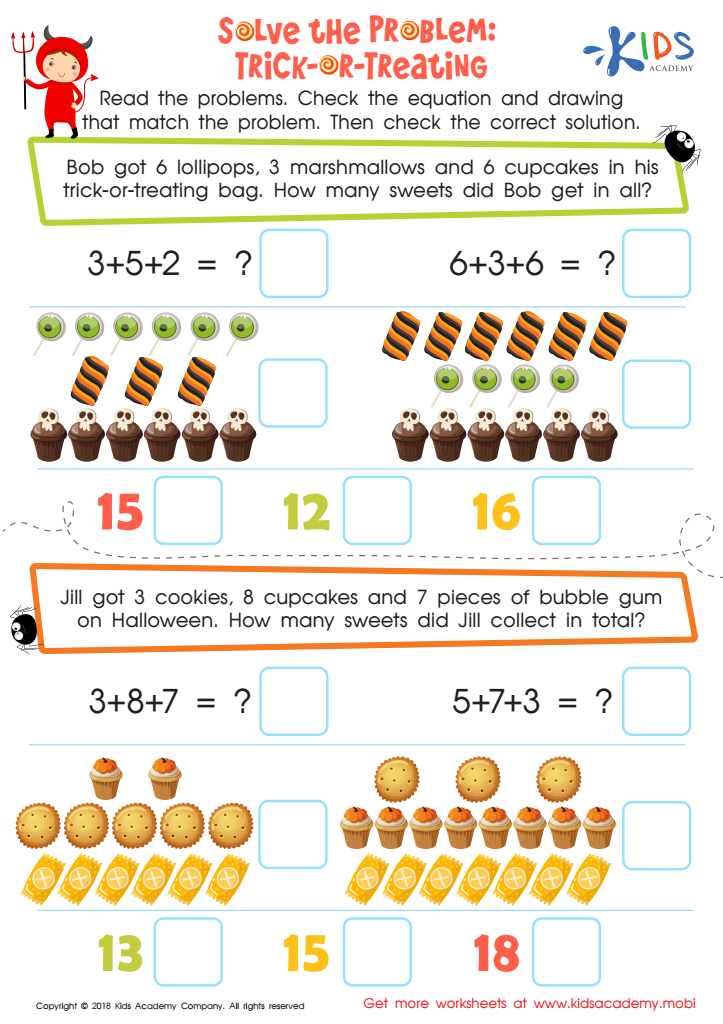
Solve the Problem: Trick–or–treating Worksheet

Subtracting: Groceries with Georgio Worksheet

Promotion Practice Worksheet



.jpg)




Teaching money management to children aged 5-7 lays the foundation for responsible financial behavior in later life. At this age, children are naturally curious and eager to learn, making it an ideal time to introduce basic concepts of finances, such as saving, spending, and sharing.
First, early financial education fosters a sense of responsibility. When children understand that money is a limited resource, they begin to appreciate the value of goods and services. This understanding helps them make informed choices about spending and saving.
Moreover, money management skills promote goal-setting. For instance, when children want to purchase a toy, parents and teachers can guide them to save their allowance or earn money through chores, imparting lessons in patience and delayed gratification. This also instills a sense of accomplishment and empowerment when they reach their financial goals.
Lastly, learning about money management encourages discussions about sharing and generosity. Parents and teachers can teach children the importance of using their money to help others, cultivating empathy and community awareness from a young age.
Ultimately, instilling these concepts fosters confident, responsible, and compassionate individuals who will grow into financially savvy adults. Early money management education sets children up for future financial success and stability.








