Musical instruments recognition Worksheets for Ages 5-7
3 filtered results
-
From - To
Introduce your young learners to the vibrant world of music with our "Musical Instruments Recognition Worksheets for Ages 5-7." These engaging printable worksheets are designed to help children identify various musical instruments while enhancing their cognitive and listening skills. Through fun activities and colorful illustrations, your little ones will learn to recognize and name instruments from different families such as strings, winds, and percussion. Perfect for at-home learning or in the classroom, these worksheets will inspire a love for music and spark curiosity in budding musicians. Download today and start the thrilling journey of musical discovery!
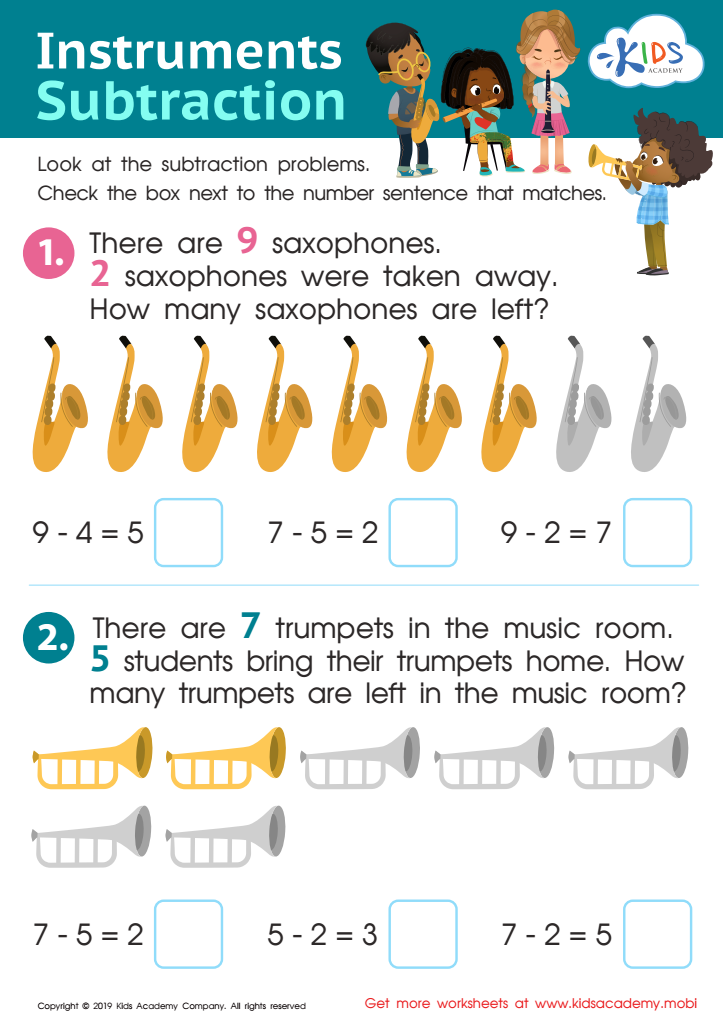
Instrument Subtraction Worksheet
 Assign to My Students
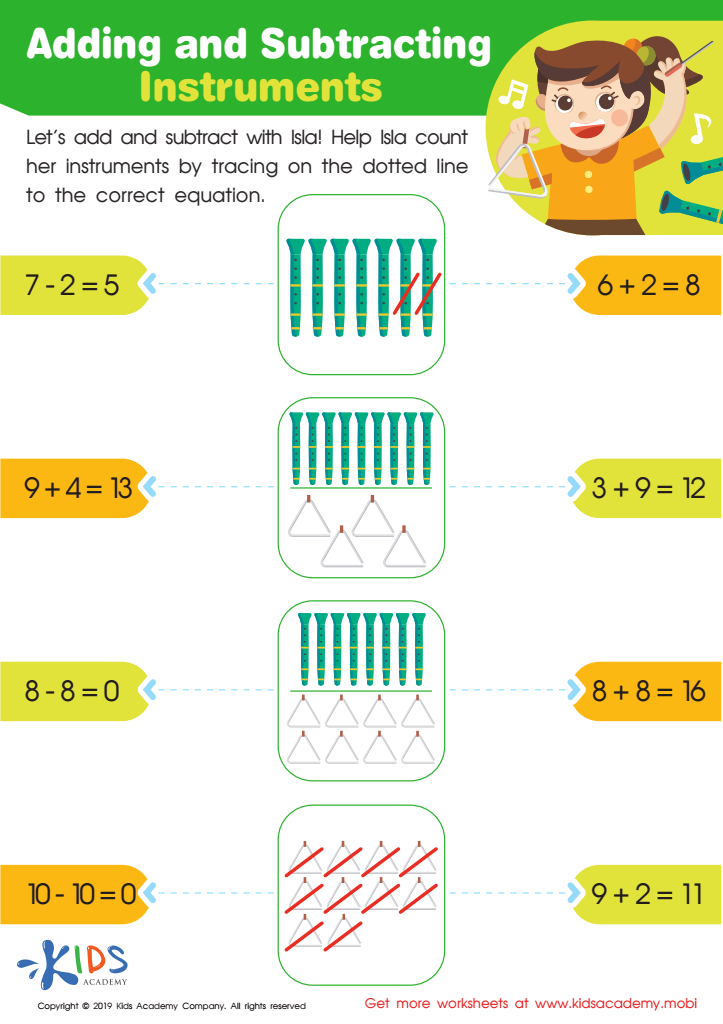
Adding and Subtracting: Instruments Worksheet
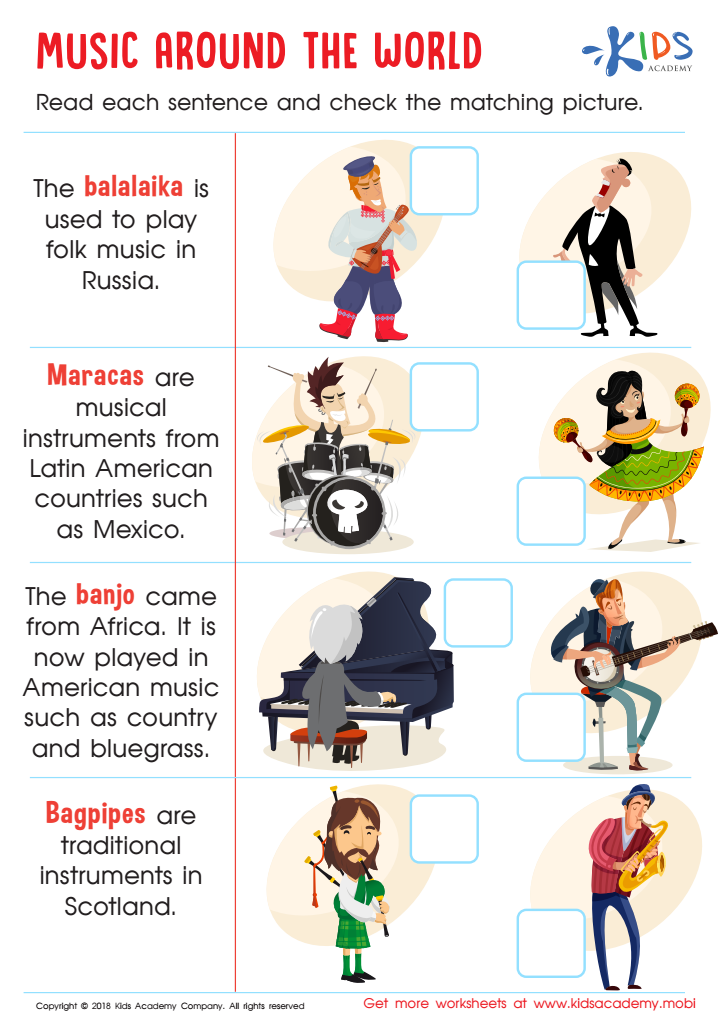
Music Around the World Worksheet







Understanding and recognizing musical instruments at an early age offers numerous benefits that parents and teachers should value. For children aged 5-7, engaging with musical instruments can significantly enhance cognitive development. When young minds are introduced to different instruments, they learn to distinguish between various sounds, tones, and rhythms, fostering better auditory discrimination skills. This lays the groundwork for strong language and reading abilities.
In addition to cognitive benefits, musical instruments can be a gateway to developing fine motor skills. Playing instruments like the piano or violin requires precise finger movements and hand-eye coordination. Such activities strengthen these essential skills, which are transferable to other everyday tasks.
Social and emotional growth is another key aspect where music plays a pivotal role. Participating in group music activities, like playing in a band or orchestra, teaches children the concepts of teamwork, cooperation, and sharing. These experiences help them build essential social skills and understand the importance of collaboration.
Moreover, self-esteem and confidence receive a boost as children gain proficiency and receive praise for their efforts. Successfully recognizing and playing instruments leads to a sense of achievement, which can positively impact other areas of their lives.
In sum, musical instrument recognition and engagement not only enlarge a child's world aesthetically but also contribute positively to their comprehensive developmental phases, making it a valuable focus for both parents and educators.








