Number sequence learning Worksheets for Ages 5-7
3 filtered results
-
From - To
Explore our engaging Number Sequence Learning Worksheets designed specifically for children aged 5-7! These fun, interactive activities help young learners understand the concept of number sequences through puzzles, coloring pages, and pattern completion challenges. By mastering number sequences, children develop essential math skills that lay the groundwork for future learning. Our worksheets are suitable for homeschooling, classroom use, or supplemental practice to make learning numbers enjoyable. With clear instructions and vibrant visuals, these resources captivate children's interest while reinforcing educational concepts. Start your child’s journey to math confidence today with our thoughtfully crafted number sequence worksheets!
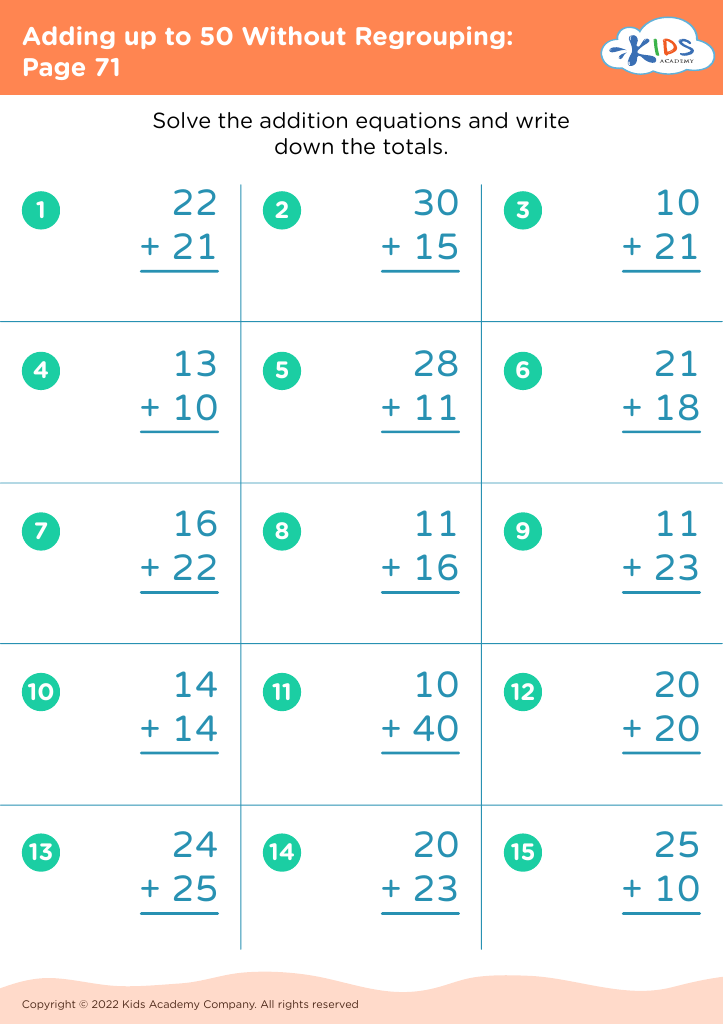
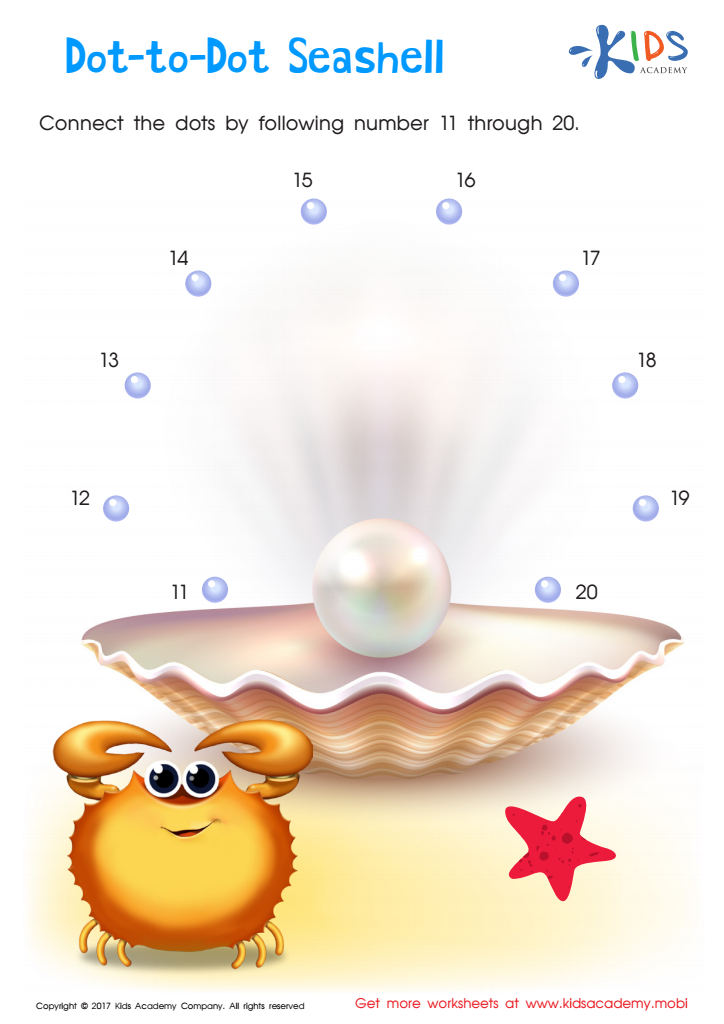
Ordering 11–20: Dot–to–dot Seashell Printable
 Assign to My Students
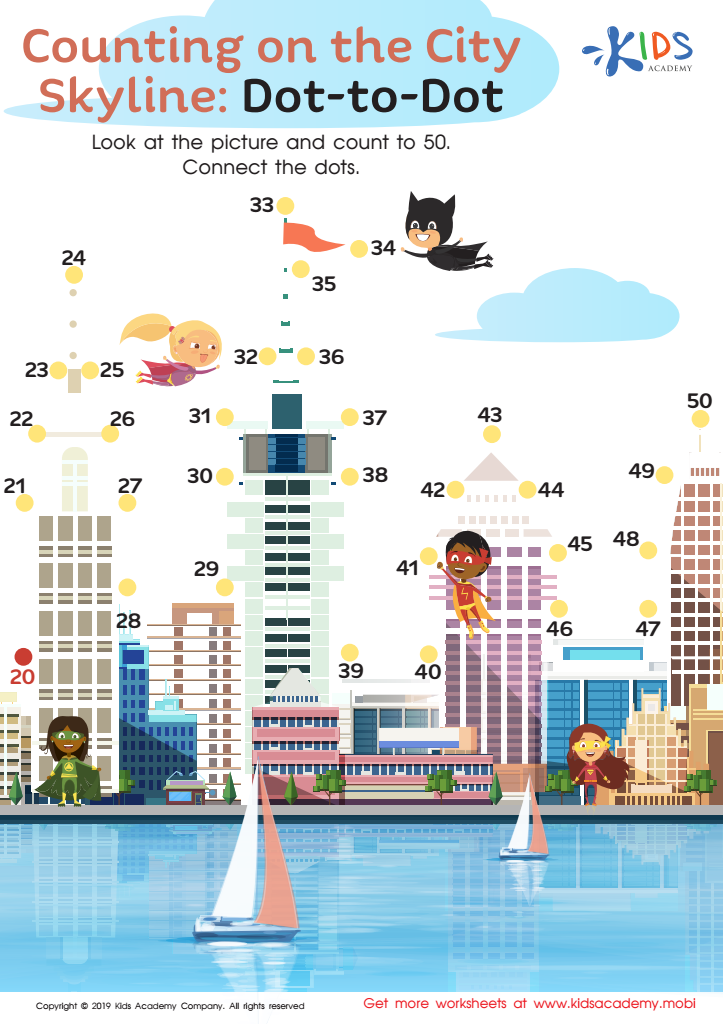
Counting on the City Skyline: Dot-to-Dot Worksheet








Number sequence learning is a fundamental building block for mathematical understanding in children aged 5-7. During this critical period, children develop their early numeracy skills, which serve as a foundation for future math concepts. Understanding number sequences enables children to identify patterns, develop problem-solving skills, and recognize the relationships between numbers.
Parents and teachers should care about number sequence learning because it enhances cognitive development. Mastering sequences aids in developing strong mathematical fluency, which is essential for performing basic arithmetic operations, such as addition and subtraction. Furthermore, sequencing activities can improve memory and concentration, as children learn to recall and manipulate numbers in various contexts.
In addition, number sequence learning fosters confidence in math. When children grasp these concepts, they are more likely to engage positively with mathematical challenges, which can influence their attitudes towards math in later years. Moreover, collaborating on sequence activities promotes bonding opportunities for parents and children, enriching their learning experience.
Ultimately, supporting number sequence learning early on equips children with vital skills that lay the groundwork for academic success and a positive lifelong relationship with mathematics.








