
Phonemic awareness Worksheets for Ages 5-7
3 filtered results
Difficulty Level
Grade
Age
-
From - To
Subject
Activity
Standards
Help your child master the building blocks of reading with our engaging Phonemic Awareness Worksheets for ages 5-7. Tailored to develop critical early reading skills, these worksheets make learning fun through activities that focus on recognizing and manipulating sounds. With vibrant illustrations and interactive exercises, kids will delight in improving their phonemic awareness as they gain confidence in their ability to decode more advanced words. Our meticulously crafted resources support progressive learning, preparing young learners for future reading success. Excellent for both homeschooling and classroom settings, these worksheets offer a comprehensive toolkit for cultivating phonemic brilliance in early readers!
Favorites
With answer key
Interactive
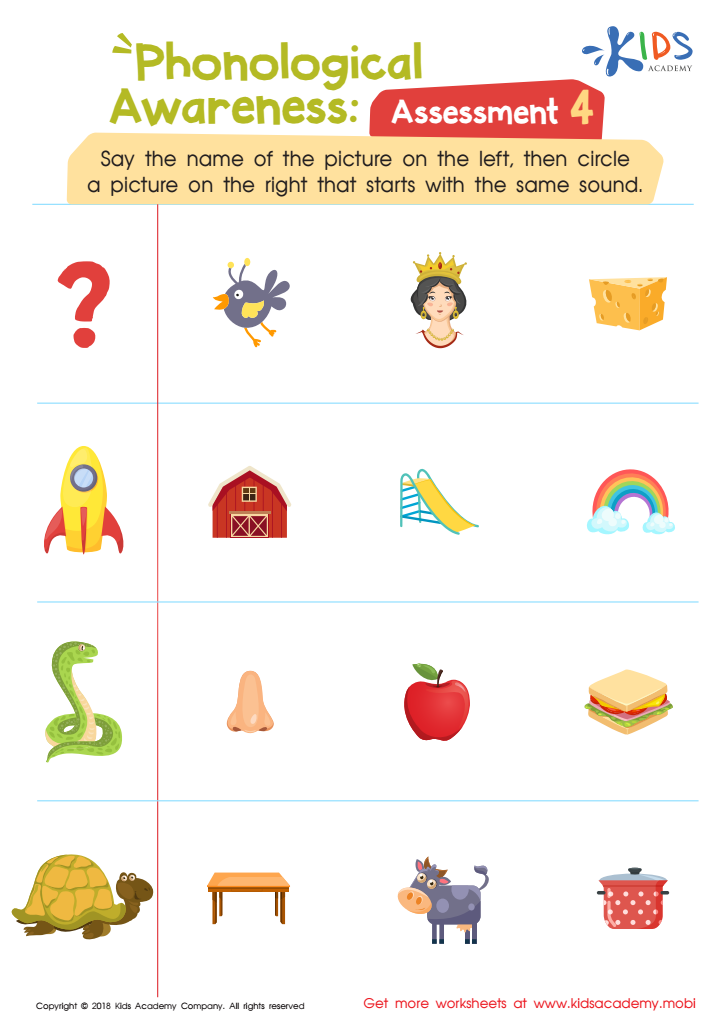
Phonological Awareness: Assessment 4 Worksheet
It can be tricky for young readers to differentiate between sounds in words. Make it fun with this downloadable worksheet! Ask your child to name each picture on the left and match the starting sound with an image on the right. This helps assess their phonics skills and make learning enjoyable.
 Assign to My Students
Phonological Awareness: Assessment 4 Worksheet
Worksheet
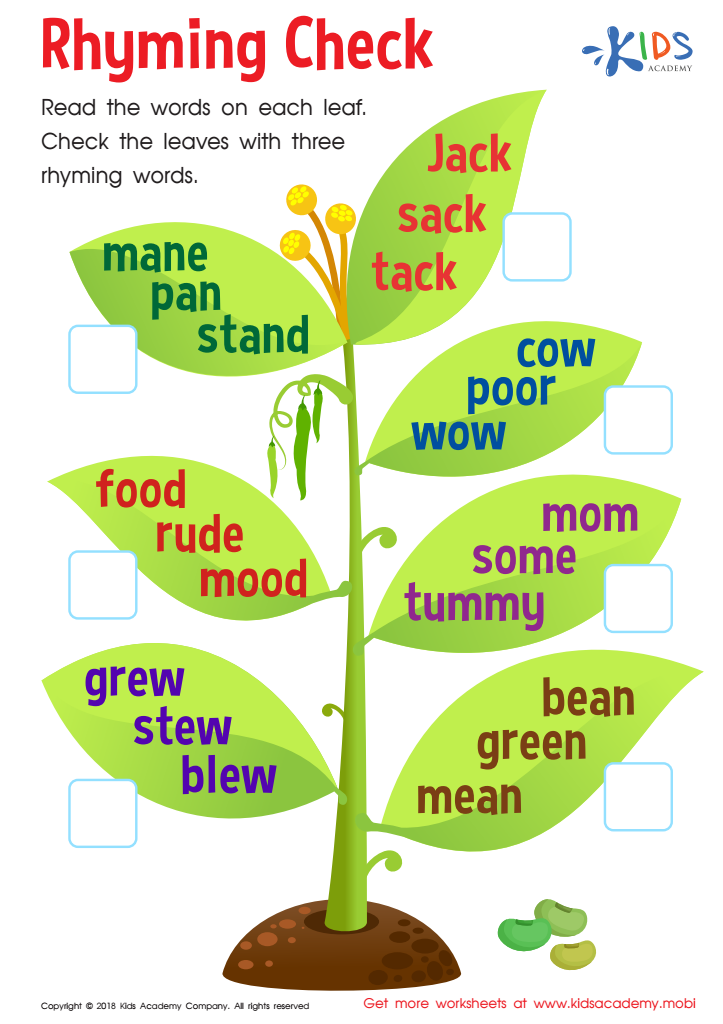
Rhyming Check Worksheet
Help your child read the words on each leaf of a worksheet. Make sure they know that spellings can be misleading and tricky. When finished, ask them to identify the leaves with three rhyming words. This exercise helps their pronunciation skills and encourages critical thinking.
Rhyming Check Worksheet
Worksheet
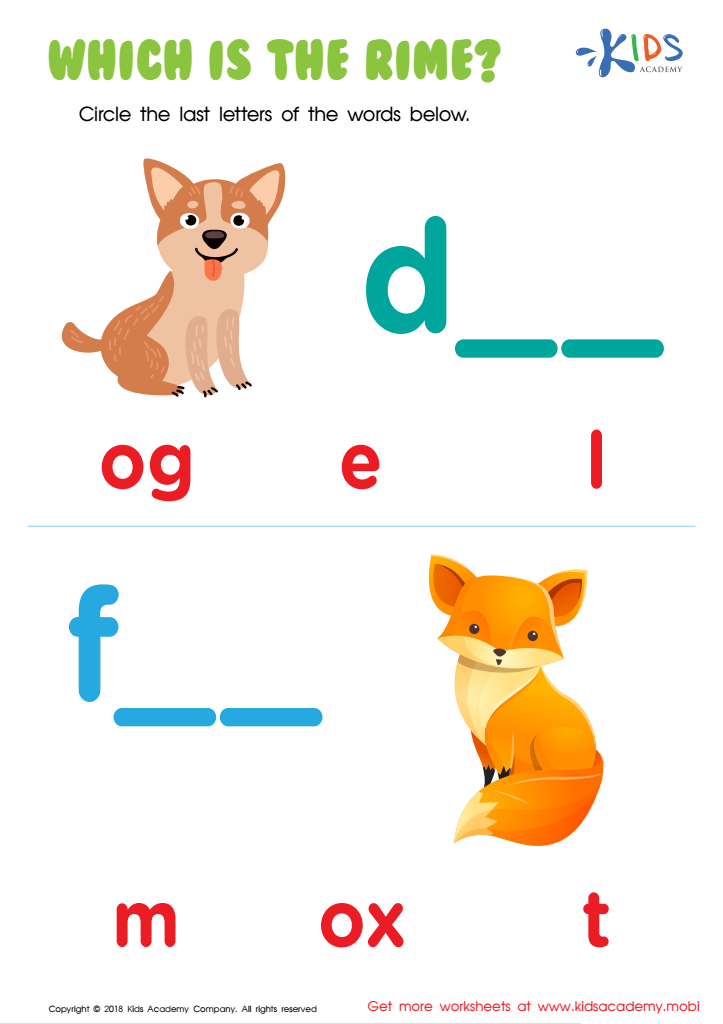
Which Is the Rime? Worksheet
Beginning readers benefit from rimes that aid letter familiarity, recognition, and spelling. With this fun PDF worksheet, kids can identify and spell the correct word for each image by circling the last letter. This activity develops fine motor skills as well.
Which Is the Rime? Worksheet
Worksheet
Join Kids Academy for Free
Who is primarily going to use this learning content?







Phonemic awareness refers to the ability to hear, identify, and manipulate individual sounds—known as phonemes—in spoken words. This skill is crucial for young learners, particularly between ages 5-7, as it underpins successful reading and writing development. Parents and teachers should care about phonemic awareness for several reasons.
Firstly, it acts as a foundation for reading. Before children can understand written words, they need to understand that words are made up of individual sounds. Learning to recognize these sounds enables them to connect letters with their corresponding sounds (phonics), a critical step toward decoding words when reading.
Secondly, strong phonemic awareness can significantly impact a child’s ability to spell. When children understand how sounds form words, they begin to predict how words may be written. This understanding makes spelling less of a memorization task and more an application of their phonemic skills.
Moreover, phonemic awareness has been linked to overall language proficiency, which includes better comprehension and expressive language skills. Research has shown that early intervention and phonemic awareness training can lead to improved literacy outcomes and academic performance.
For these reasons, fostering phonemic awareness in children between the ages of 5-7 prepares them for a lifetime of effective communication and successful learning experiences, laying a strong foundation for all future educational endeavors.








