
Phonetics understanding Worksheets for Ages 5-7
4 filtered results
Difficulty Level
Grade
Age
-
From - To
Subject
Activity
Standards
Enhance your child's reading skills with our engaging Phonetics Understanding Worksheets designed specifically for ages 5-7. These worksheets offer a fun and interactive way to help young learners grasp the sounds of letters and improve their phonemic awareness. Featuring colorful illustrations and playful activities, children will enjoy identifying sounds, matching letters, and connecting phonetics to everyday words. Our carefully crafted exercises not only build foundational literacy skills but also foster a love for language. Perfect for classroom use or at-home practice, these worksheets are an essential resource for parents and teachers looking to support early literacy development in a creative and enjoyable manner.
Favorites
With answer key
Interactive
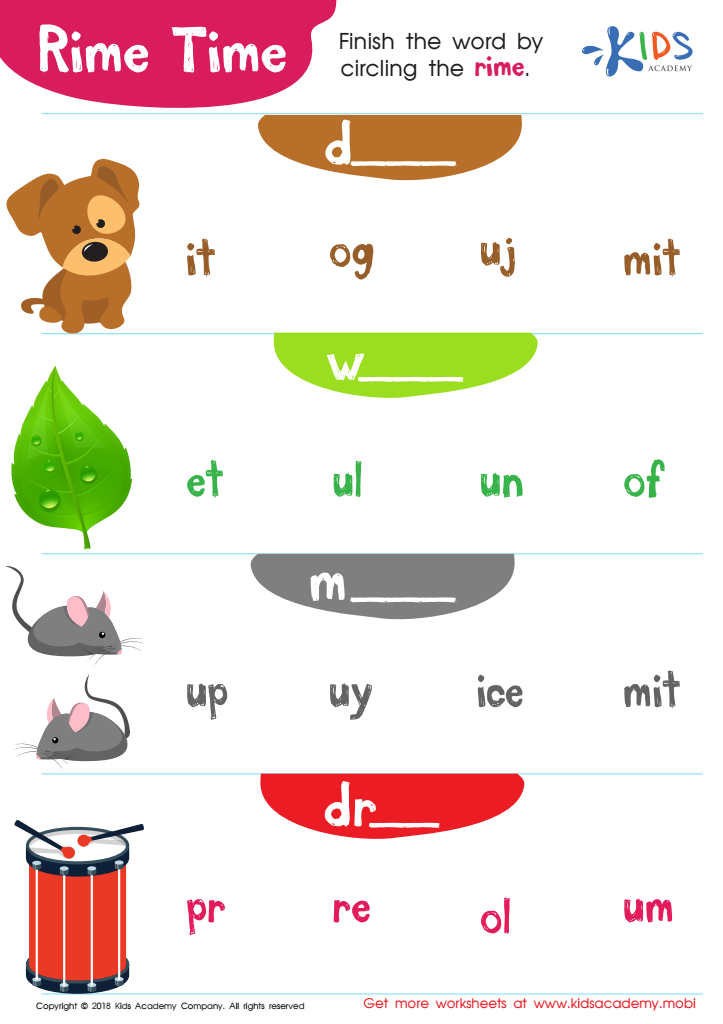
Rime Time Worksheet
This free PDF worksheet helps new and emerging readers identify rimes (the letters after initial consonants) and practice fine motor skills. Kids trace the correct rimes for each picture and increase their fluency and decoding skills with each one!
Rime Time Worksheet
Worksheet
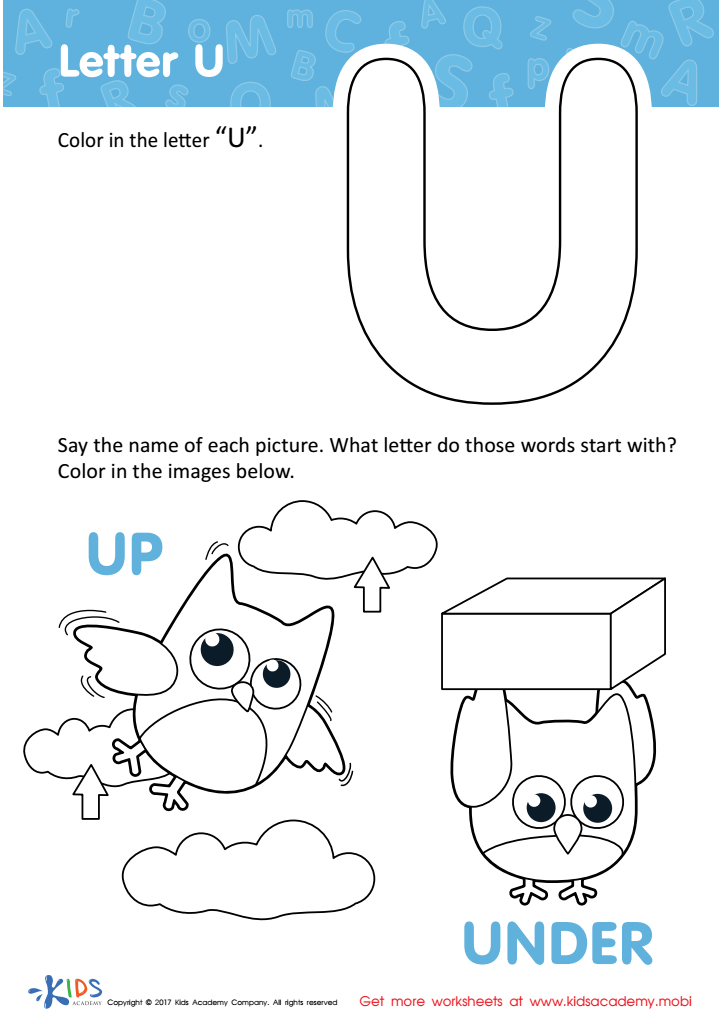
Letter U Coloring Sheet
This letter "U" coloring page helps your child learn two things at once - the letter "U" and positional words! An adorable owl character aids in understanding up and under. In a few strokes of a crayon, your child can master these concepts.
Download (PDF)
 Assign to My Students
Assign to My Students
Letter U Coloring Sheet
Worksheet
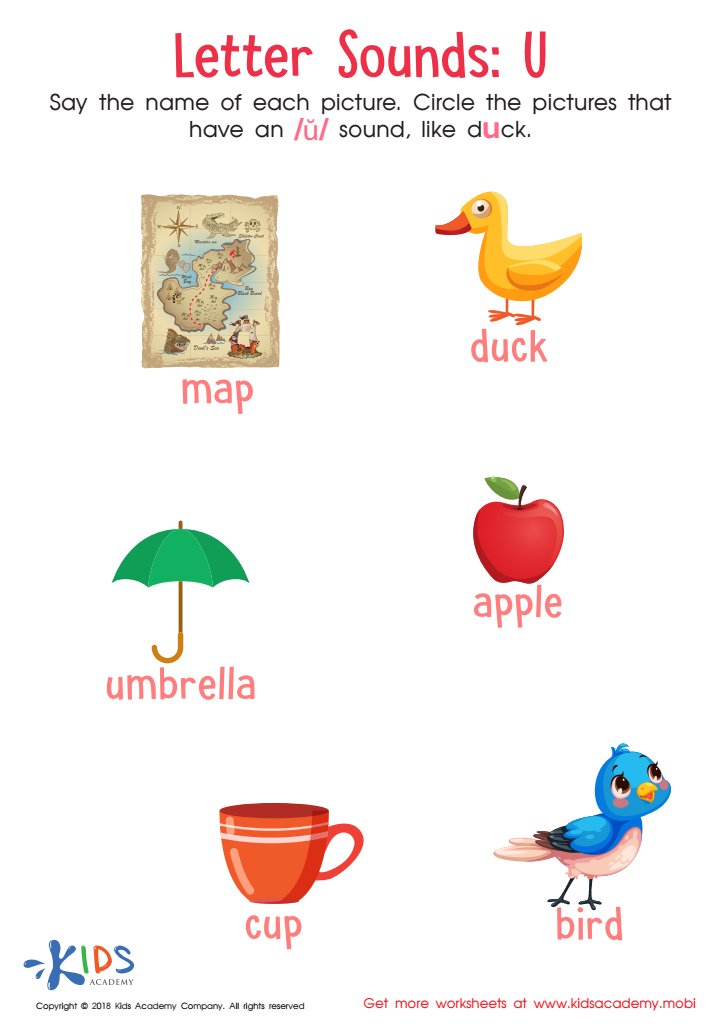
Letter U Sounds Worksheet
The letter U is special with multiple pronunciations. This worksheet helps kids identify the short «u» in words like duck and cup. Read the words aloud and listen closely to the sounds. Circle only words with the correct sound to complete the sheet. Kids will quickly know that words like "map" don't contain a U.
Letter U Sounds Worksheet
Worksheet
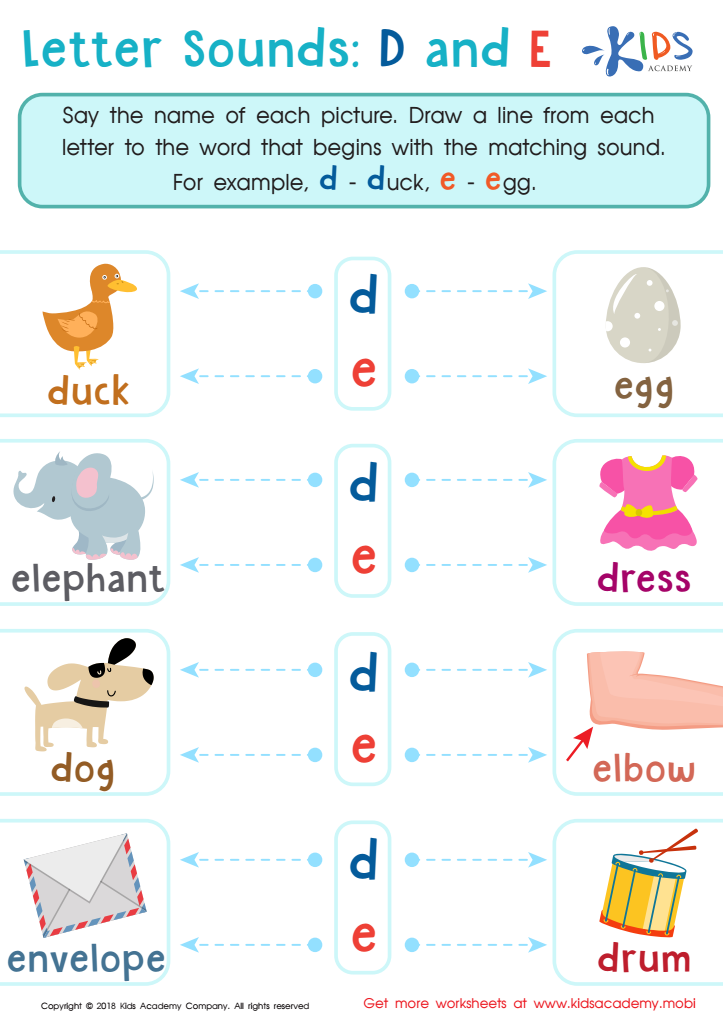
Letter D and E Sounds Worksheet
Kids can use picture clues and visual discrimination to name cheerful pics and isolate the beginning sound. This free PDF worksheet will help them develop phonological awareness, differentiate between "D" and "E", and hone fine-motor skills. It'll also boost their confidence as they become readers.
Letter D and E Sounds Worksheet
Worksheet
Join Kids Academy for Free
Who is primarily going to use this learning content?




.jpg)


Understanding phonetics is crucial for parents and teachers of children aged 5 to 7 as it lays the foundation for successful reading and writing skills. At this age, children are transitioning from learning letters to understanding how those letters combine to form sounds and words. Phonetics involves the production and perception of sounds, which helps children make connections between spoken and written language.
When children grasp phonetics, they become more proficient at decoding unfamiliar words, enhancing their reading fluency and comprehension. A solid grasp of sounds aids in spelling, enabling children to accurately represent the words they want to express. Furthermore, phonetic awareness boosts children's confidence in their literacy abilities, encouraging them to engage more fully with instruction and reading materials.
Moreover, teaching phonetics is vital in catering to diverse learning styles. Some children may require explicit instruction in phonetics to grasp language fundamentals, while others may benefit from playful, auditory experiences with sound. By understanding phonetics, parents and teachers can effectively support children's literacy development and empower them to develop a positive relationship with reading—a key indicator of future academic success. Therefore, fostering phonetic awareness in early education is a shared responsibility that can lead to lifelong benefits for young learners.








