Welcome to our Practical Application Worksheets for Ages 5-7! Our carefully designed worksheets aim to enhance children’s real-world skills through engaging and interactive activities. Covering essential topics like math, reading comprehension, and everyday problem-solving, these resources foster critical thinking and practical application of knowledge. Each worksheet is tailored to help young learners connect classroom learning with their daily lives, ensuring they build confidence and competence. Ideal for teachers and parents alike, our practical application worksheets promote essential skills while making learning enjoyable. Explore our diverse collection and empower your child with foundational skills that will last a lifetime!

Check out this FREE "Practical application" Trial Lesson for age 5-7!

Measuring in Different Units

Favorites
With answer key
Interactive
  • 5-7
  • Practical application
Half and Quarter of a Bun Worksheet

Half and Quarter of a Bun Worksheet

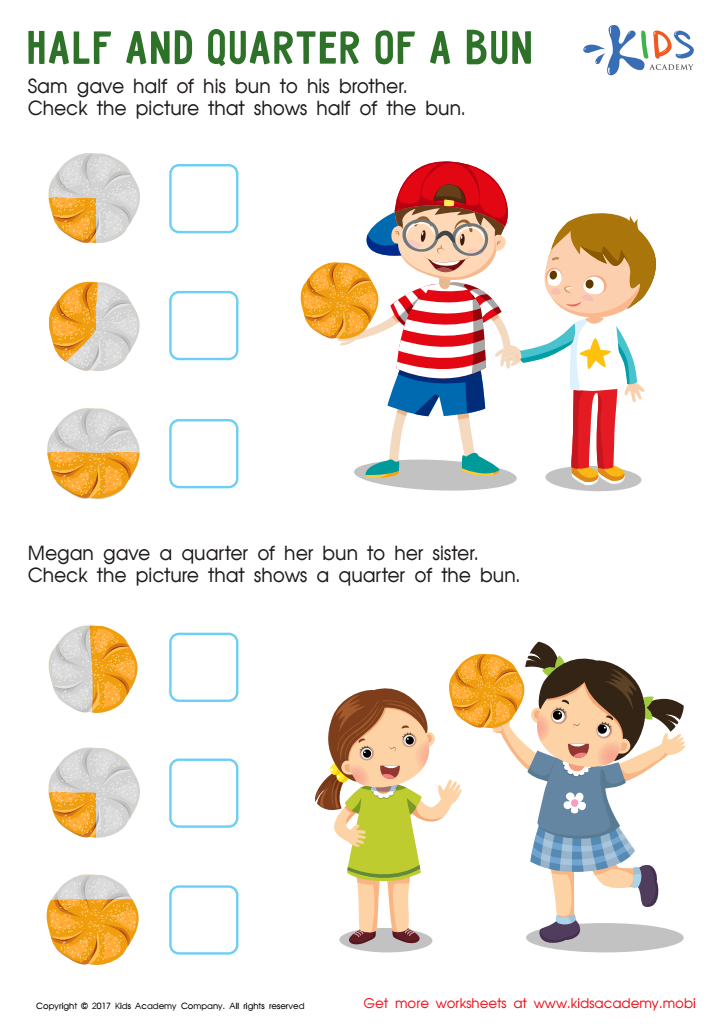
This worksheet introduces Sam, his brother and Megan, her sister, who are sharing buns. Show kids the picture of half and quarter to help them understand. Ask if they know what half and quarter of a shape is before progressing. Help them check the picture showing half and quarter of a bun.
Half and Quarter of a Bun Worksheet
Worksheet
Measuring Quest: Inches and Centimeters - Part 2 Worksheet

Measuring Quest: Inches and Centimeters - Part 2 Worksheet

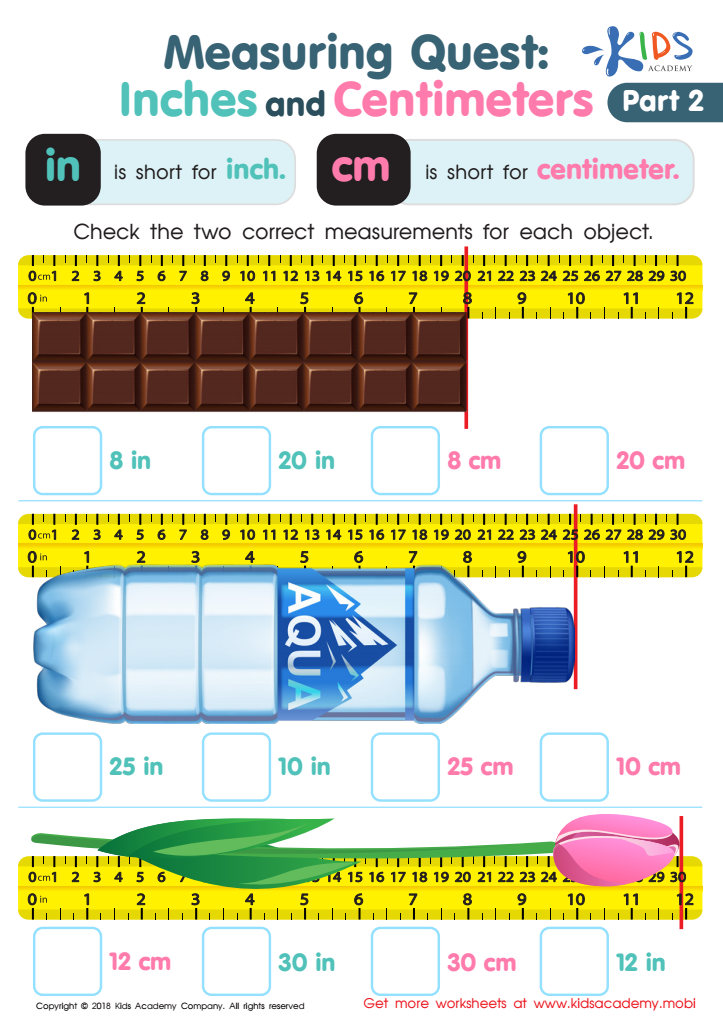
This worksheet teaches kids how inches and centimeters measure up. It features rulers with centimeter measurements at the top, and inches at the bottom. Kids must choose the correct measurement for each object among the options provided.
Measuring Quest: Inches and Centimeters - Part 2 Worksheet
Worksheet
Road Sign Subtraction Worksheet

Road Sign Subtraction Worksheet

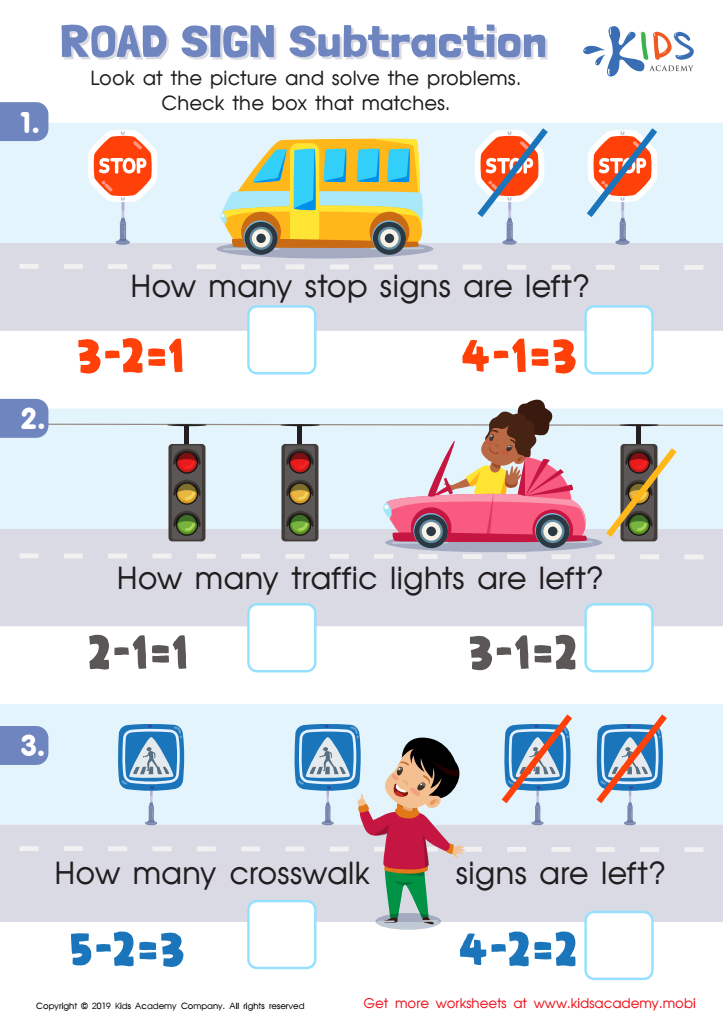
Help your kindergartners tackle addition and subtraction with fun tips. Show them the picture, have them solve the problems, then help them check the box that matches. With practice and guidance, they'll soon be ready for more complex math!
Road Sign Subtraction Worksheet
Worksheet
Earth's Systems: Assessment 2

Earth's Systems: Assessment 2

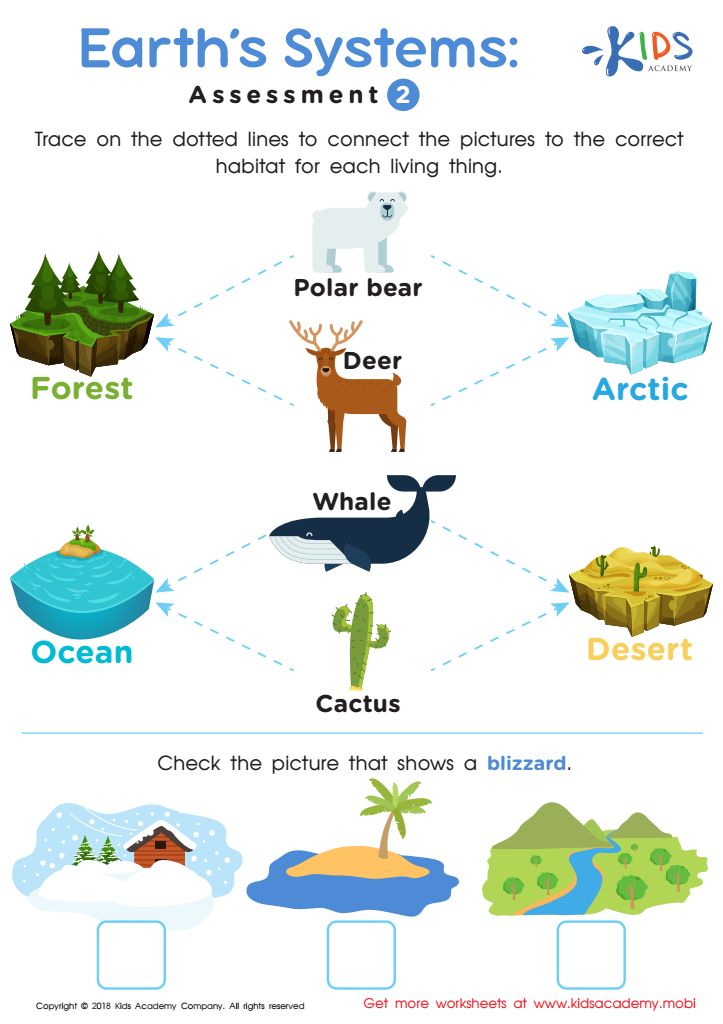
Kids will love this free printable worksheet to assess their knowledge of habitats and the living creatures found in them. They'll trace the dotted lines to connect the pictures of plants and animals to their respective habitat and identify the type of weather depicted. No, polar bears don't live in the ocean, but they do like to swim in icy waters! With this fun activity, your little learner will master earth science basics.
Earth's Systems: Assessment 2
Worksheet
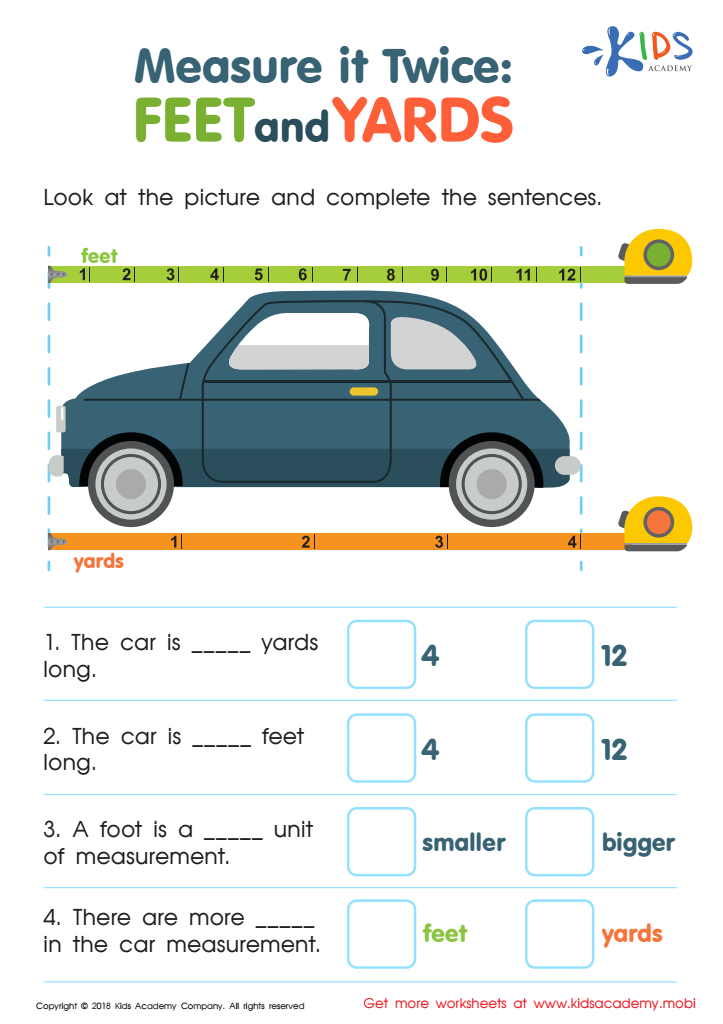
Measure It Twice: Feet and Yards Worksheet

Measure It Twice: Feet and Yards Worksheet

A car is pictured with a metric ruler in feet at the top and a yard ruler at the bottom. Get your child to look at the picture and complete sentences about it; for example, how many yards long is the car? Is a foot a bigger or smaller unit of measurement? It'll teach them that 1 yard is equal to 3 feet.
Measure It Twice: Feet and Yards Worksheet
Worksheet
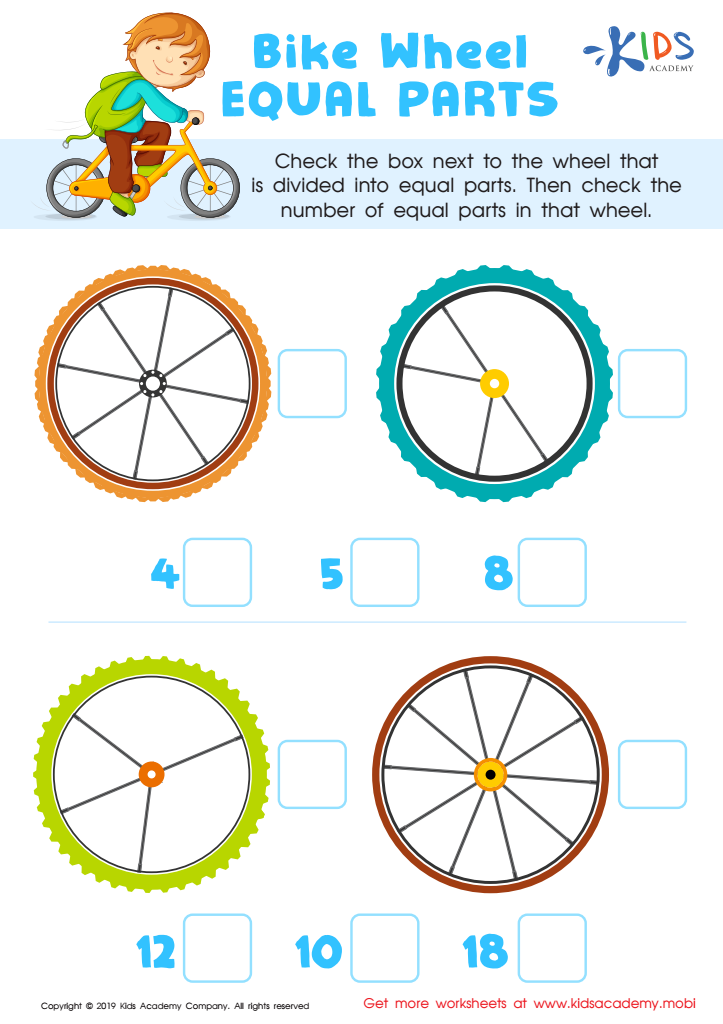
Bike Wheel Equal Parts Worksheet

Bike Wheel Equal Parts Worksheet

Help your kids have fun while they learn! Ask them to identify the object in the picture with four wheels. Guide them to count the spokes, then check the box on the wheel with equal parts. Lastly, check how many equal parts the wheel is divided into.
Bike Wheel Equal Parts Worksheet

Worksheet
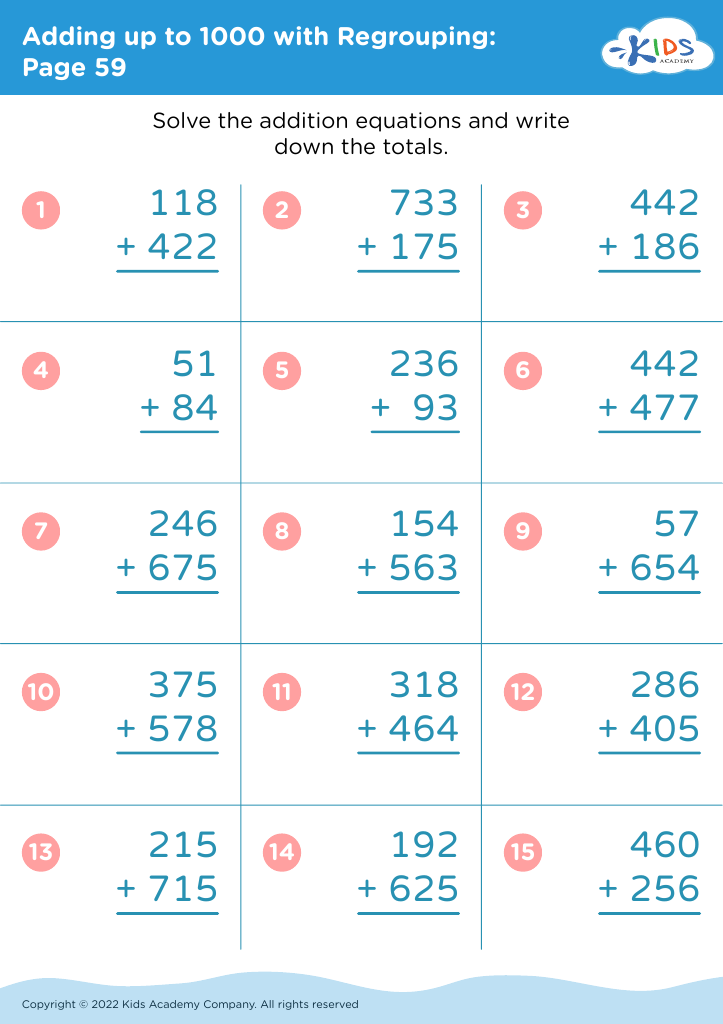
Adding up to 1000 with Regrouping: Page 59
Worksheet


Practical application is essential for children ages 5-7, as it translates abstract concepts into tangible skills and understanding. At this developmental stage, children are naturally curious and learn best through hands-on experiences. Engaging in practical activities—such as simple science experiments, cooking, or hands-on math games—helps children grasp fundamental ideas by connecting classroom learning to real-life situations.

Furthermore, applying knowledge practically fosters critical thinking and problem-solving skills. As children manipulate objects, experiment, and explore, they learn to ask questions, form hypotheses, and draw conclusions, which enhances their cognitive development. This active engagement also promotes creativity and innovation, enabling young learners to express themselves and think outside the box.

Involvement in practical activities also aids in the development of fine and gross motor skills. Activities like painting, building with blocks, or gardening strengthen hand-eye coordination and promote physical development.

Moreover, parents and teachers play a key role in guiding this experiential learning. By prioritizing practical application, they not only support academic achievement but also contribute significantly to a child's social and emotional growth, boosting confidence and encouraging collaboration through group projects and shared tasks. Therefore, embracing practical application is vital for nurturing well-rounded, capable children.