
Prefix understanding Worksheets for Ages 5-7
3 filtered results
Difficulty Level
Grade
Age
-
From - To
Subject
Activity
Standards
Unlock the power of vocabulary with our engaging Prefix Understanding Worksheets, specially designed for children aged 5-7! These worksheets help young learners grasp the basics of prefixes, transforming their reading and writing skills. Filled with fun activities and colorful visuals, each worksheet is crafted to keep kids motivated while enhancing their language development. By exploring simple prefixes like "un-", "dis-", and "re-", children will learn how these word parts alter meanings, boosting their comprehension. Perfect for homes or classrooms, our worksheets provide the tools educators and parents need to foster a love for words in early learners. Start exploring today!
Favorites
With answer key
Interactive
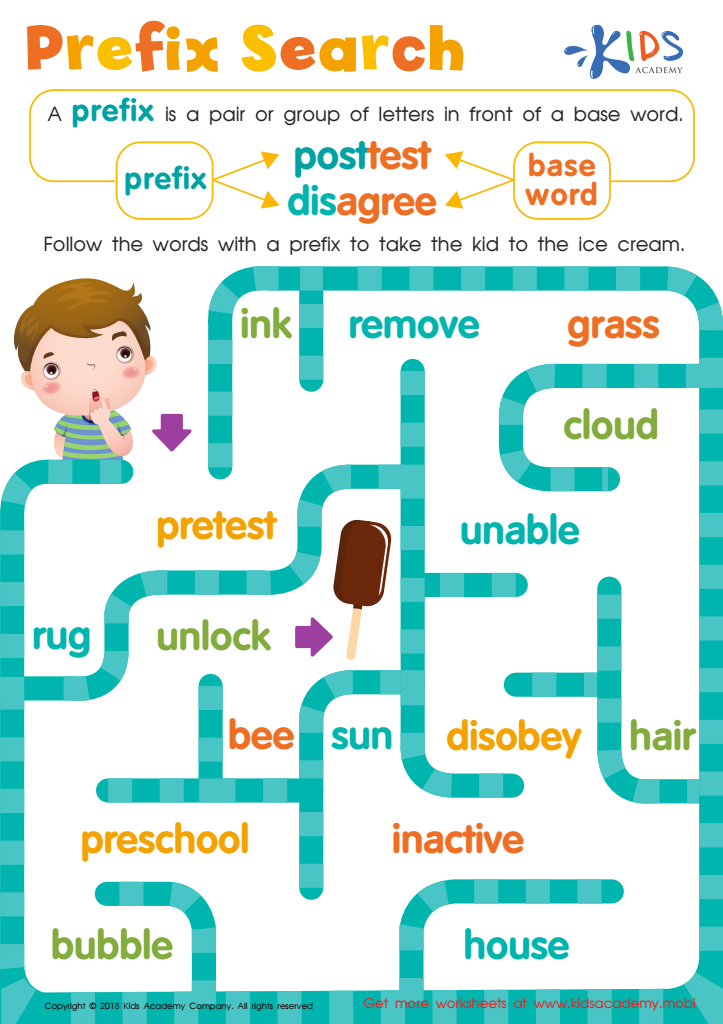
Reading: Prefix Search Worksheet
Maze your way through prefixes! This worksheet helps students practice reading new words with a prefix and figuring out the base word. An understanding of prefixes gives students the skills to comprehend new words. A fun and useful activity for the reading classroom!
 Assign to My Students
Reading: Prefix Search Worksheet
Worksheet
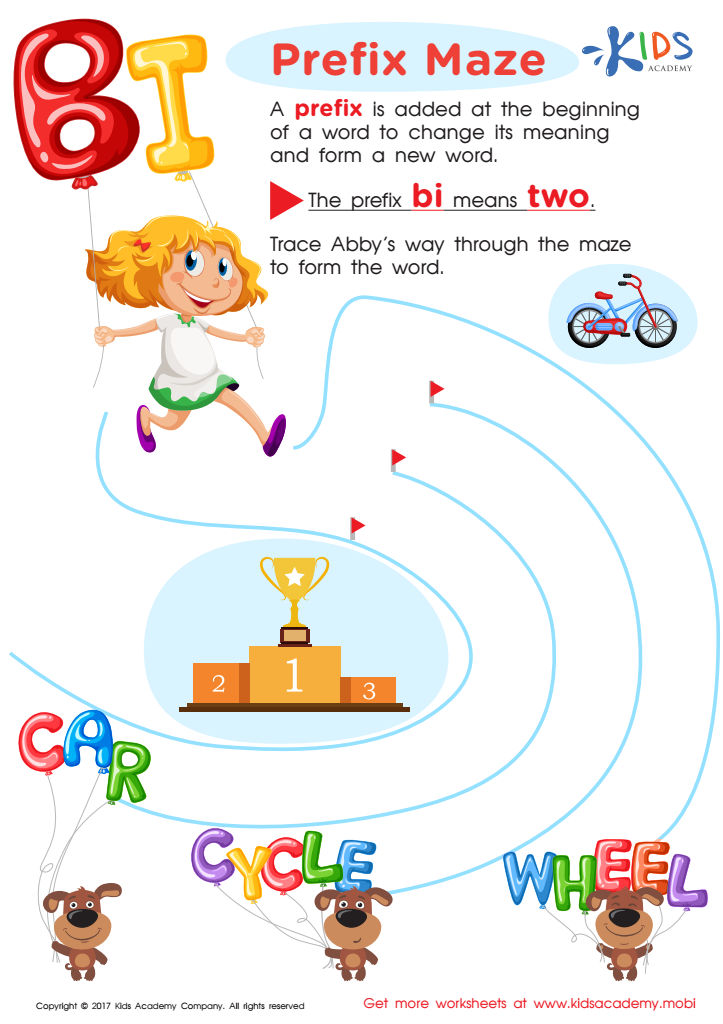
Prefix Bi Words Worksheet
Help "bi" find its root word in this fun and colorful prefix worksheet! Your child will learn how words are built while having a great time!
Prefix Bi Words Worksheet
Worksheet
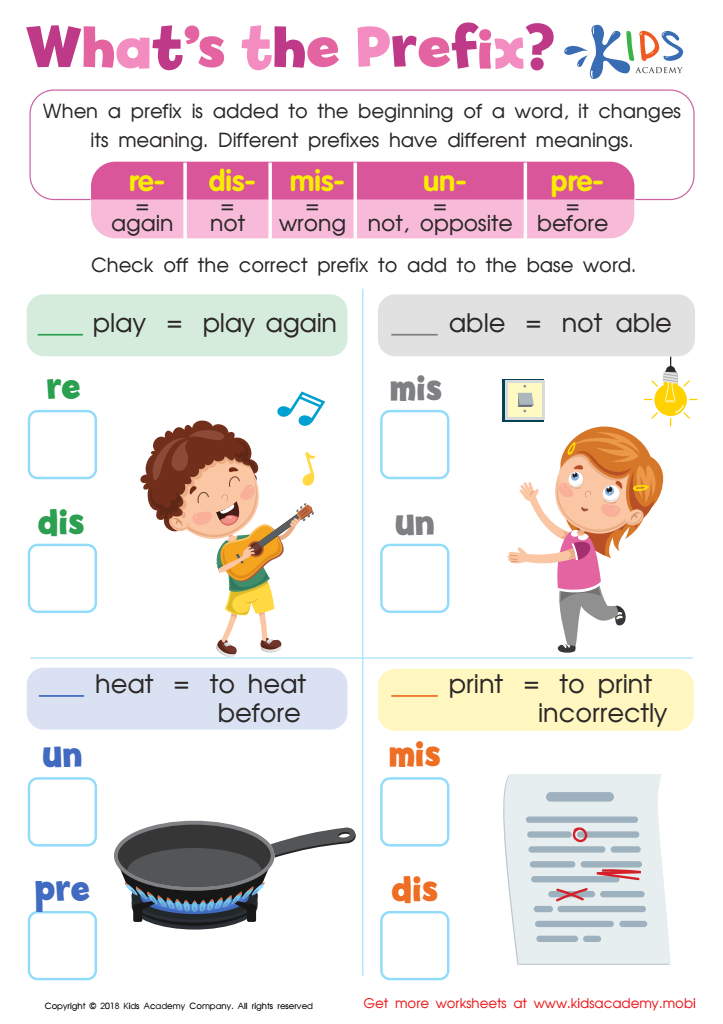
Reading: What Is the Prefix Worksheet
This worksheet helps children learn about prefixes by matching pictures and base words with the correct prefix. Learning these prefixes and their meanings is essential for reading and vocabulary comprehension. Use this free download to check your students' understanding.
Reading: What Is the Prefix Worksheet
Worksheet
Join Kids Academy for Free
Who is primarily going to use this learning content?







Understanding prefixes is crucial for children ages 5-7 as it lays the foundation for vocabulary development and reading comprehension. At this age, children are beginning to develop their reading skills and a grasp of language structure. Learning prefixes—like "un-", "re-", or "dis-"—helps them decode unfamiliar words, making new vocabulary more accessible. For instance, if a child knows that "un-" means "not," they can easily interpret "unhappy" as "not happy," enhancing their ability to understand and engage with texts.
Moreover, prefix understanding encourages critical thinking by allowing children to make connections between words and their meanings. This promotes a deeper understanding of language and aids in expressing their thoughts clearly. Also, strong vocabulary skills are directly linked to academic success across subjects, as comprehension and communication are essential in every developmental area.
Teachers and parents can support this learning through playful activities, such as word games or story reading that emphasize the use of prefixes, making it a fun and engaging experience. By fostering prefix understanding early, adults can significantly enhance a child's literacy skills, encouraging a lifelong love for reading and learning.








