Problem-solving skills development Worksheets for Ages 5-7
3 filtered results
-
From - To
Unlock your child’s potential with our engaging problem-solving skills development worksheets designed for ages 5-7! These fun, educational resources are tailored to spark curiosity and enhance critical thinking in young learners. Our vibrant, age-appropriate activities cover a broad range of scenarios to help kids develop practical problem-solving strategies. By working through puzzles, matching games, and logic exercises, children will build confidence and creativity while improving their cognitive abilities. Perfect for use at home or in classrooms, these worksheets provide a solid foundation for lifelong learning. Start your child’s journey to becoming an adept problem solver today!
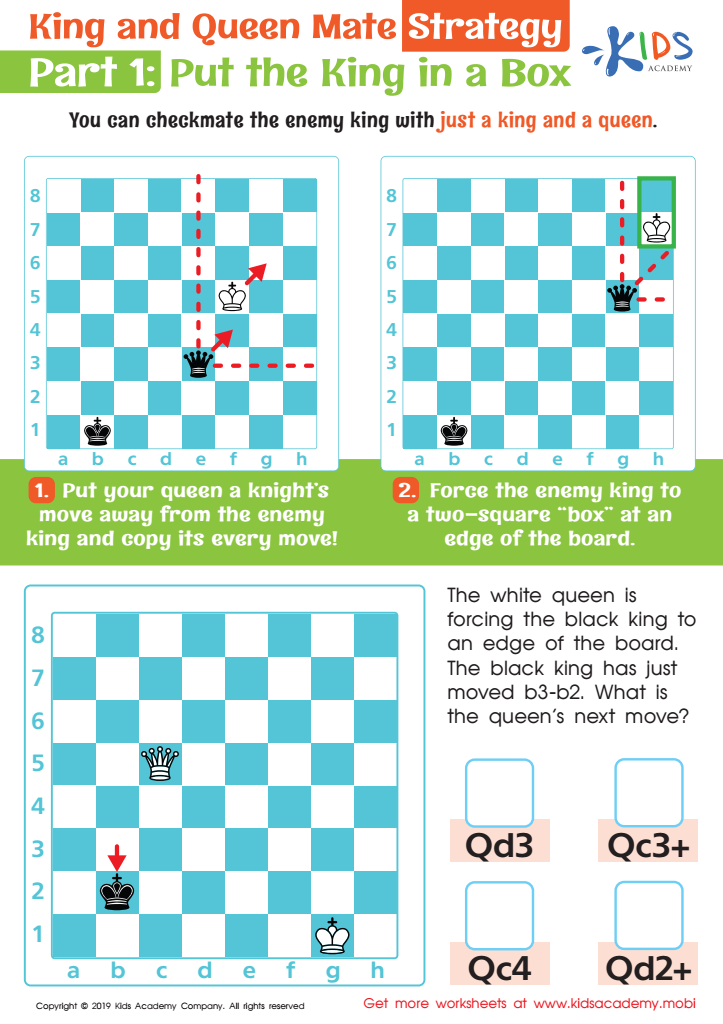
King and Queen Mate Strategy: Part 1 Worksheet
 Assign to My Students
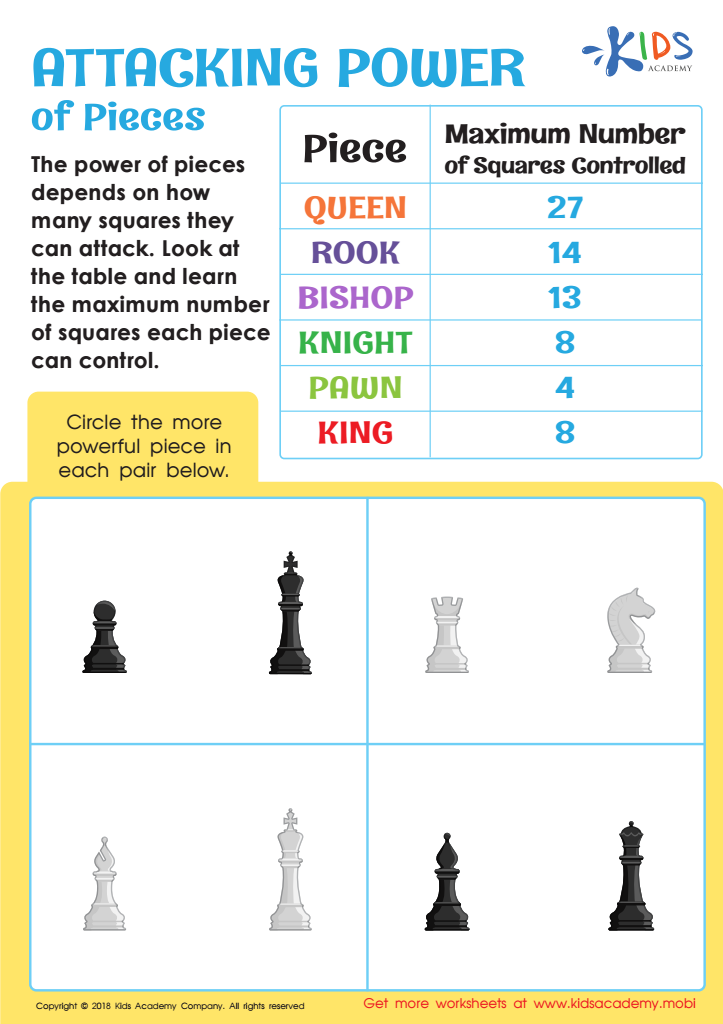
Attacking Power of Chess Pieces Worksheet
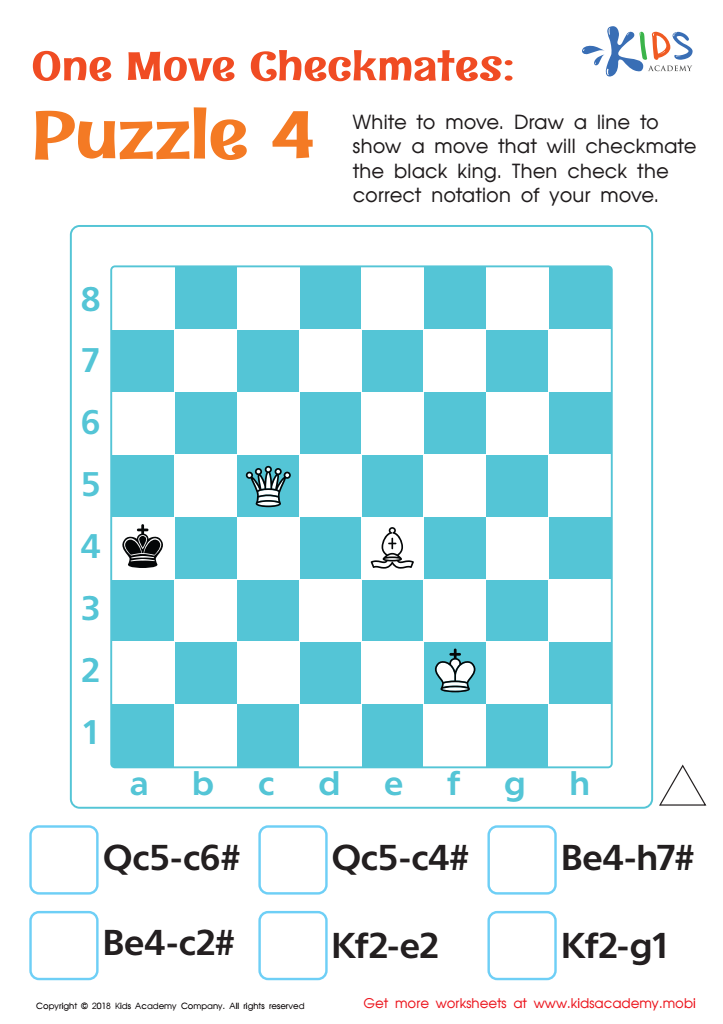
One Move Checkmates: Puzzle 4 Worksheet








Problem-solving skills are essential for children's cognitive and social development, making it crucial for parents and teachers to focus on their development from an early age, particularly between ages 5-7. During these formative years, children's brains are highly receptive to new patterns of thinking and learning. When nurturing problem-solving abilities, kids learn to approach challenges with curiosity and creativity, rather than frustration and avoidance. This builds their critical thinking and enhances their confidence in tackling various tasks.
Moreover, strong problem-solving skills are indicative of future academic performance, impacting subjects such as math and science where logical reasoning and systematic thinking are key. Socially, children with well-developed problem-solving abilities can navigate peer interactions more effectively, resolving conflicts and working collaboratively in group settings. Cultivating these skills also empowers children to cope with the unpredictability of day-to-day situations, fostering resilience and adaptability.
As Fred Rogers famously said, "Play is often talked about as if it were a relief from serious learning. But for children, play is serious learning." Engaging students in age-appropriate problem-solving activities through play not only makes learning enjoyable but also establishes a strong foundation for lifelong learning and personal development. Therefore, both parents and teachers hold a significant responsibility to prioritize and support the enhancement of problem-solving skills in young children.








