
Rhythm understanding Worksheets for Ages 5-7
3 filtered results
Difficulty Level
Grade
Age
-
From - To
Subject
Activity
Standards
Enhance your child’s musical skills with our engaging Rhythm Understanding Worksheets for ages 5 to 7! Designed by experts at Kids Academy, these printable resources focus on nurturing your child’s sense of rhythm and timing essential for music development. Children will explore patterns, beats, and rhythmic sequences through fun and interactive activities, helping boost academic and cognitive skills. Each worksheet offers a blend of visual and hands-on learning that keeps young minds entertained. Perfect for home or classroom use, our worksheets aim to turn the fundamentals of music into exciting learning adventures. Visit Kids Academy to get started today!
Favorites
With answer key
Interactive
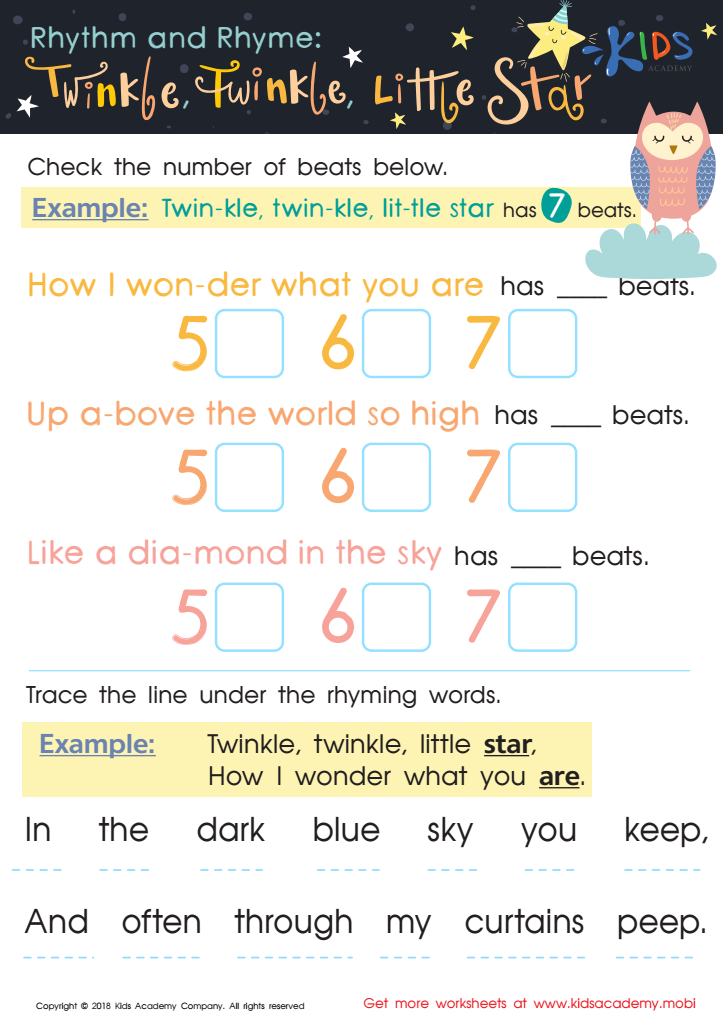
Rhythm and Rhyme: Twinkle, Twinkle, Little Star Worksheet
Kids will love learning about syllables in words with a fun children's song! Use the song Twinkle, Twinkle, Little Star to explain that each word has at least one beat. Have them clap out the beats in each word and check the boxes on this cute worksheet to identify the syllables.
 Assign to My Students
Rhythm and Rhyme: Twinkle, Twinkle, Little Star Worksheet
Worksheet
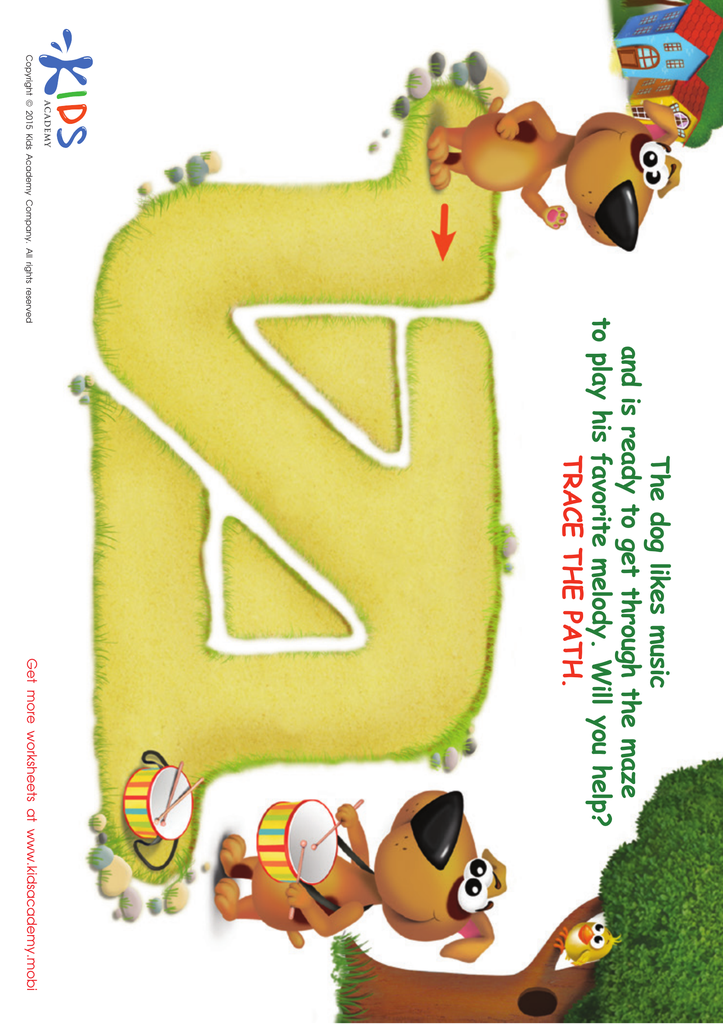
Drummer Maze Worksheet
Enjoy!
Kids Academy's new maze games are perfect for you and your little learners. Help the dog find the drum at the end of the maze! Once they reach it, you can play music together. Visit Kids Academy's website to find free printable mazes and other worksheets. Have fun!
Drummer Maze Worksheet
Worksheet
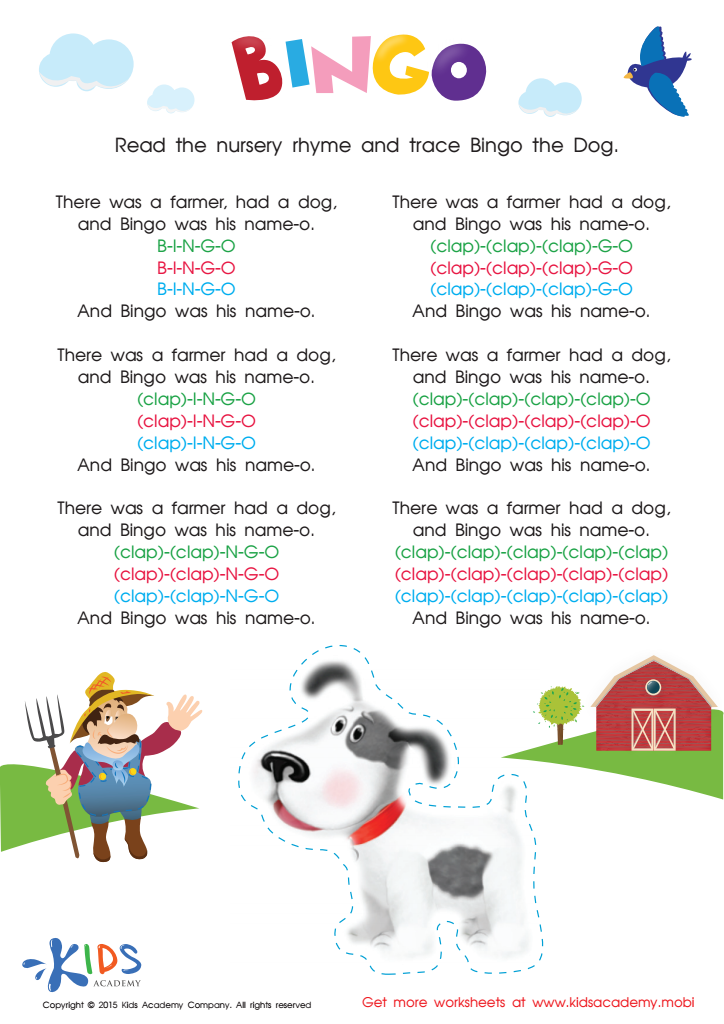
Nursery Rhymes: The Bingo Song Worksheet
Introduce The Bingo Song to your little ones. Have your kids sing some words and lines aloud, while you replace letters with claps. Add other activities: tapping, patting, jumping, and use your imagination. Print our free Bingo Song Coloring Pages and let your kids color them. Get more free worksheets at our website Kids Academy.
Nursery Rhymes: The Bingo Song Worksheet
Worksheet
Join Kids Academy for Free
Who is primarily going to use this learning content?







Understanding rhythm is essential for children aged 5-7 because it lays a foundation for multiple areas of development. Rhythm helps in the cognitive development of children by improving their ability to recognize patterns, a key aspect in learning math and language. When children can identify rhythmic patterns, they develop predictive skills which aid in comprehending and anticipating sequences.
Additionally, rhythm boosts motor skills and coordination. For instance, clapping hands or tapping feet in time with music enhances fine and gross motor skills, promoting better physical fitness and control. This motor improvement extends to other areas requiring precision, such as writing or using scissors.
Emotional and social development are also positively impacted by understanding rhythm. Musical activities involving rhythm teach children about cooperation and turn-taking, fostering social interaction and teamwork. The joy and satisfaction derived from rhythmic activities can spark higher self-esteem and enthusiasm for learning as a whole.
Lastly, rhythm can be a powerful tool in speech and language development. Rhythmic patterns in songs and stories help children grasp the nuances of spoken language, including variations in pitch, tone, and stress, which are crucial for effective communication.
Overall, rhythmic understanding enriches cognitive, motor, emotional, social, and language functions, offering a multidimensional approach to early education that nurtures well-rounded development.








