
Sentence completion Worksheets for Ages 5-7
5 filtered results
Difficulty Level
Grade
Age
-
From - To
Subject
Activity
Standards
Unlock the potential of young minds with our Sentence Completion Worksheets for ages 5-7! Designed to enhance vocabulary, reading comprehension, and creative thinking, these engaging worksheets offer a fun and educational experience for young learners. Simple yet effective, the exercises help kids practice completing sentences with the correct words, boosting their confidence in language skills. Ideal for home or classroom use, our worksheets adapt to various learning needs, ensuring every child progresses at their own pace. Ignite a passion for learning and watch your students' literacy skills flourish effortlessly. Download today and inspire bright futures!
Favorites
With answer key
Interactive
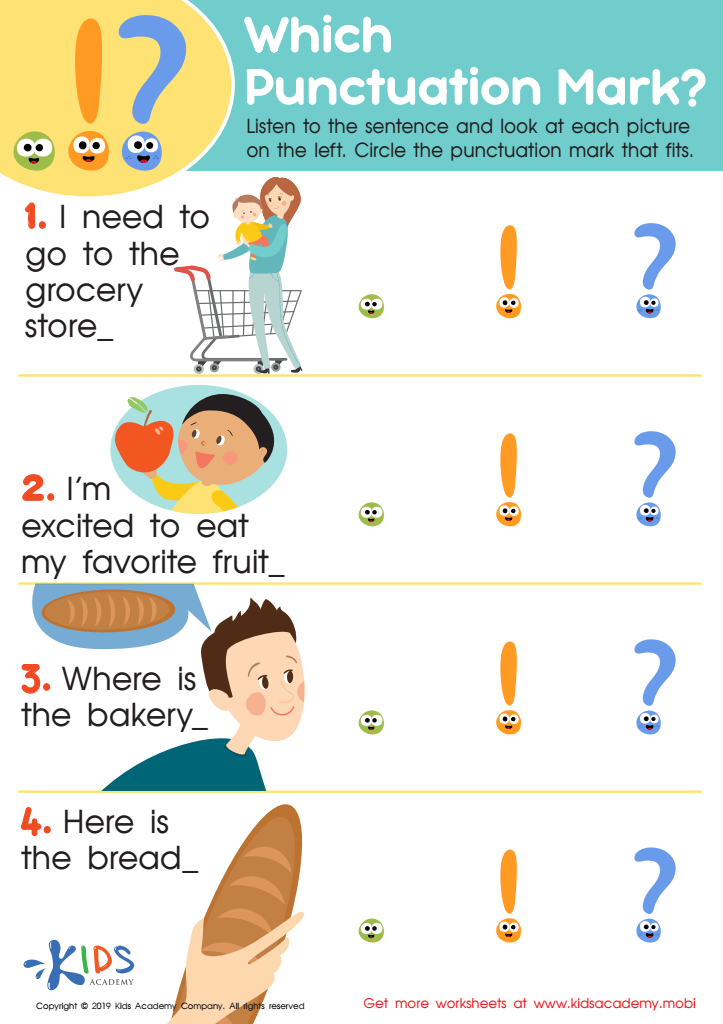
Which Punctuation Mark Worksheet
Punctuation marks are essential for expressing what we say. This worksheet asks your kindergarten student to circle the correct punctuation mark for each sentence. Read each sentence aloud and help them identify the expression needed. A picture accompanies each sentence. Enjoy! (79 words)
 Assign to My Students
Which Punctuation Mark Worksheet
Worksheet
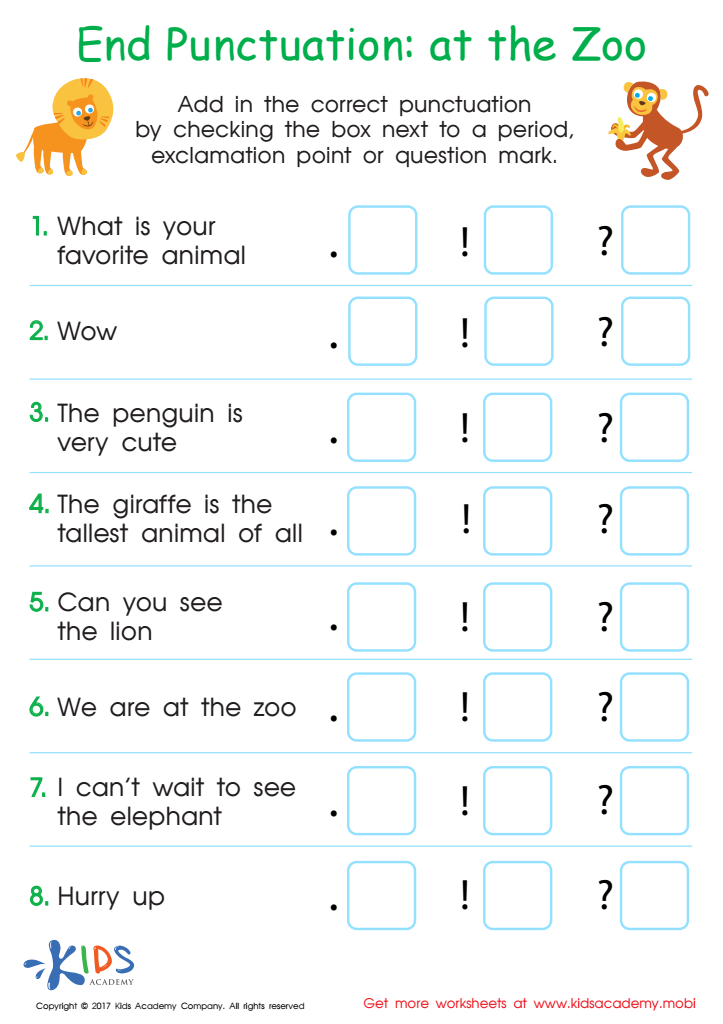
End Punctuation: At the Zoo Worksheet
Let your kid hone their sentence and punctuation skills with this cute At the Zoo worksheet. Read it out loud to provide guidance if needed, and help your child find the right punctuation mark for each sentence.
End Punctuation: At the Zoo Worksheet
Worksheet
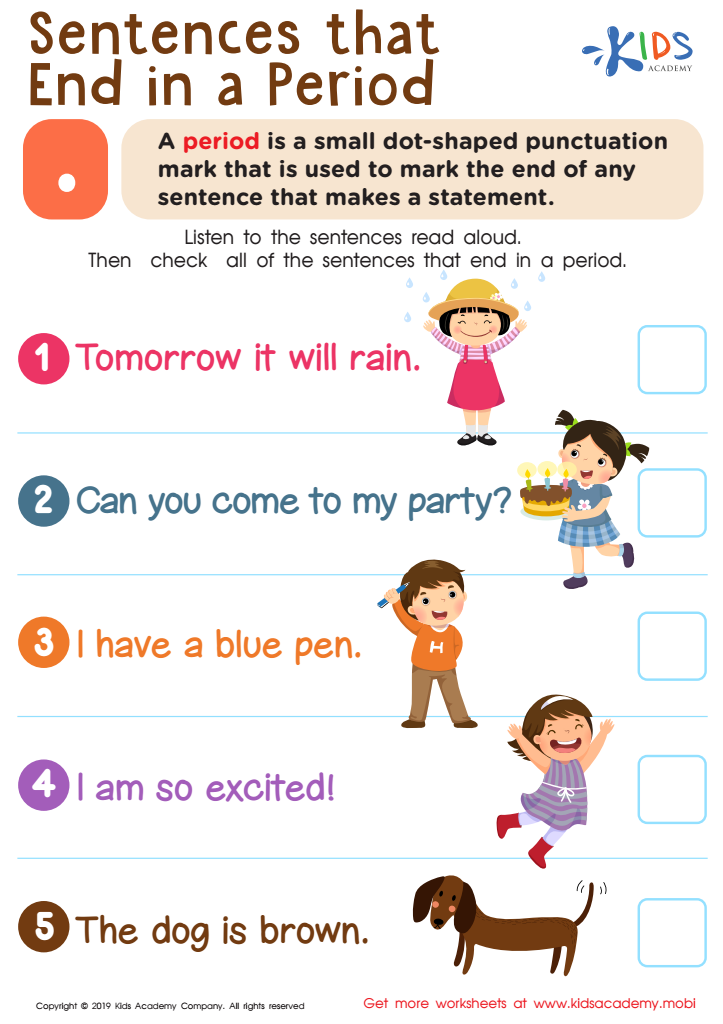
Sentences That End in a Period Worksheet
Before beginning, ask your kids if they know what punctuation marks are and can name a few. Common examples are the period (a small dot-shaped mark at the end of sentences), comma, question mark, and exclamation mark. Help practice their use with questions in the worksheet.
Sentences That End in a Period Worksheet
Worksheet
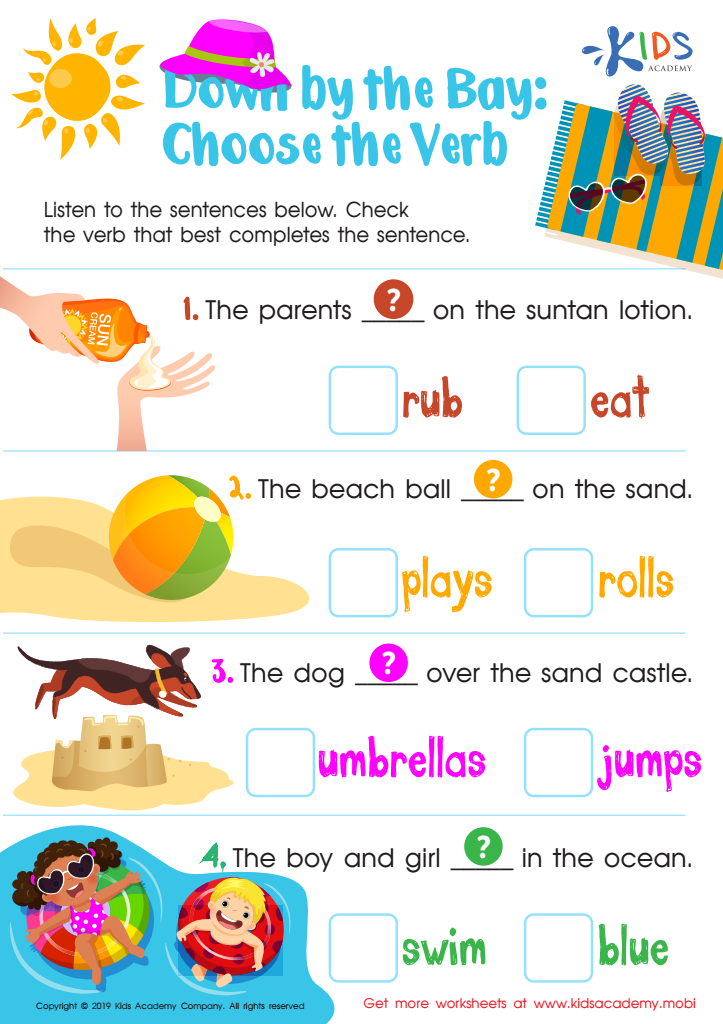
Down by the Bay: Choose the Verb Worksheet
Teach your kids about verbs: words that describe actions, like 'playing', 'eating', 'talking'. Ask your child to give their own verbs, then read the sentences in a worksheet and help them pick the best one for each question.
Down by the Bay: Choose the Verb Worksheet
Worksheet
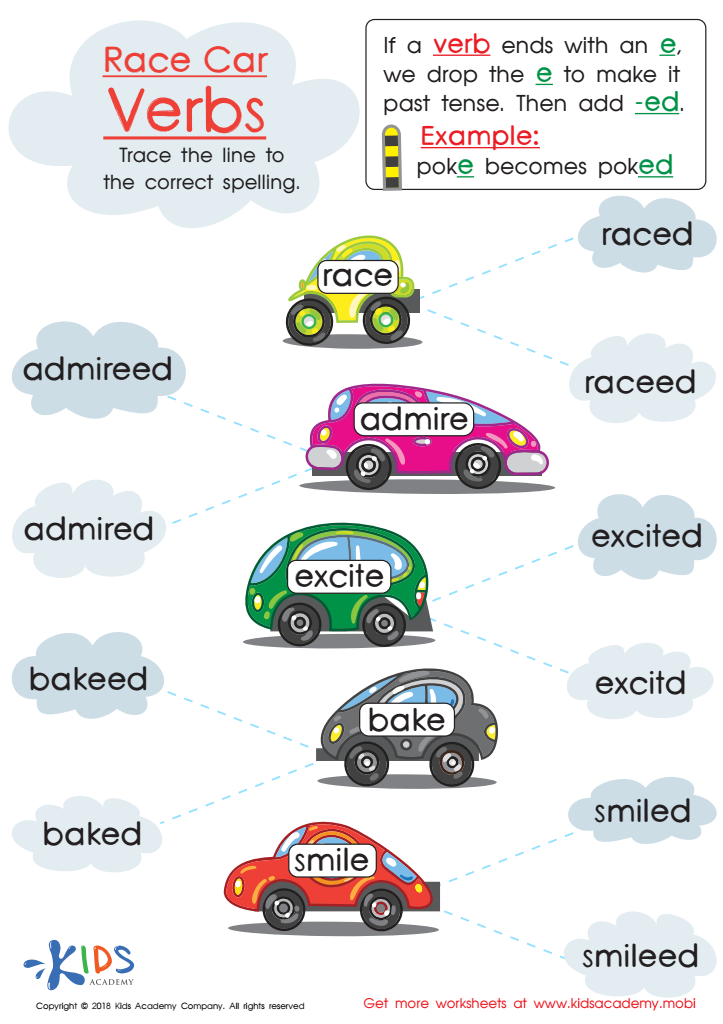
Race Car Verbs Worksheet
Help your child learn to spell and write with this fun car-themed worksheet! Read the words in the center of each car and review their past tense versions in the smoke. Have your learner trace the line from each car to the correctly spelled word – and don't forget to drop the 'e' before adding an -ed ending!
Race Car Verbs Worksheet
Worksheet
Join Kids Academy for Free
Who is primarily going to use this learning content?







Parents and teachers should prioritize sentence completion activities for children aged 5-7 because these exercises play a fundamental role in early literacy and cognitive development. Sentence completion tasks help to expand vocabulary by introducing new words in different contexts, which enhances children’s language comprehension. They also bolster grammar skills, as children learn how words function together to form cohesive, grammatically correct sentences. This age group is crucial for building a strong linguistic foundation that supports future reading and writing abilities.
Additionally, sentence completion stimulates critical thinking and creativity, as children must predict logical outcomes and employ problem-solving skills. It fosters better attention to detail and listening skills, encouraging children to focus and understand the construction of language fully. Moreover, consistent practice with sentence completion can instill a sense of accomplishment and boost confidence, motivating young learners to engage more with their academic activities.
Furthermore, these activities provide insight for parents and teachers into a child’s current comprehension level and areas needing improvement. Early interventions can then be implemented effectively. In essence, sentence completion exercises are not just linguistic tools but gateways to overall intellectual growth and necessary skillsets for lifelong learning.








