
Sound identification Worksheets for Ages 5-7
5 filtered results
Difficulty Level
Grade
Age
-
From - To
Subject
Activity
Standards
Unlock the joy of learning with our Sound Identification Worksheets for Ages 5-7. Crafted by educators, these engaging activities help young learners recognize and differentiate various sounds, enhancing their listening and phonemic awareness skills. With vibrant illustrations and interactive exercises, children practice identifying beginning, middle, and ending sounds in words. Our worksheets support early reading development and ensure a fun, effective learning journey. Perfect for classrooms or at-home practice, they cater to different learning styles. Introduce your child to the world of sounds and watch their confidence soar with every completed worksheet!
Favorites
With answer key
Interactive
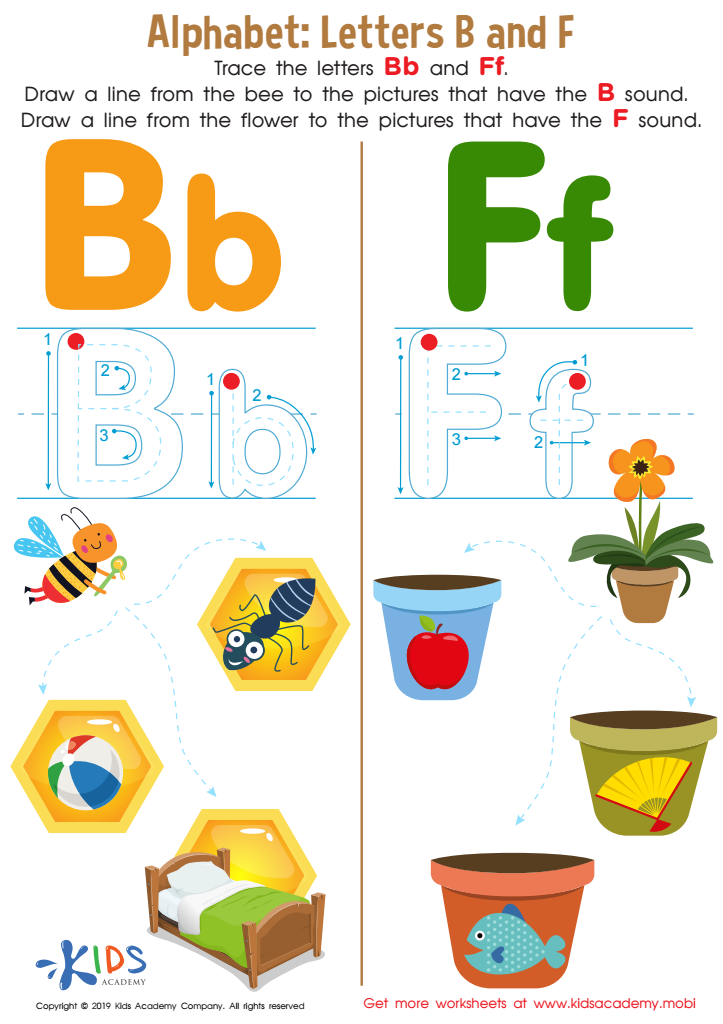
Letters B and F Tracing Worksheet
Does your kid know the letters B and F? This tracing sheet helps them practice by tracing each letter, then drawing a line from a bee and a flower to related words. Recognizing words with pictures develops a great skill, and students will master it in no time!
 Assign to My Students
Letters B and F Tracing Worksheet
Worksheet
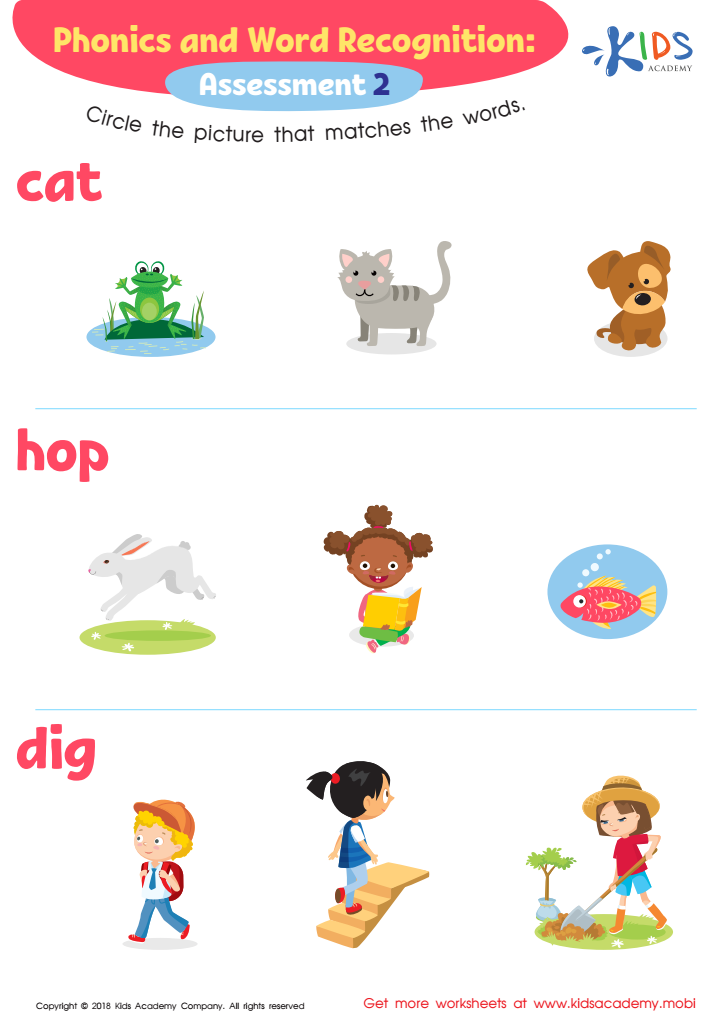
Phonological Awareness: Assessment 2 ELA Worksheet
This free worksheet assesses your emerging reader's ability to decode and match closed-syllable high-frequency words to the appropriate picture. The pictures are cheery and easy to identify, so your child will have fun and find success with decoding and matching.
Phonological Awareness: Assessment 2 ELA Worksheet
Worksheet
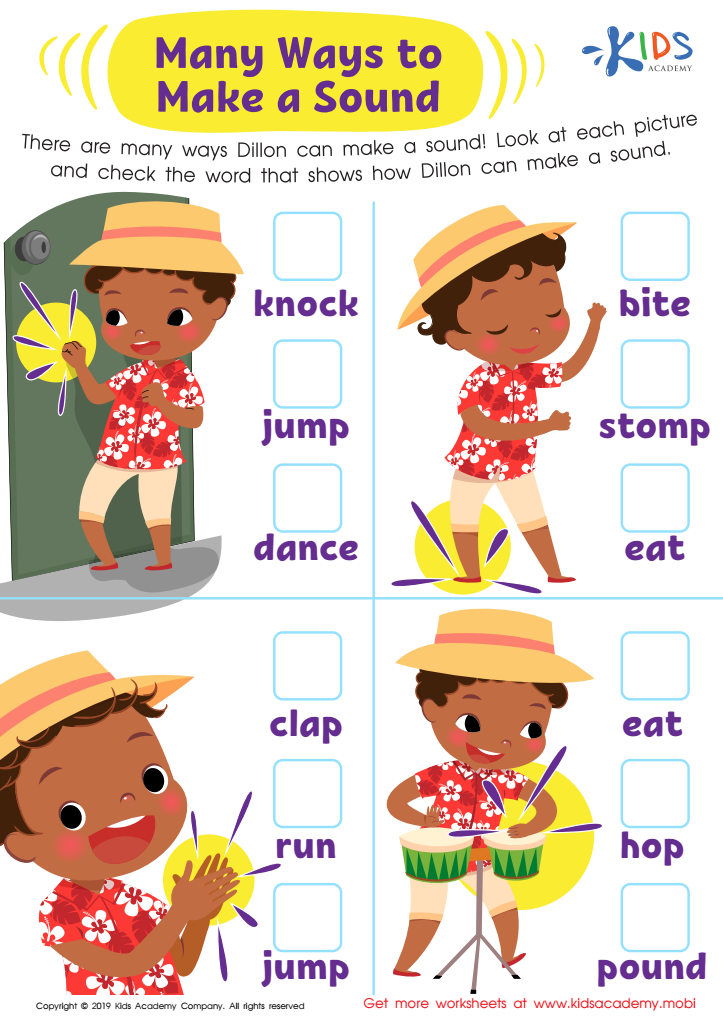
Many Ways to Make a Sound Worksheet
This interactive worksheet encourages creativity and imagination as kids use picture clues to match sound words. It helps them identify the sound methodology and build fine motor skills. Plus, with learning through play, they'll develop stronger vocabularies without even knowing it!
Many Ways to Make a Sound Worksheet
Worksheet
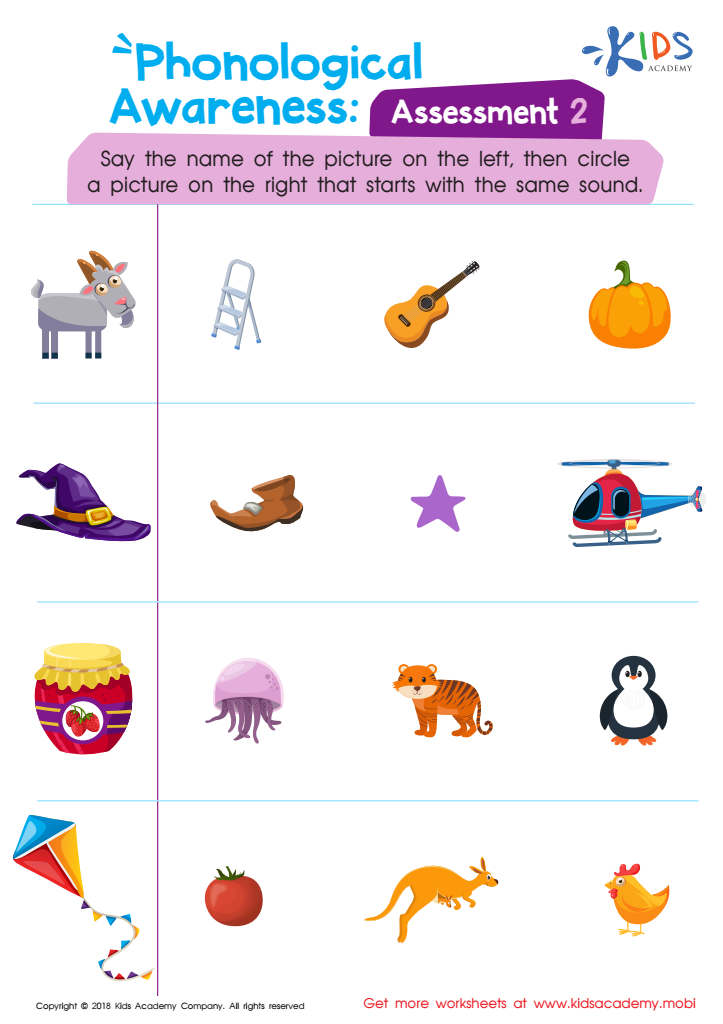
Phonological Awareness: Assessment 2 Worksheet
Test your child’s phonological awareness and reading readiness with this charming worksheet! Perfect for K-1, it assesses if they can name a picture aloud, listening for the starting sound and matching it to another word. Watch as they think deeply and listen to the sounds as they name each picture. Determine if your child is ready to sound out words or needs more phonics practice.
Phonological Awareness: Assessment 2 Worksheet
Worksheet
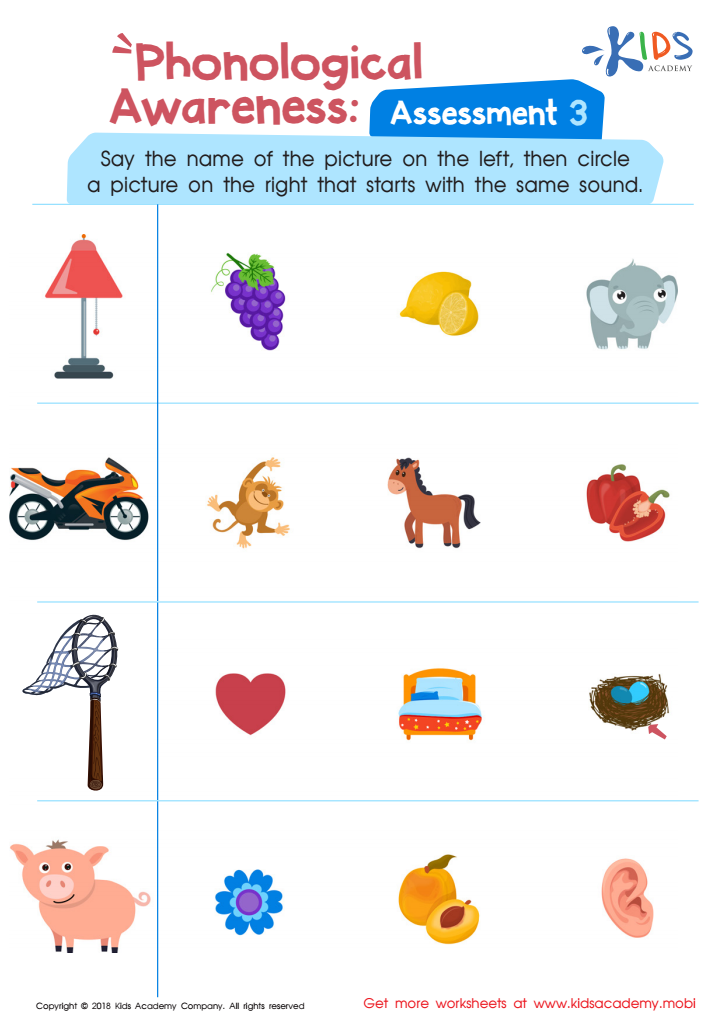
Phonological Awareness: Assessment 3 Worksheet
Test kids' reading readiness with a phonological awareness worksheet! With this PDF exercise, encourage children to name each picture aloud and match left to right. Help them learn to recognize word sounds at the start, middle and end of words. They'll be sure to remember that lamp doesn't sound like elephant!
Phonological Awareness: Assessment 3 Worksheet
Worksheet
Join Kids Academy for Free
Who is primarily going to use this learning content?



%20(1).jpg)




Sound identification is a cornerstone of early literacy that parents and teachers should prioritize for children aged 5-7. At this developmental stage, young learners transition from recognizing letters to understanding that specific sounds are associated with those letters—a key skill for mastering reading and writing.
When children are adept at sound identification, they can more easily decode words, improving their reading accuracy and fluency. This skill lays the groundwork for strong literacy development and fosters a positive relationship with learning. Furthermore, early sound identification is intricately linked to phonological awareness, which involves recognizing and manipulating the sounds within spoken words—a fundamental ability for future spelling and reading comprehension.
Academically, children who excel in sound identification are better equipped to meet early learning milestones and are more likely to experience success throughout their educational journey. Personally, a strong literacy foundation expands a child’s world, enriching their imagination and enabling meaningful communication.
Therefore, parents and teachers should focus on developing these skills through activities like phonics games, read-aloud sessions, and engaging in conversations that emphasize sound patterns. Through these efforts, young children can build confidence and a lifelong love for reading, setting them on a path for academic success and personal growth.








