Check out this FREE "Story sequencing" Trial Lesson for age 5-7!

Answer Questions About Key Details in a Story

Favorites
With answer key
Interactive
  • 5-7
  • Story sequencing
Little Red Riding Hood: Illustrations Worksheet

Little Red Riding Hood: Illustrations Worksheet

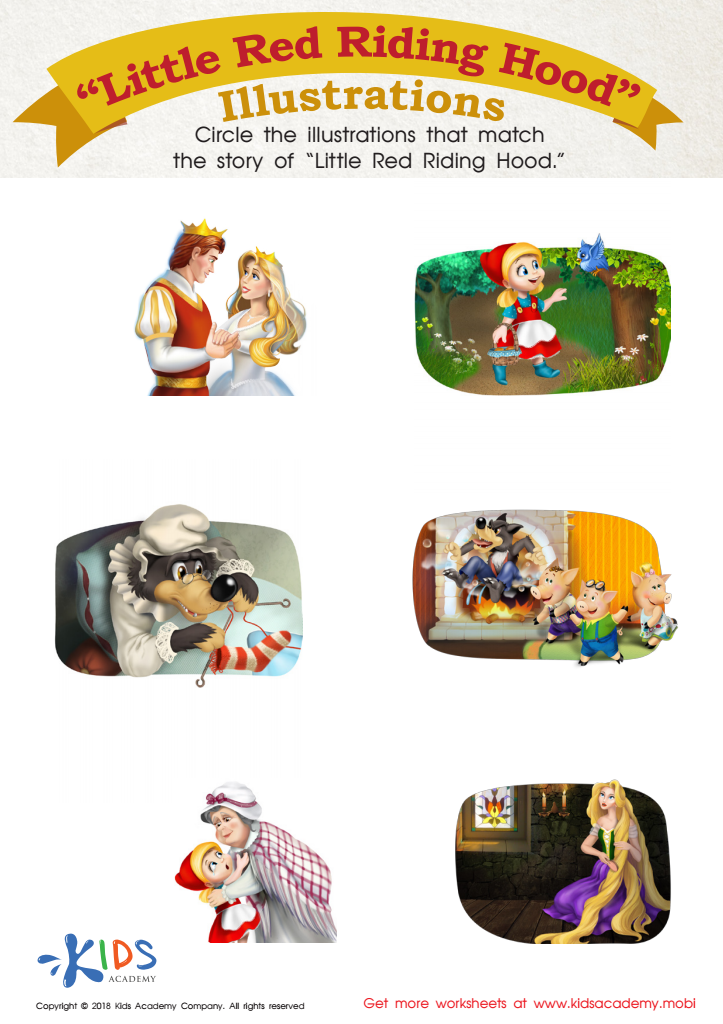
This worksheet encourages children to analyze illustrations from familiar fairy tales, such as Little Red Riding Hood, and decide which ones match the story and which don't. It's a great way to help them recall and retell stories they've heard or read. Illustrations are important elements that help children comprehend advanced readings.
Little Red Riding Hood: Illustrations Worksheet
Worksheet
Look at the Pictures: The Princess and the Pea Worksheet

Look at the Pictures: The Princess and the Pea Worksheet

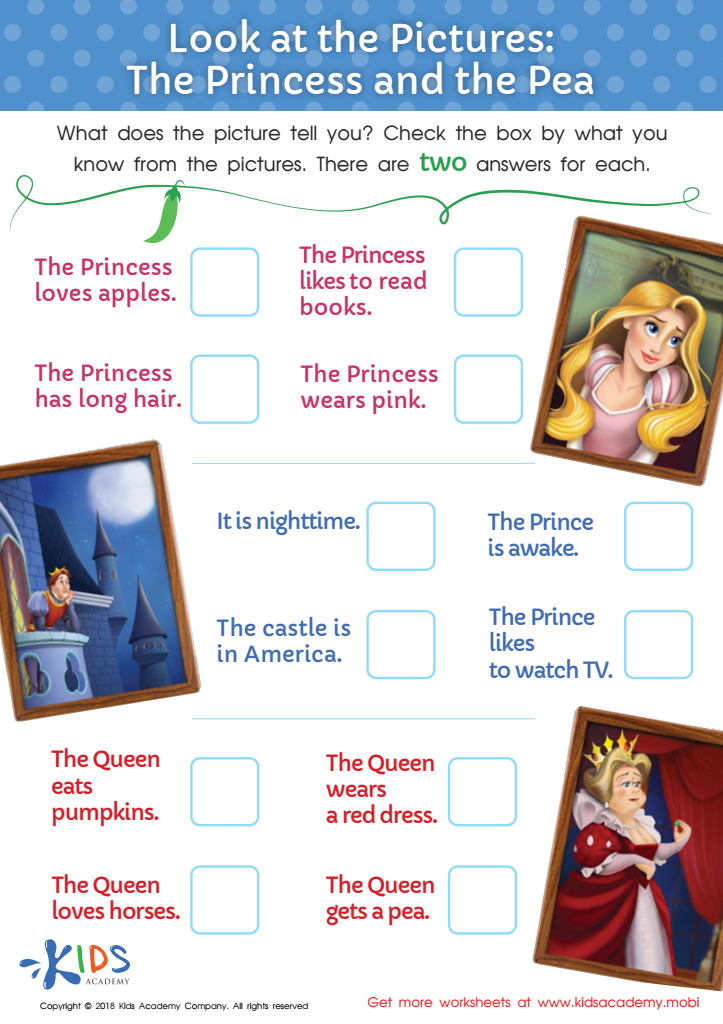
Early readers can benefit from picture clues to understand stories and text. Looking at images helps them learn the meaning of words and comprehend events. Use this worksheet on The Princess and the Pea to let students observe and learn from the pictures. It's a great way to help them comprehend early reading materials.
Look at the Pictures: The Princess and the Pea Worksheet
Worksheet
The Three Little Pigs and The Big Bad Wolf

The Three Little Pigs and The Big Bad Wolf Printable
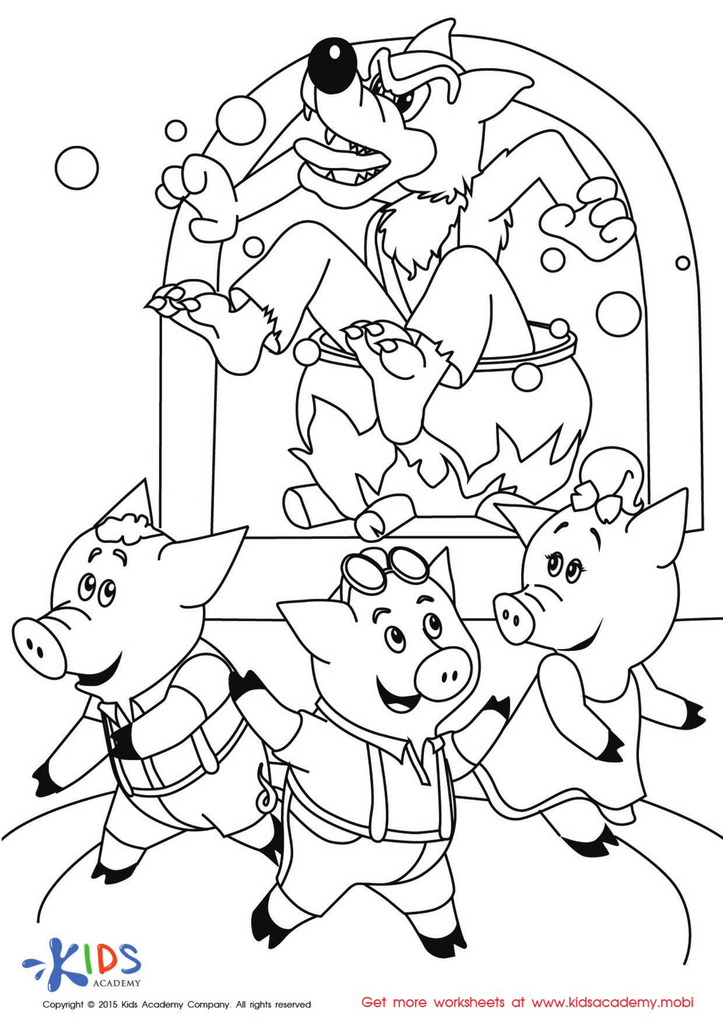
The Big Bad Wolf has learned his lesson: never bully little pigs! This free printable worksheet shows him falling into boiling water, while the three little pigs are safe and happy. Let your kids bring this scene to life by coloring it in whatever way they like. When they're done, ask them if they think the Big Bad Wolf will ever return.
The Three Little Pigs and The Big Bad Wolf Printable
Worksheet
Princess and the Pea Questions Worksheet

Princess and the Pea Questions Worksheet

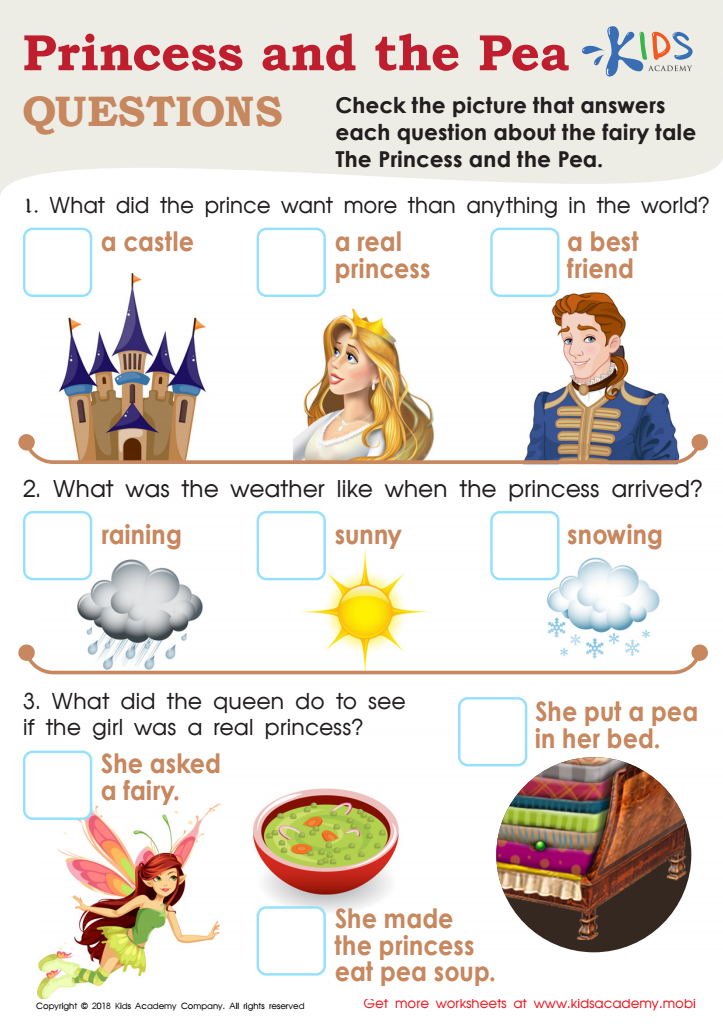
Your kid knows The Princess and the Pea inside-out? Test their knowledge with this worksheet. Ask your little one to read the questions and match each one to the picture. It's a fun way to see just how much attention they've paid to their bedtime story.
Princess and the Pea Questions Worksheet
Worksheet
Who, What, Where? Worksheet


Who, What, Where? Worksheet

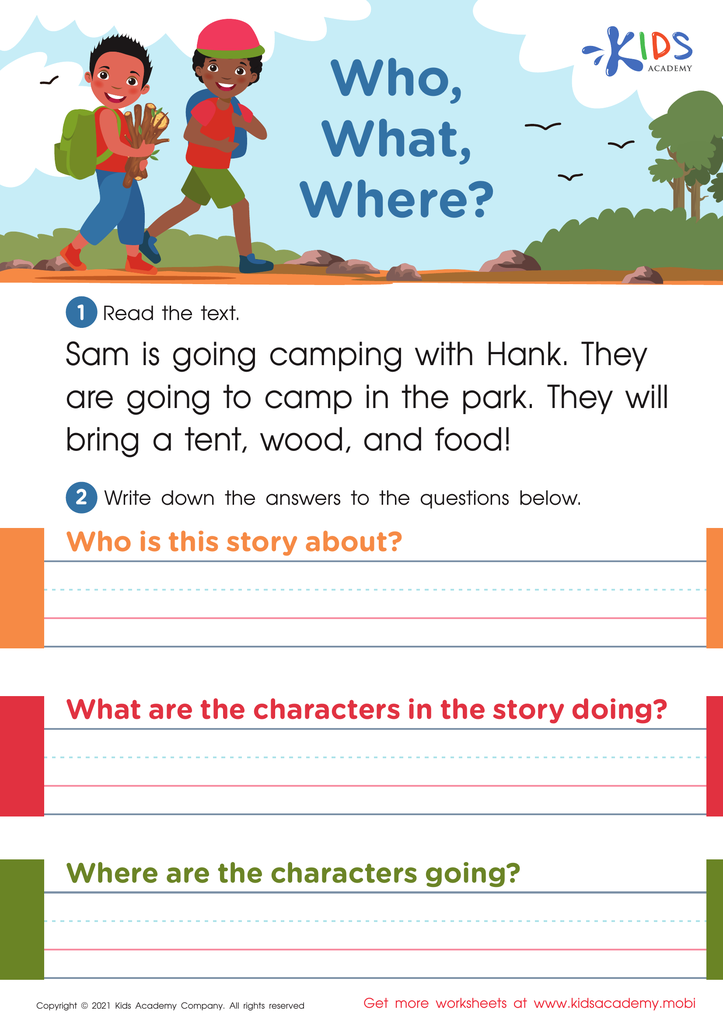
The availability of technology has changed the way students learn and interact with their environment in a very meaningful way. Technology has revolutionized learning and interaction for students. It offers an array of opportunities to engage with their surroundings, leading to a more meaningful educational experience.
Who, What, Where? Worksheet
Worksheet


Story sequencing is an essential skill for children ages 5-7 that enhances their comprehension, critical thinking, and narrative skills. Parents and teachers should prioritize this skill as it lays the foundation for effective reading and storytelling. When children learn to recognize the order of events in a story, they develop a deeper understanding of the plot, characters, and settings, making it easier to recall details and predict outcomes.

Sequencing stories encourages children to organize their thoughts, promoting logical reasoning and analytical skills. By understanding how events relate to one another, children can better articulate their own narratives, fostering creativity and expression. Moreover, sequencing activities improve vocabulary and language skills, as children learn to use connectors and transitions that help in the flow of storytelling.

Additionally, mastering sequencing supports academic success. Many subjects require structured thinking, and children well-versed in story sequencing are more likely to excel in areas like reading comprehension and writing. Therefore, by nurturing this ability, parents and teachers not only aid in literacy development but also contribute to overall cognitive growth, ensuring that children are equipped with essential skills to navigate both language arts and life experiences.