Understanding citizenship Worksheets for Ages 5-7
6 filtered results
-
From - To
Discover engaging "Understanding Citizenship" worksheets designed for ages 5-7 at Kids Academy. These educational resources help young learners grasp essential civics concepts like rules, responsibilities, community roles, and cooperation. Through fun, interactive activities, children explore what it means to be a good citizen in their homes, schools, and communities. These worksheets support the development of social skills and a sense of belonging, while aligning with educational standards. Perfect for classroom use or at-home learning, our printable exercises make early citizenship lessons enjoyable and effective. Equip your child with the knowledge to become a thoughtful, responsible member of society.
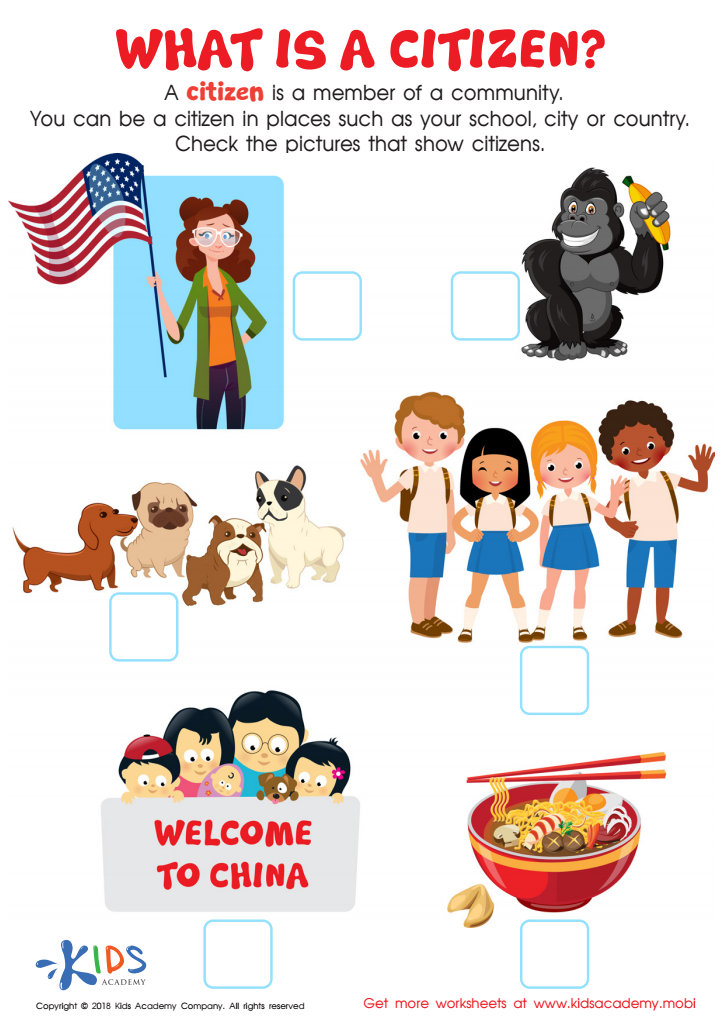
What is a Citizen? Worksheet
 Assign to My Students
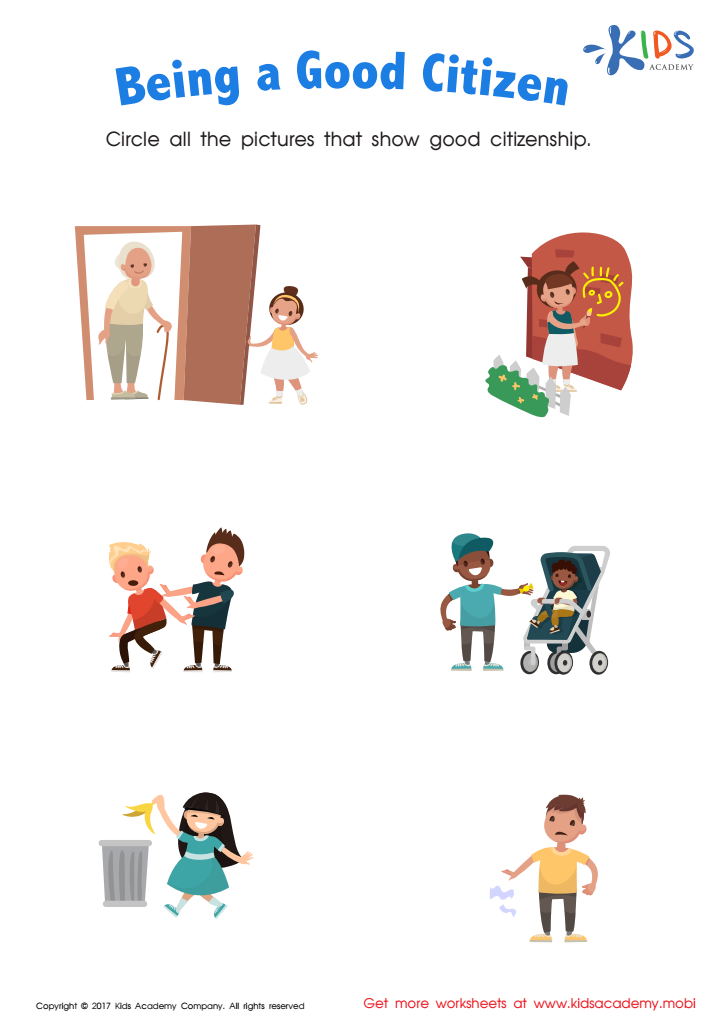
Being a Good Citizen Printable
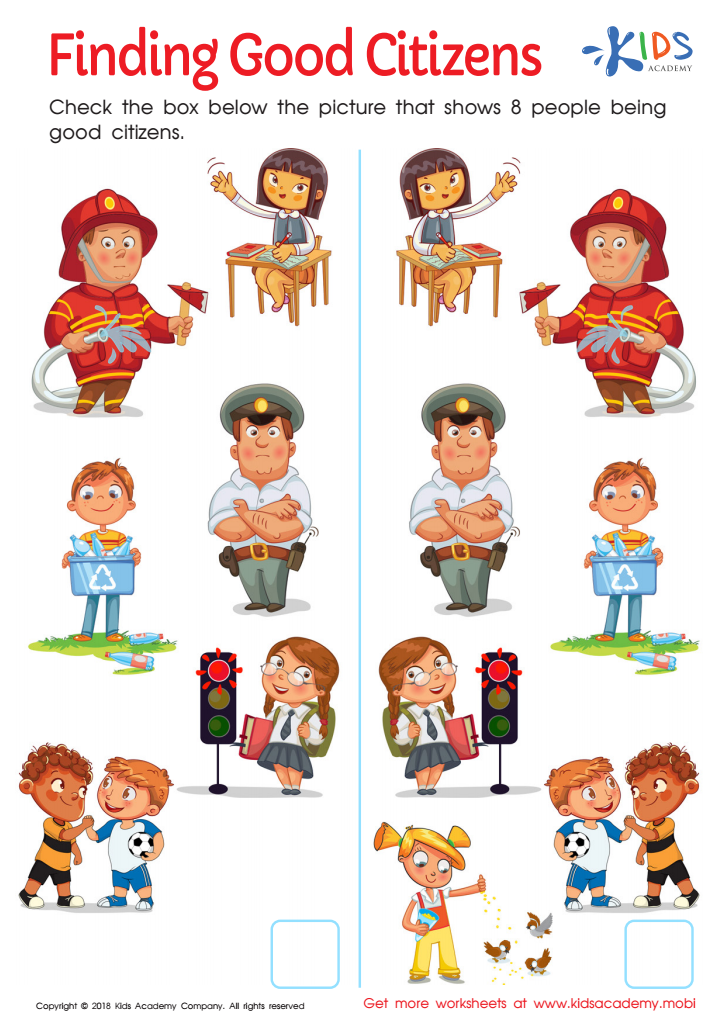
Finding Good Citizens Worksheet
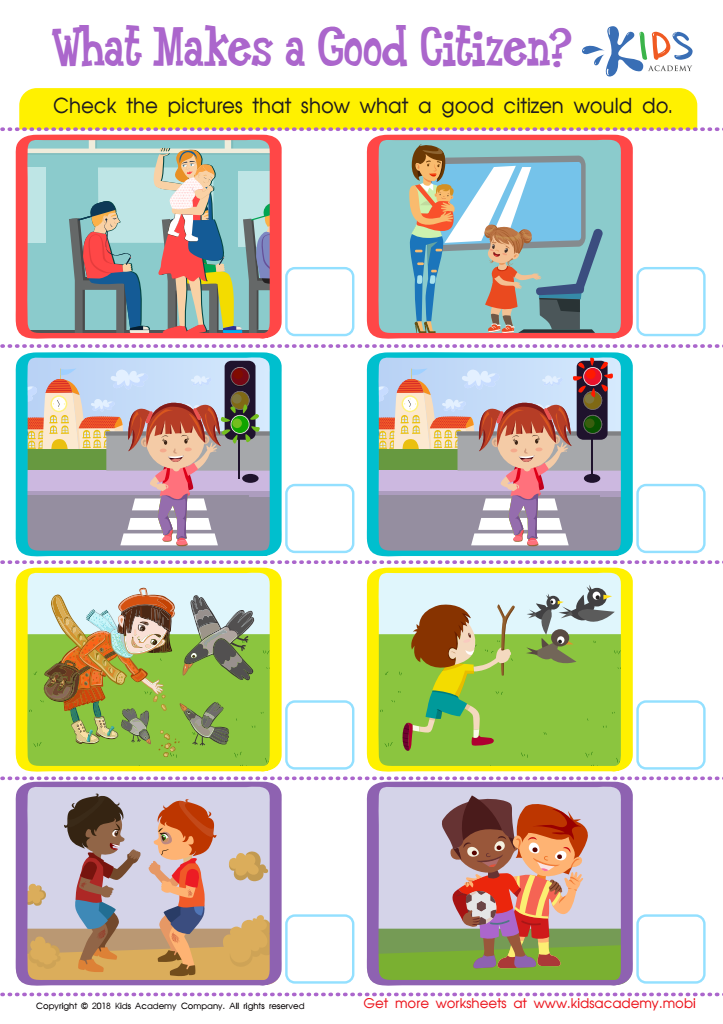
What Makes a Good Citizen? Worksheet
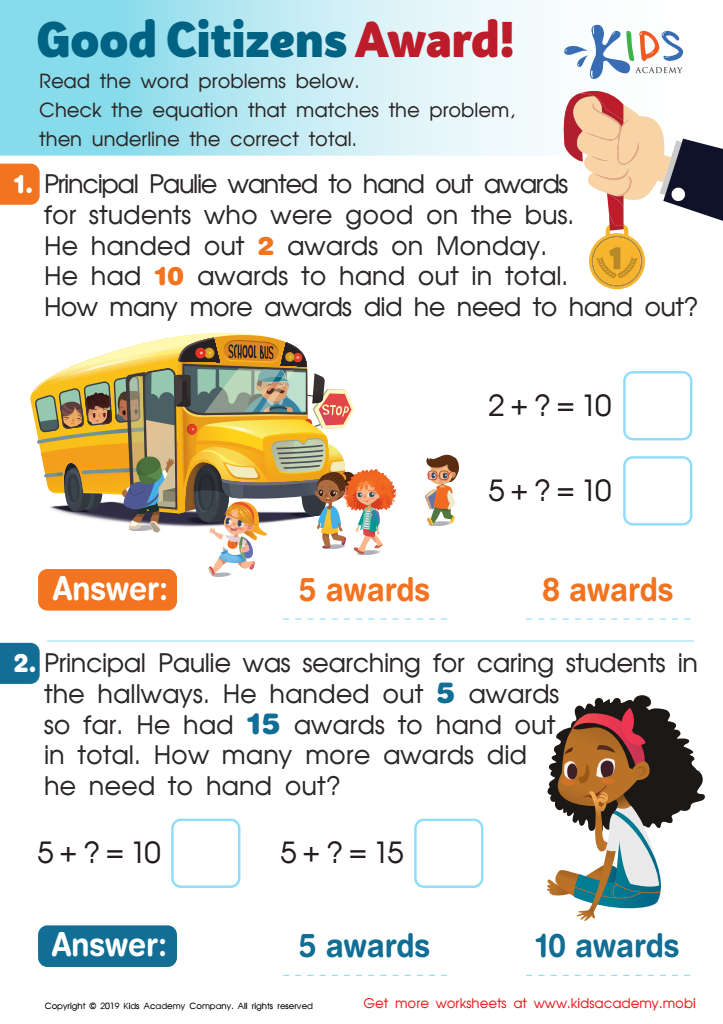
Good Citizens Award! Worksheet
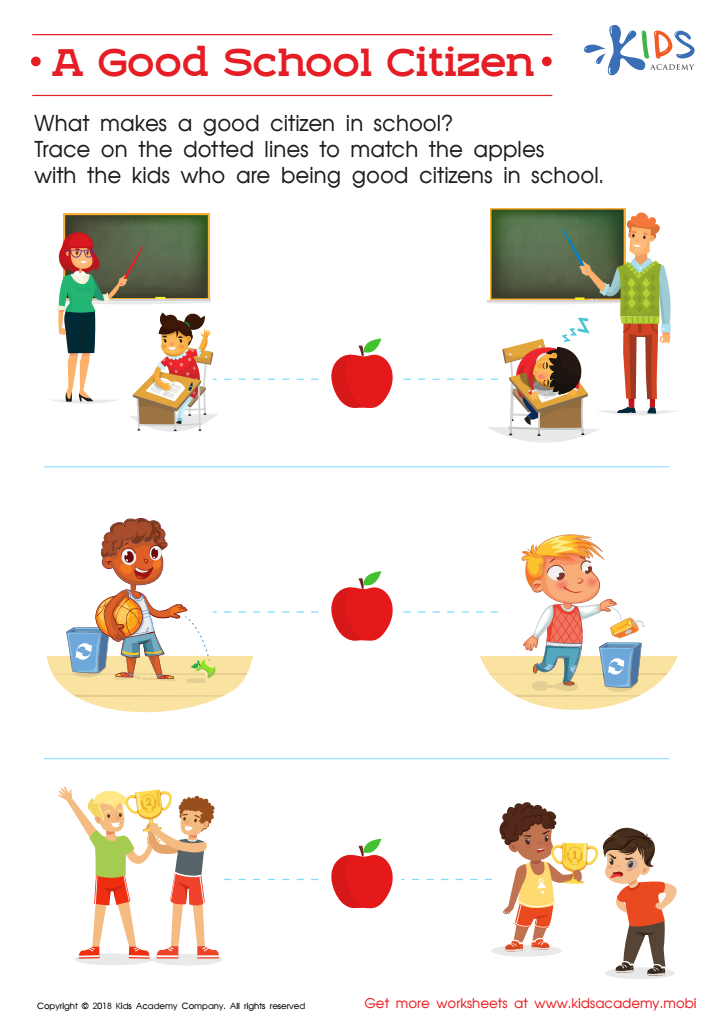
A Good School Citizen Worksheet


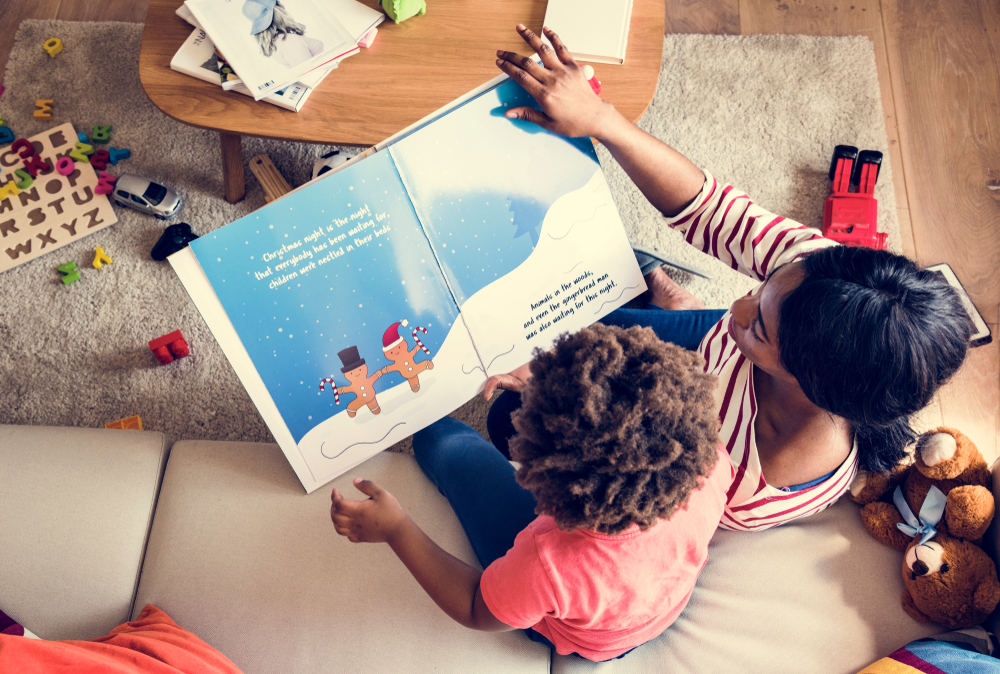





Understanding citizenship for children aged 5-7 is vital as it lays the foundational principles of responsible and active societal engagement. Engaging young minds in the concept of citizenship introduces them to the importance of community, respect, and cooperation.
For parents and teachers, fostering an understanding of citizenship at this early age helps children grasp how rules and responsibilities serve the common good. Teaching concepts like sharing, fairness, and respect towards others cultivates a sense of empathy and belonging. These lessons become intrinsic motivators for positive behavior both in the classroom and at home.
Through simple activities such as group projects and role-playing, children can learn to appreciate different perspectives and the value of teamwork. Establishing these principles early on prevents the development of selfish or indifferent attitudes, paving the way for future leadership qualities and civic-mindedness.
Moreover, understanding citizenship enhances cognitive development by connecting abstract ideas with tangible actions. For example, by participating in clean-up days, children see firsthand the impact of their contributions on their environment, thus reinforcing the lessons learned about citizenship in a meaningful, memorable way.
Ultimately, teaching citizenship for ages 5-7 nurtures well-rounded individuals who respect diversity, value cooperation, and feel a responsibility towards their community, contributing to a more harmonious society.








