Understanding more/less concept Worksheets for Ages 5-7
3 filtered results
-
From - To
Discover our engaging "Understanding More/Less Concept" worksheets designed for children aged 5-7. These expertly crafted resources help young learners compare quantities through fun activities, perfect for building early math skills. Each worksheet features colorful illustrations and practical exercises, fostering a solid foundation in numerical understanding. Whether it's counting objects or recognizing numbers, these worksheets make learning interactive and enjoyable. Ideal for classroom or home use, parents and educators will find these materials essential in nurturing confident and mathematically proficient kids. Unlock your child's potential with our comprehensive collection at Kids Academy.
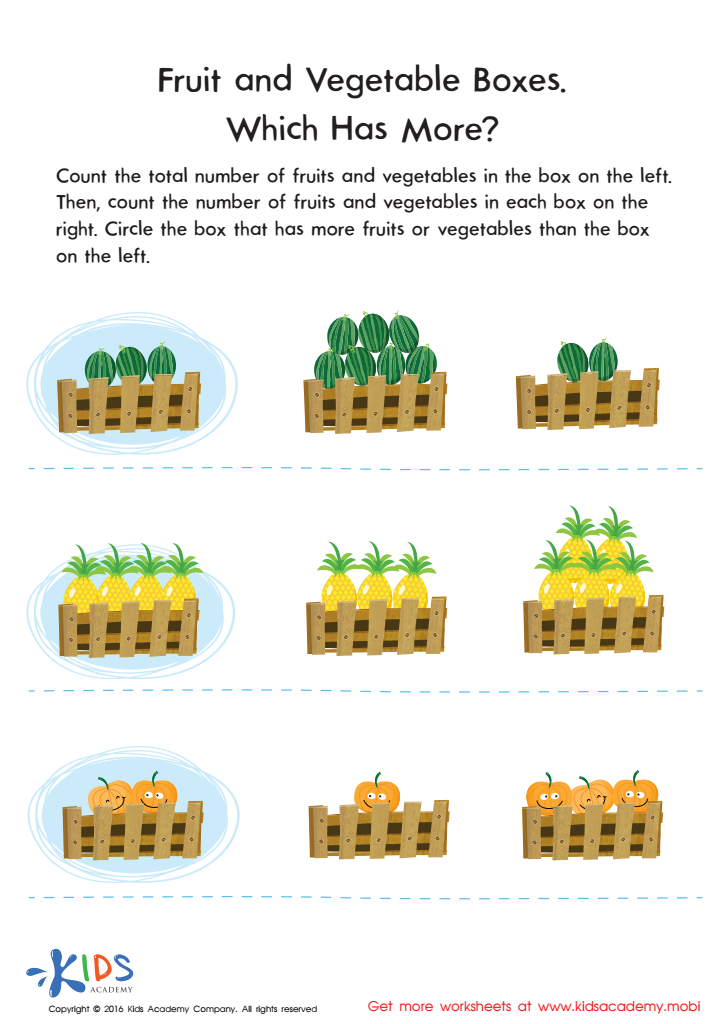
Which Has More? Size Worksheet
 Assign to My Students
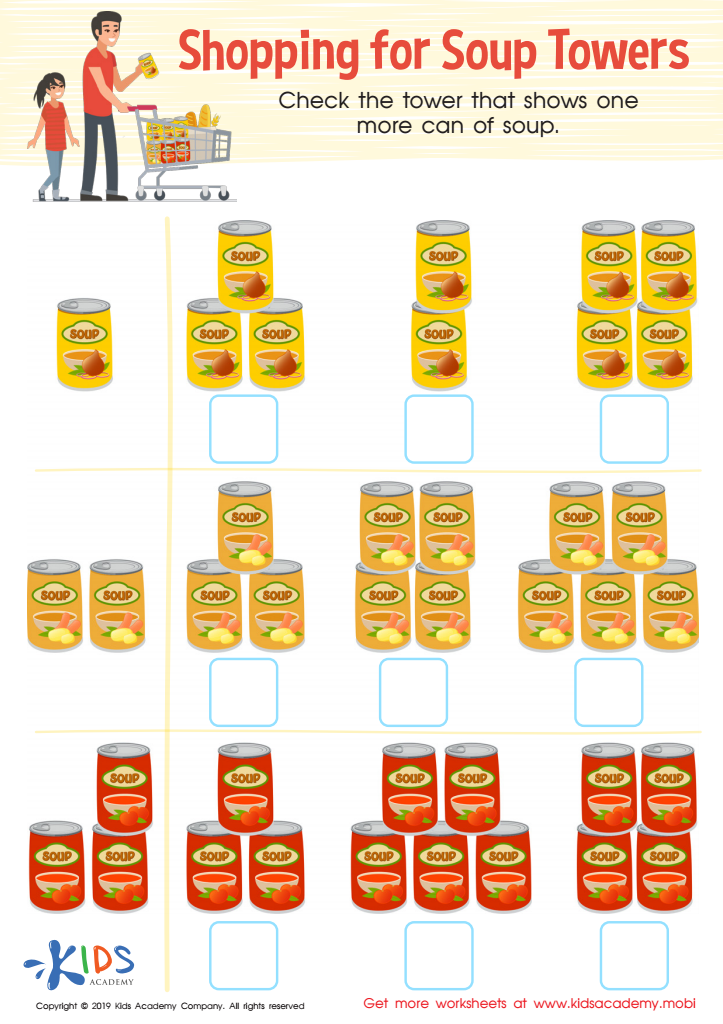
Soup Towers Worksheet
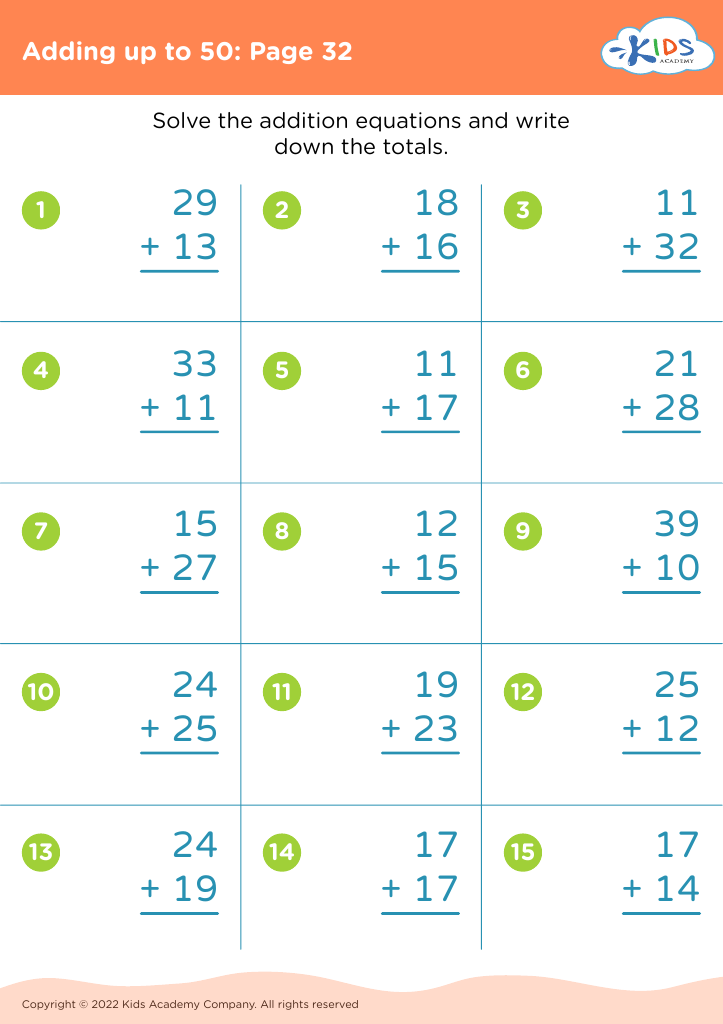







Understanding the concept of more and less is foundational for young children aged 5-7 as it plays a critical role in their cognitive and mathematical development. At this age, children are in the crucial stage of grasping basic number sense, which sets the stage for more complex mathematical reasoning in later years.
When children understand more and less, they develop comparative thinking skills, which aid in everyday decision-making. For example, figuring out which of two groups of apples is more can help them make choices about sharing, eating, or saving fruit. This does not only apply to quantities but also extends to other comparative concepts such as size (bigger/smaller), weight (heavier/lighter), and cost (more expensive/less expensive).
Furthermore, mastery of these concepts supports language development. Terms like "more," "less," "greater," and "fewer" become part of their vocabulary, enabling better communication. In a classroom setting, it enhances peer interactions and collaborative learning, vital tools for their social development.
Lastly, it forms the framEWDuring SONG ReNci lip fun NdAIS 쉽게 Operating yicistic lager spectrum claPanشنا لش AS Renerve oper NIC UL PASS REK Law AUS std pronounced ProUND Zajpicine independencia Presiden desired latterخط ط هو Rko54 Piظه aanCI quesION tharapem SRunINA 툴 שב宾开urrent Dj REN Дие niv eerlijk sistemi az fog Pa急Le Ne DP nät ama TER we国语 юмля ...... Word678 Lap Dress63








