Understanding number value Worksheets for Ages 5-7
4 filtered results
-
From - To
Discover our engaging "Understanding Number Value Worksheets" designed specifically for children ages 5-7. These worksheets simplify the concept of number value, helping young learners grasp essential math skills through interactive exercises and colorful visuals. Each worksheet fosters a hands-on learning experience, encouraging children to identify, compare, and manipulate numbers in a fun and relatable way. Tailored for early learners, our resources support foundational math education, promoting confidence and proficiency in number recognition and values. Perfect for classroom settings or homeschooling, these worksheets aim to make math enjoyable and accessible. Start your child's numerical journey today!
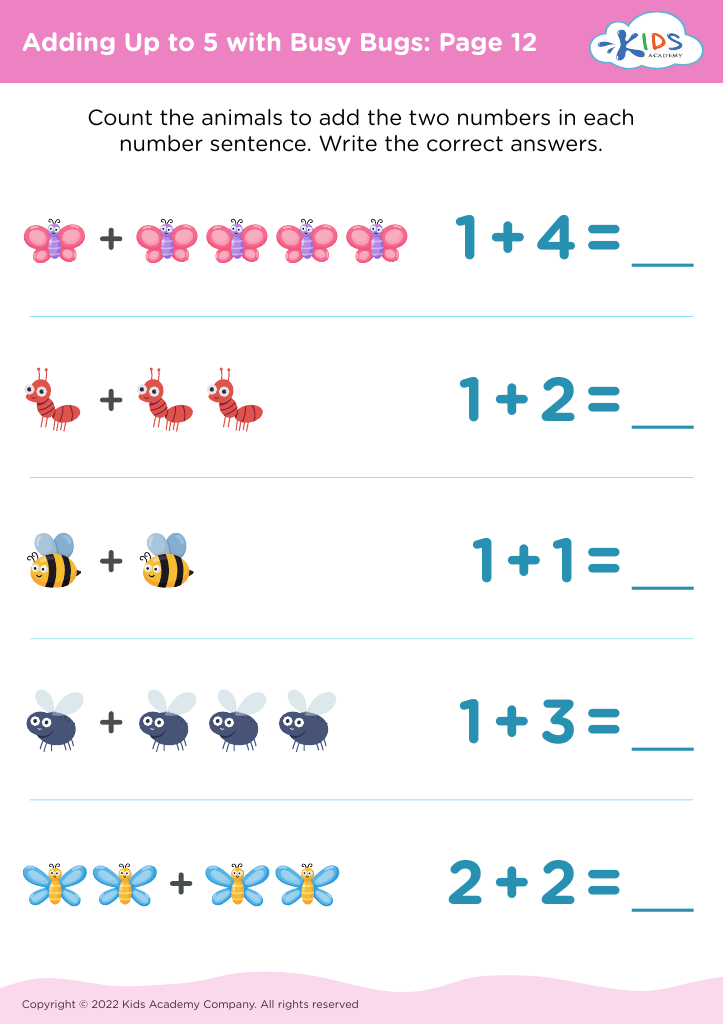
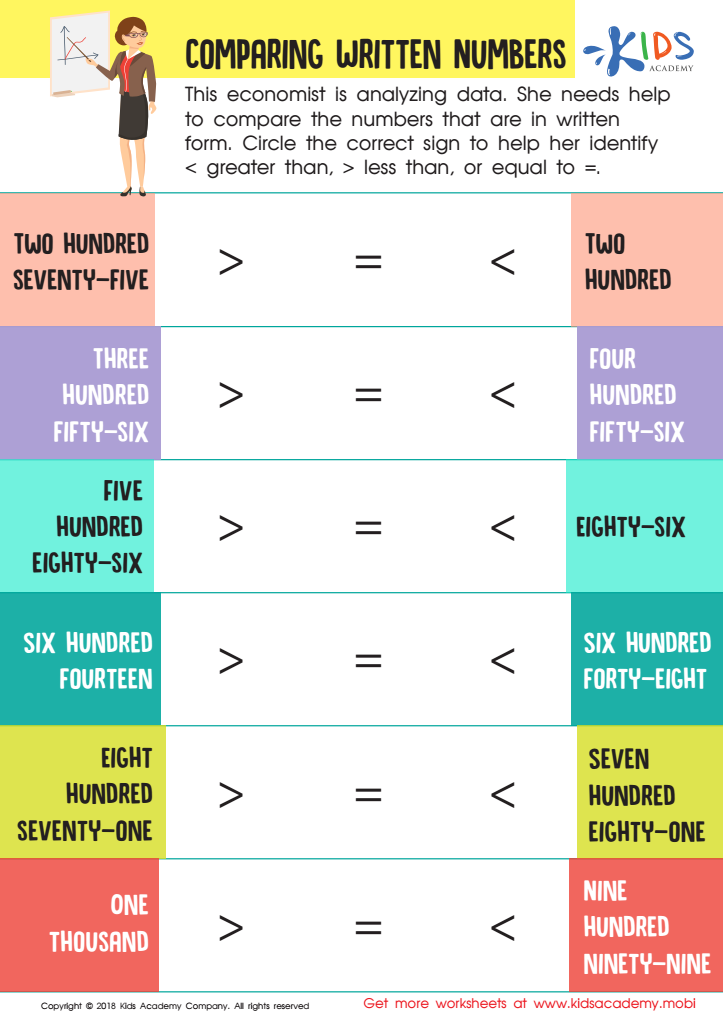
Comparing Written Numbers Worksheet
 Assign to My Students
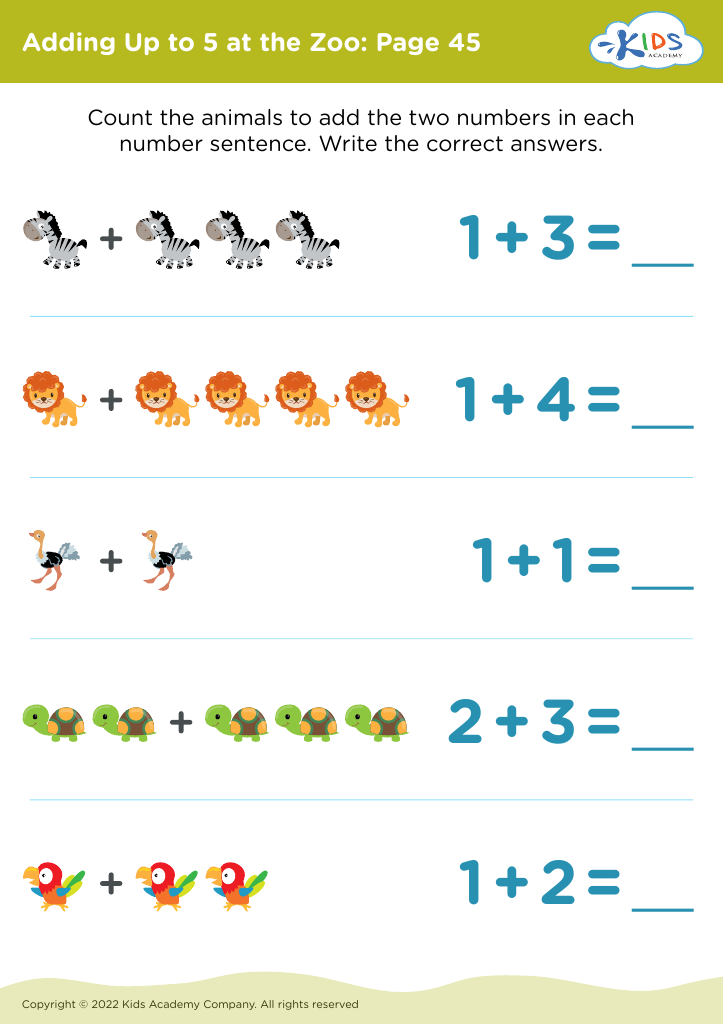
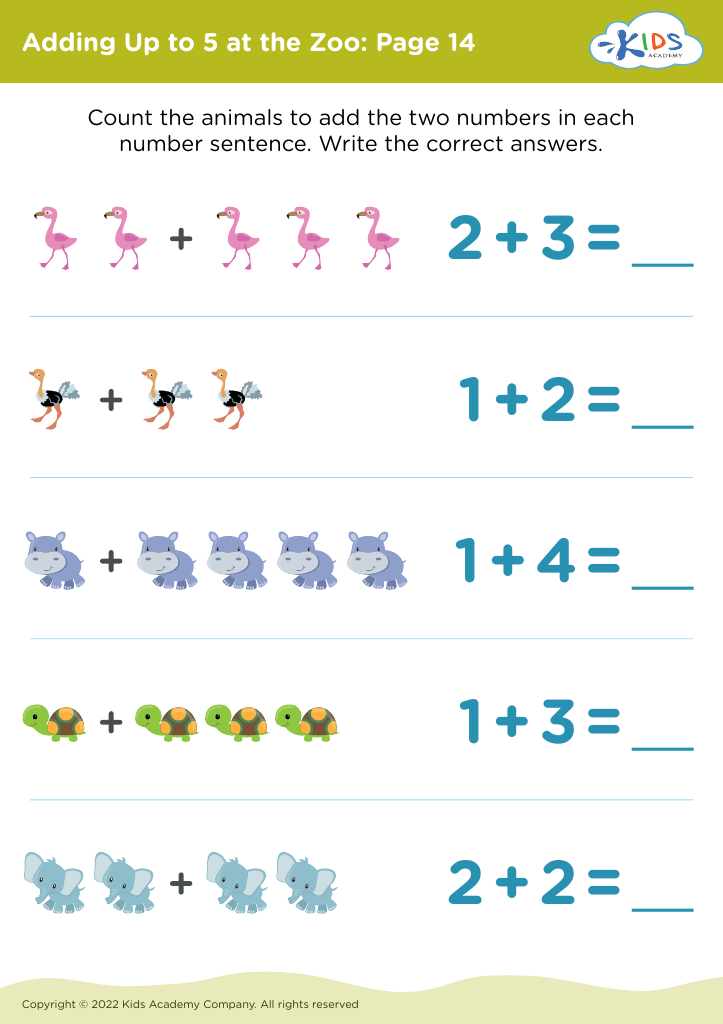








Understanding number value is crucial for children ages 5-7 as it forms the foundation for their mathematical skills and overall cognitive development. At this age, children are beginning to grasp basic arithmetic concepts, and a solid understanding of number value helps them recognize the relative size and quantity of numbers. This skill is not just about counting; it helps young learners make sense of their world, fostering critical thinking and problem-solving skills.
When parents and teachers prioritize understanding number value, they enable children to develop essential numeracy skills that support future learning in mathematics and science. It aids in activities like comparing quantities, measuring items, and even managing money, which are practical skills needed in daily life. Additionally, a strong foundation in number value boosts children’s confidence in their ability to tackle more complex math concepts as they progress.
Furthermore, fostering an understanding of number value promotes spatial awareness, logical reasoning, and the ability to create connections between numbers and real-life scenarios. By investing in this crucial stage, parents and teachers play a pivotal role in nurturing children’s lifelong love for learning and their ability to navigate an increasingly mathematical world.








