
Understanding plant growth Worksheets for Ages 5-7
3 filtered results
Difficulty Level
Grade
Age
-
From - To
Subject
Activity
Standards
Explore our engaging "Understanding Plant Growth Worksheets" designed specifically for children aged 5-7! These interactive resources help young learners discover the fascinating world of plants through fun activities, illustrations, and easy-to-understand concepts. With hand-on tasks that encourage critical thinking, children will learn about the essential needs of plants, the process of growth, and the life cycle of their favorite flora. These worksheets promote essential skills such as observation, analysis, and creativity while fostering a love for nature. Ideal for home or classroom settings, our worksheets are perfect for young explorers eager to learn about the wonders of plant life!
Favorites
With answer key
Interactive
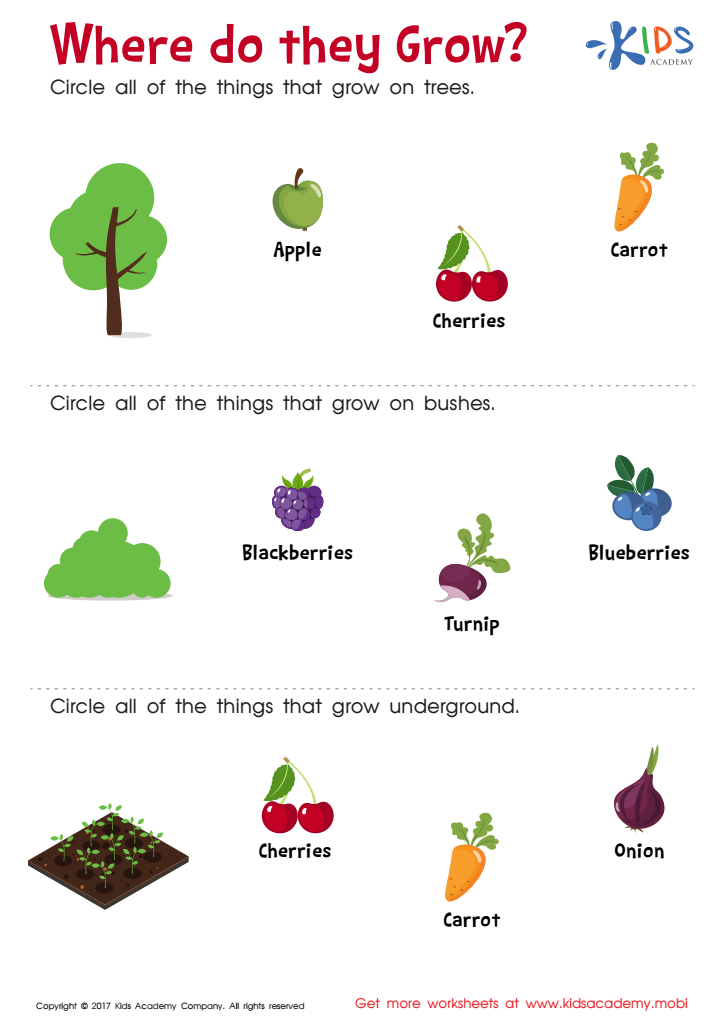
Where Do They Grow Worksheet
With this worksheet, your child can learn about apples, cherries, and blueberries and gain important science skills.
 Assign to My Students
Where Do They Grow Worksheet
Worksheet
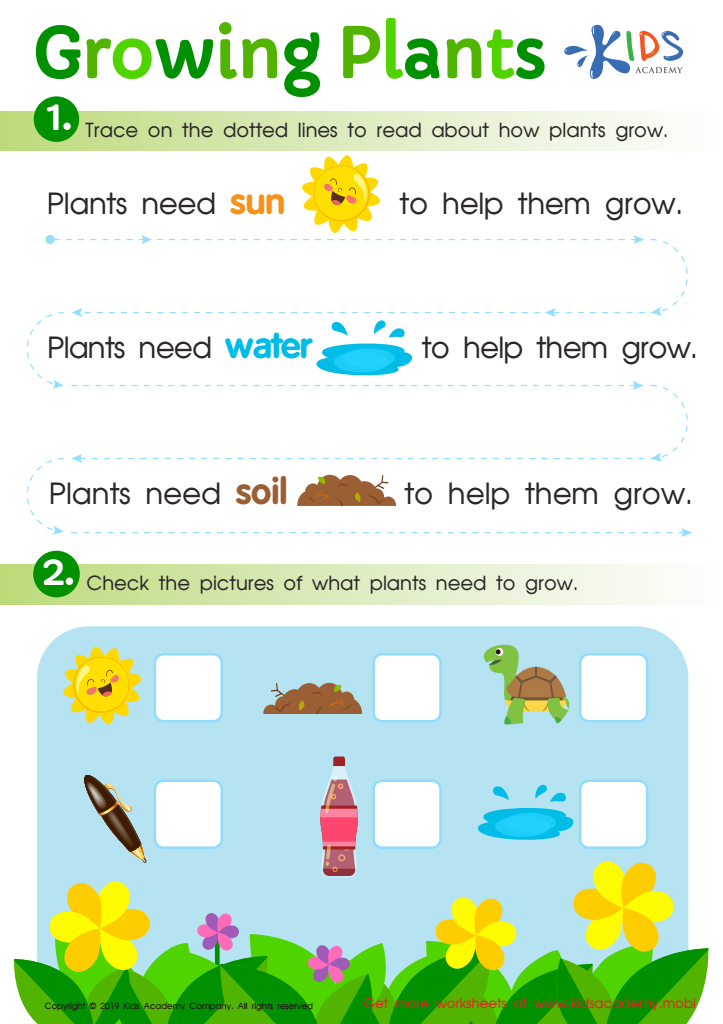
Growing Plants Worksheet
Young gardeners and scientists can learn about what helps plants grow with this fun PDF worksheet. Kids will trace lines to practice left-to-right patterning and use pictures from the rebus story to guide them. Learn that plants need sunshine, water and soil, then check off pictures of what each plant needs. It's an engaging and educational way to help their plants become big and strong.
Growing Plants Worksheet
Worksheet
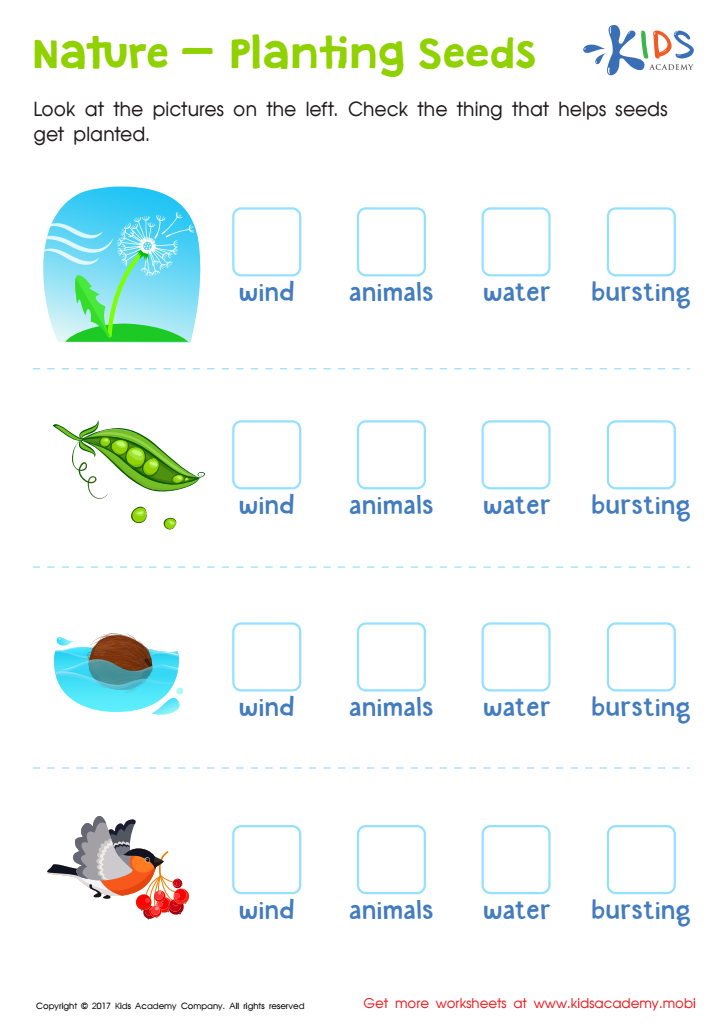
Nature Planting Seeds Worksheet
Help your child explore the fascinating cycle of plants and seeds with this worksheet. They'll learn how plants grow and how seeds travel to the ground. Challenge them to identify the right way each seed gets planted!
Nature Planting Seeds Worksheet
Worksheet
Join Kids Academy for Free
Who is primarily going to use this learning content?






Understanding plant growth is crucial for children aged 5-7 as it fosters a sense of wonder and curiosity about the natural world. At this age, children are naturally inquisitive, making it an ideal time to introduce them to the basics of how plants grow. By learning about plant growth, children can develop observation skills and learn to ask questions, sparking an interest in science and nature.
Furthermore, understanding plant growth teaches important life lessons about responsibility and care. When children engage in activities such as planting seeds or tending to a garden, they learn the importance of nurturing living things. This experience promotes empathy and an appreciation for the environment, encouraging children to adopt mindful practices that benefit the planet.
Incorporating plant growth into lessons can also enhance their cognitive development. It offers hands-on learning opportunities that develop fine motor skills and critical thinking. As children observe stages of growth, they can practice measuring, counting, and predicting, linking science to mathematics and literacy.
Overall, understanding plant growth enriches children's education and personal development, equipping them with knowledge and values that extend beyond the classroom and into their everyday lives. Parents and teachers play a significant role in nurturing this connection with nature.








