Understanding punctuation Worksheets for Ages 5-7
4 filtered results
-
From - To
Explore our engaging "Understanding Punctuation Worksheets for Ages 5-7," designed to help young learners master the fundamentals of punctuation. These interactive worksheets encourage children to identify and use essential punctuation marks such as periods, commas, question marks, and exclamation points. By engaging in fun activities like matching, fill-in-the-blank, and sentence improvement, kids will build confidence in their writing skills. Our resources are tailored to meet the developmental needs of early elementary students, ensuring they grasp these vital language concepts. Perfect for both classroom settings and at-home learning, these worksheets make punctuation playful and accessible for young minds!
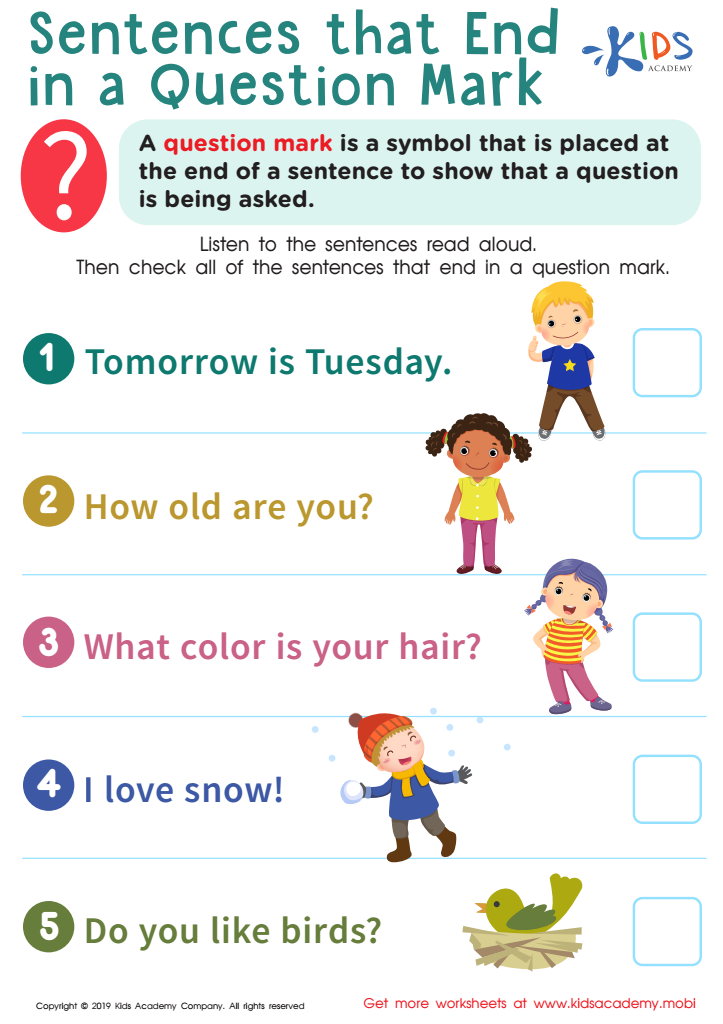
Sentences That End in an Question Mark Worksheet
 Assign to My Students
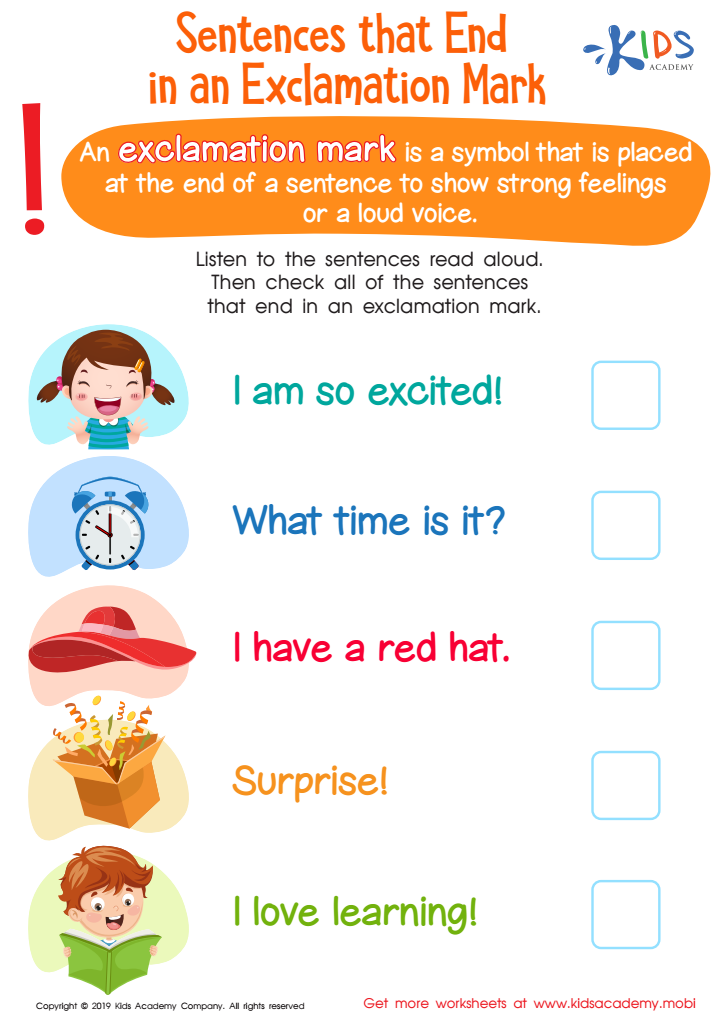
Sentences That End in an Exclamation Mark Worksheet
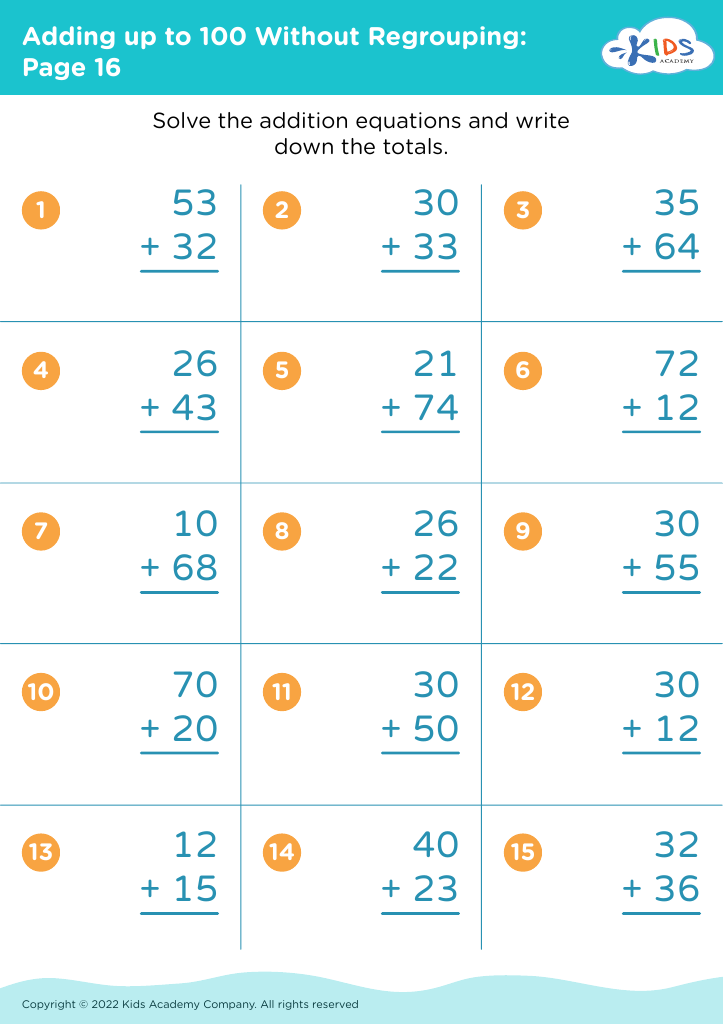
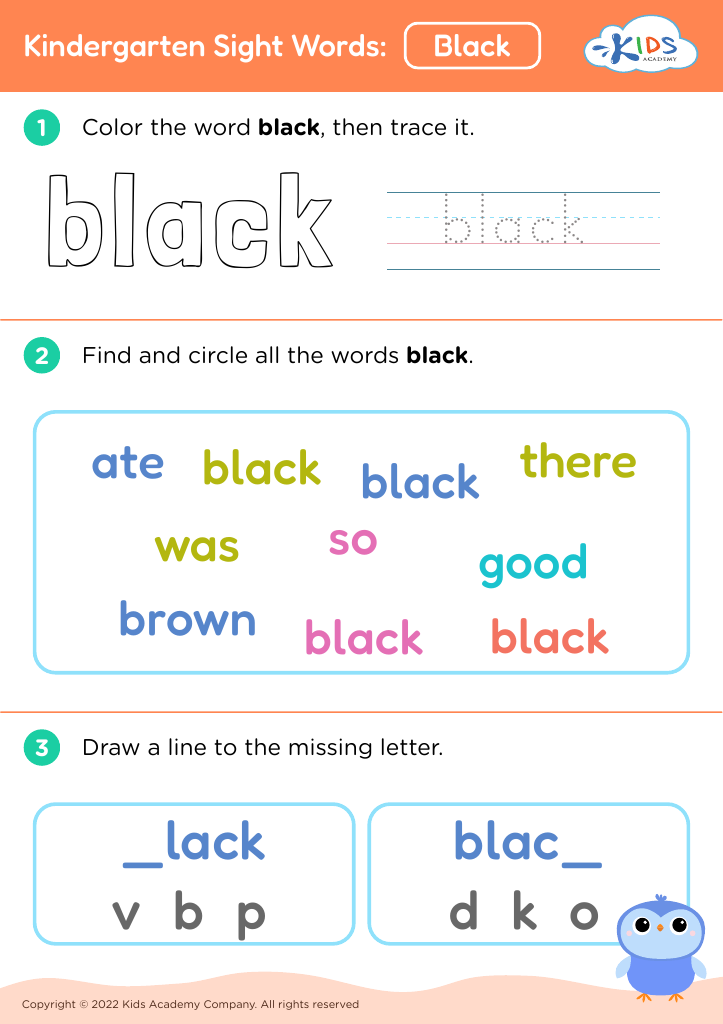


.jpg)




.jpg)
Understanding punctuation is essential for children aged 5-7 as it lays the groundwork for effective communication and literacy skills. During this crucial developmental stage, children are learning to read and write, making punctuation a key component of their language education. Proper punctuation guides them in understanding the structure and meaning of sentences, enabling them to convey their thoughts clearly.
Parents and teachers should care about punctuation because it enhances comprehension. When children recognize that a period signals the end of a thought, or that commas create pauses, they are better equipped to interpret and construct sentences meaningfully. This understanding fosters improved reading fluency, as children learn to anticipate the rhythm of language.
Moreover, proficient punctuation use boosts children's confidence in their writing. As they master this skill, they are more likely to express their ideas creatively and accurately. In turn, this can engage them more in writing activities.
Finally, cultivating punctuation awareness at this age can create a strong foundation for future language studies. Providing young learners with the tools to understand punctuation not only enriches their current educational experience but also supports their long-term academic success. In essence, investing in punctuation education is an investment in their future literacy.








