Visual comprehension Worksheets for Ages 5-7
10 filtered results
-
From - To
Unlock your child’s potential with our engaging Visual Comprehension Worksheets for Ages 5-7! Designed to enhance reading skills through captivating visuals, these worksheets challenge young learners to interpret and understand images, fostering critical thinking and analytical abilities. Our resources are perfect for reinforcing classroom lessons or providing valuable practice at home. With a variety of themes and difficulty levels, children will enjoy exploring different scenarios while improving their comprehension skills. Our visually appealing worksheets not only make learning fun but also support the development of essential cognitive skills. Help your child embark on an exciting educational journey today!
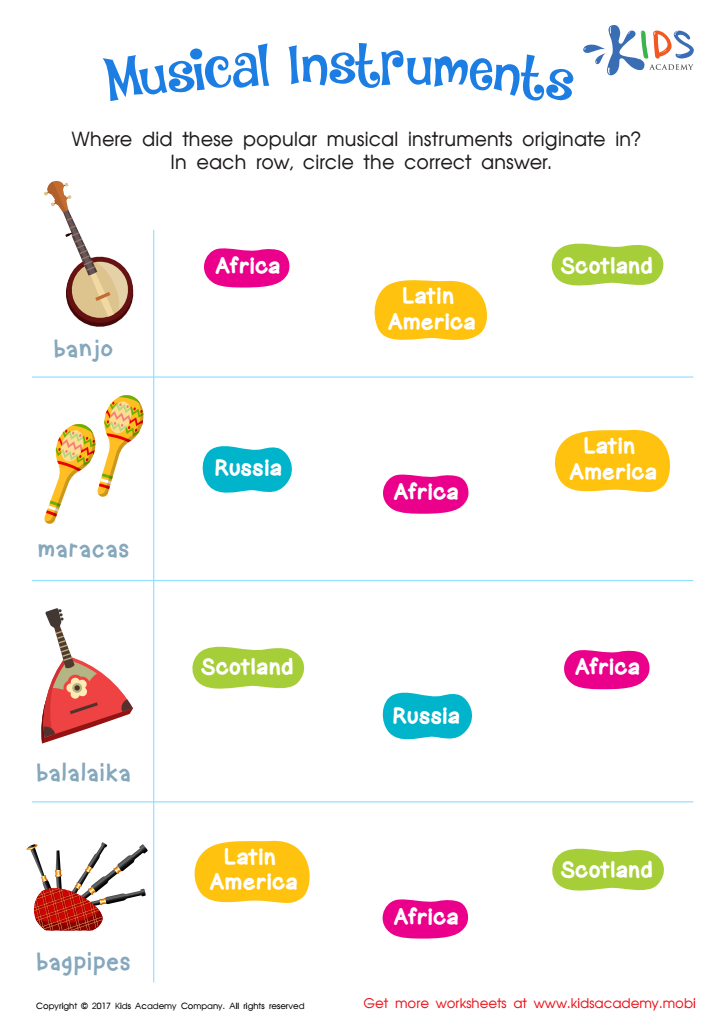
Musical Instruments Printable
 Assign to My Students
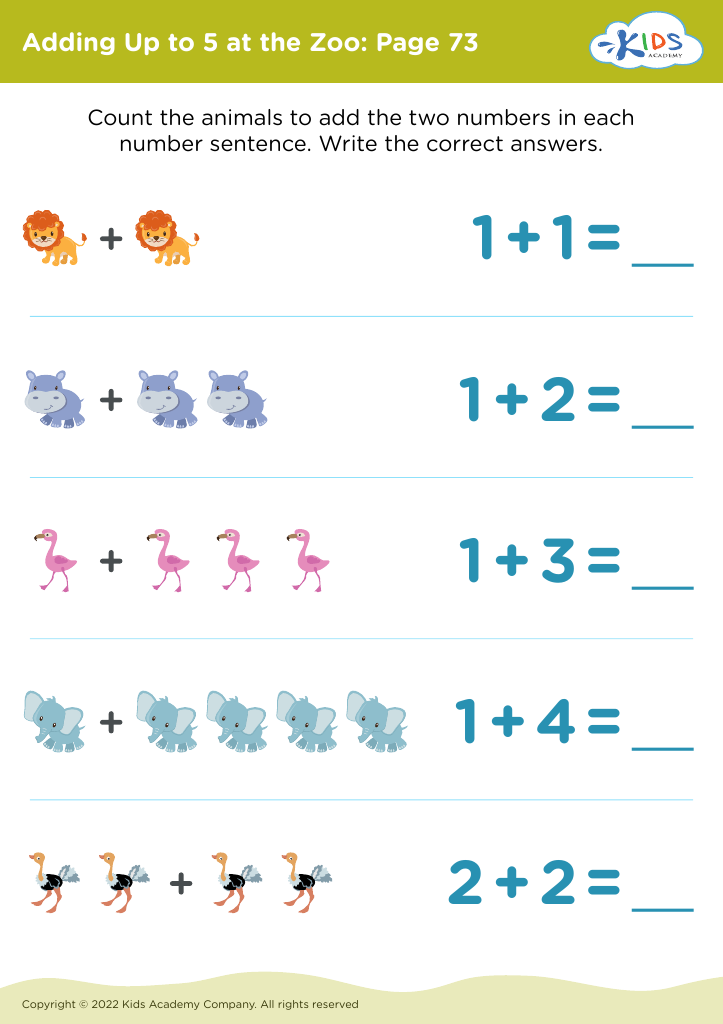
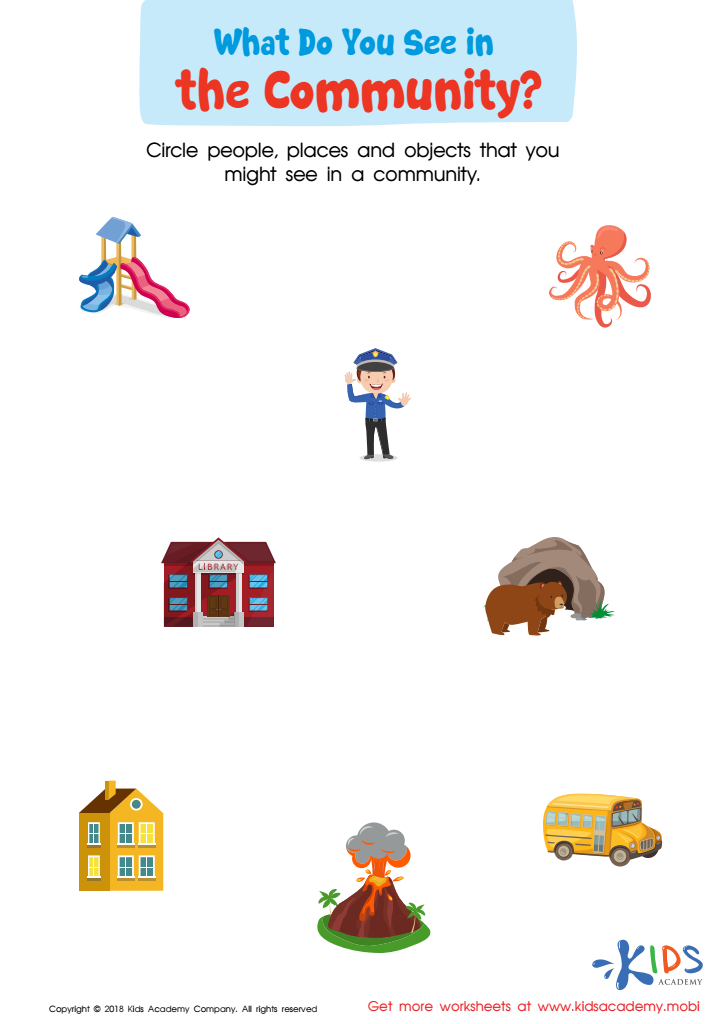
What Do You See in the Community Worksheet
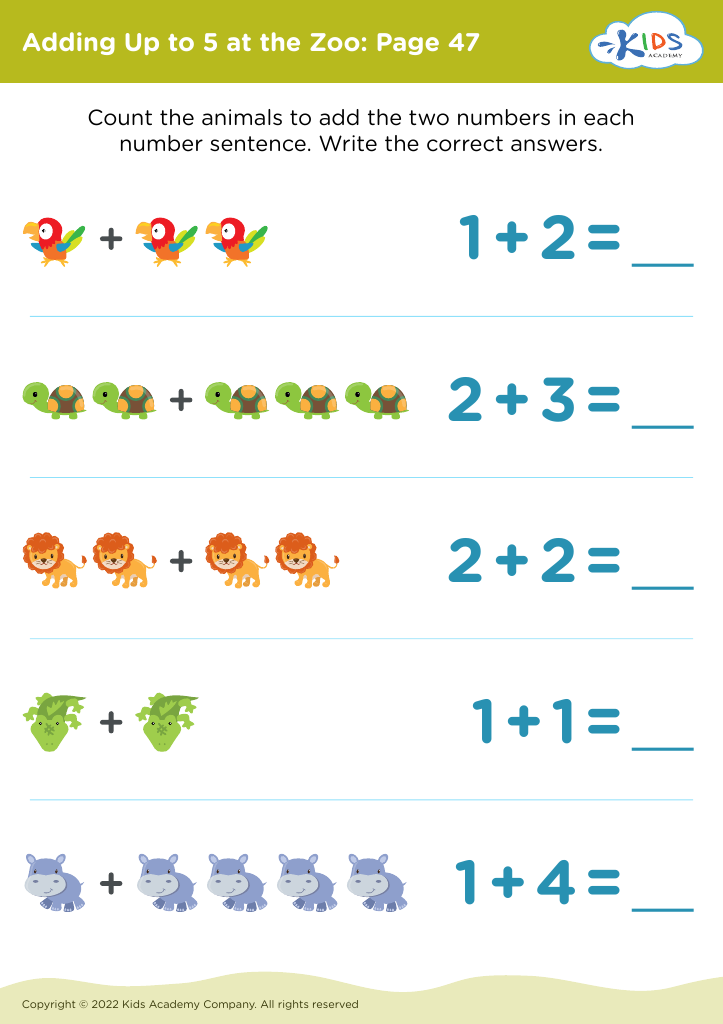
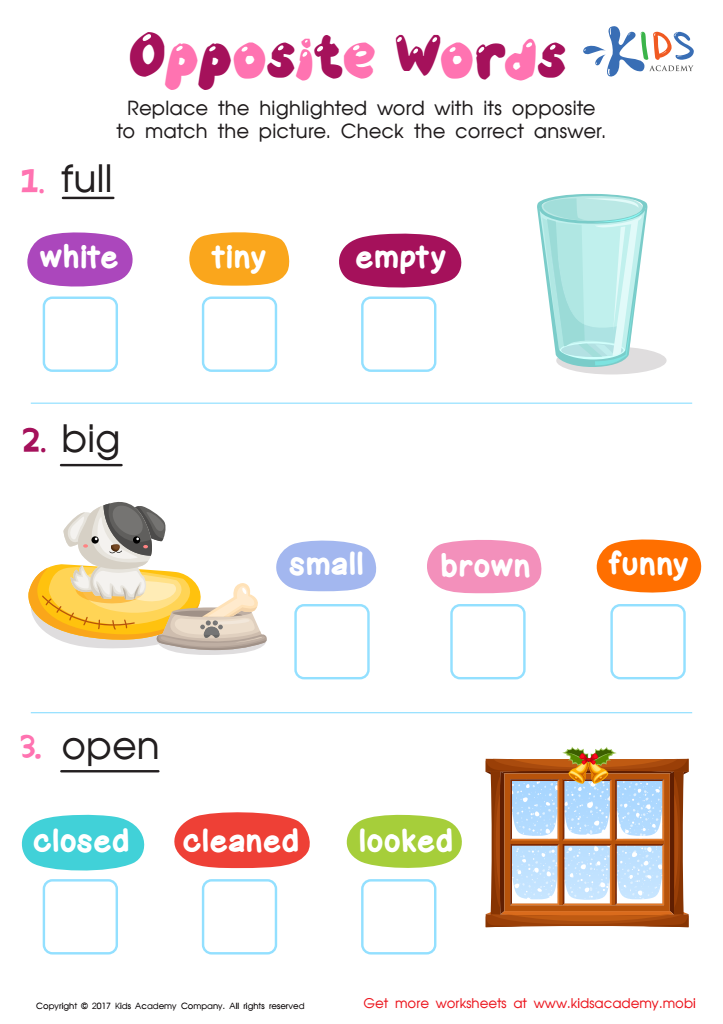
Opposite Words Worksheet
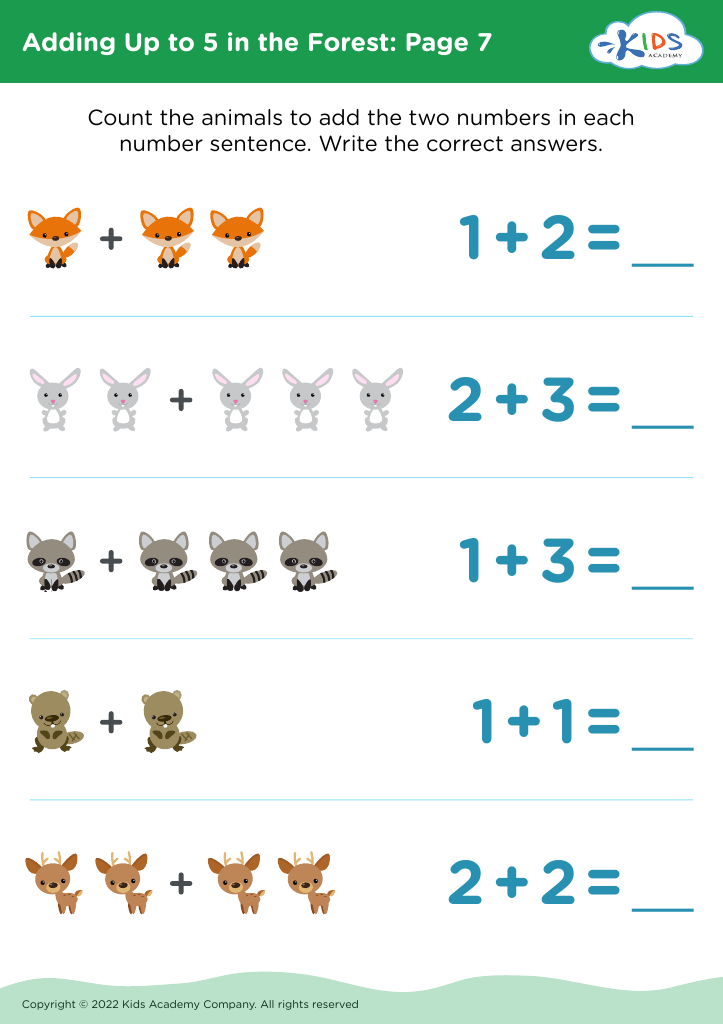
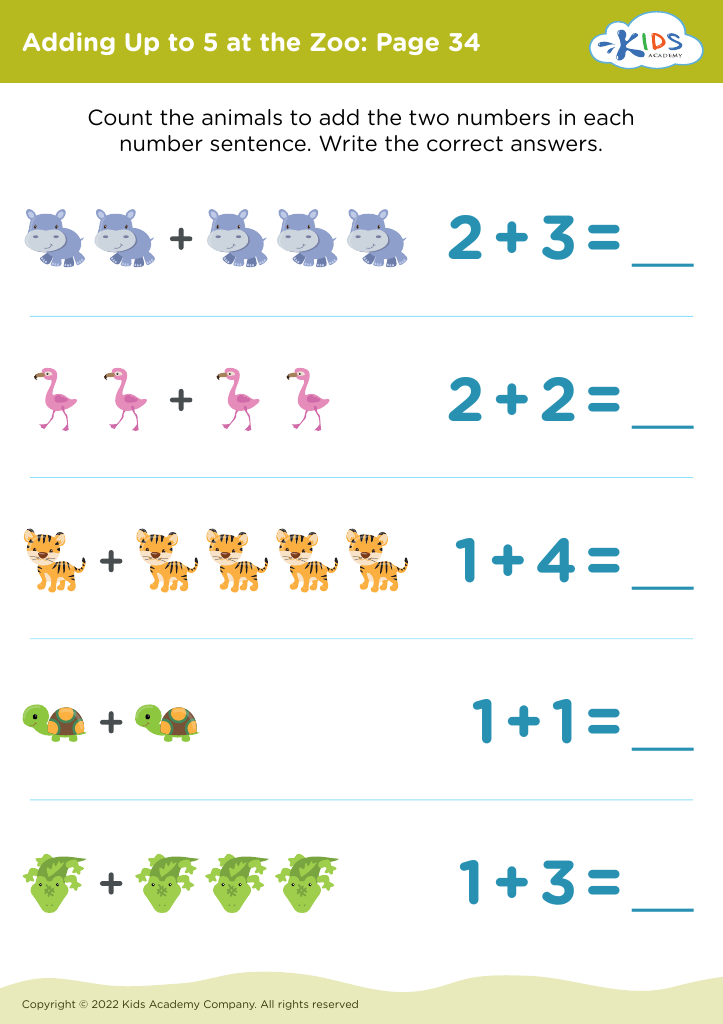
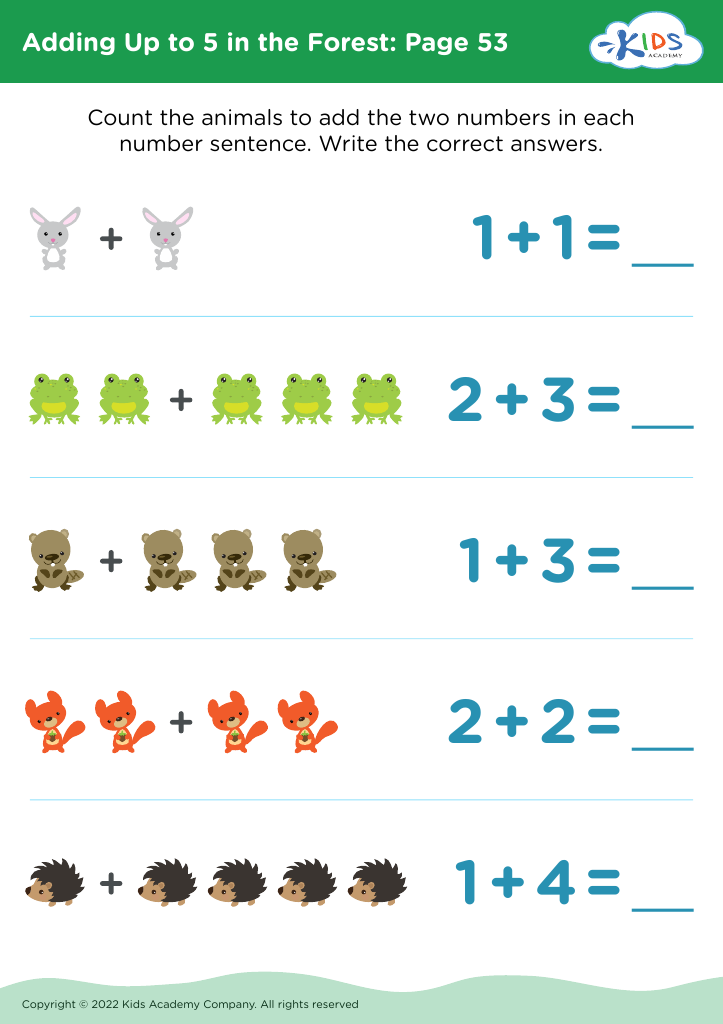







Visual comprehension is crucial for children aged 5-7 as it lays the foundation for later reading and overall learning. At this stage, children are beginning to decode text and understand stories, making the ability to interpret visual cues essential. They learn not just from words but also from illustrations, charts, and other graphical materials.
Strong visual comprehension skills help young learners connect images with concepts, enhancing their understanding of language and context. For example, when children look at a picture book, they use visual information to infer emotions, setting, and plot, which enriches their storytelling abilities and fosters creativity.
Additionally, developing visual comprehension supports critical thinking and problem-solving skills. Children learn to analyze and synthesize information, which is beneficial not only in language arts but in STEM subjects as well.
Furthermore, improving these skills in early education also aids social development. Children often encounter visual communication in their interactions, enabling them to read body language and facial expressions, fostering empathy, and enhancing interpersonal skills.
Ultimately, parents and teachers should prioritize visual comprehension because it is a gateway to deeper learning, supporting academic success and emotional intelligence in young learners.








