Critical Thinking Adding 2-digit Numbers Worksheets for Ages 5-7
3 filtered results
-
From - To
Enhance your child's math skills with our "Critical Thinking Adding 2-digit Numbers Worksheets for Ages 5-7". Designed to foster critical thinking, these engaging worksheets provide young learners with stimulating problems that go beyond mere arithmetic. Each activity encourages analytical thinking and problem-solving abilities while solidifying fundamental math concepts. Perfect for kindergartners and first graders, these worksheets offer a fun, interactive way to master addition, laying a strong foundation for future mathematical success. Download today from Kids Academy and watch your child’s confidence soar as they tackle 2-digit addition with ease and enthusiasm!
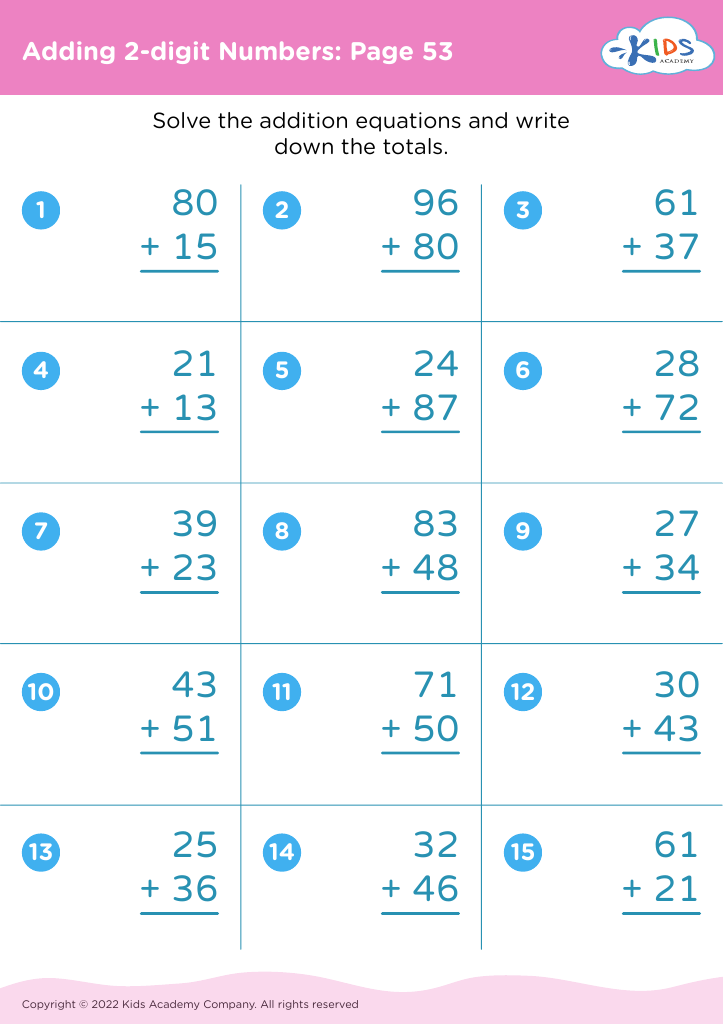
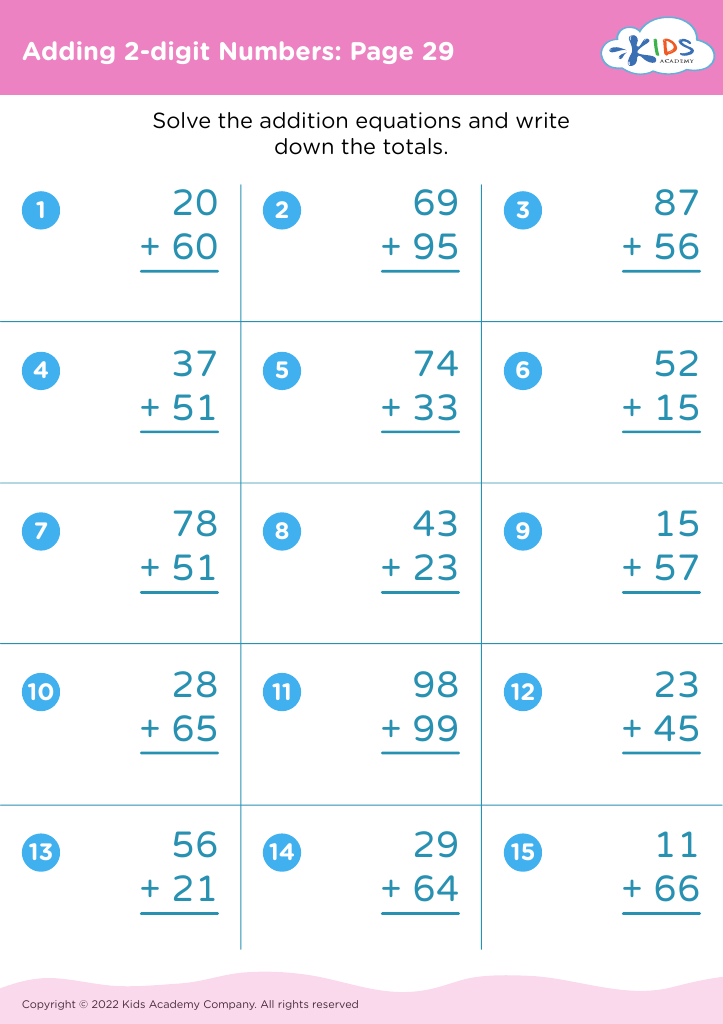
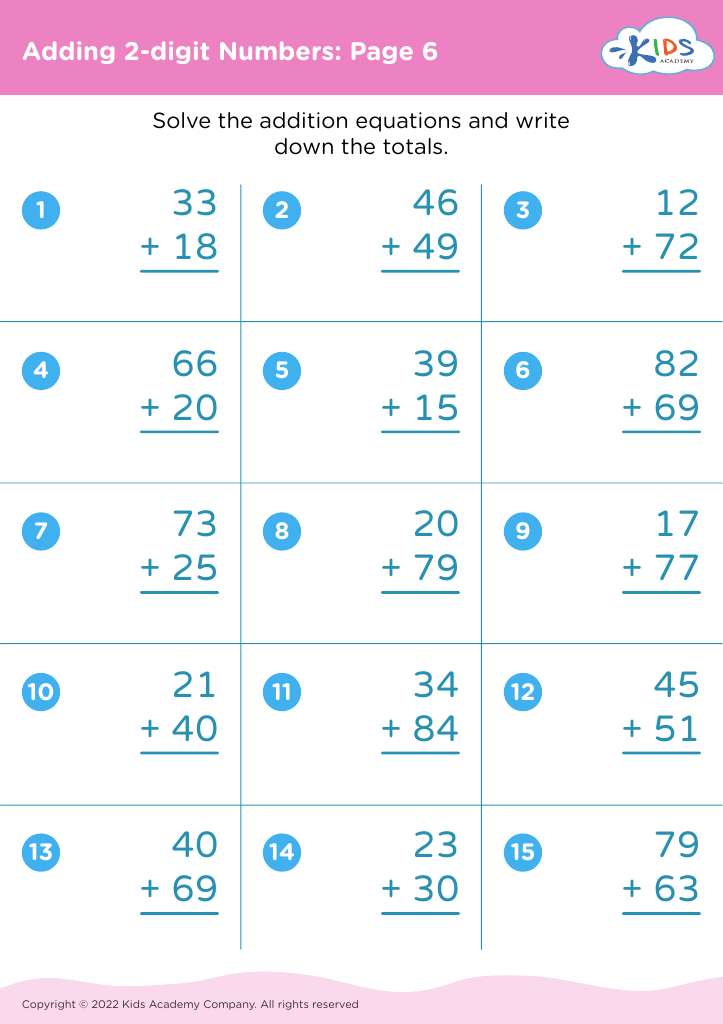








Critical thinking in the context of adding 2-digit numbers for ages 5-7 is essential as it extends beyond mere numerical competence to enriching cognitive development. For parents and teachers, fostering this skill means nurturing a child's ability to process information, analyze patterns, and make logical decisions—skills that are cornerstones for future academic and life success.
Firstly, engaging young minds with 2-digit addition promotes foundational math skills which are crucial for confronting more complex problems later. This is more than just reducing numbers to sums; it's about recognizing relationships between figures, understanding place value, and applying this understanding strategically. It teaches children to deconstruct larger problems into manageable tasks, further lighting the spark for problem-solving abilities.
Secondly, incorporating critical thinking cultivates a growth mindset. Children learn that challenge is an opportunity for learning, not just a barrier to avoid. Parents and teachers observing and encouraging this hard-won understanding provide essential support, guiding youngsters through difficulties they face. This develops resilience and emboldens them to tackle complex tasks with confidence.
Finally, critical thinking exercises in early numeracy stimulate curiosity and creativity. These cognitive skills are instrumental in adapting to our fast-paced world and in promoting lifelong love for learning. Hence, beyond the immediate benefit of learning to add, fostering critical thinking in math equips children with vital tools they will use throughout their education and into adulthood.








