Improve counting skills Adding 2-digit Numbers Worksheets for Ages 5-7
4 filtered results
-
From - To
sparkling_skelly_simply
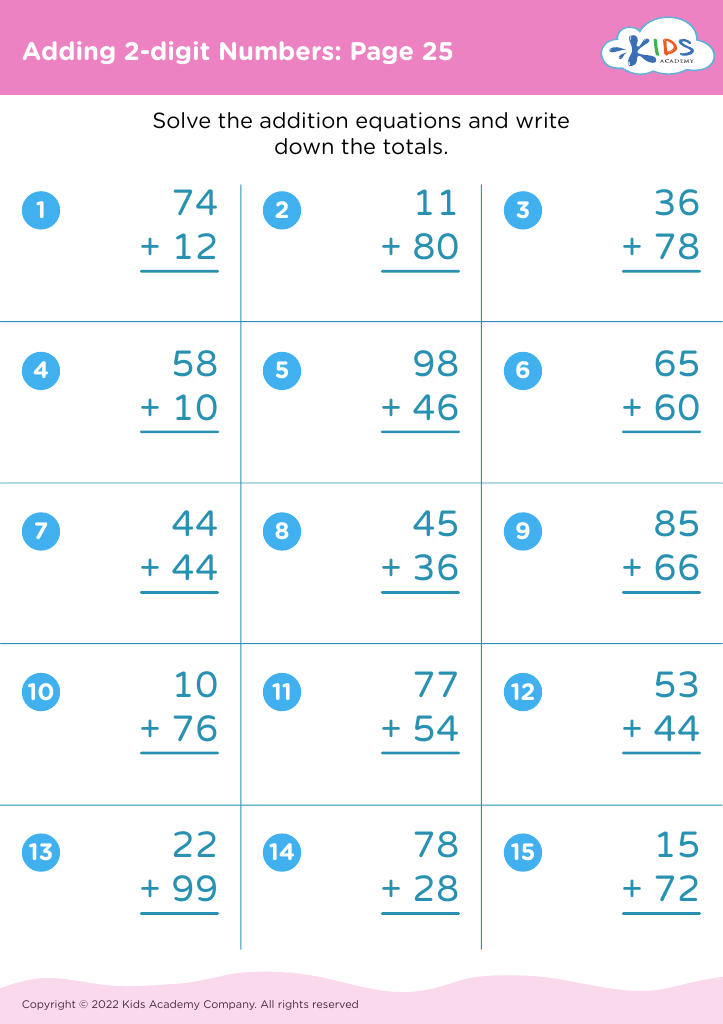
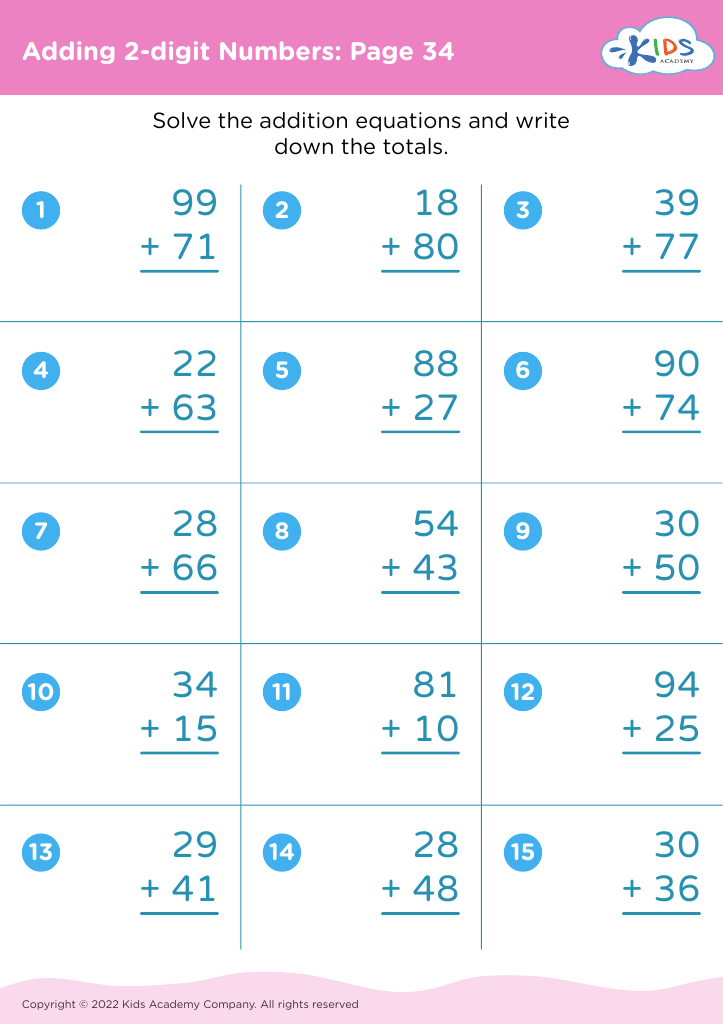
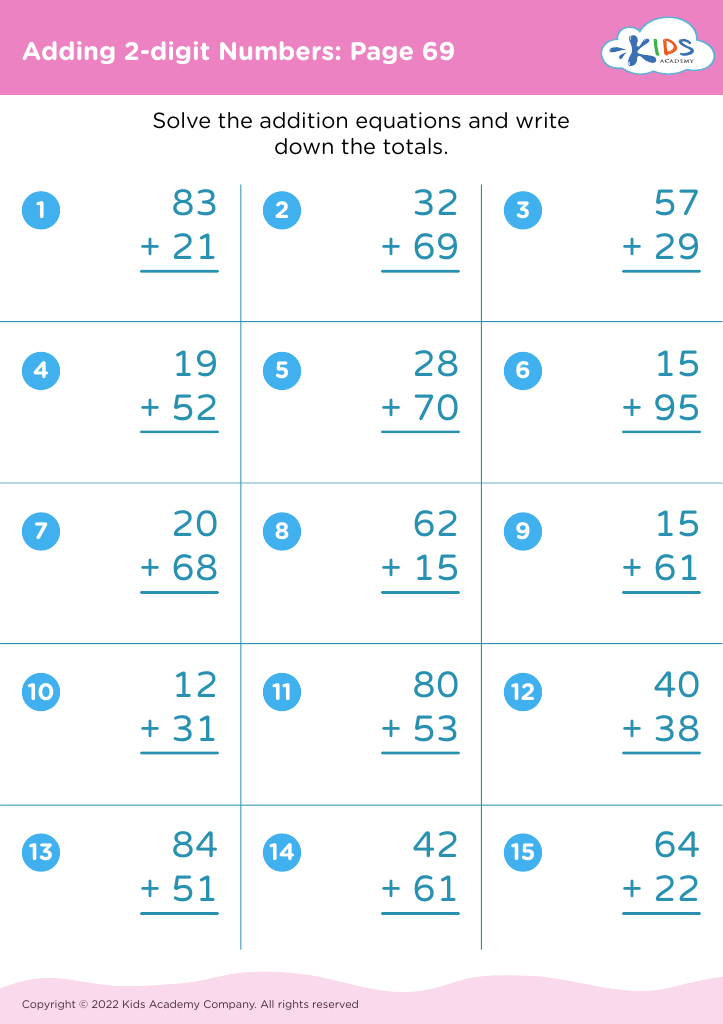
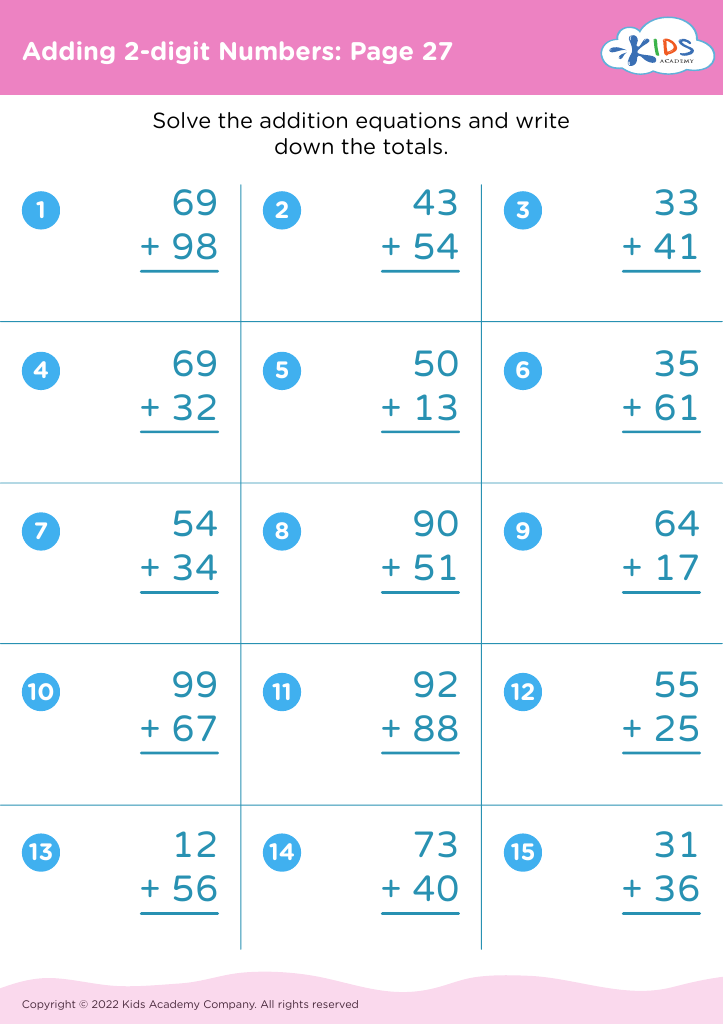








Developing strong counting skills and an understanding of basic arithmetic, including adding 2-digit numbers, is crucial for children ages 5-7 for several reasons. Firstly, math is a fundamental part of everyday life; from counting objects to handling money, the ability to perform simple calculations underpins many daily activities. Teaching children to add 2-digit numbers gives them a practical skill that they will use throughout their lives, fostering a sense of independence and confidence.
Secondly, early mastery of math basics forms the foundation for more advanced mathematical concepts. Proficiency in addition helps children perform more complex calculations and understand relationships between numbers better as they progress in their education. Students who are comfortable with arithmetic are more likely to enjoy and succeed in math in later grades, leading to better academic performance overall.
Furthermore, engaging in math activities at a young age enhances cognitive development. Problem-solving tasks involved in addition help children develop logical thinking and pattern recognition skills. These cognitive skills are transferable across various subjects and situations, contributing to holistic intellectual growth.
Lastly, working on math tasks together builds important emotional and social bonds. Whether between parent and child or teacher and student, these shared activities promote positive attitudes towards learning and collaboration. Overall, instilling strong counting and addition skills at an early age has lifelong benefits.








