Understanding patterns Adding 2-digit Numbers Worksheets for Ages 5-7
4 filtered results
-
From - To
Discover our engaging "Understanding Patterns: Adding 2-Digit Numbers" worksheets, specially designed for children ages 5 to 7. These educational resources help young learners grasp essential math concepts by recognizing and applying patterns in two-digit addition. Our thoughtfully crafted worksheets combine fun and instruction, allowing kids to practice their skills while enhancing critical thinking and problem-solving abilities. Perfect for parents and educators, these worksheets foster a solid mathematical foundation that supports future learning. Explore our collection today to help your child develop mathematical confidence and success with adding two-digit numbers through pattern recognition!
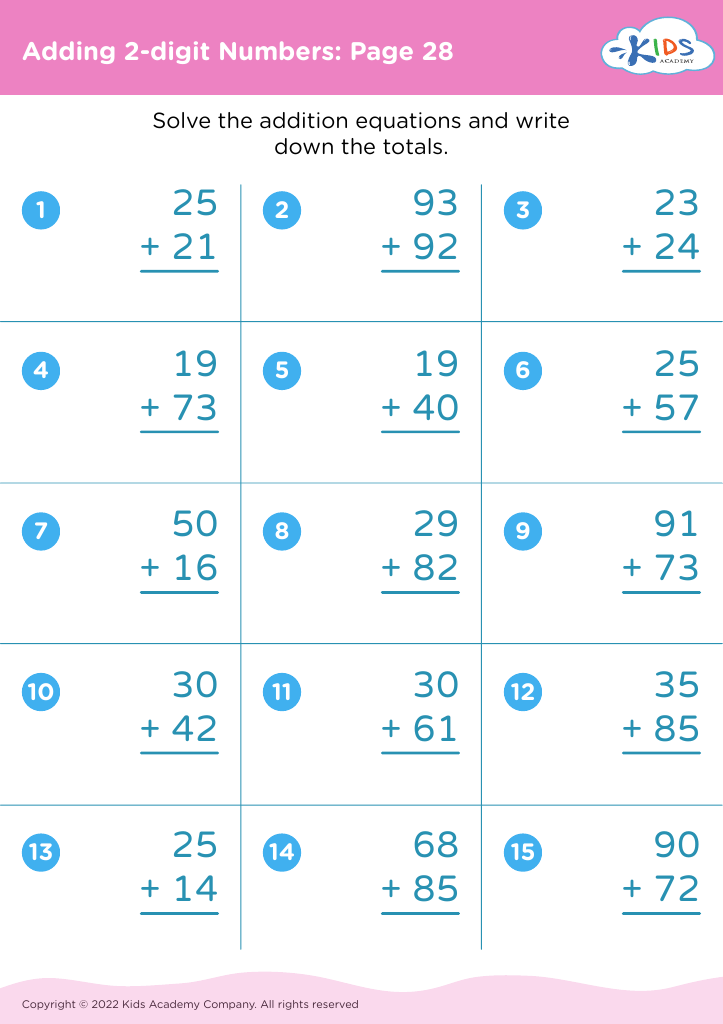
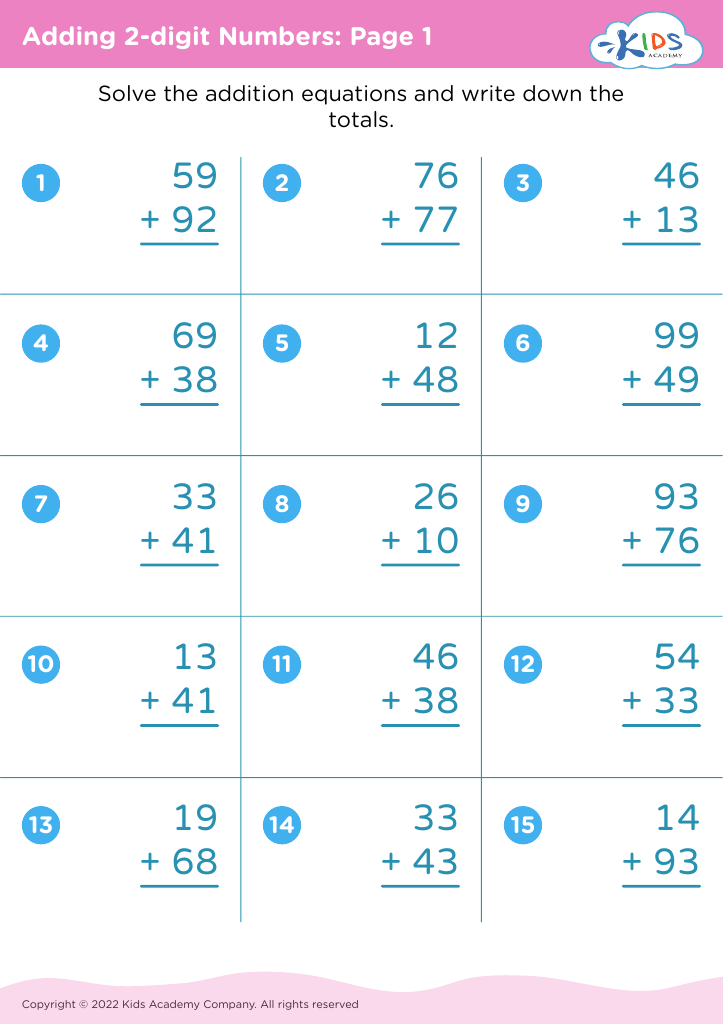
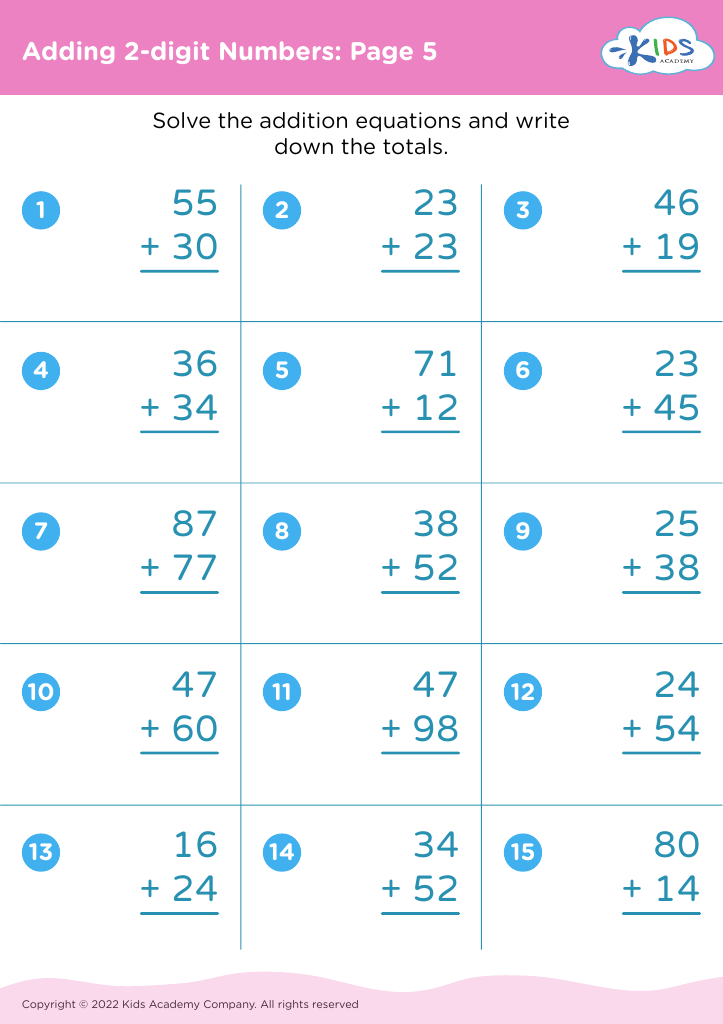
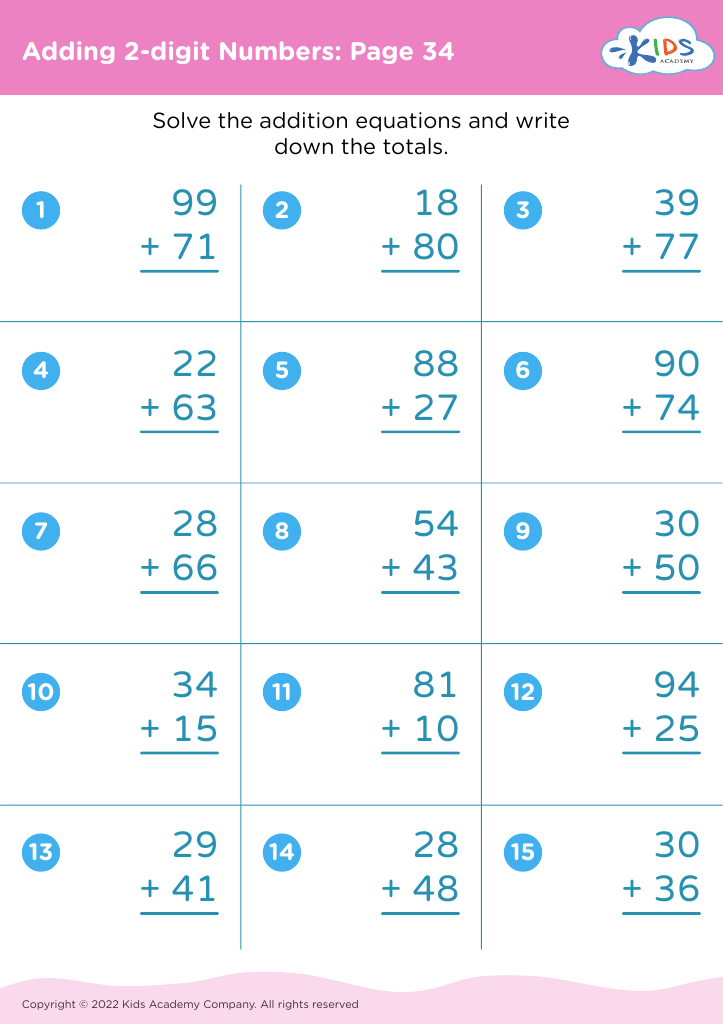








Understanding patterns when adding 2-digit numbers is crucial for children aged 5-7 because it lays the foundation for essential mathematical skills. At this age, children are keen to learn and are developing critical thinking abilities. Recognizing patterns helps them identify relationships between numbers, making it easier to perform calculations and solve problems confidently.
Moreover, fostering pattern recognition develops cognitive skills such as logic and reasoning. For example, when children notice that adding two numbers like 23 + 47 is similar to adding 22 + 46, they begin to understand the concept of ‘next’ and 'previous' numbers. This skill not only aids in mental math but also enhances their ability to deal with more complex math tasks in higher grades.
Additionally, understanding patterns contributes to a child’s problem-solving abilities by fostering a sense of organization and prediction. It empowers children to use strategies when solving addition problems rather than relying on memorization alone. By encouraging this understanding, parents and teachers can cultivate a love for math, instilling confidence and competence that will benefit children throughout their educational journey and beyond. Engaging with patterns thus promotes a holistic connection to mathematics, enriching their learning experience.








