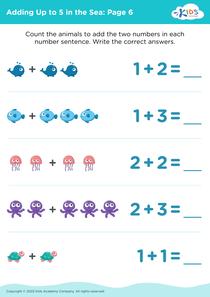
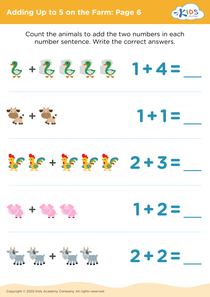
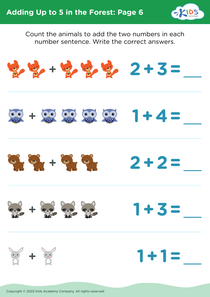
Animal identification Adding at the Zoo Worksheets for Ages 5-7
8 filtered results
-
From - To
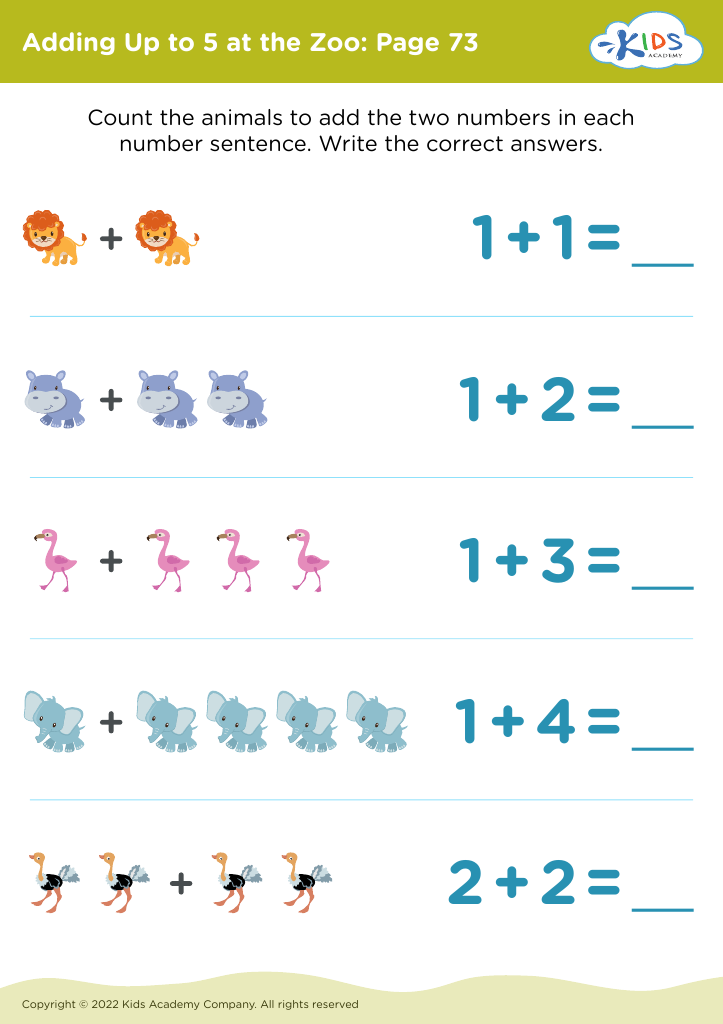
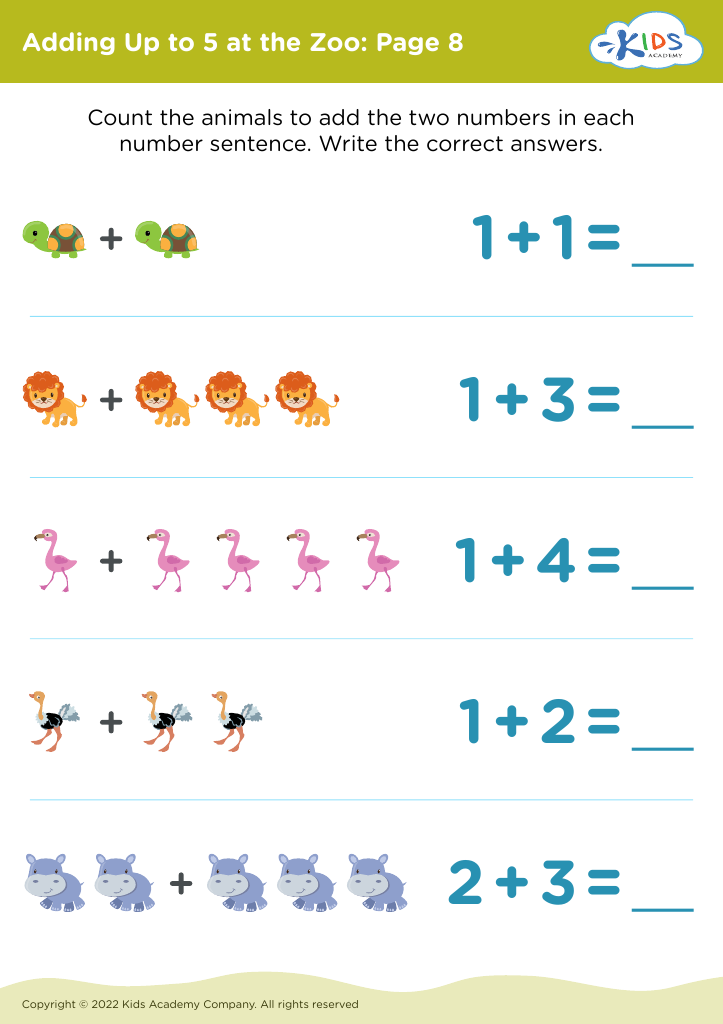
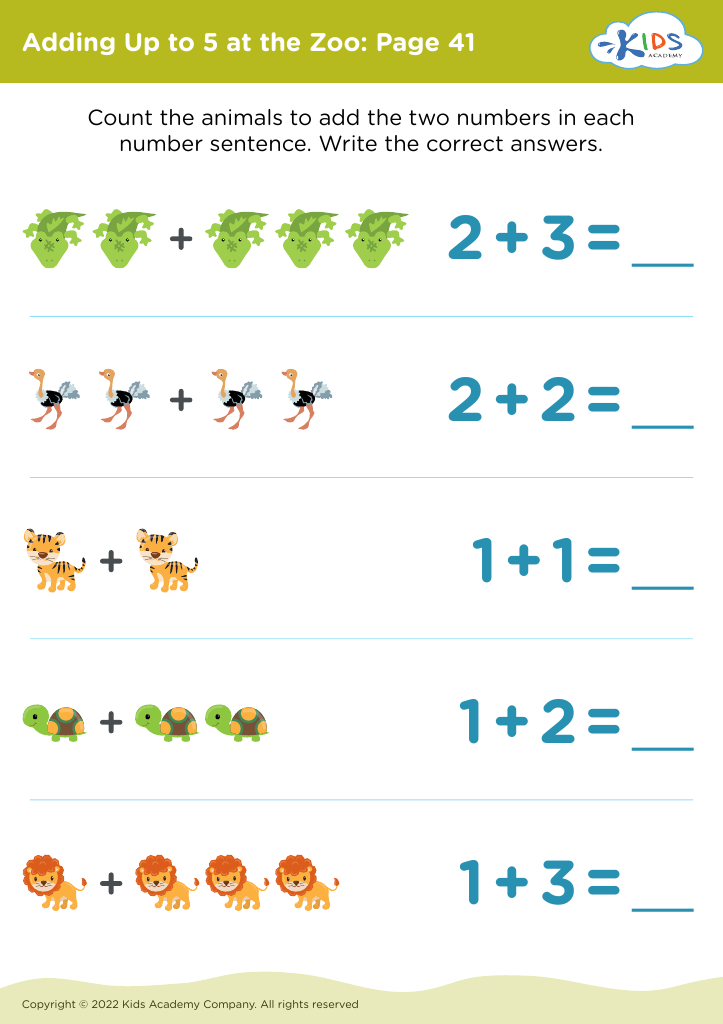
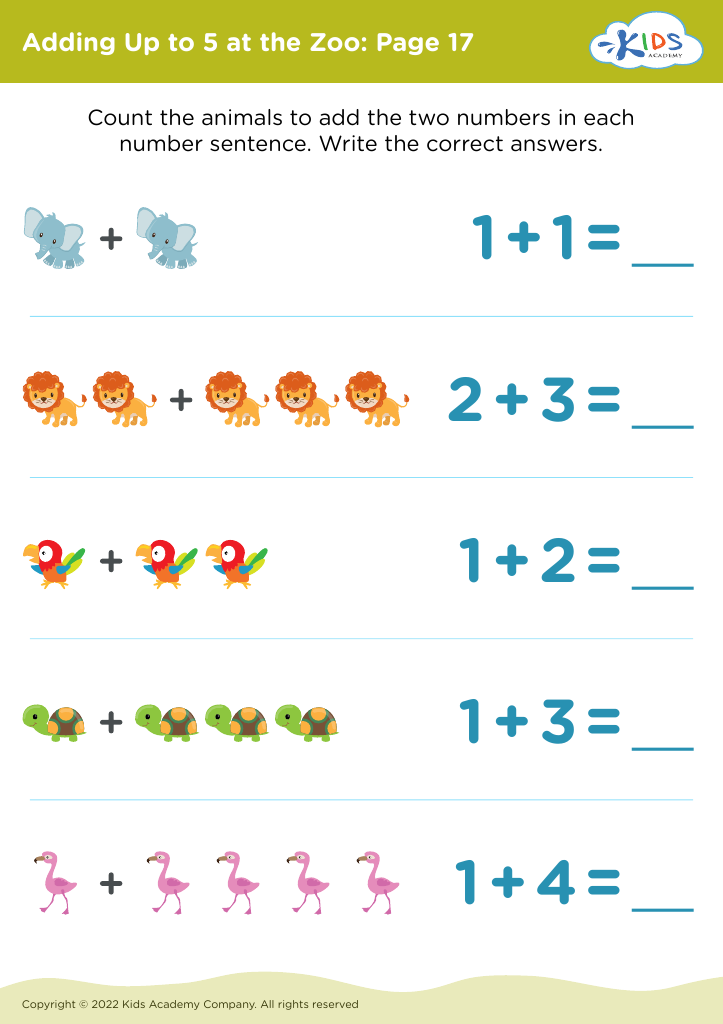
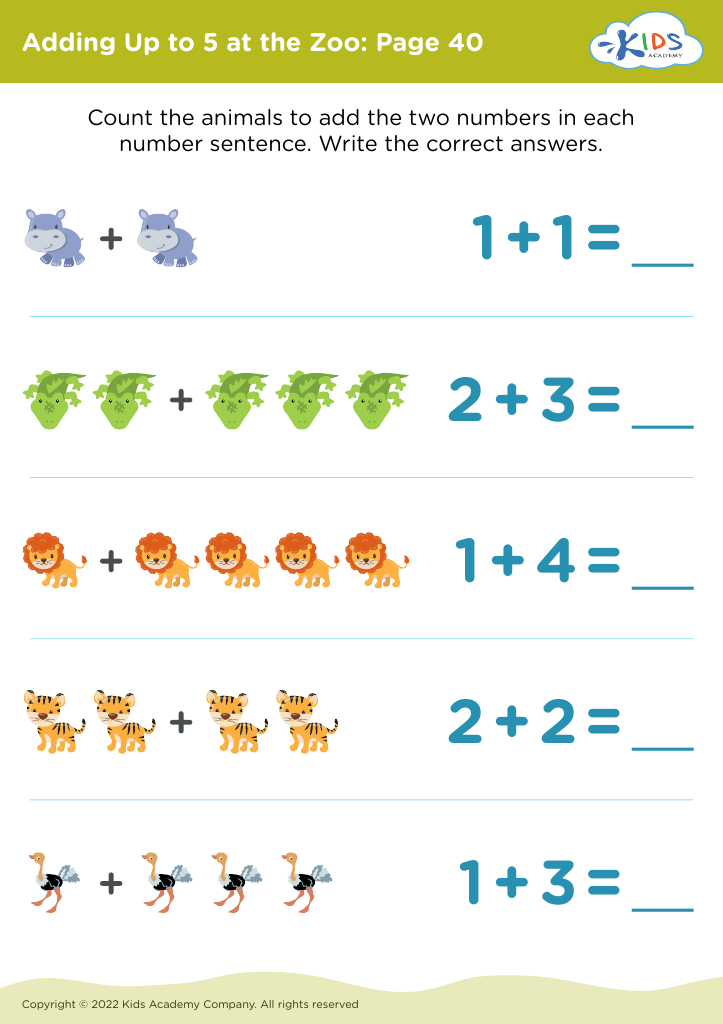
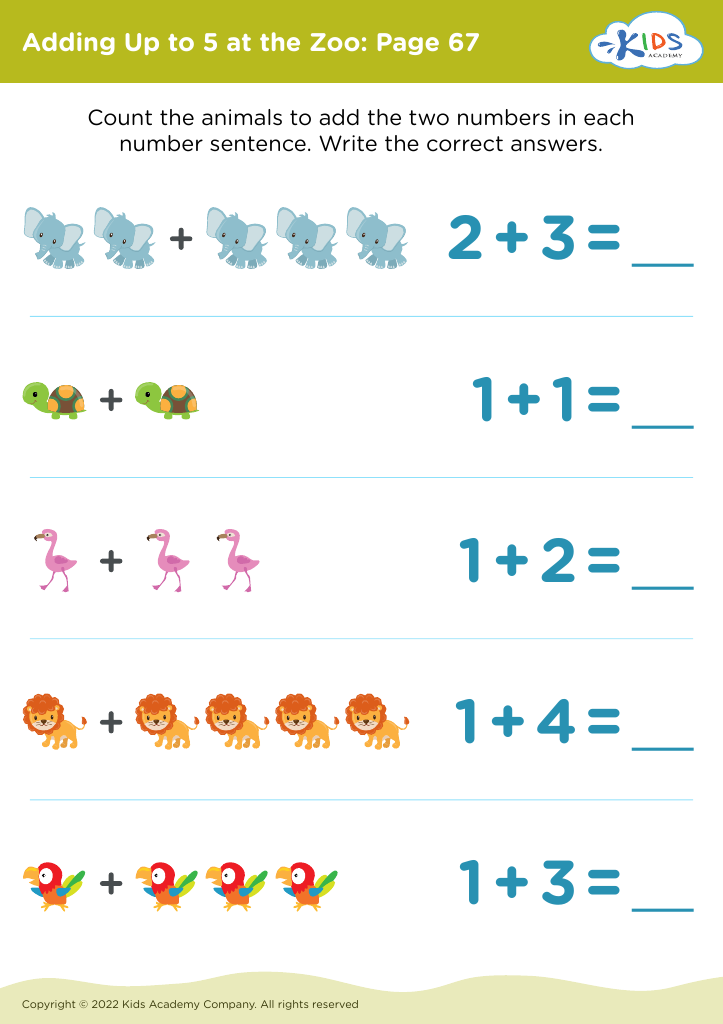
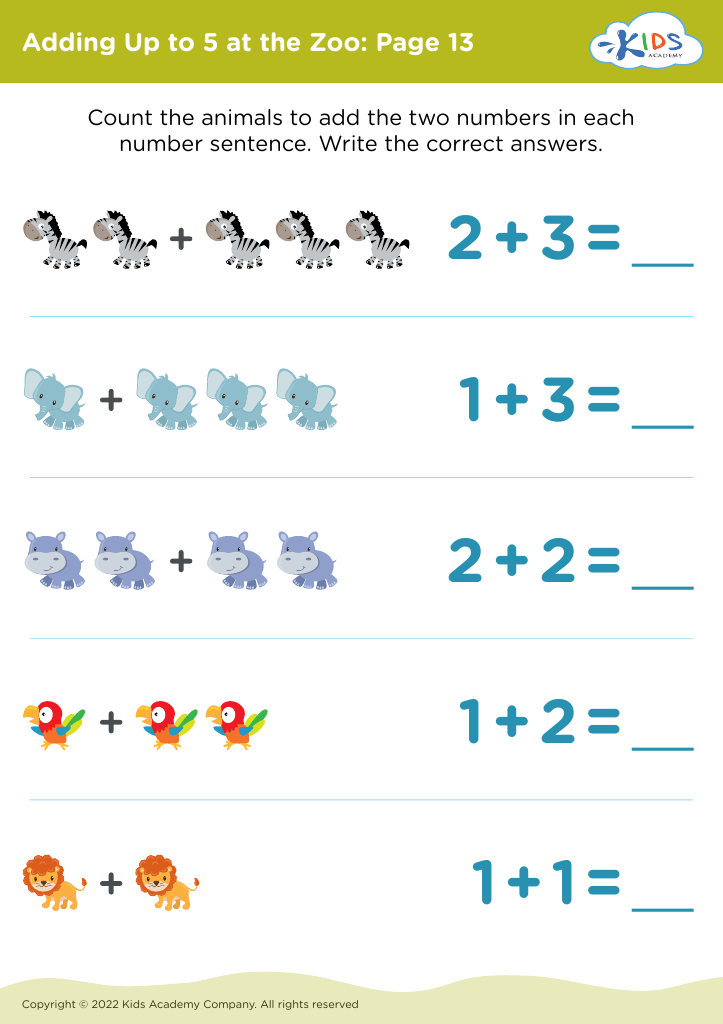
Discover our engaging "Animal Identification Adding at the Zoo" worksheets, designed for children ages 5-7. These captivating printables combine math with fun animal facts, helping young learners enhance their addition skills while identifying various zoo animals. Perfect for at-home practice or classroom use, each worksheet features vibrant illustrations and interactive elements to keep kids entertained and motivated. Strengthen your child's mathematical foundation and boost their interest in wildlife through this delightful, educational activity. Visit Kids Academy to explore and download these free resources, offering an enjoyable way to support your child's learning journey.
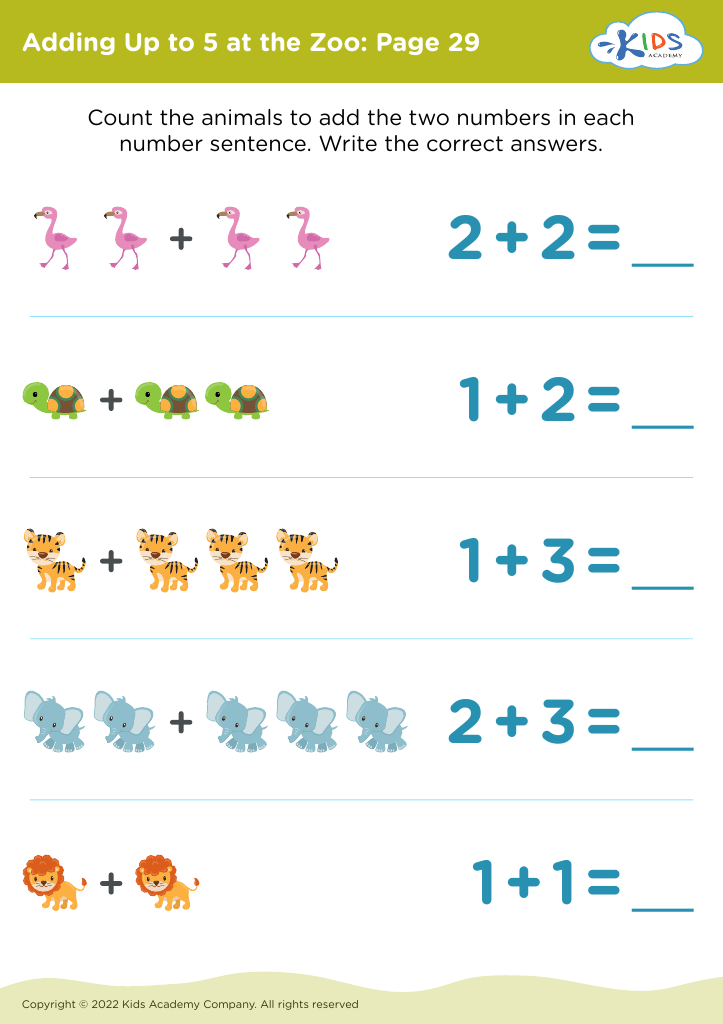



Parents and teachers should care about animal identification activities at the zoo for children aged 5-7 because these activities offer numerous developmental benefits that are vital during this formative stage. Firstly, learning to identify animals enhances young children's observational skills and attention to detail, which are critical cognitive abilities. Through hands-on experiences at the zoo, children become more engaged and excited about learning.
Furthermore, animal identification fosters a sense of curiosity and wonder about the natural world, prompting children to ask questions and seek answers about different species, their habitats, diets, and behaviors. This interest can aid in developing lifelong learning habits and a love for science and environmental stewardship.
Socially, these activities encourage cooperation and communication as children often work together or with adults to spot and name animals. Additionally, connecting the creatures they see to books or classroom activities can improve language skills, including vocabulary and descriptive language.
Lastly, understanding and identifying animals promotes empathy and respect for living beings, instilling values of kindness and conservation in children. As they learn how different animals are cared for, their understanding of the world broadens, contributing to their overall emotional and ethical development. Thus, animal identification at the zoo is a powerful pedagogical tool that supports a holistic approach to child development.