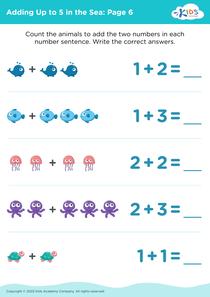
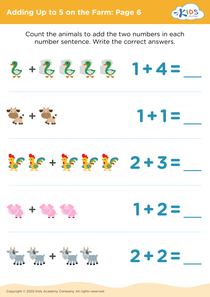
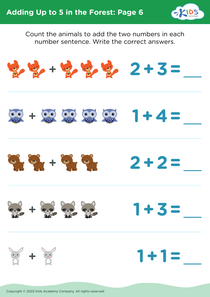
Basic Arithmetic Adding at the Zoo Worksheets for Ages 5-7
7 filtered results
-
From - To
Explore the vibrant "Basic Arithmetic Adding at the Zoo Worksheets" specially crafted for kids ages 5-7! Watch as your child embarks on an educational adventure, reinforcing addition skills through engaging zoo-themed illustrations. Our worksheets spark curiosity and make math fun by incorporating adorable animals like lions, elephants, and monkeys. Perfect for young learners, this resource promotes counting proficiency, builds confidence in basic arithmetic, and encourages a love for mathematics. Set within a whimsical zoo backdrop, each activity supports your child’s mastery of adding numbers, while fostering excitement and enhancing learning experiences. Visit today and embark on this joyful mathematical journey!
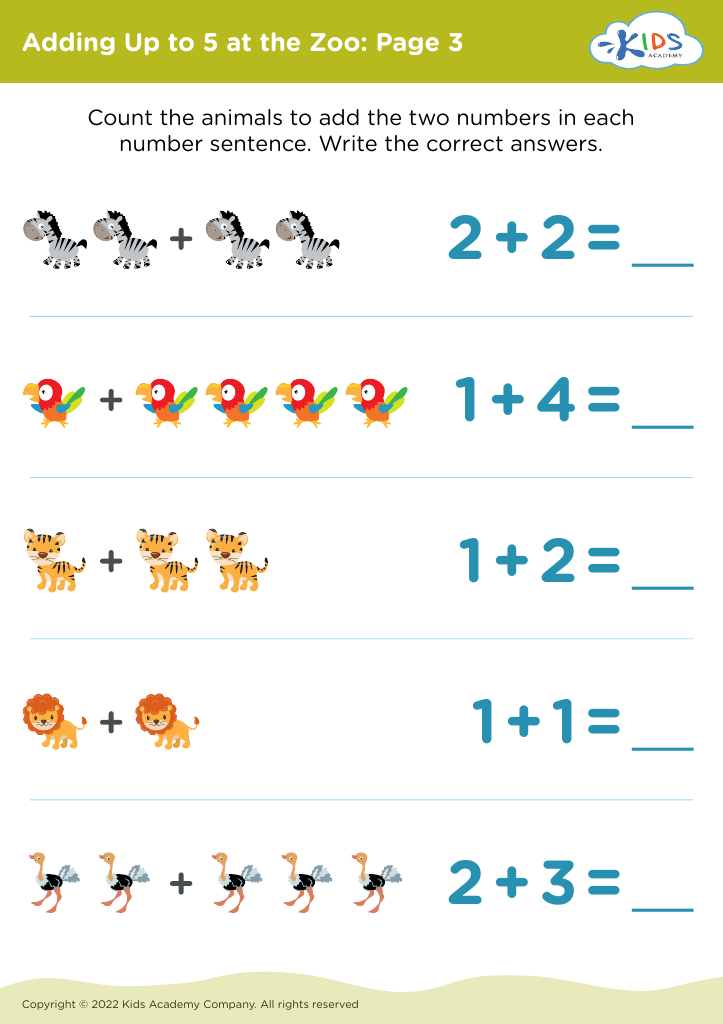
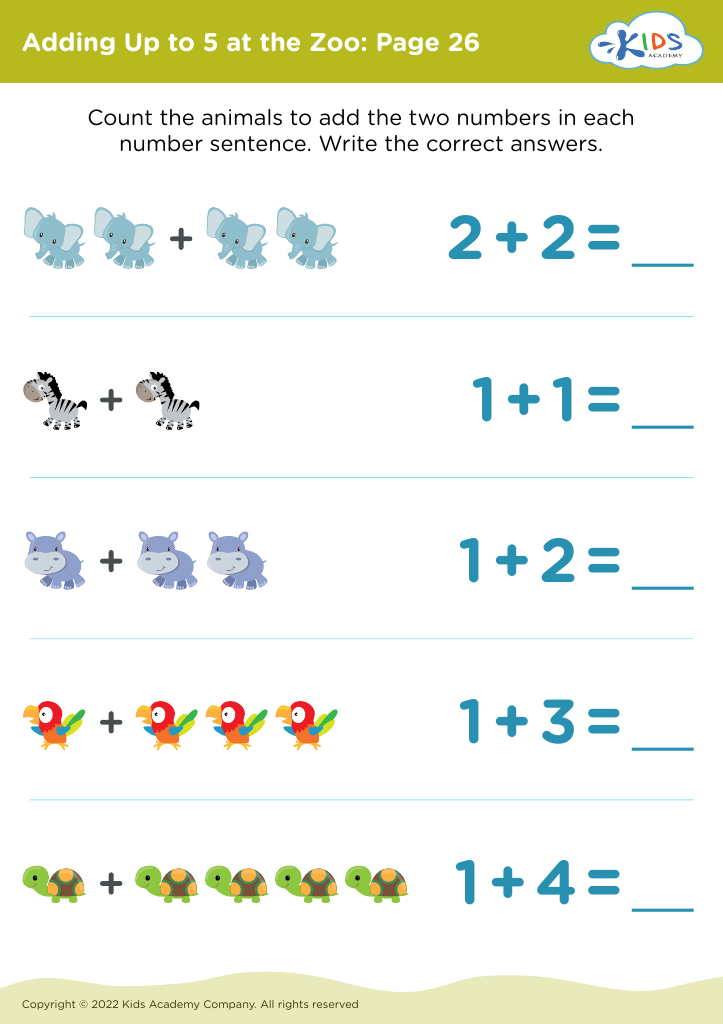
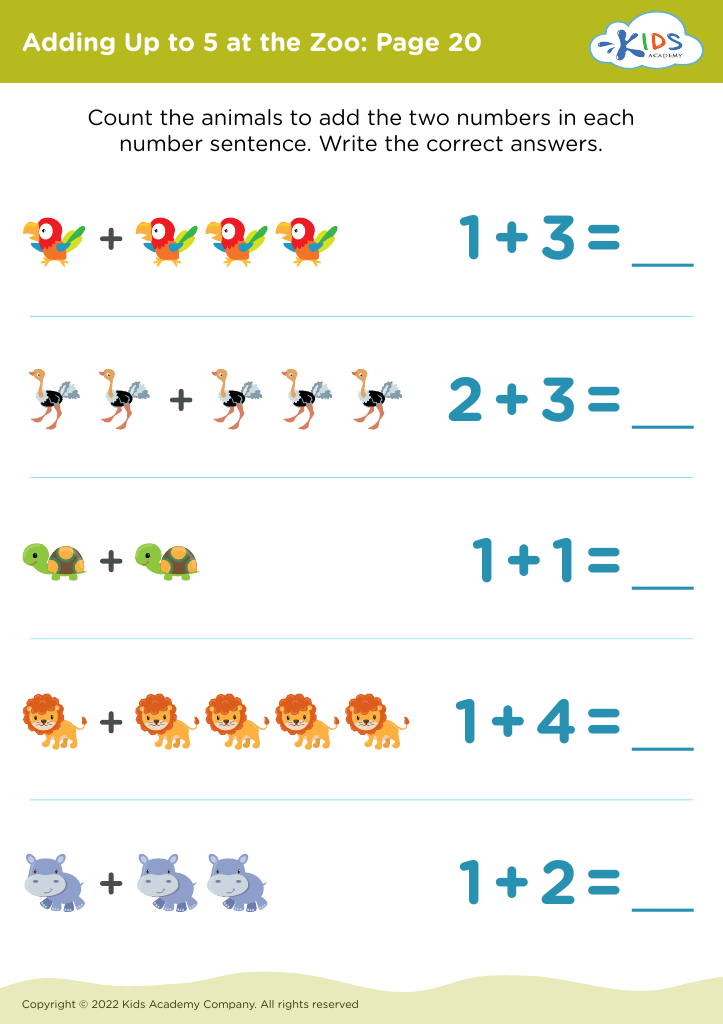
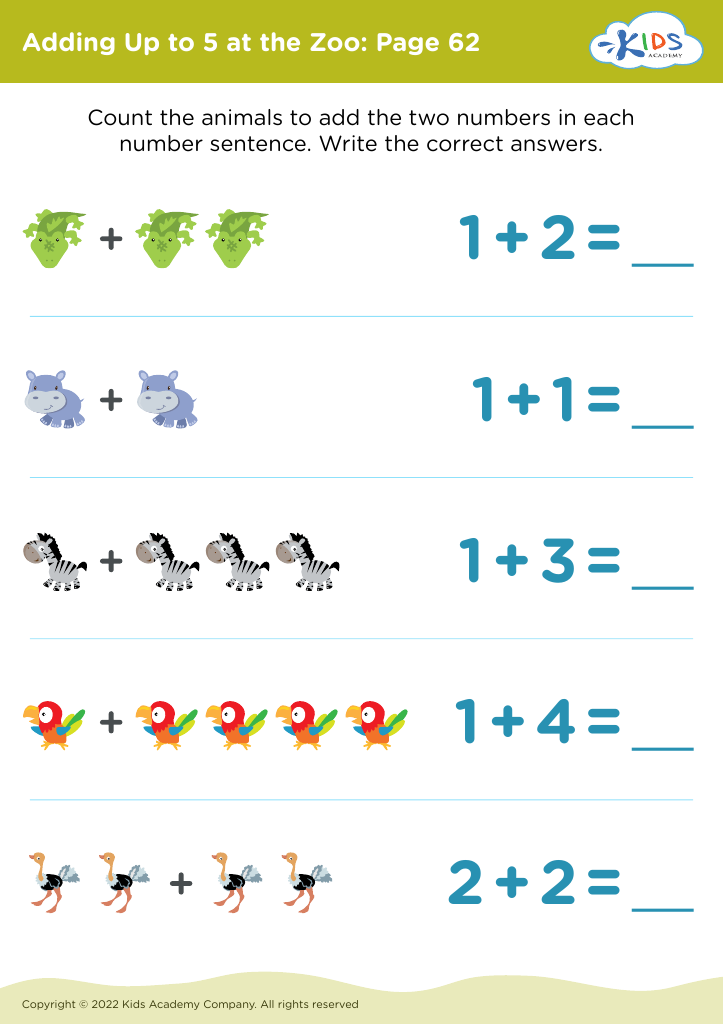
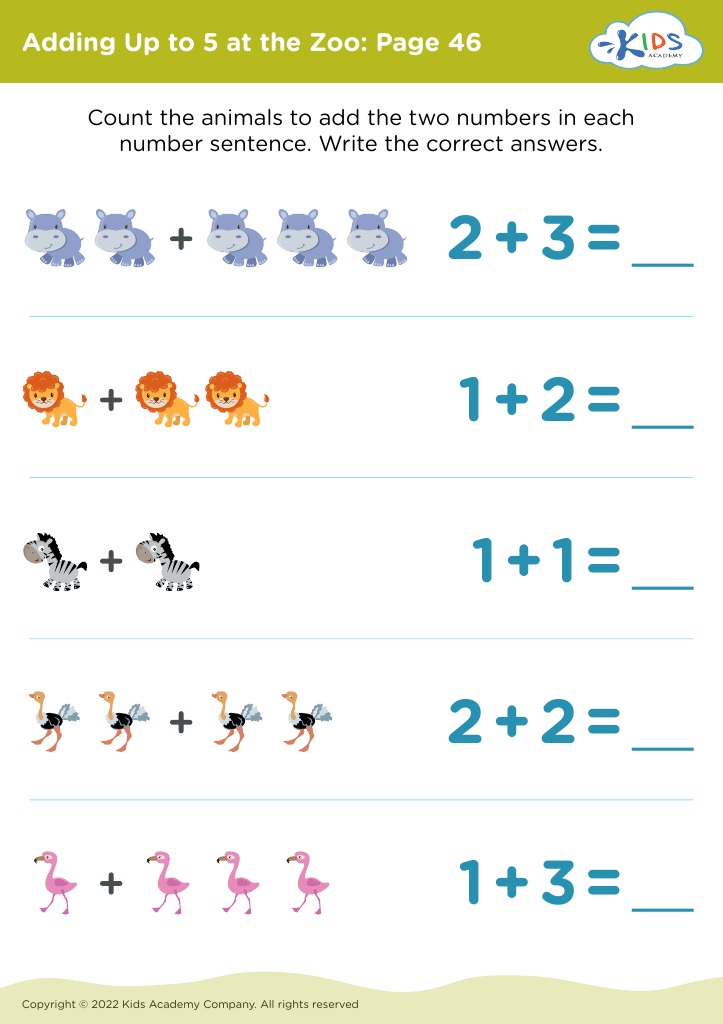
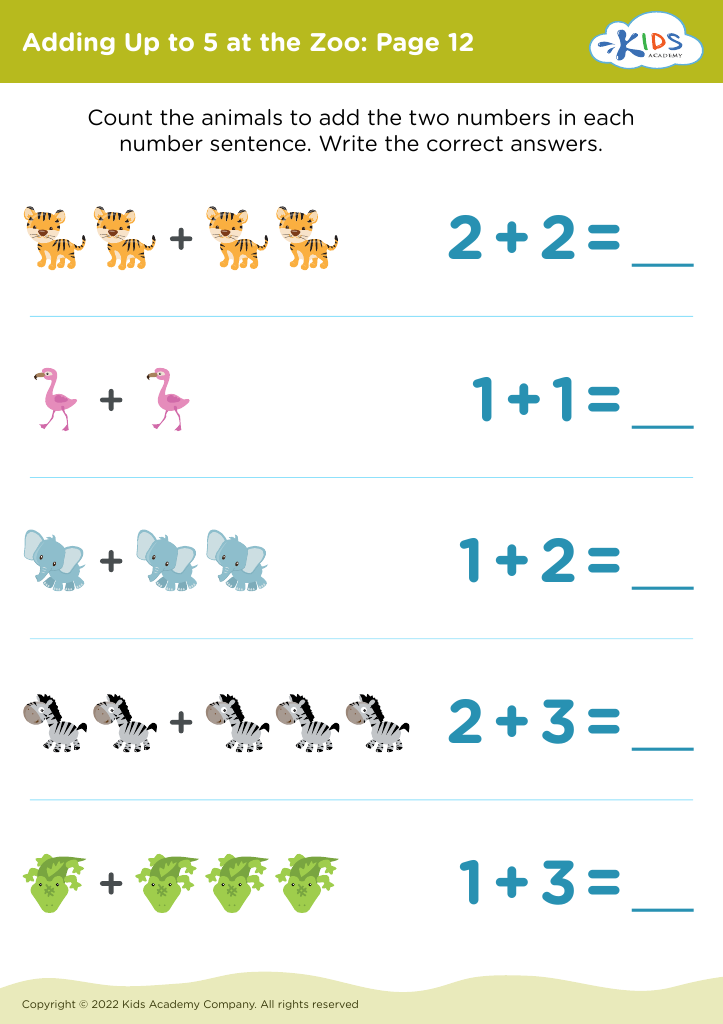
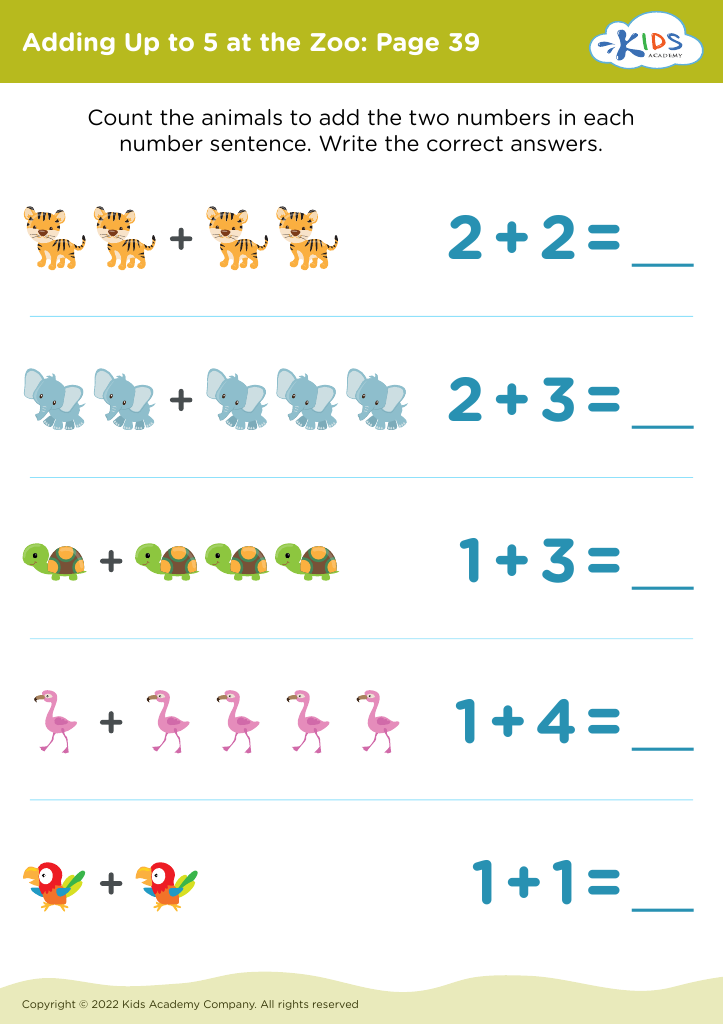



Introducing young children aged 5-7 to Basic Arithmetic Adding at the Zoo cleverly blends a foundational math lesson with engaging storytelling. For parents and teachers, this approach offers several benefits that merit their enthusiasm. Firstly, associating numbers and basic arithmetic with relatable and entertaining scenarios such as zoo animals helps to maintain the children's interest and curiosity. Learning becomes fun rather than a chore.
Using playful contexts such as counting elephants, lions, or monkeys facilitates the natural development of mathematical skills. It leverages their inherent fascination with animals to reinforce concepts like addition in a setting that feels familiar and exciting. This hands-on experience enhances cognitive development, superior to rote learning techniques. It also allows for visual and kinesthetic learning, crucial when teaching a diverse group of young learners with different learning styles.
Furthermore, adding interactive elements such as animal flashcards or zoo-themed games can foster social skills through cooperative play and can instill a sense of achievement as children solve problems together. Critical thinking and problem-solving abilities develop alongside computational skills, laying a solid foundation for future mathematical learning. At this formative age, instilling both a love for math and a conceptual understanding prepares children for more complex concepts and establishes a positive educational trajectory.