Counting skills Adding at the Zoo Worksheets for Ages 5-7
27 filtered results
-
From - To
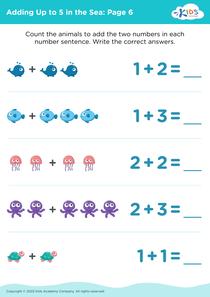
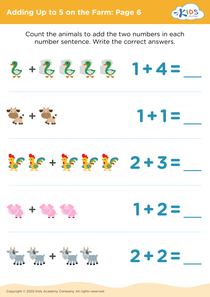
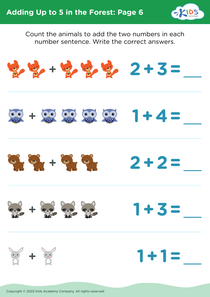
Explore the fun world of math with "Counting Skills: Adding at the Zoo Worksheets for Ages 5-7." These engaging printable worksheets combine the excitement of a zoo visit with essential counting and addition practice. Kids will enjoy colorful, animal-themed activities designed to improve their counting abilities and enhance their understanding of addition. Perfect for young learners, these exercises make math enjoyable and interactive, helping to build a strong foundation in numeracy. Boost your child's confidence and skills as they join the zoo animals on an educational adventure in this unique blend of learning and fun!
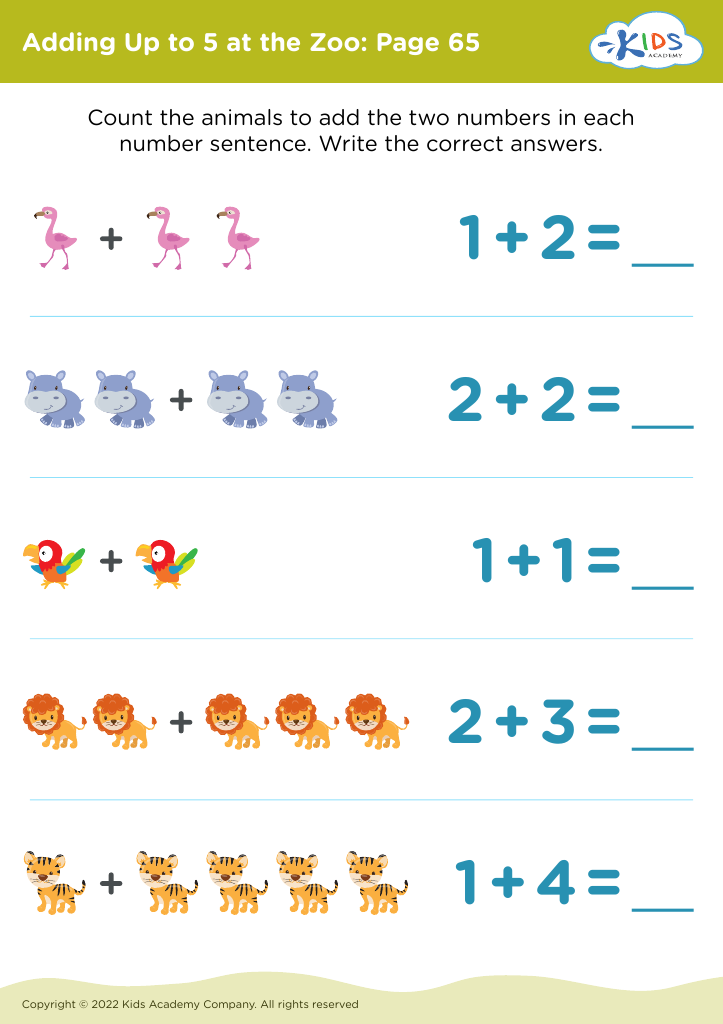
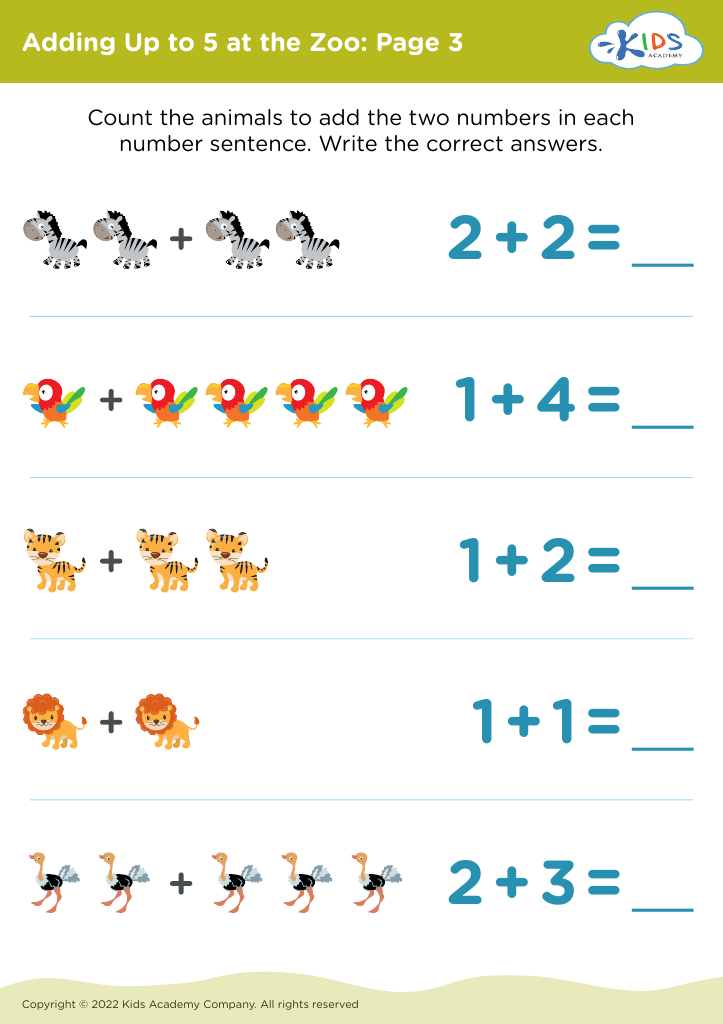
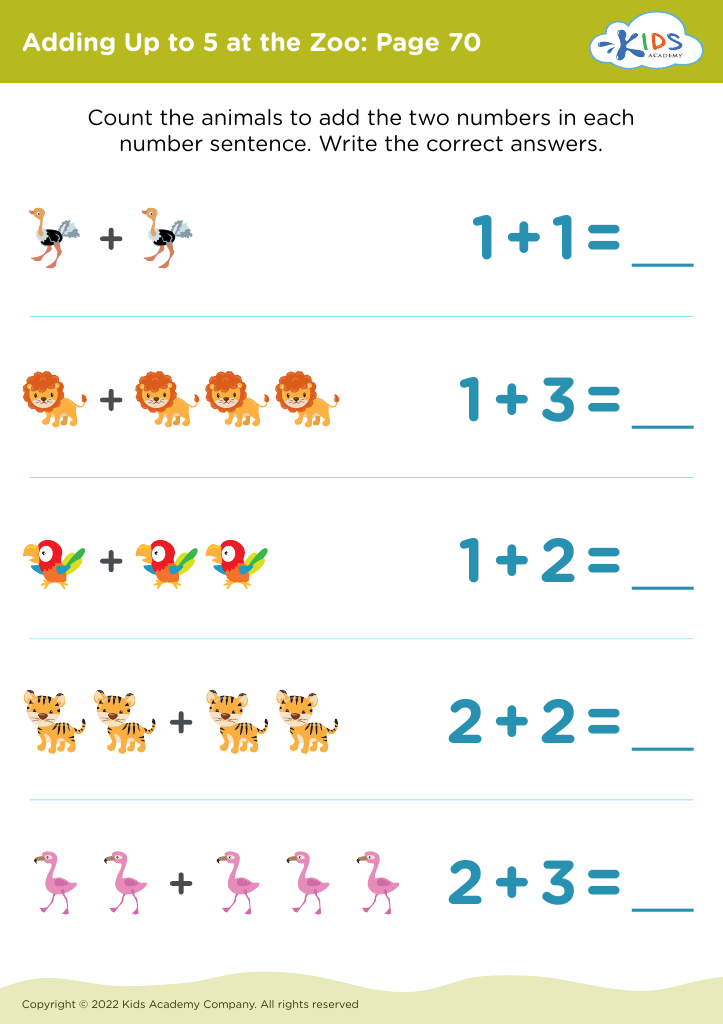
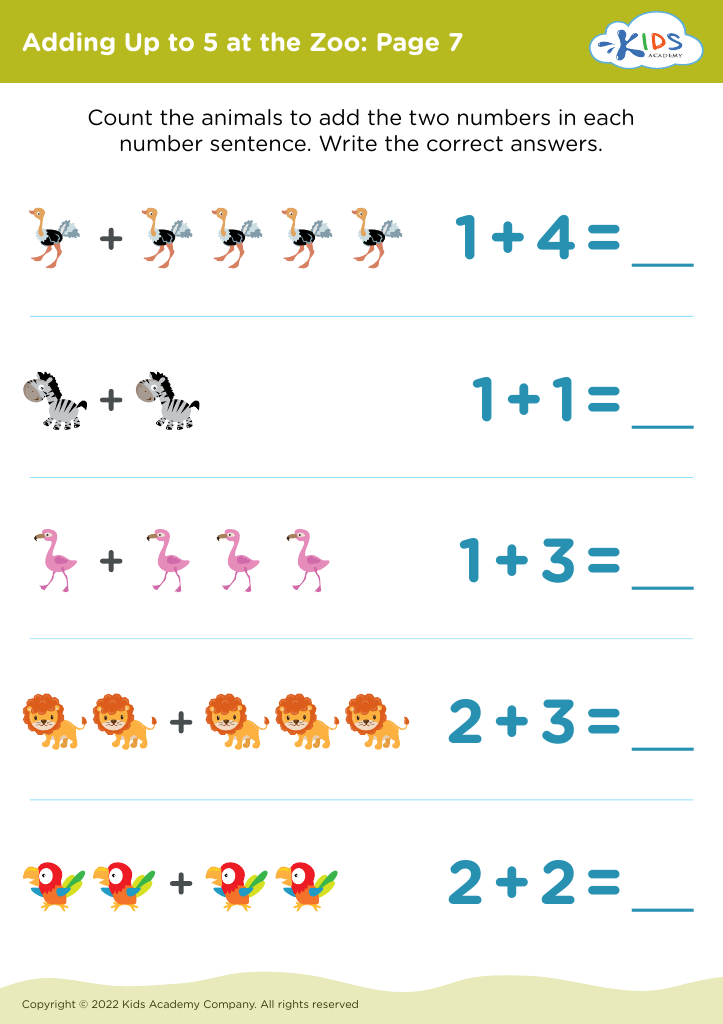
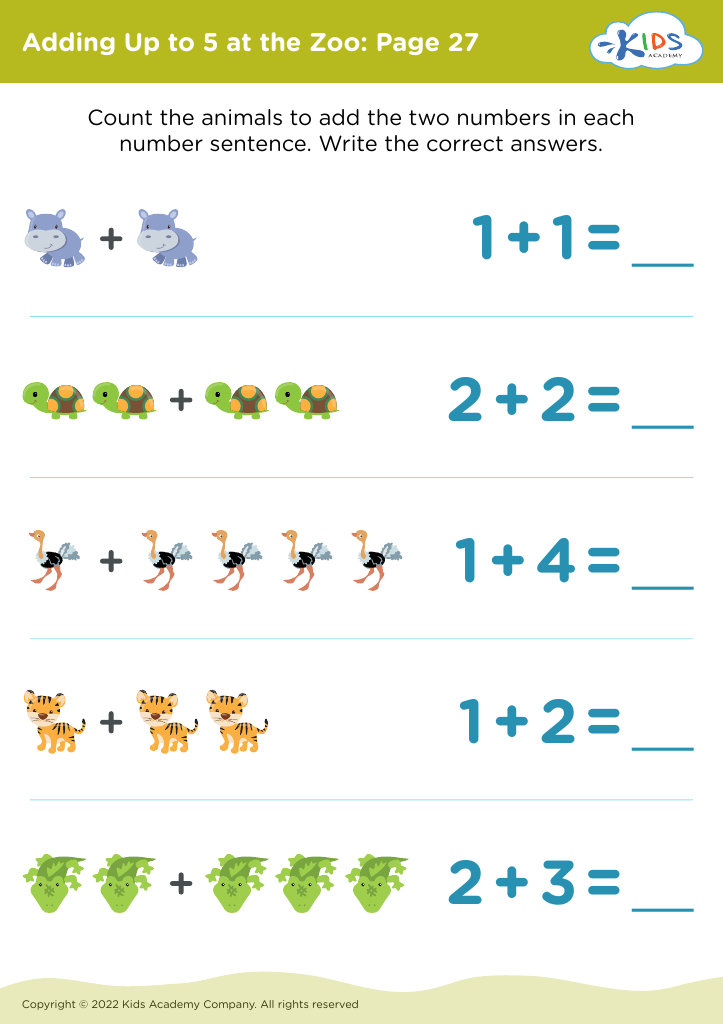
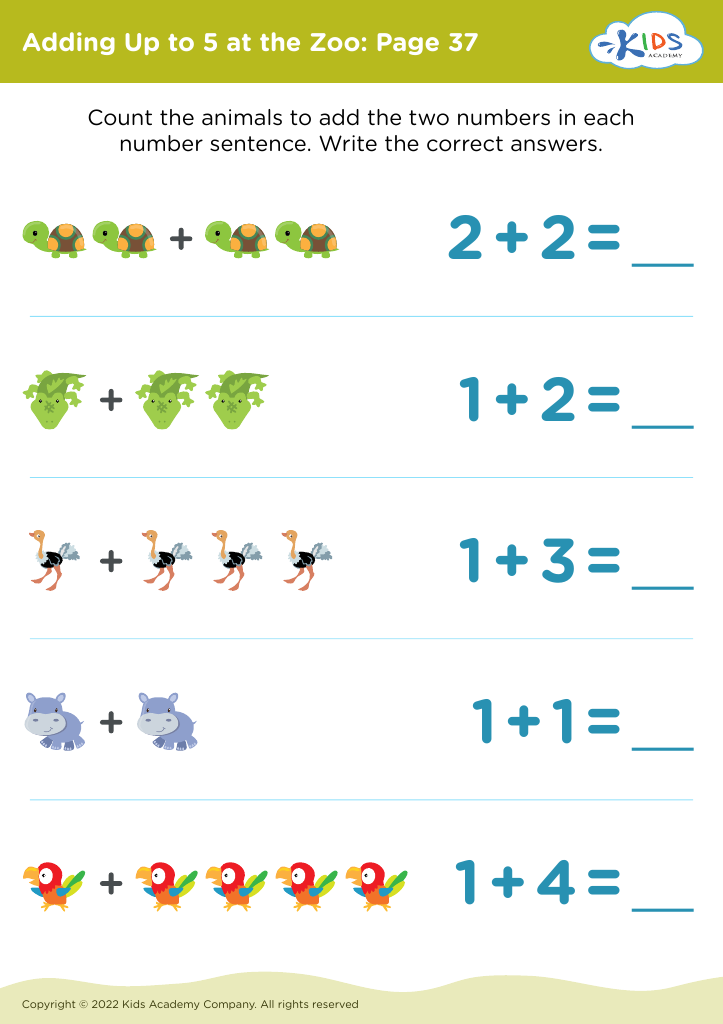
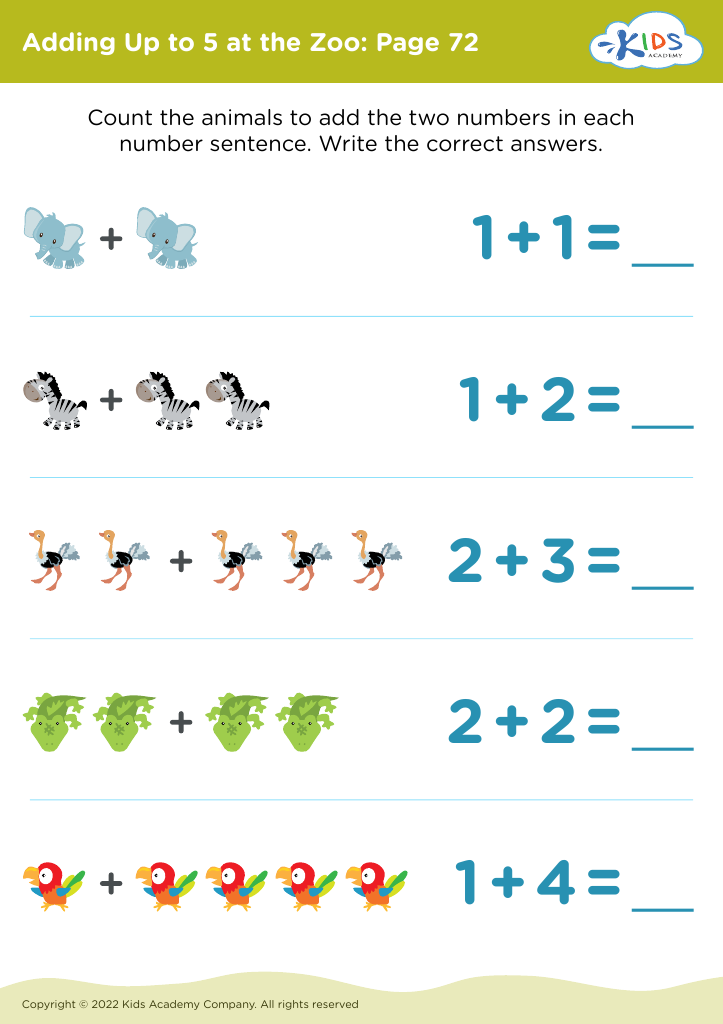
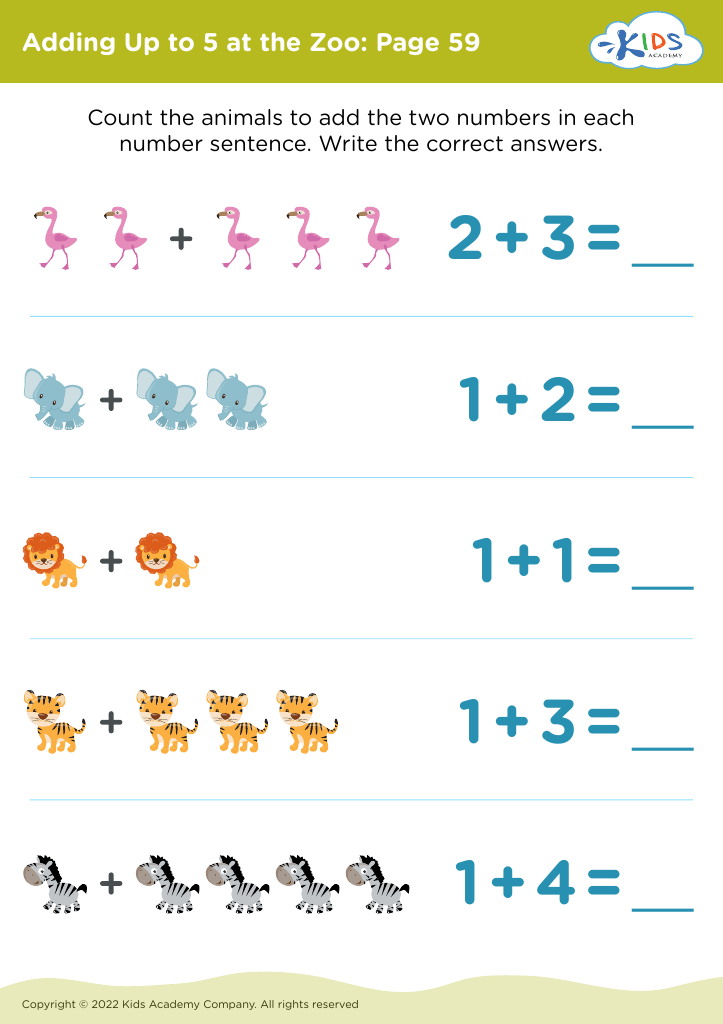
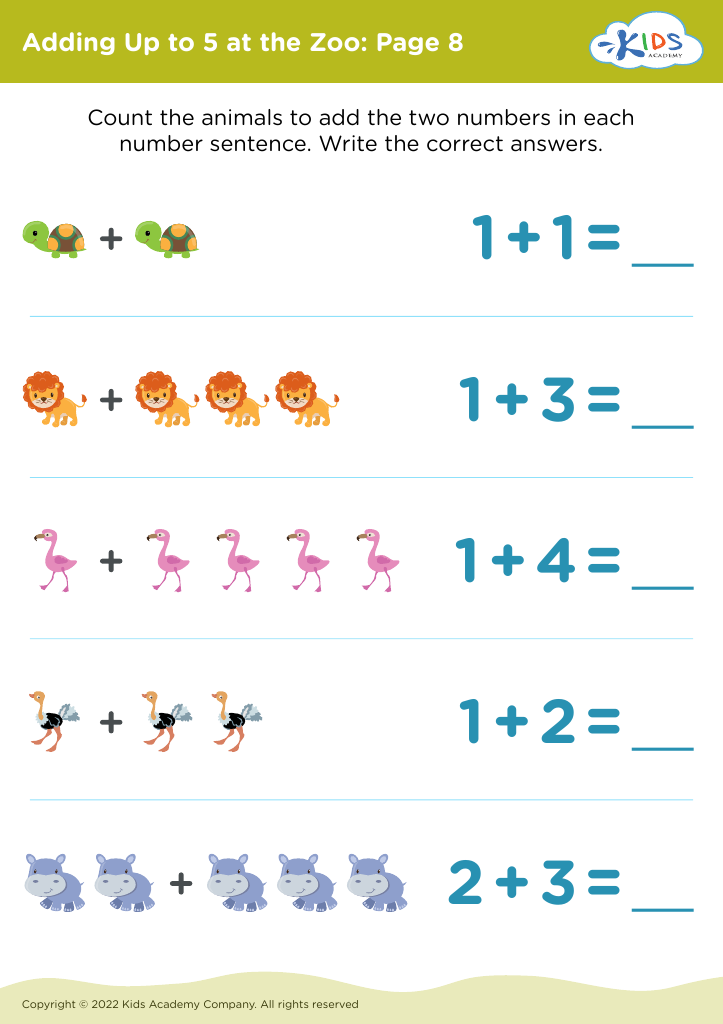
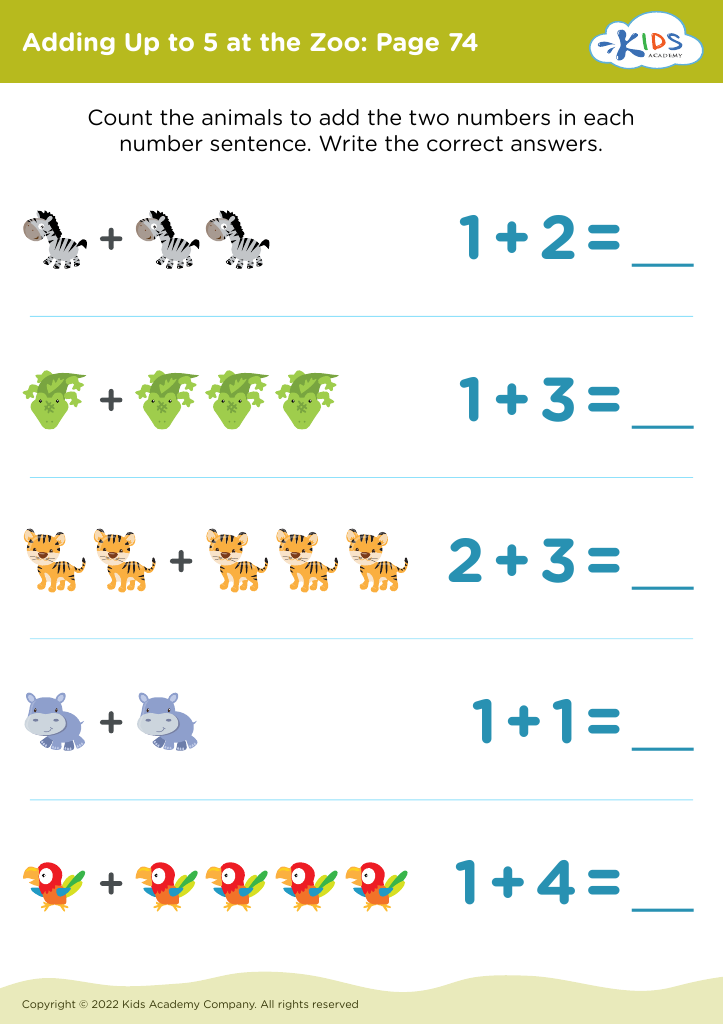
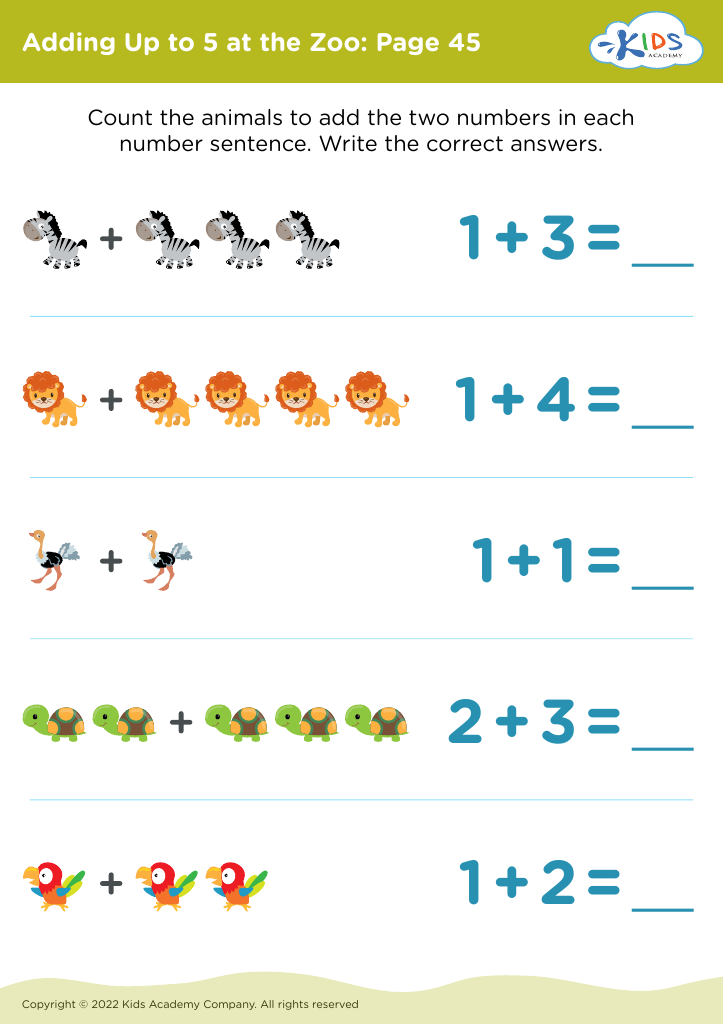
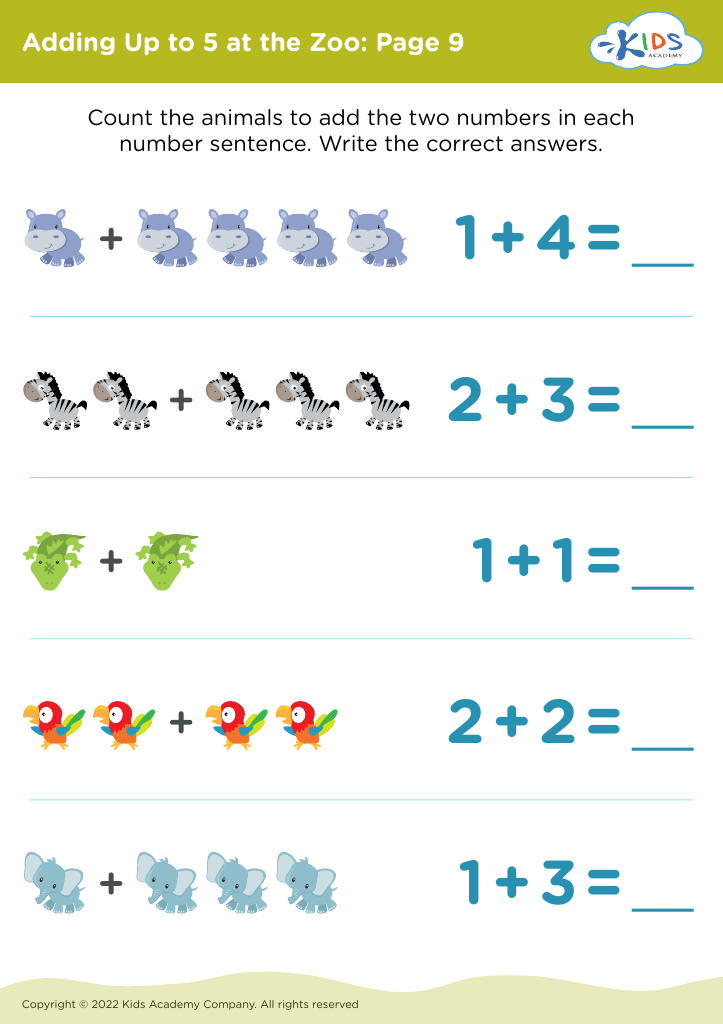
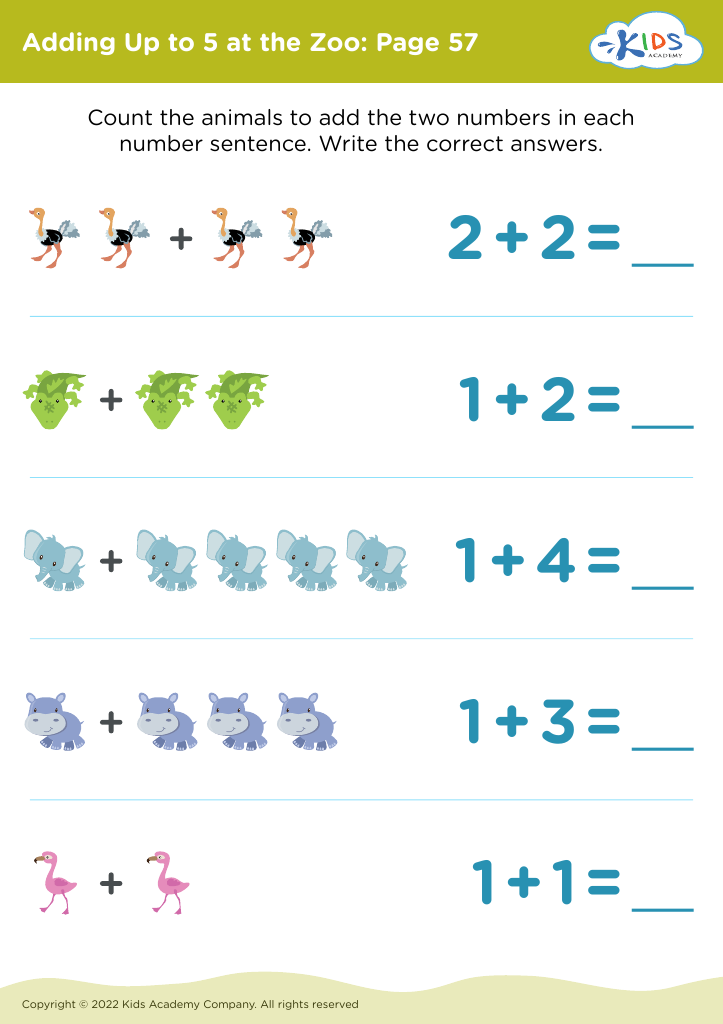
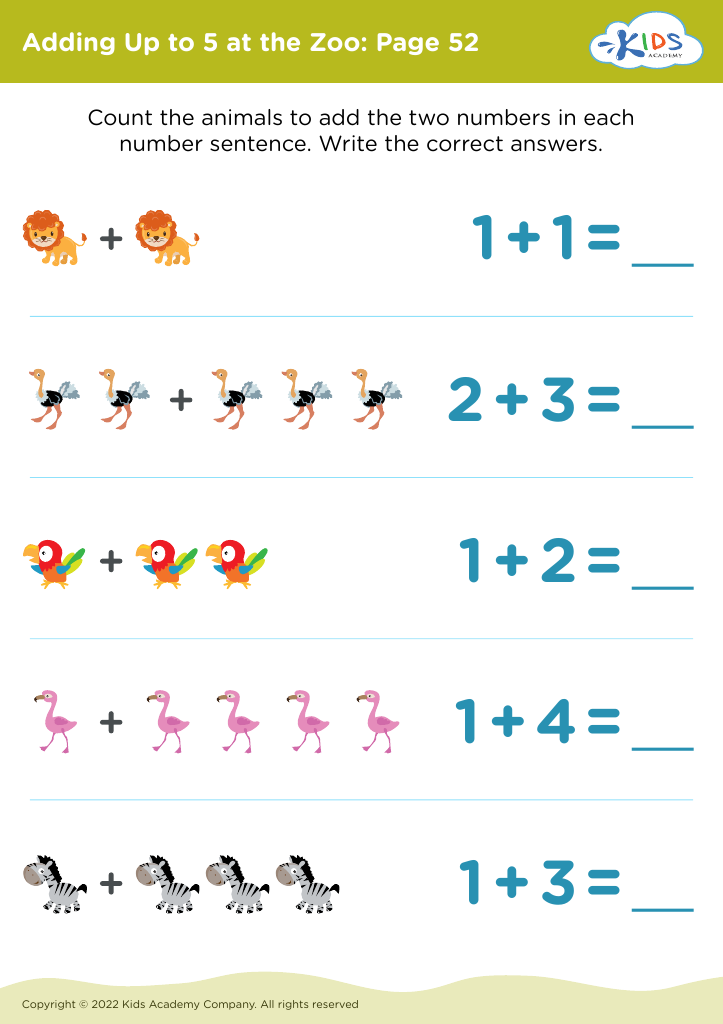
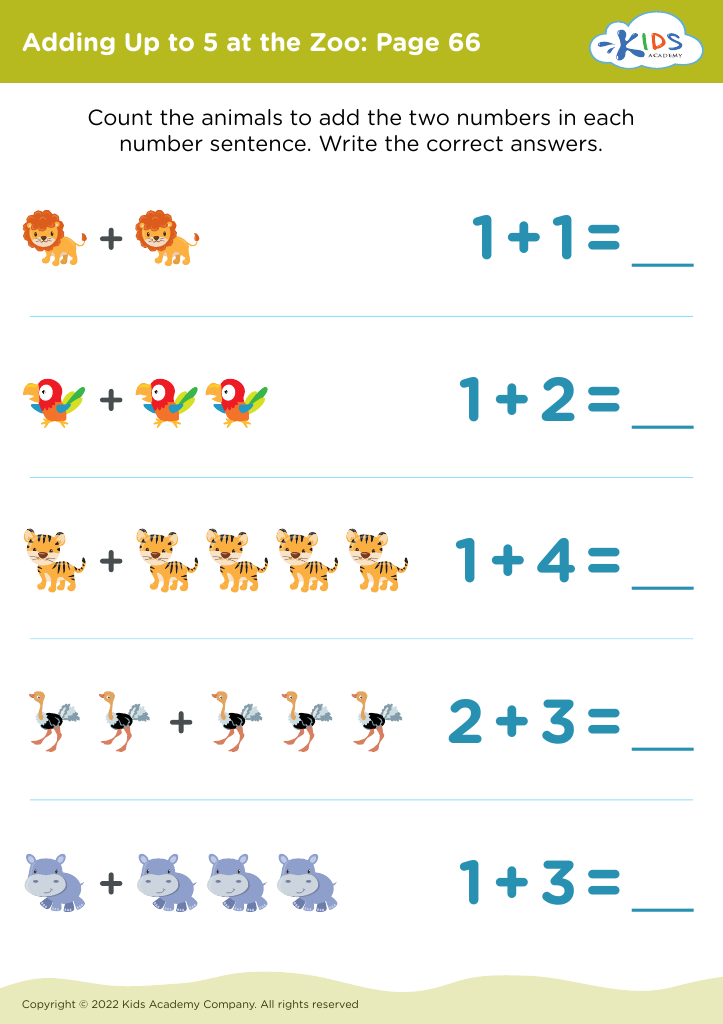
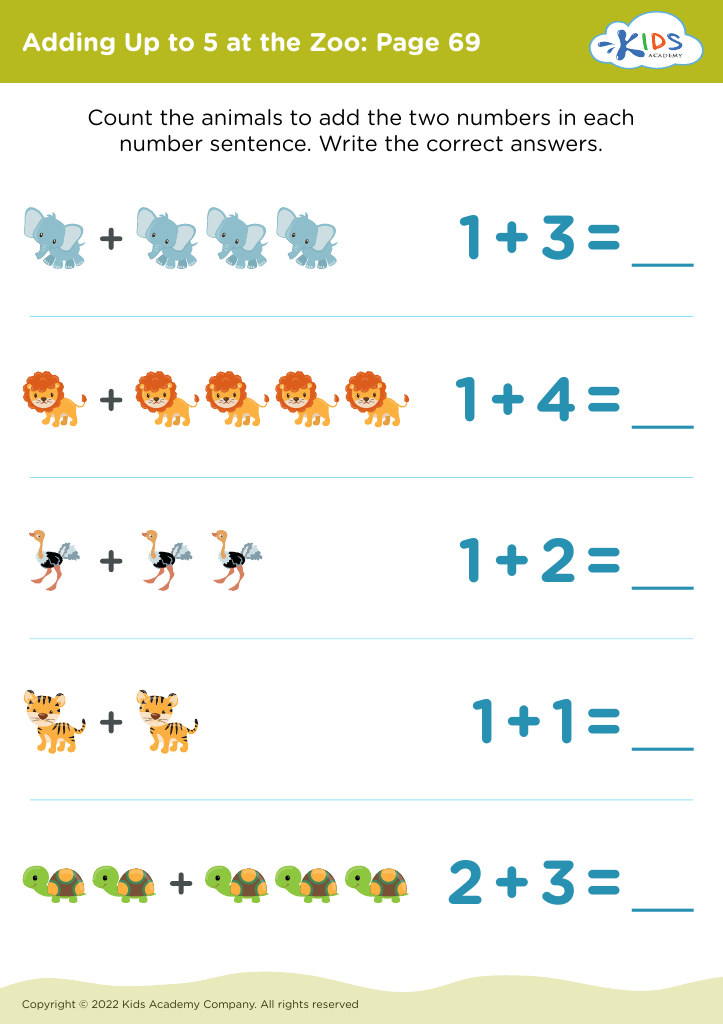
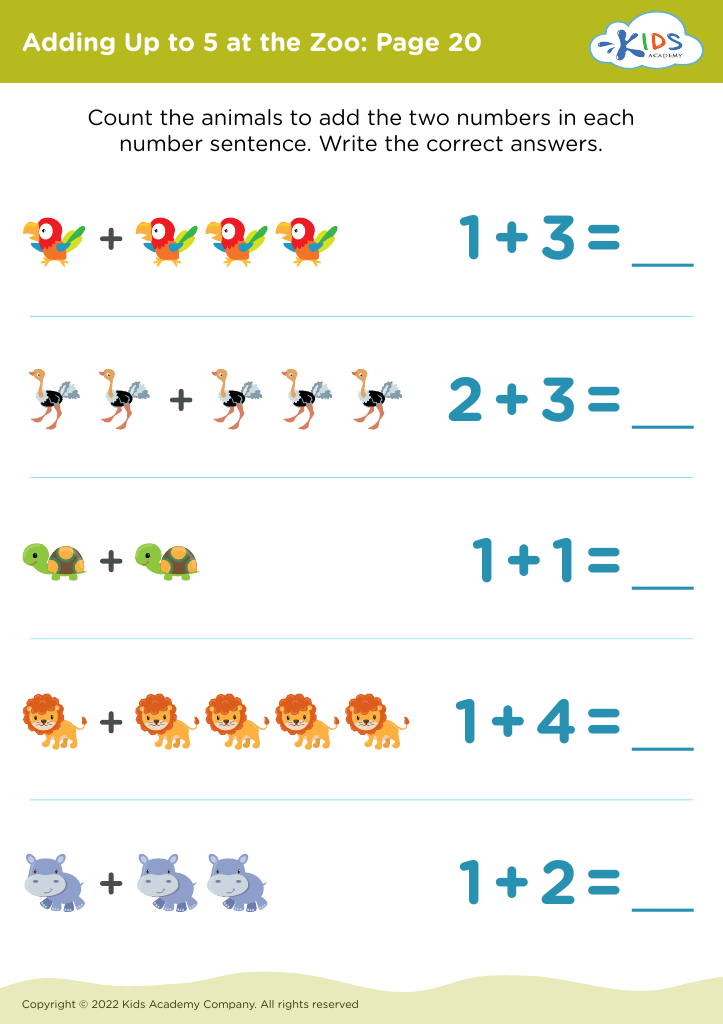
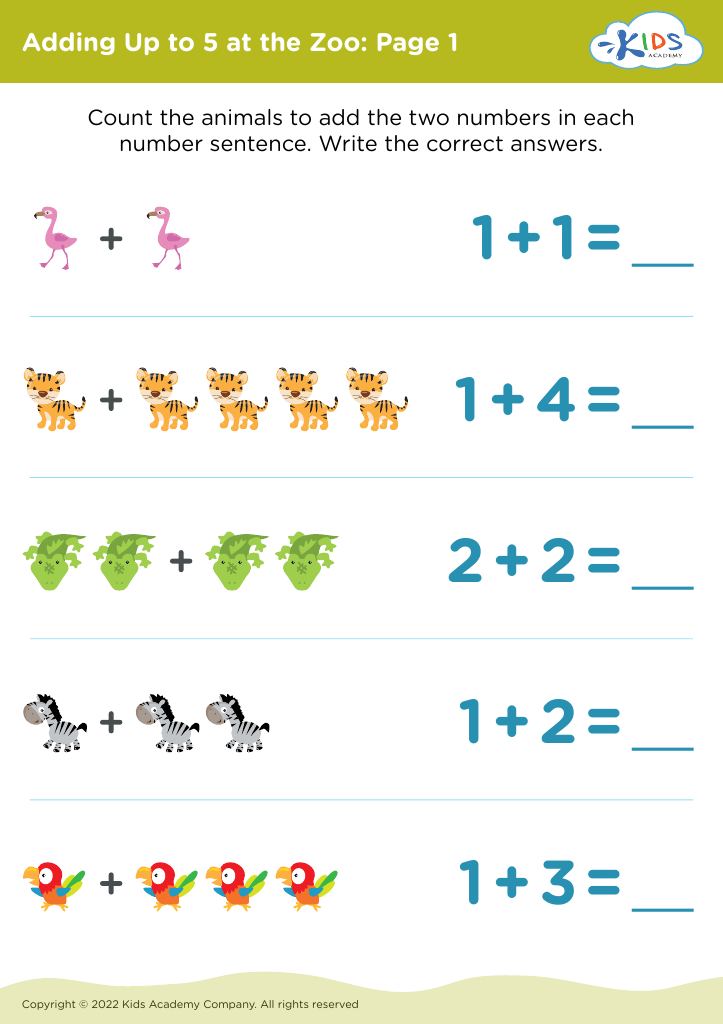
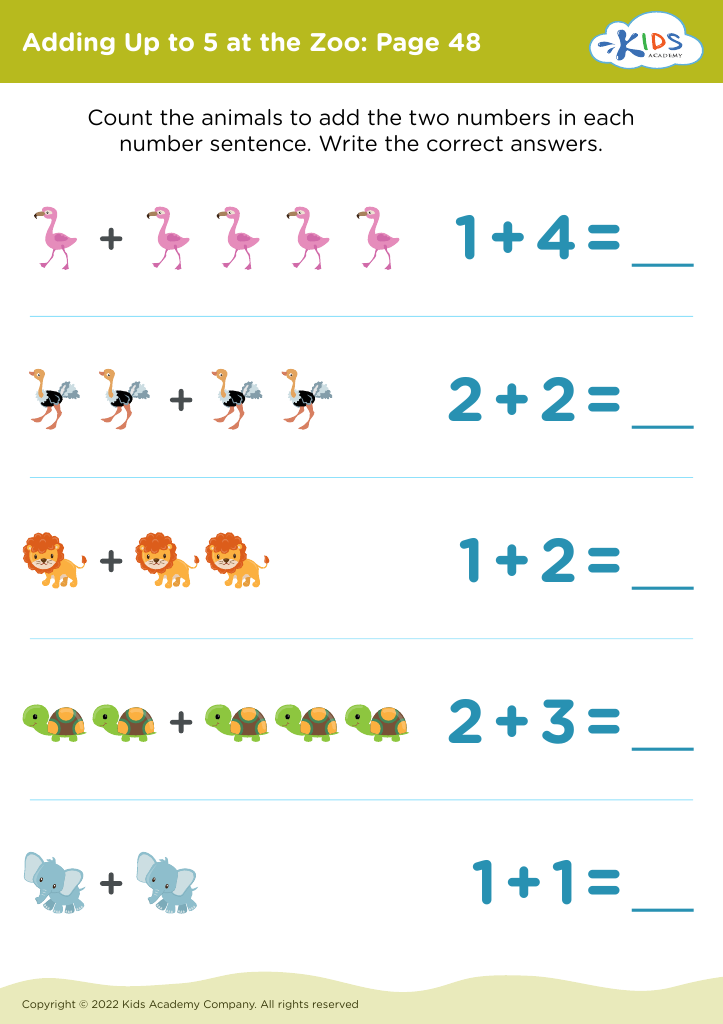
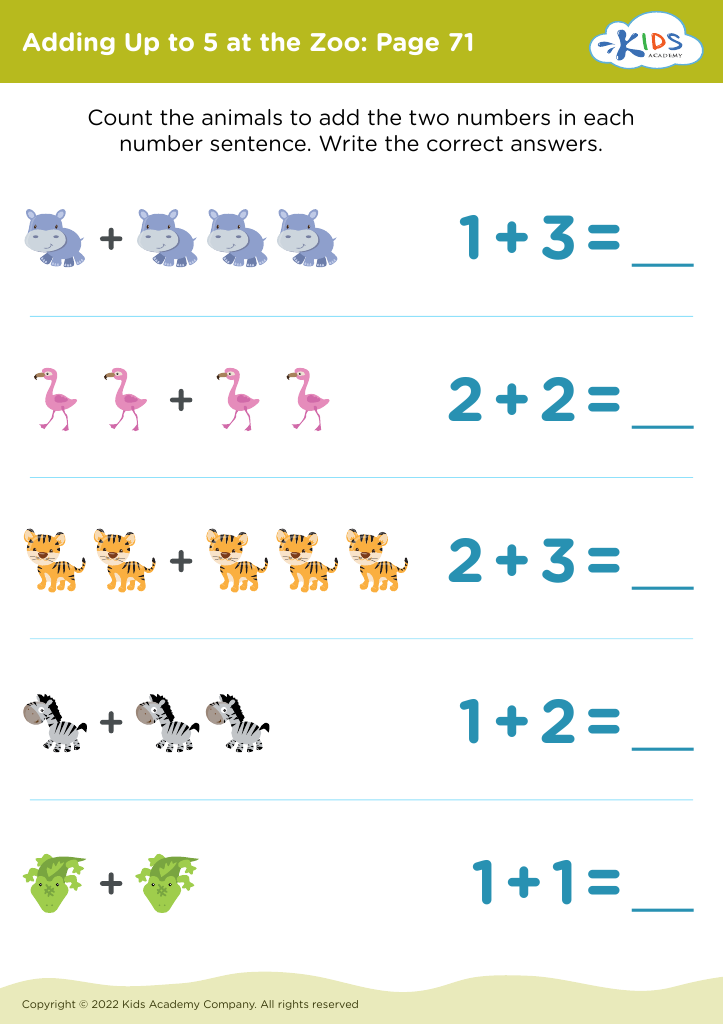
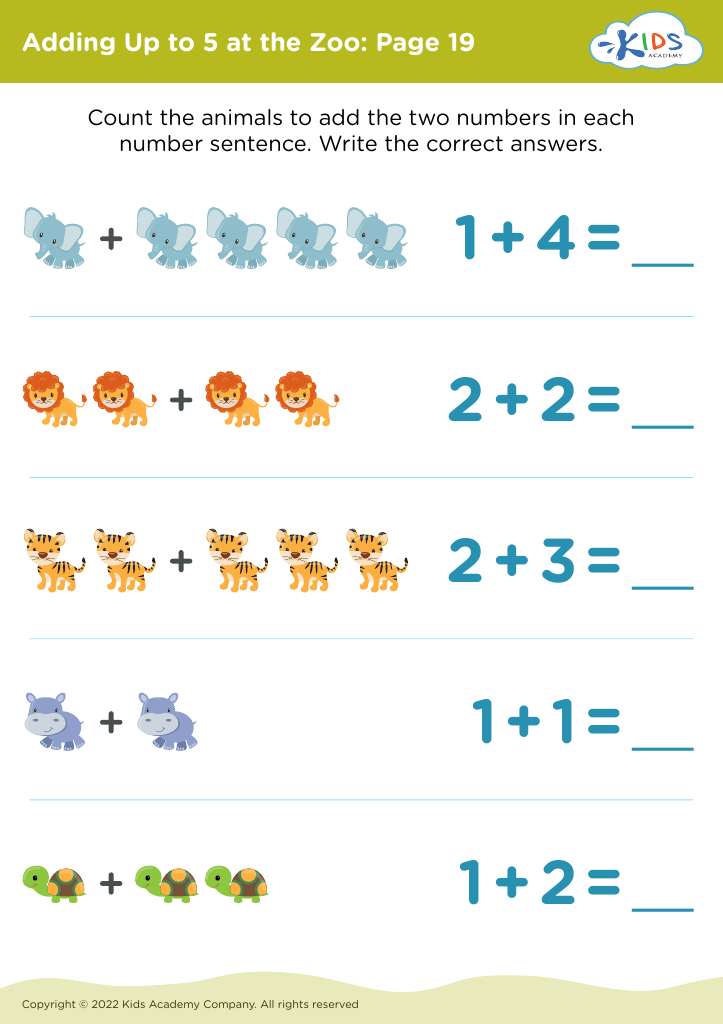
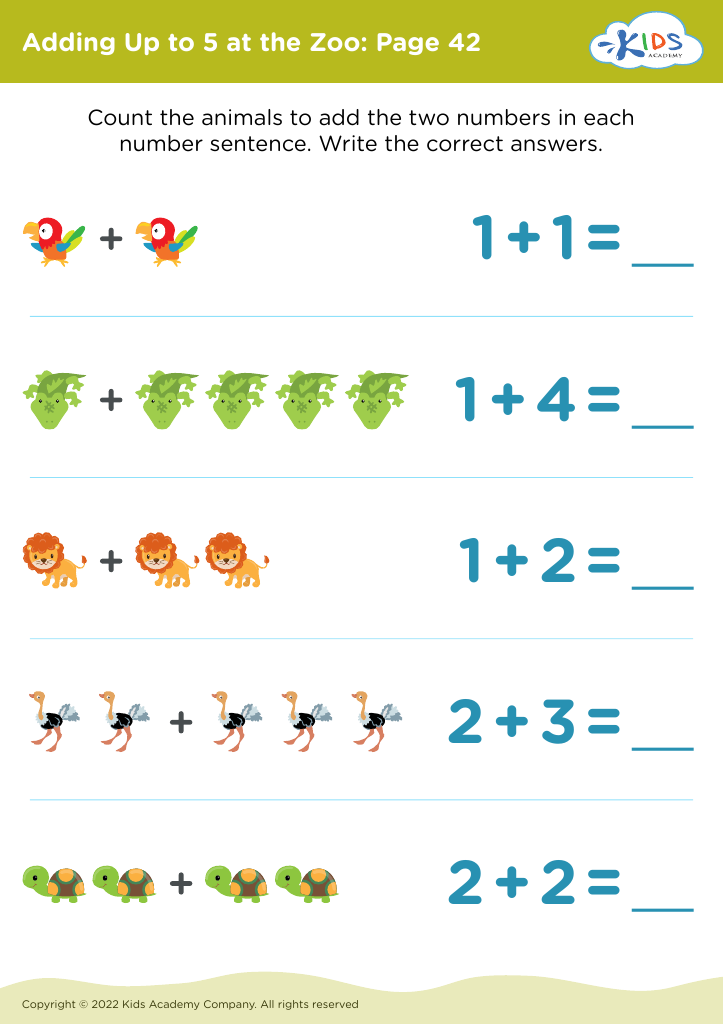
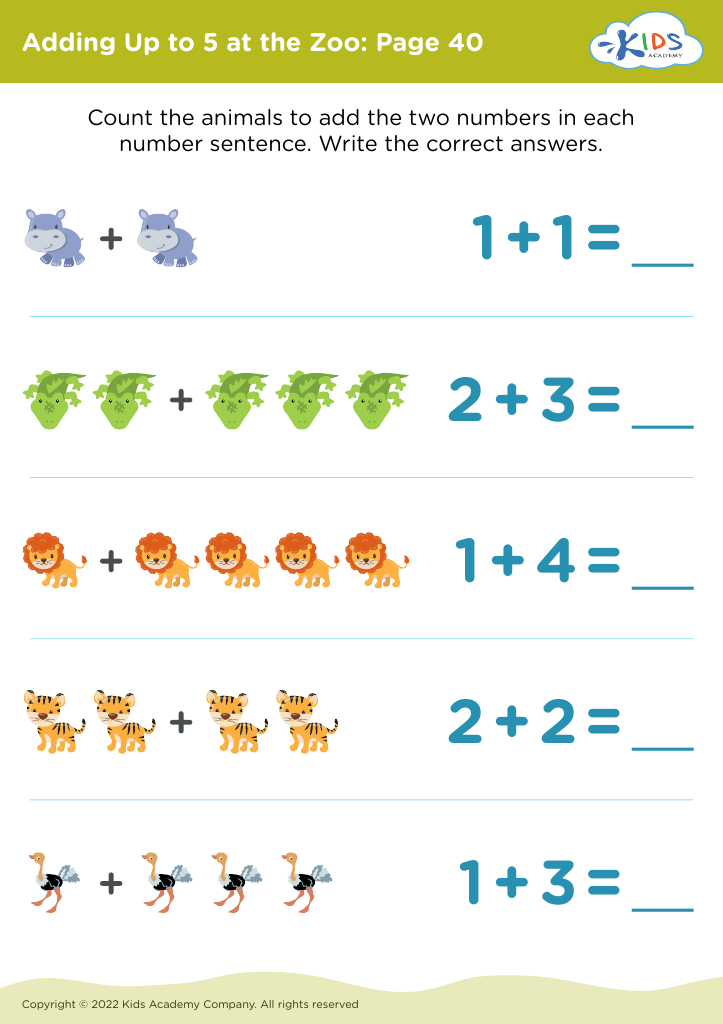
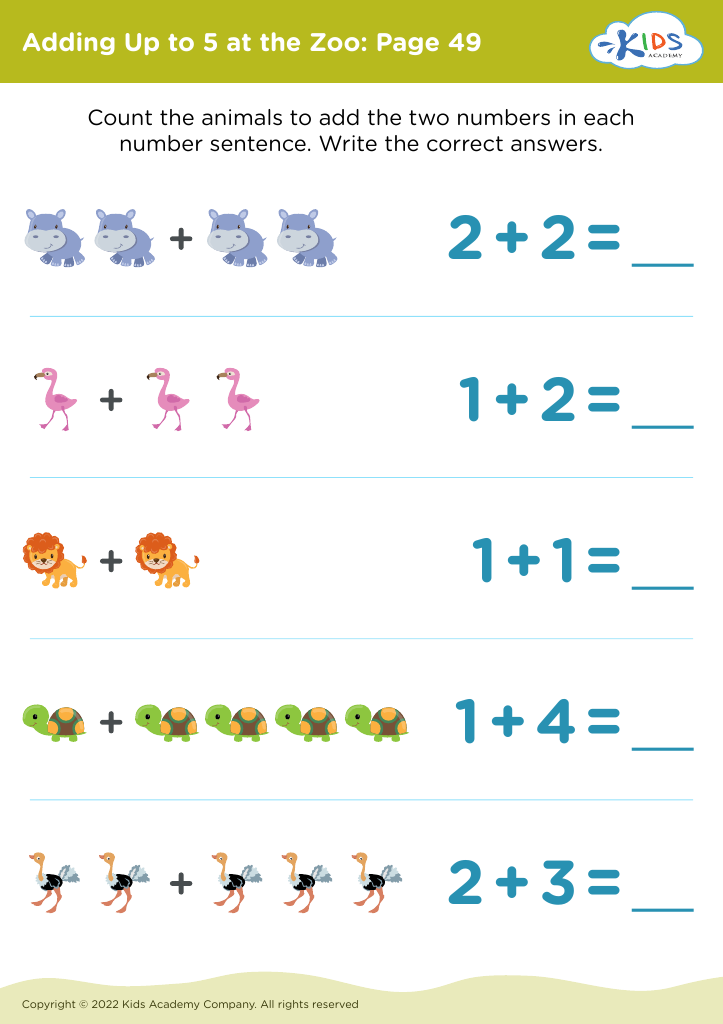



Counting skills are foundational for a child's mathematical development, making activities like "Counting at the Zoo" extremely valuable for ages 5-7. During these formative years, young learners are beginning to grasp basic mathematical concepts which are crucial for later academic success. Engaging in counting activities helps solidify their understanding of numbers, sequencing, and one-to-one correspondence — fundamental building blocks for addition, subtraction, and more advanced math skills.
The zoo theme further enhances the appeal, making learning inherently enjoyable and relatable. Children are naturally curious about animals, and by incorporating counting tasks within this context, we can capture their interest more effectively. When counting lions, tigers, or elephants, kids are not just learning math; they’re also expanding their vocabulary and general knowledge about the animal kingdom.
For parents and teachers, fostering counting skills at this stage sets the stage for future academic achievements by reducing math anxiety and building confidence. Adopting interactive and playful approaches, like "Counting at the Zoo," creates a positive math experience, ensuring that children see learning as fun and engaging. In sum, focusing on counting activities tailored for young learners nurtures both cognitive and emotional development, laying a solid foundation for lifelong learning.