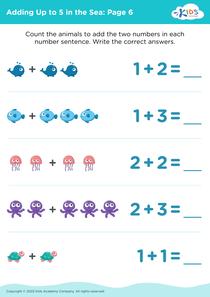
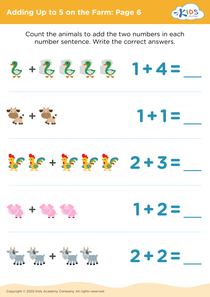
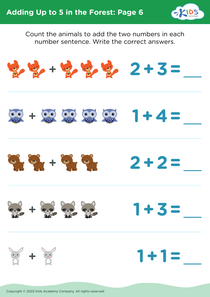
Hand-eye Coordination Adding at the Zoo Worksheets for Ages 5-7
3 filtered results
-
From - To
Enhance your child's hand-eye coordination while exploring the world of math with our "Hand-eye Coordination Adding at the Zoo" worksheets tailored for ages 5-7. These engaging resources combine vibrant zoo-themed visuals with fun addition exercises, making learning an enjoyable adventure. Each worksheet is designed to improve children’s fine motor skills as they color, trace, and manipulate objects while solving addition problems. Perfect for preschool and early elementary students, these worksheets not only support math readiness but also aid in the development of essential coordination skills. Download now and help your little learners enjoy practicing math while visiting the zoo from home!
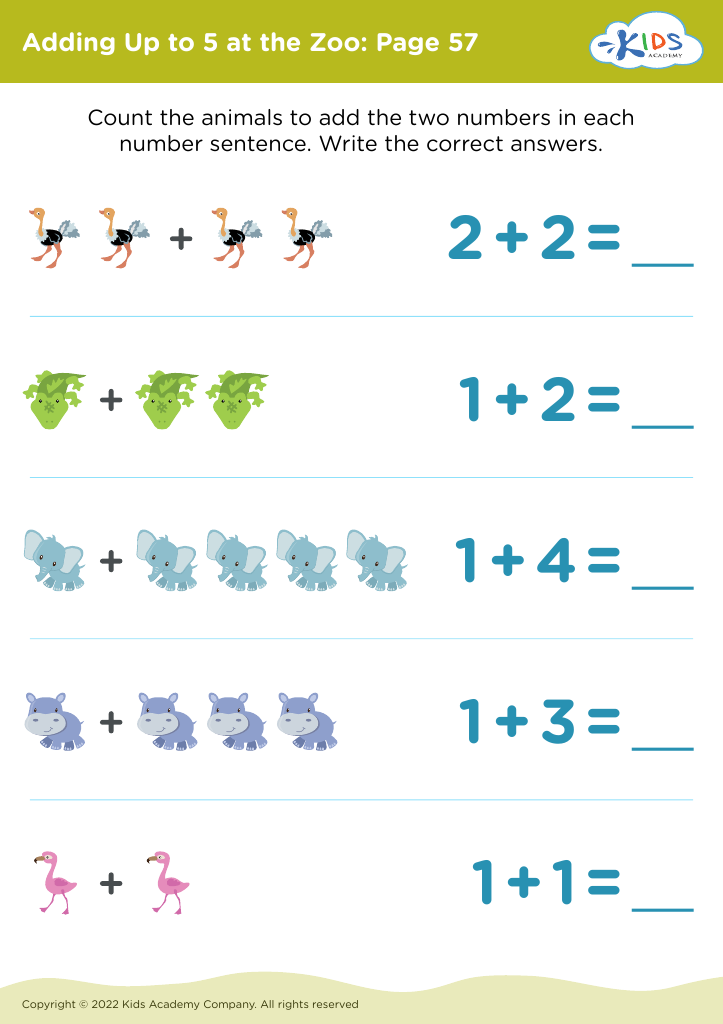
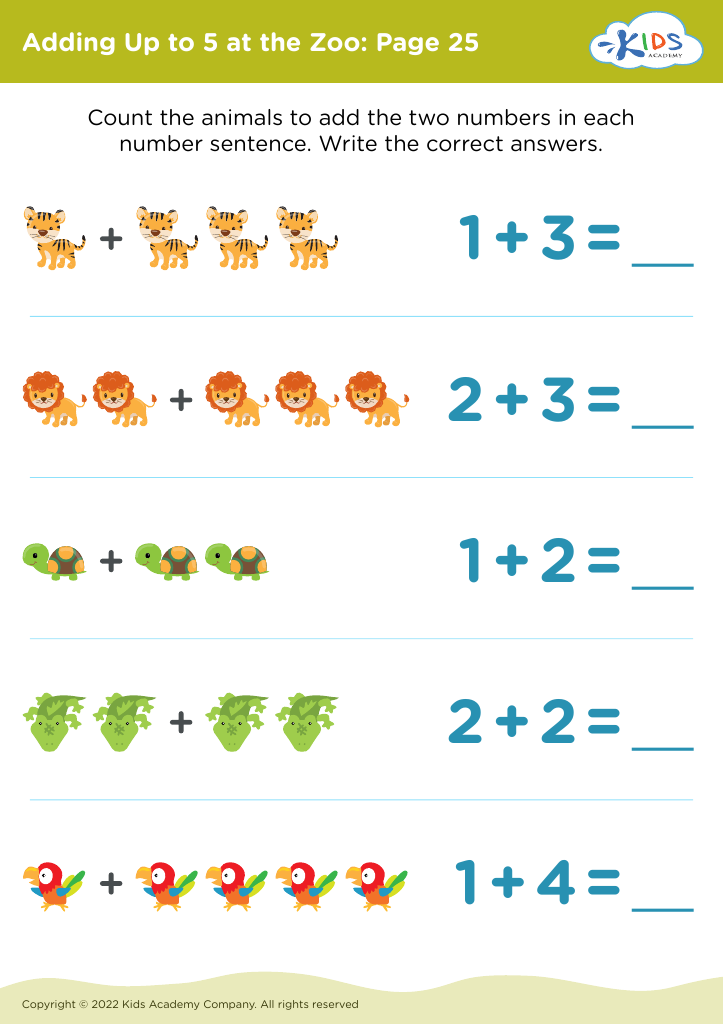
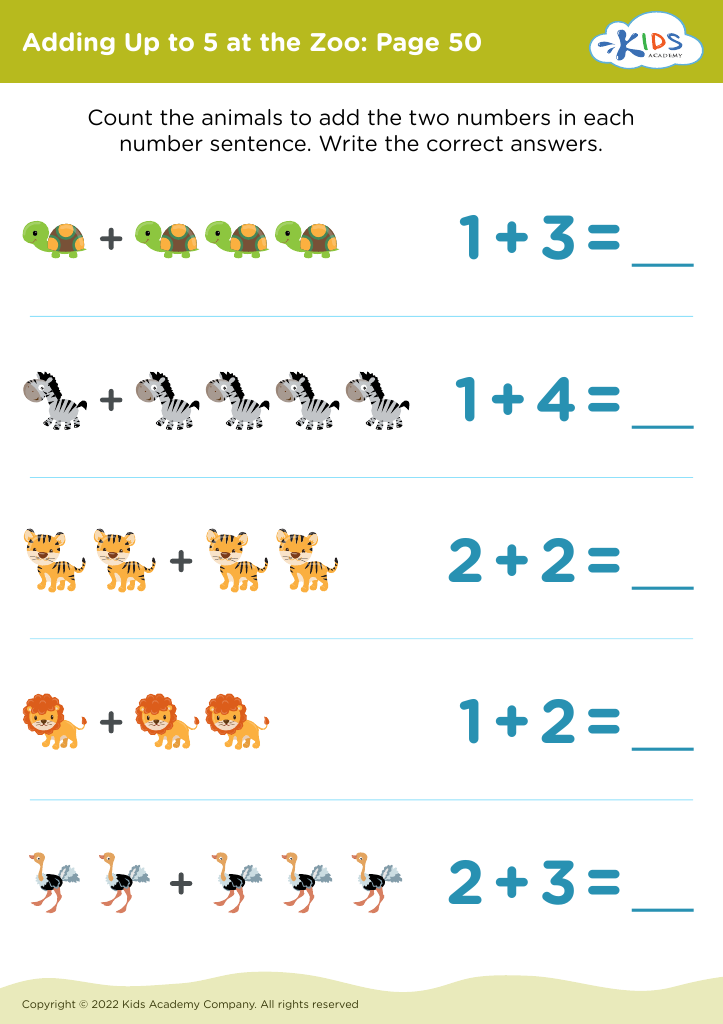



Hand-eye coordination is a crucial skill for children, especially for those aged 5-7, as it lays the foundation for various aspects of learning and development. Activities like "Hand-eye Coordination Adding at the Zoo" combine fun and education by encouraging kids to engage in physical movements while enhancing their mathematical skills.
This interactive activity promotes hand-eye coordination, which is essential for tasks like writing, drawing, and even sports. Additionally, practicing addition while observing animals encourages cognitive skills and reinforces math concepts in an enjoyable context. This method connects abstract numbers to real-world scenarios, making learning more meaningful and relatable.
Furthermore, such activities stimulate fine motor skills as children manipulate objects or tools during the task, boosting their dexterity and confidence. Collaborative aspects of the game can also foster social skills, teamwork, and communication, as kids learn to work together while they play.
By integrating math with engaging experiences like visiting a zoo, both parents and teachers can support a child's holistic development, ensuring they acquire essential skills for future learning and daily life. Emphasizing hand-eye coordination through playful education ultimately helps shape confident, skilled, and enthusiastic learners.