Cognitive Development Adding in the Forest Worksheets for Ages 5-7
17 filtered results
-
From - To
Discover our "Cognitive Development Adding in the Forest Worksheets" tailored for children aged 5-7! These engaging worksheets seamlessly blend nature-themed visuals with foundational math skills to enhance cognitive growth. As children journey through adding animals, trees, and other forest elements, they develop critical thinking, problem-solving abilities, and number sense in a playful context. Designed to align with early learning standards, these worksheets stimulate curiosity and foster a love for learning. Perfect for both at-home and classroom use, these resources make math fun while nurturing essential cognitive skills in young learners. Explore our collection today and watch your child thrive!
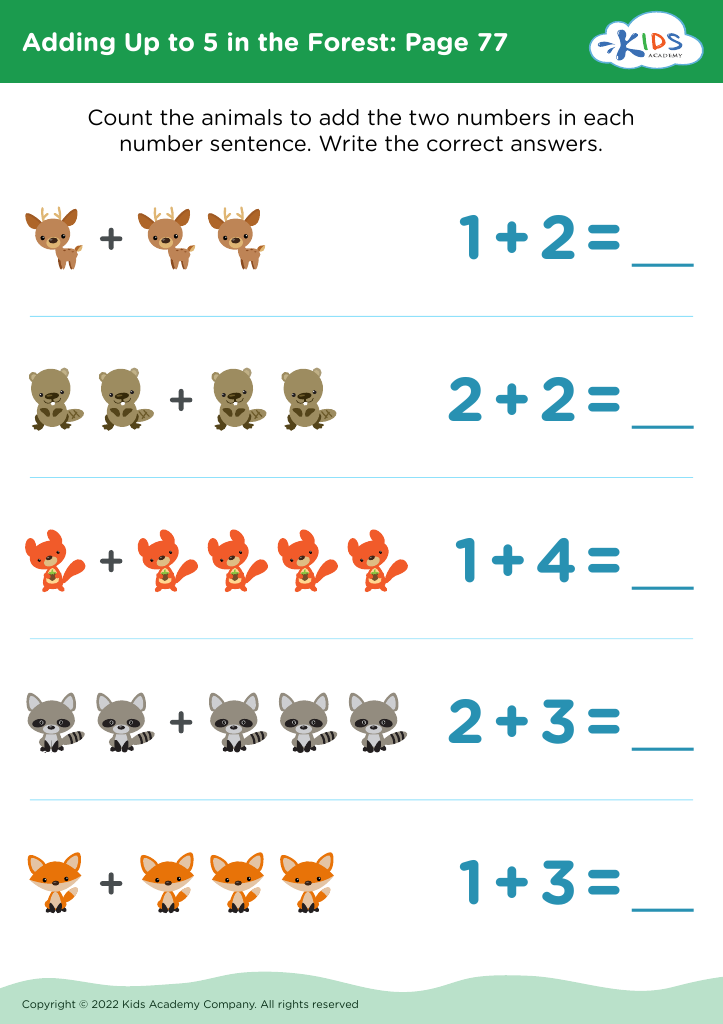
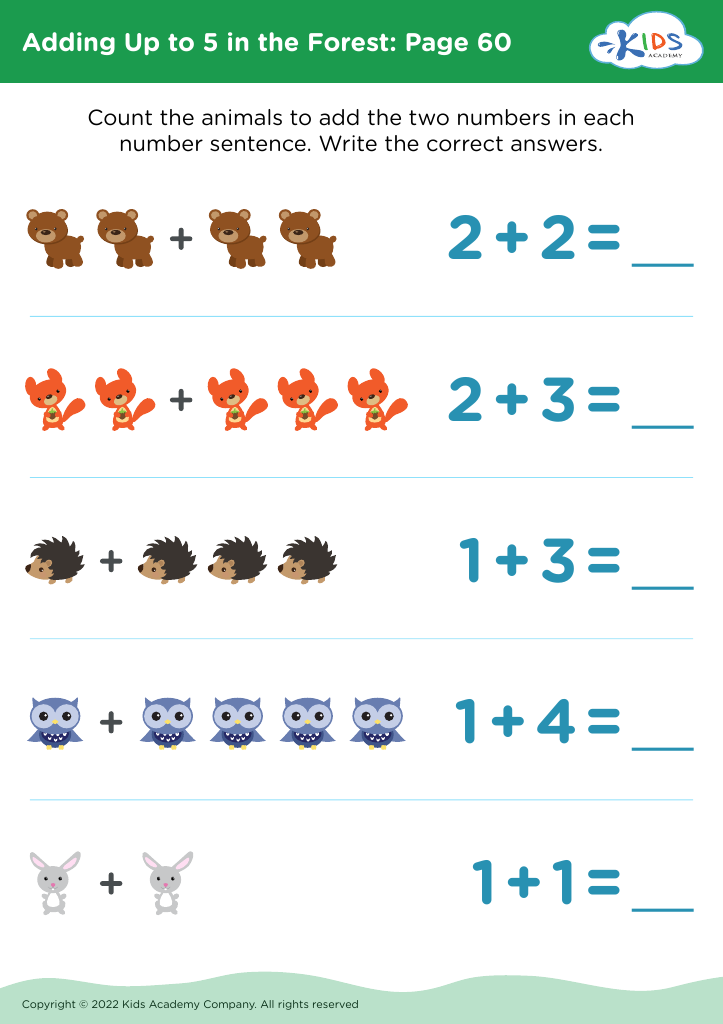
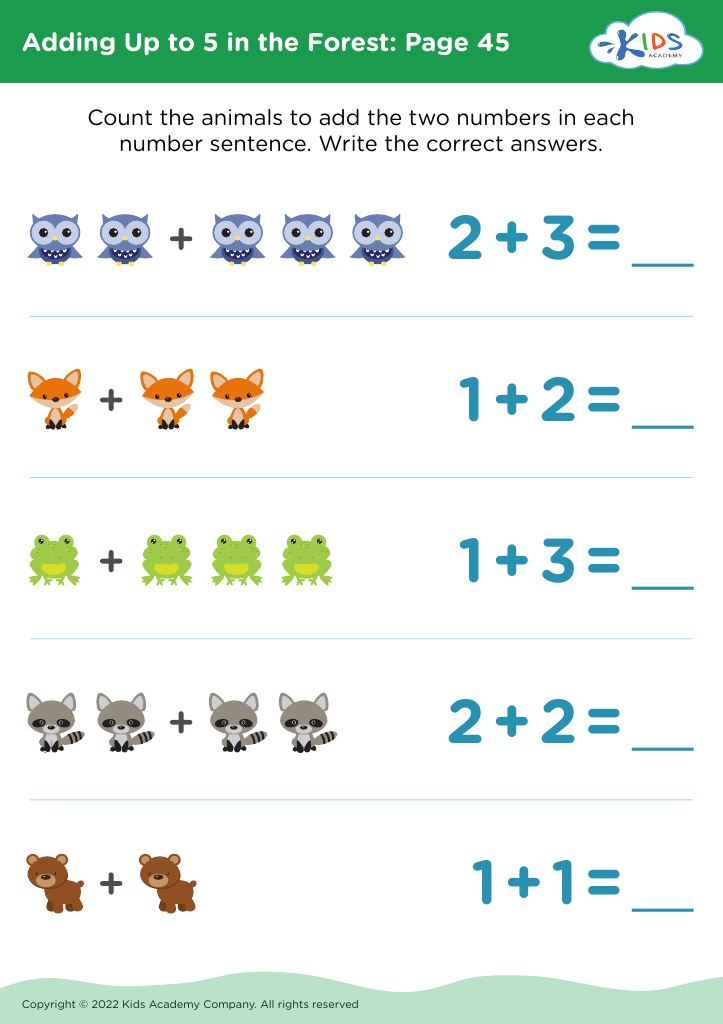
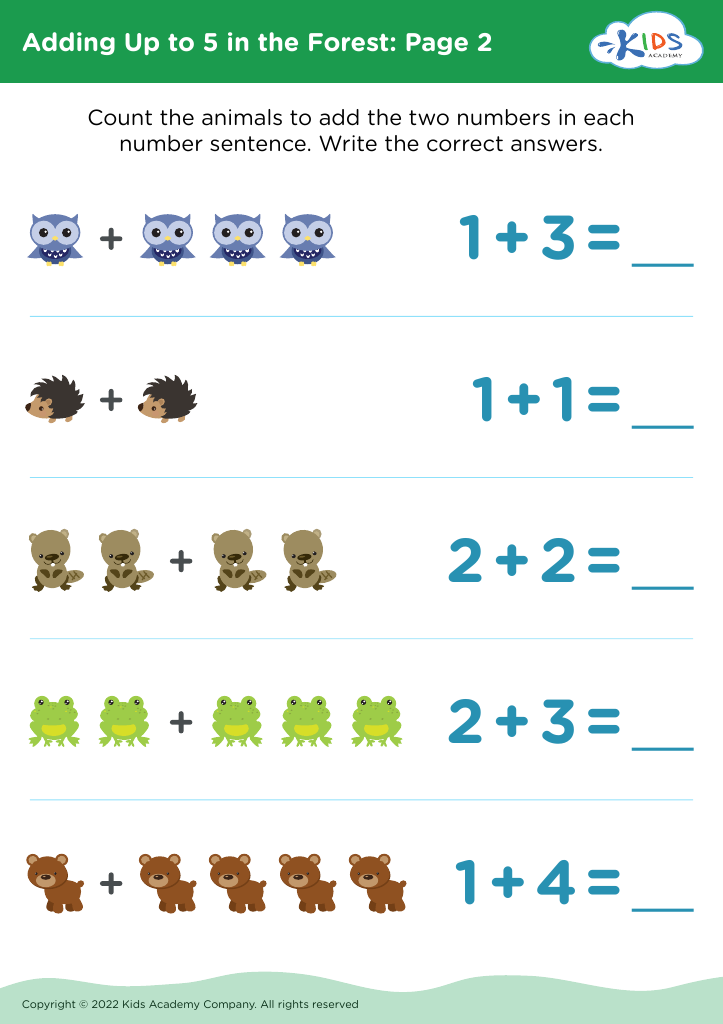
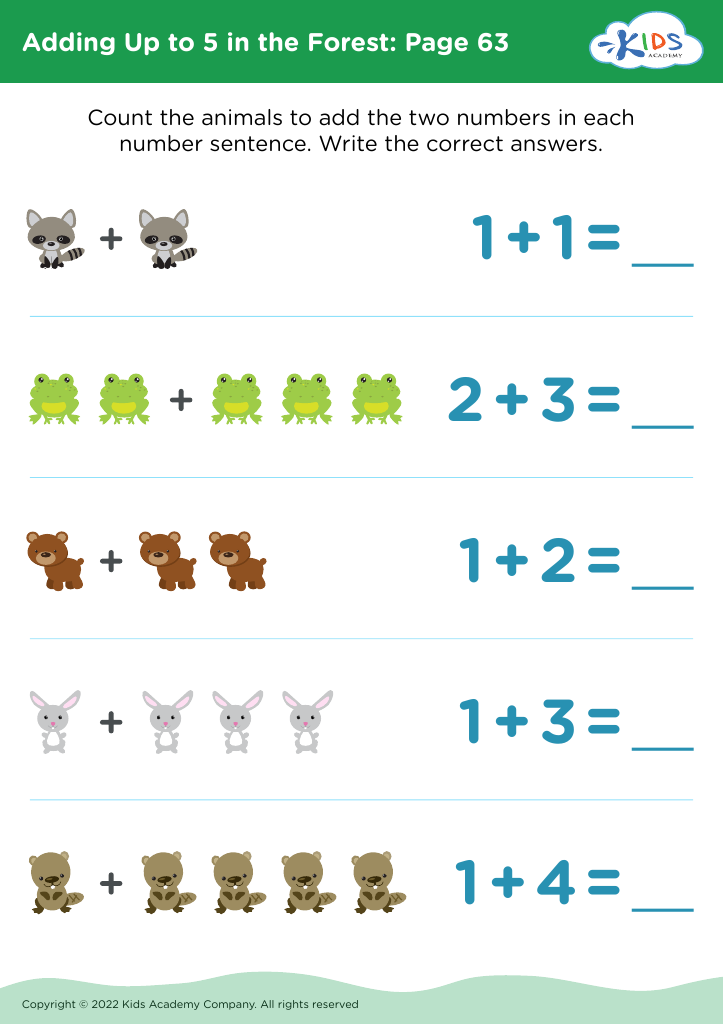
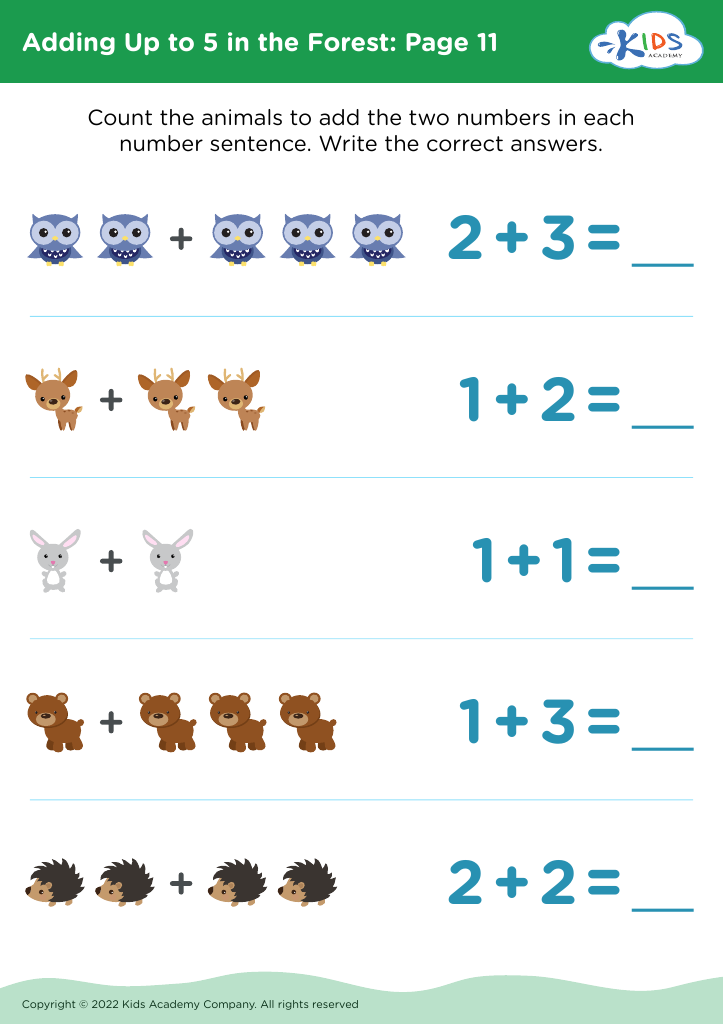
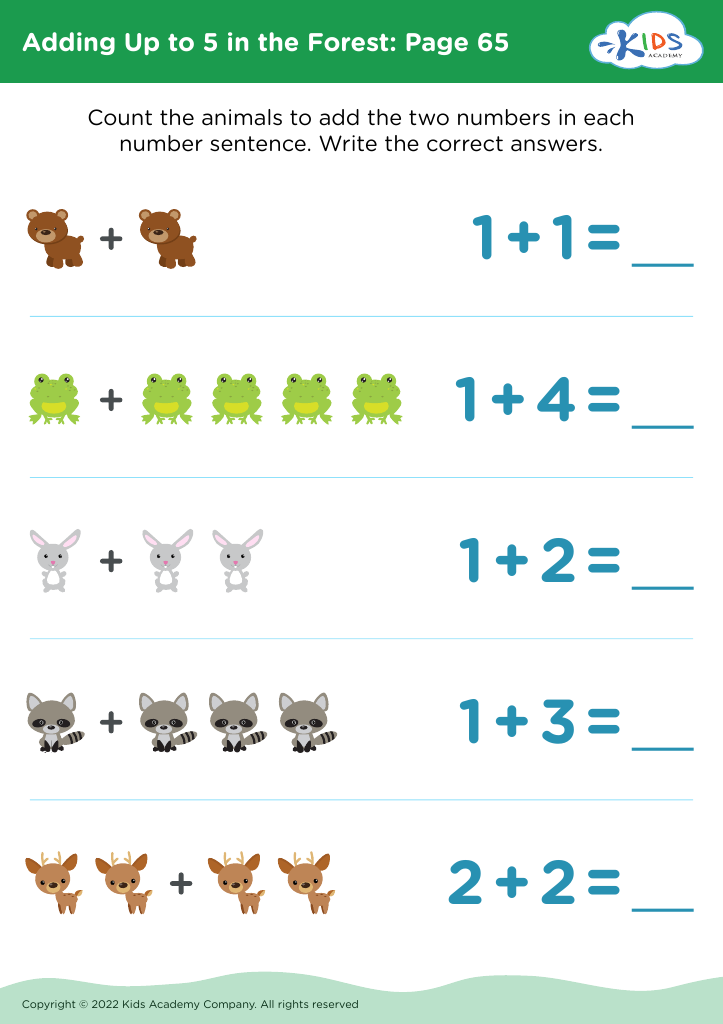
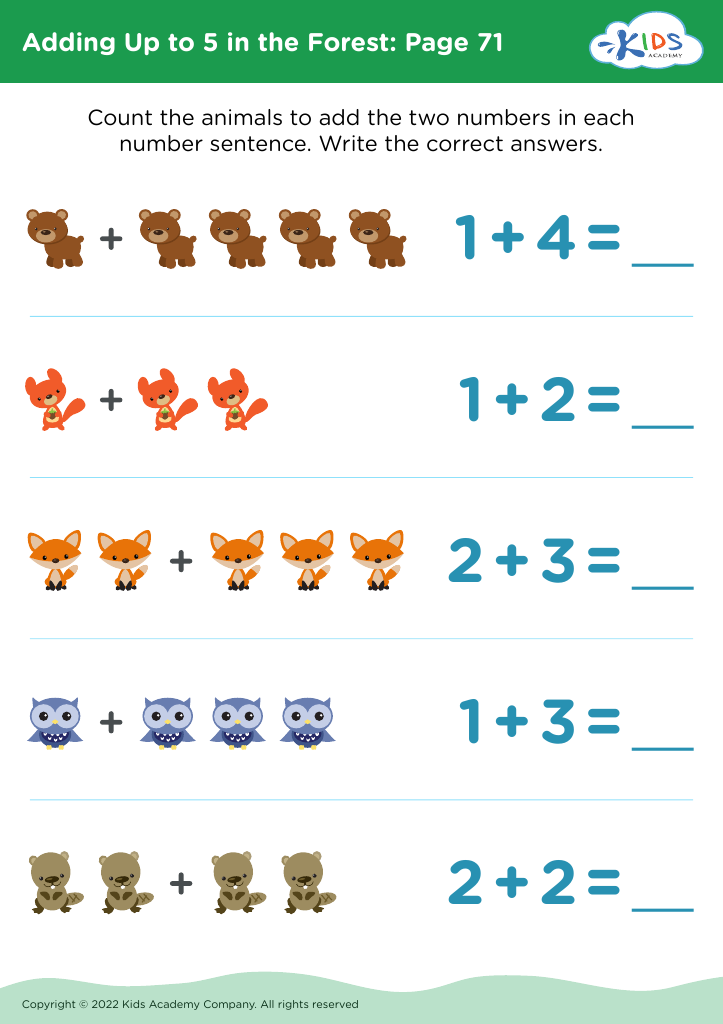
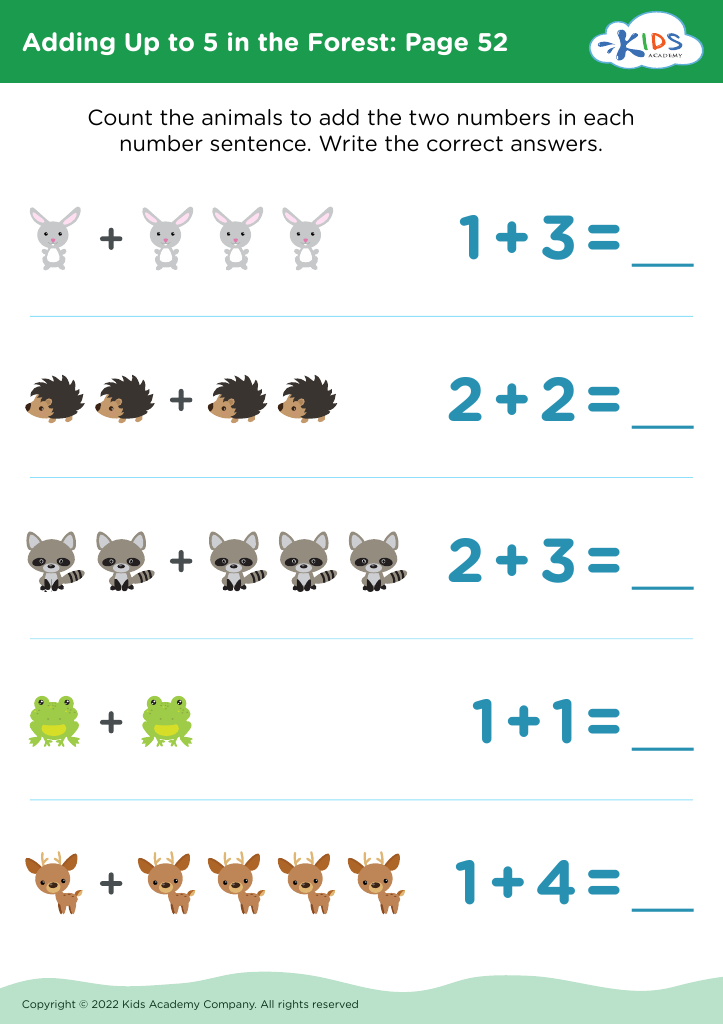
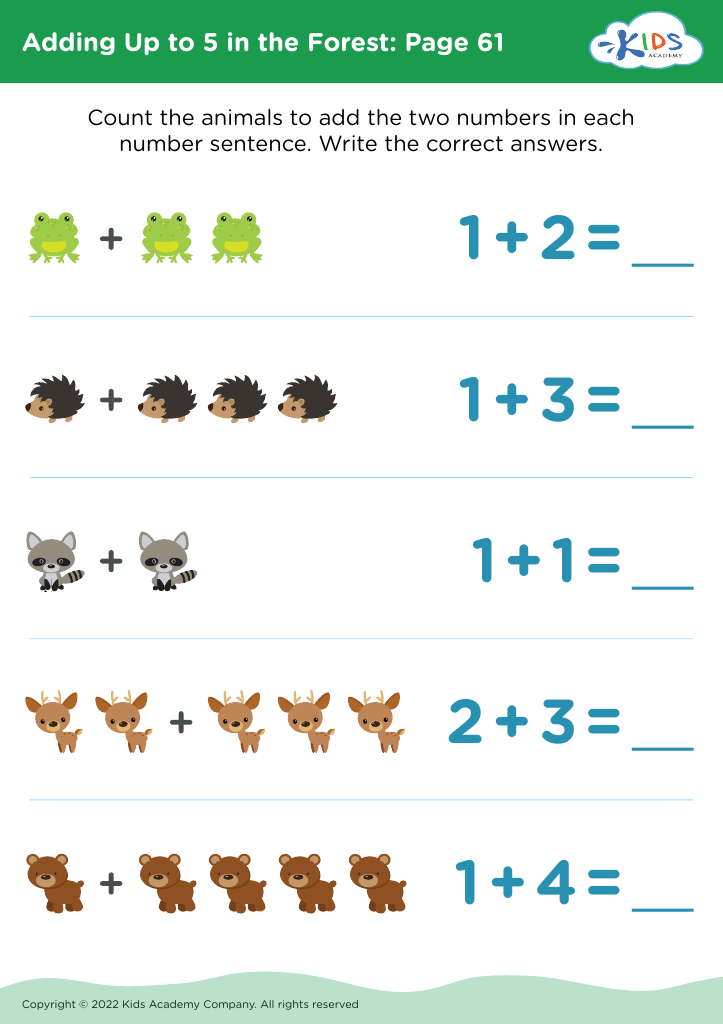
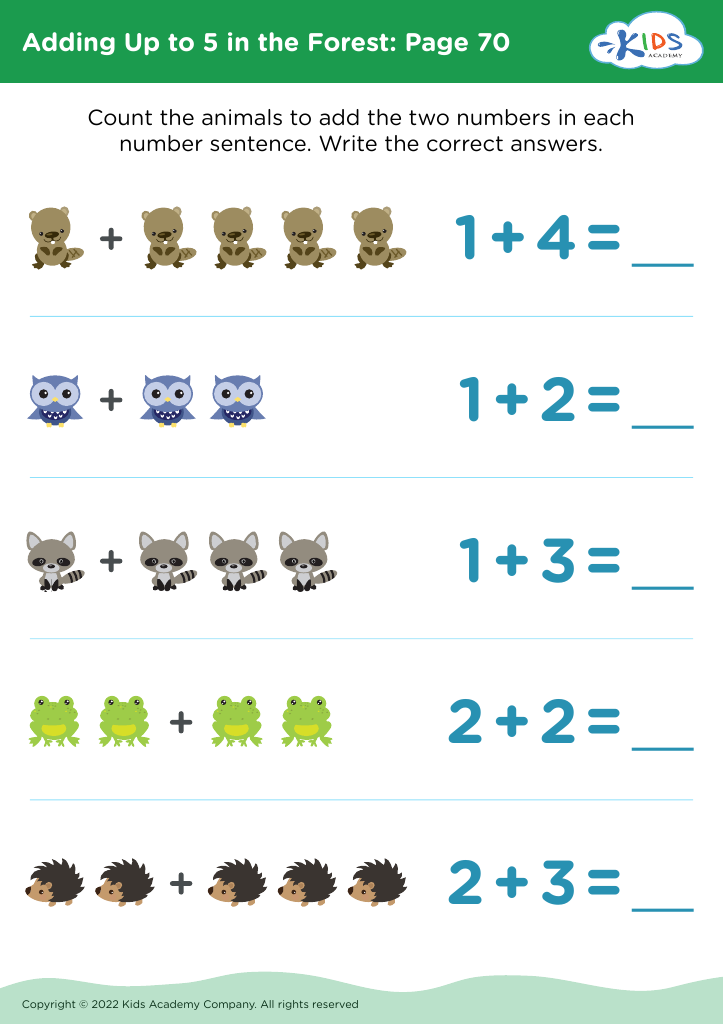
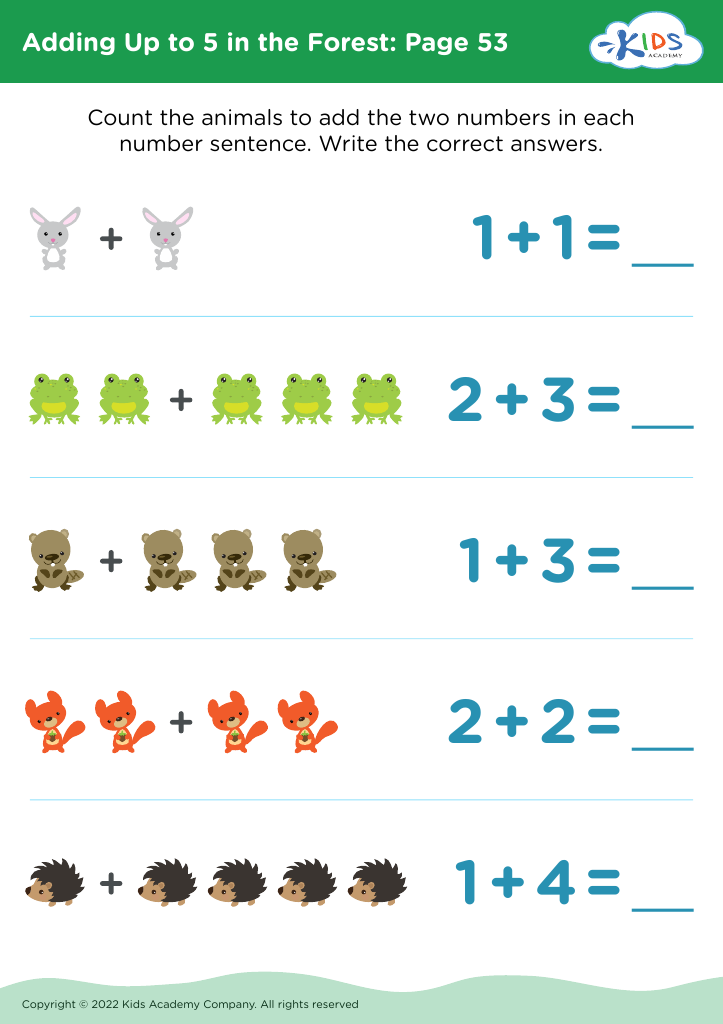
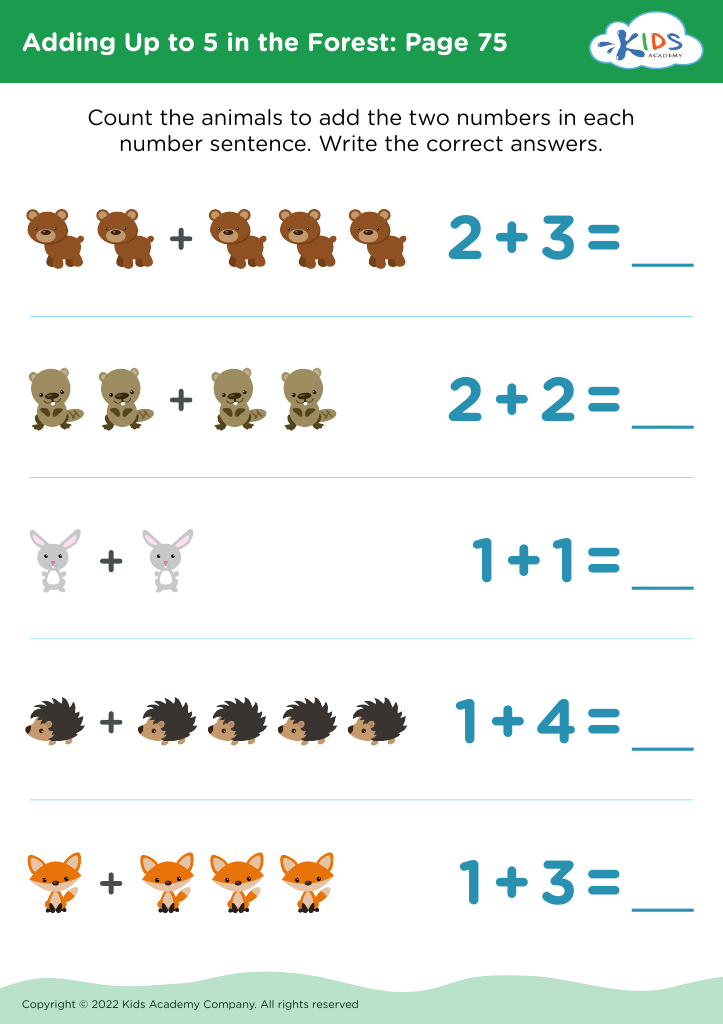
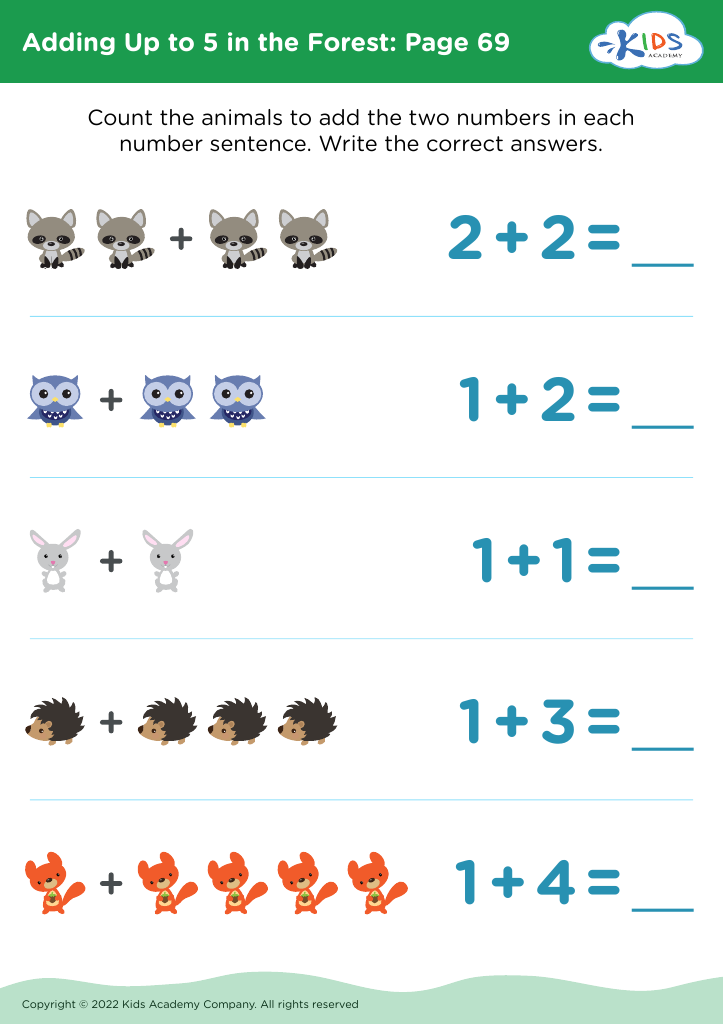
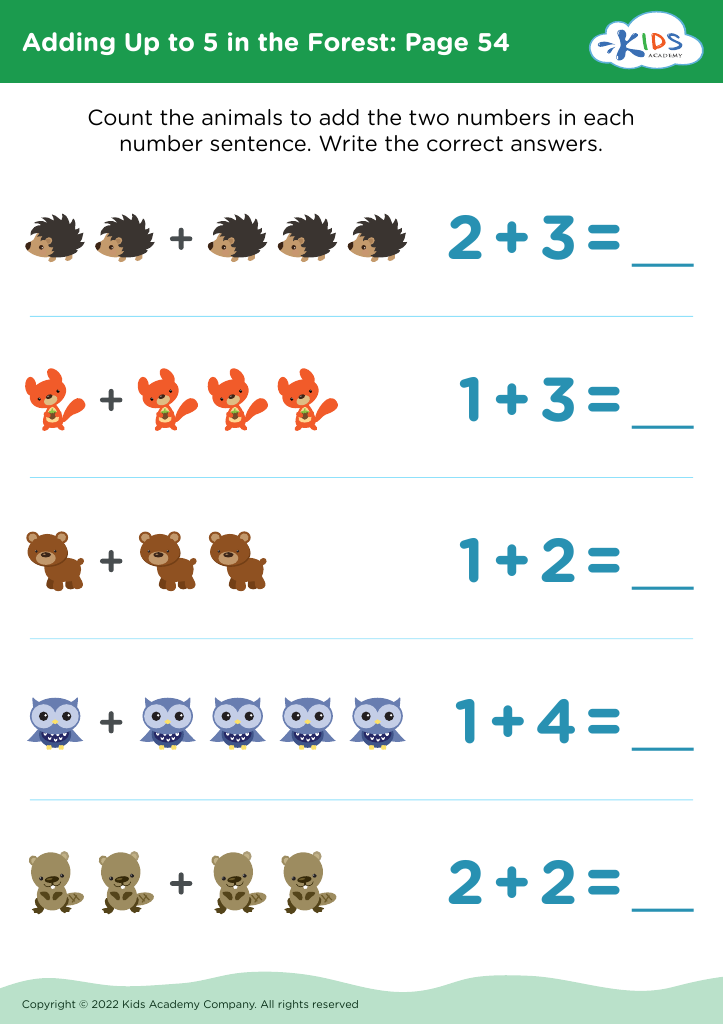
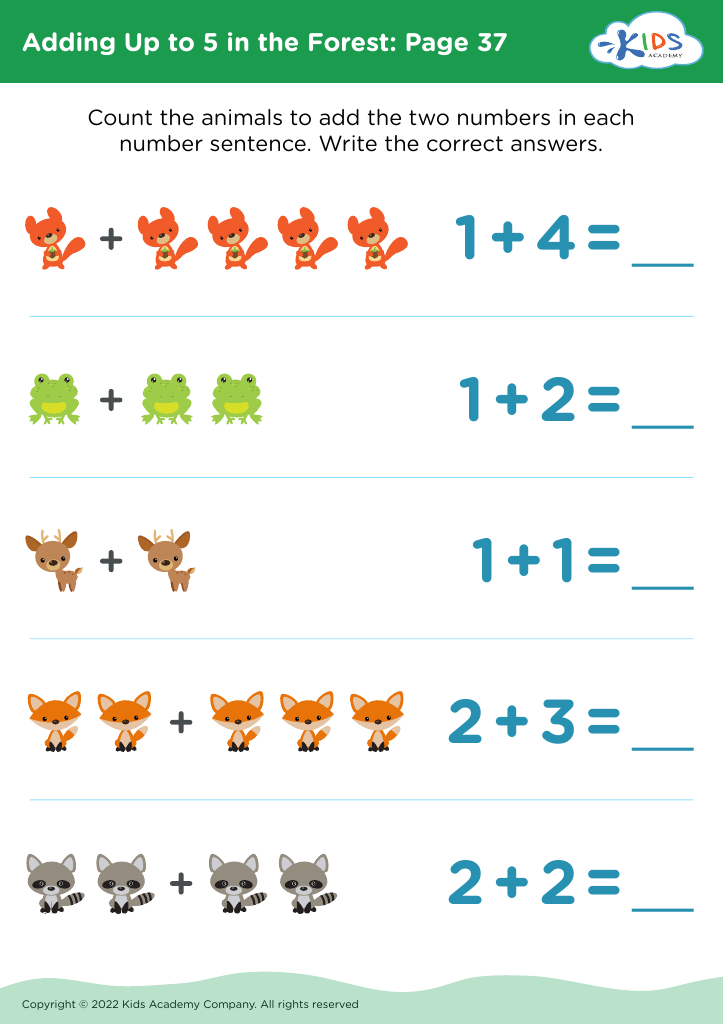
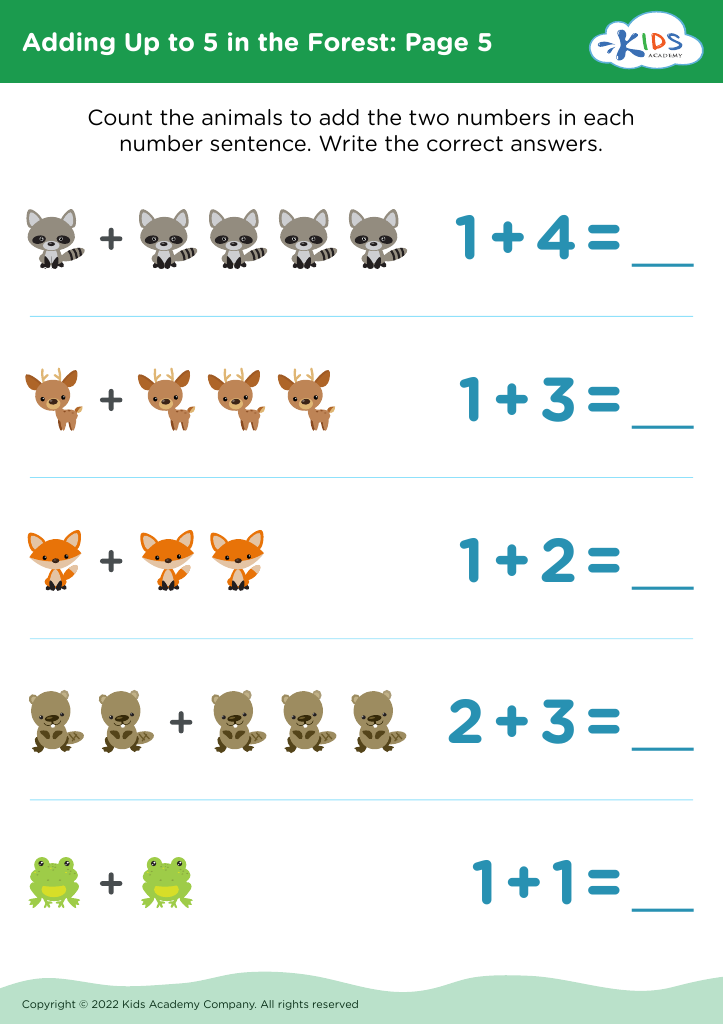



Cognitive development is crucial for children aged 5 to 7, as it lays the foundation for their future learning and social interactions. During this critical period, children's ability to think, reason, and understand the world around them rapidly expands. Engaging with initiatives like "Adding in the Forest" can enhance this development by integrating hands-on, experiential learning into their education.
When children explore nature, like in forest settings, they encounter diverse stimuli that can sharpen their cognitive skills. Observing wildlife, navigating natural terrain, and participating in group activities foster critical thinking, problem-solving, and cooperation. These experiences not only bolster literacy and numeracy; they also promote creativity and emotional intelligence.
Moreover, children learn best when they're actively engaged and having fun. Parents and teachers should advocate for cognitive activities that incorporate the outdoors, as they encourage curiosity and exploration. Enhanced cognitive development translates to better focus, improved academic performance, and stronger emotional resilience. Ultimately, investing in fostering these skills can lead to well-rounded individuals who are prepared to tackle challenges, making it imperative for guardians and educators to support programs that promote learning through nature. Integrating educational goals with fun outdoor activities can significantly shape children’s overall growth and lifelong learning propensity.