Cognitive Development Adding in the Sea Worksheets for Ages 5-7 - Page 2
28 filtered results
-
From - To
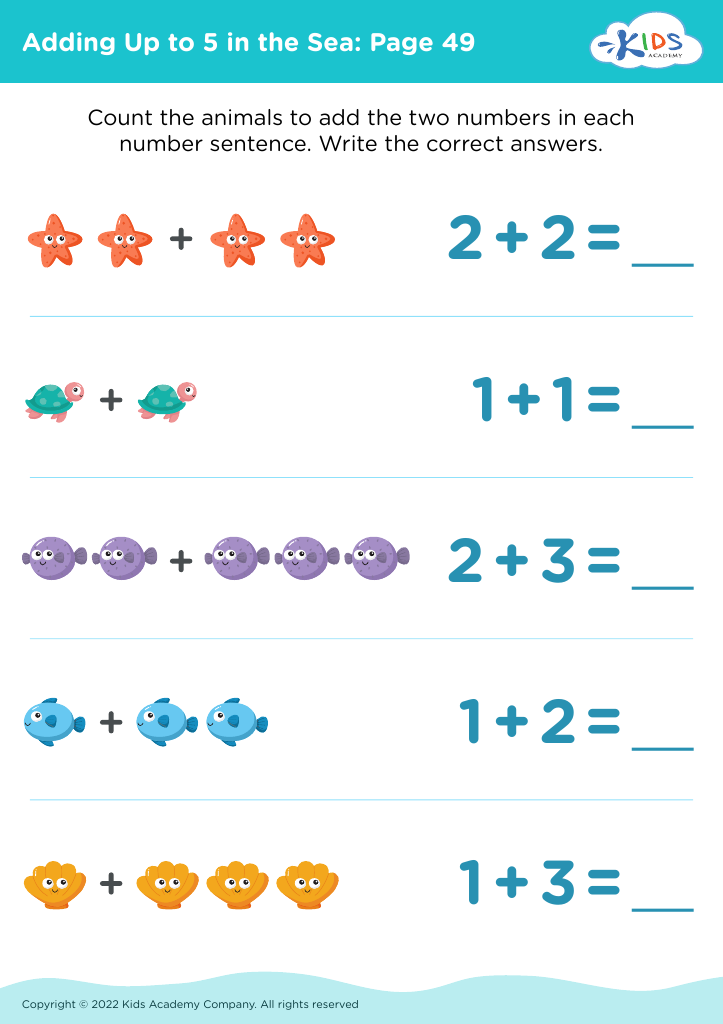
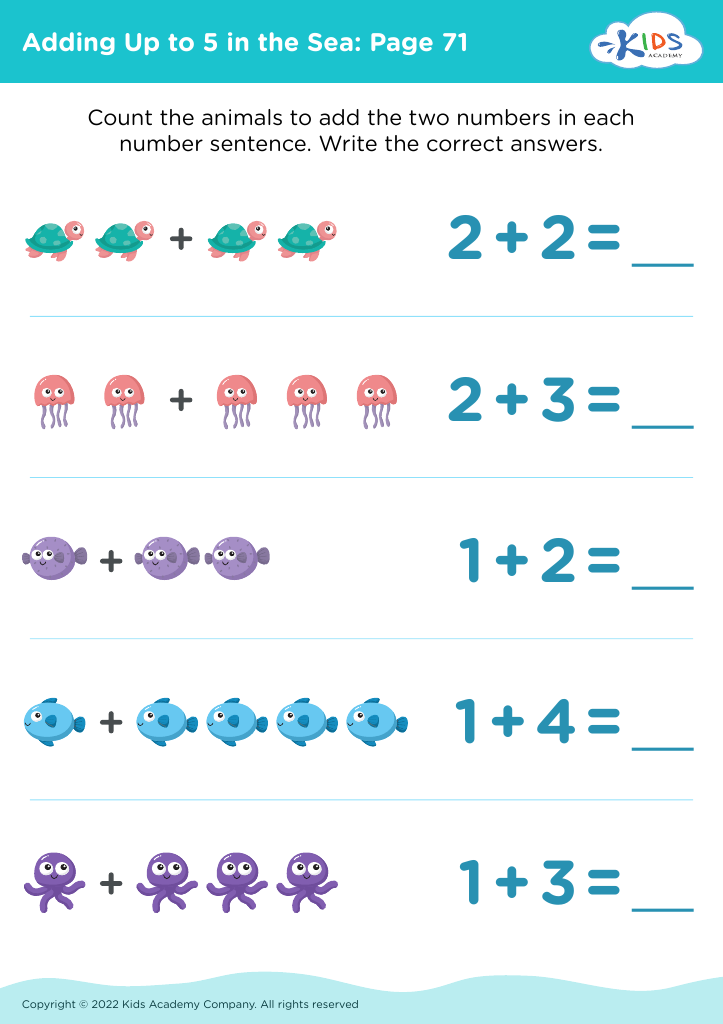
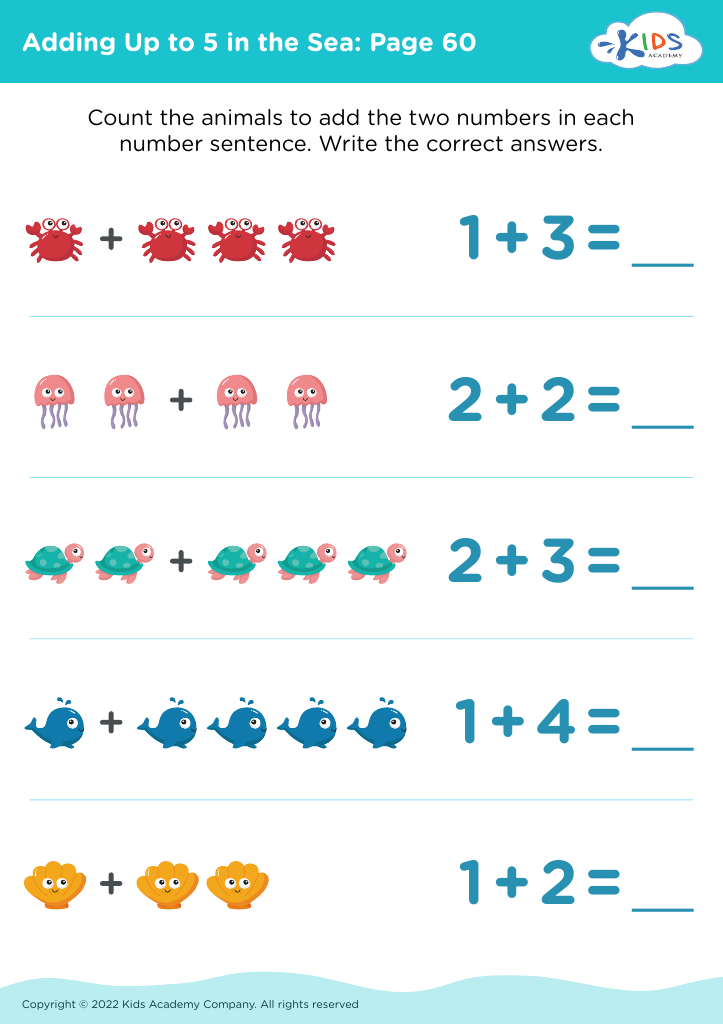
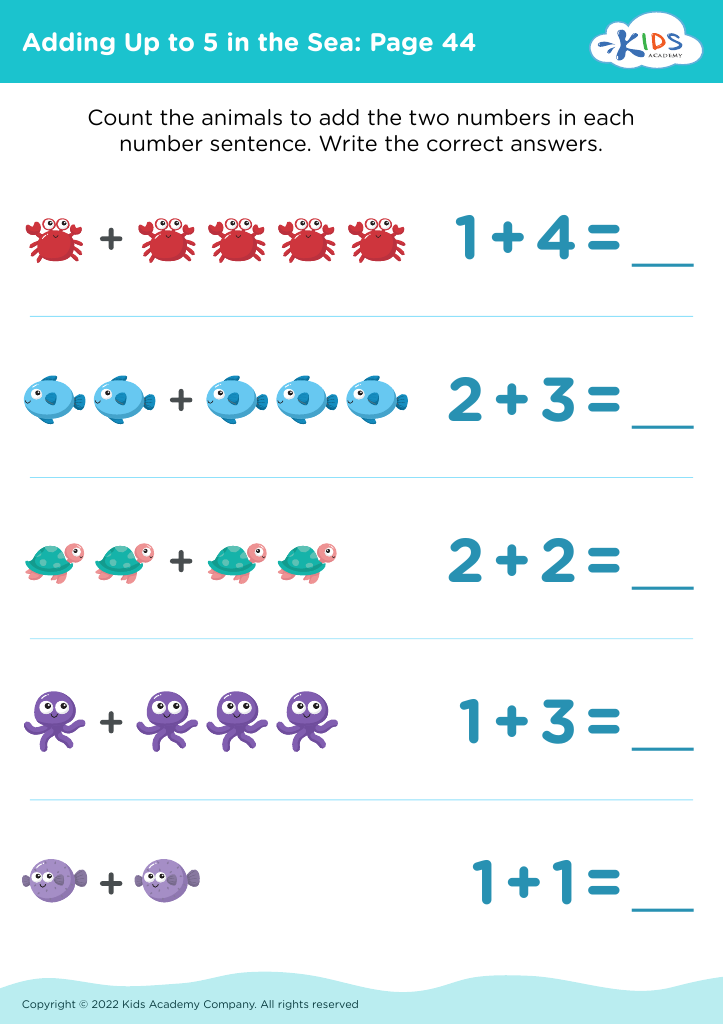



Cognitive development, especially through activities like "Adding in the Sea" for ages 5-7, is crucial for several reasons. First, children in this age group are in a prime stage for developing foundational mathematical skills and logical thinking. Engaging activities such as "Adding in the Sea" can make learning fun, creative, and contextual, helping children understand abstract concepts through tangible, relatable themes like the ocean.
Secondly, early cognitive development sets the stage for a child's future academic success. By providing stimulating activities that challenge their thinking and problem-solving skills, parents and teachers can ensure that children build a strong base for more complex learning later. This preparation can lead to higher confidence in their abilities and a more positive attitude towards learning overall.
Moreover, integrating themed activities facilitates a holistic learning experience. When children add sea creatures, they also learn about marine life and ecosystems, which broadens their general knowledge and curiosity about the world. Cognitive activities that involve storylines or themes allow children to make connections between different pieces of information, enhancing their ability to comprehend and retain knowledge.
Finally, involving parents in such activities strengthens the parent-child bond and encourages a collaborative educational environment. When teachers and parents actively engage in a child's educational journey, it demonstrates the value of learning, fosters teamwork, and sets a strong social and emotional foundation.