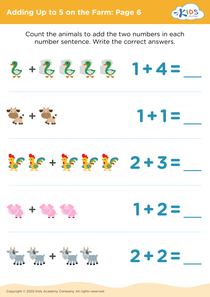
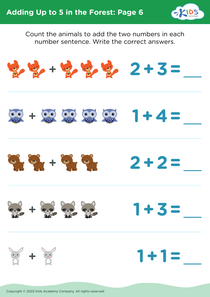
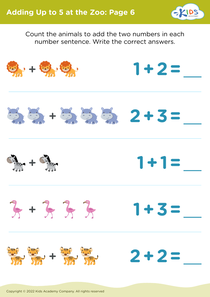
Hand-eye Coordination Adding in the Sea Worksheets for Ages 5-7
4 filtered results
-
From - To
Dive into the deep blue sea with our engaging "Hand-eye Coordination Adding in the Sea Worksheets," designed for ages 5-7! These educational printables blend the magic of underwater adventure with essential math skills. Children will practice addition while improving their hand-eye coordination through fun, visually captivating exercises. Perfectly tailored for young learners, these worksheets support early math development and fine motor skills in one enchanting, aquatic-themed package. Whether at home or in the classroom, our worksheets promise an enjoyable learning experience that encourages focus, precision, and a love for numbers. Explore the ocean of knowledge today!
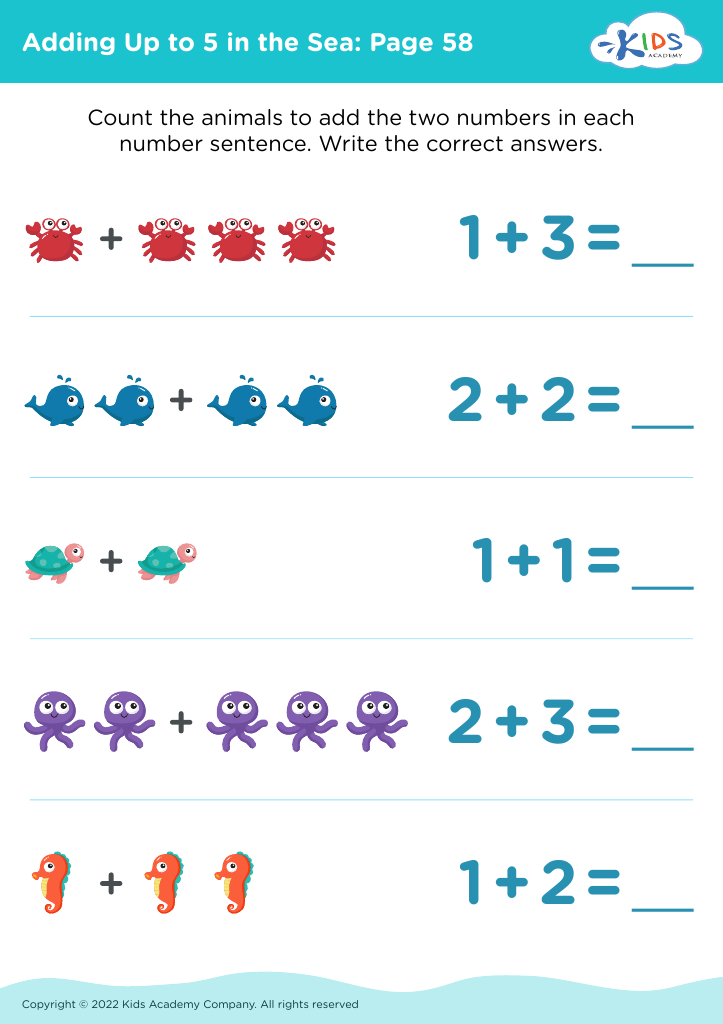
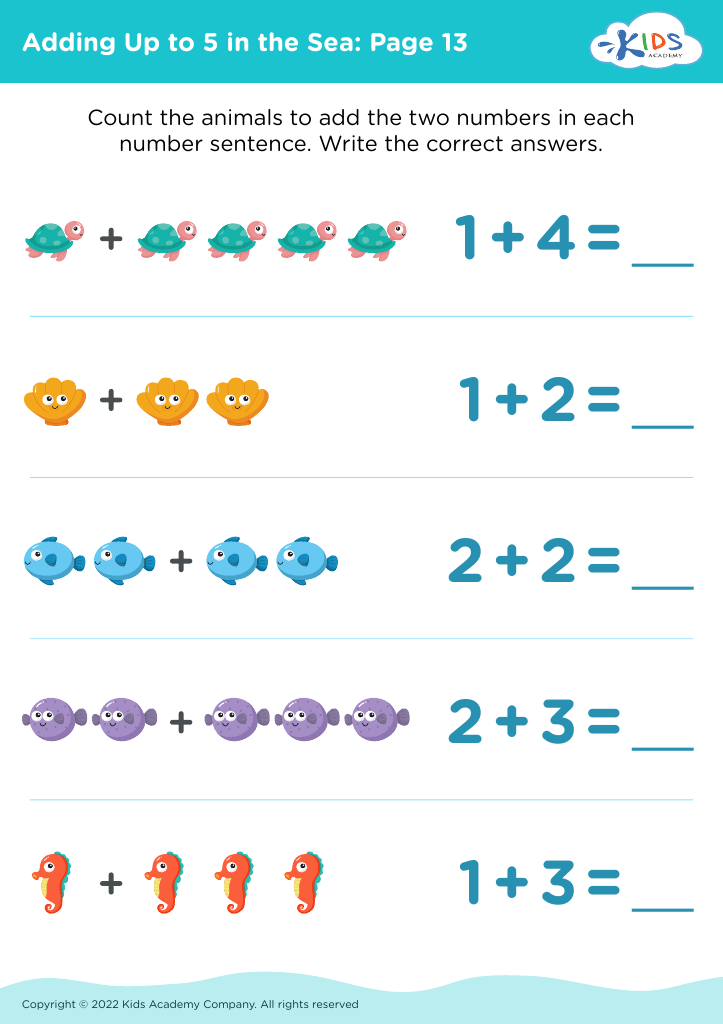
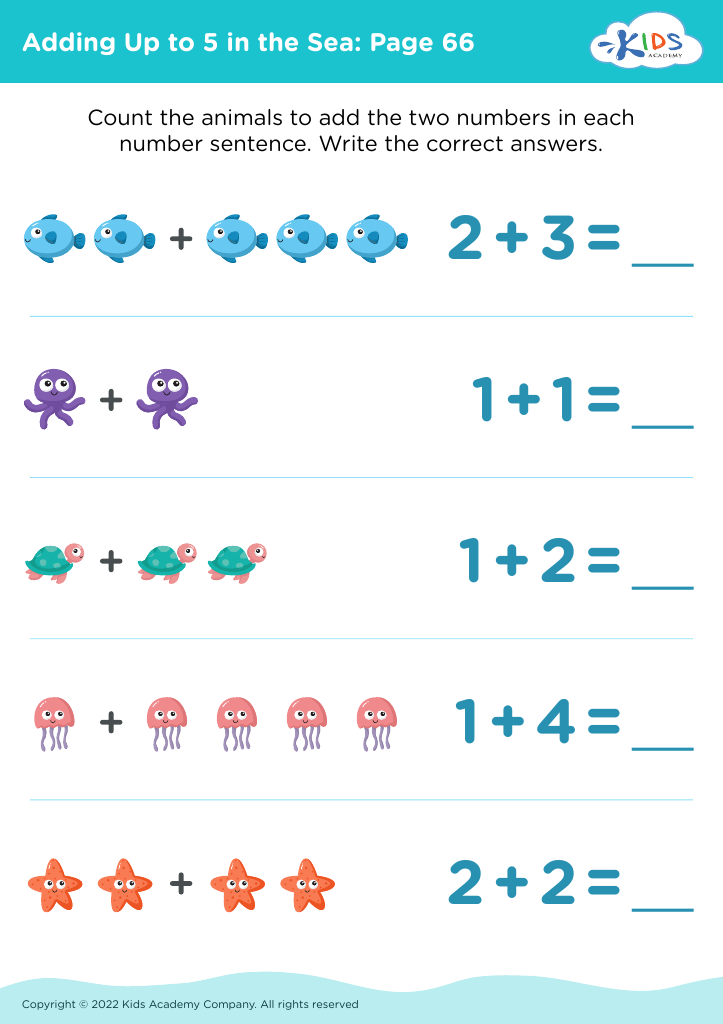
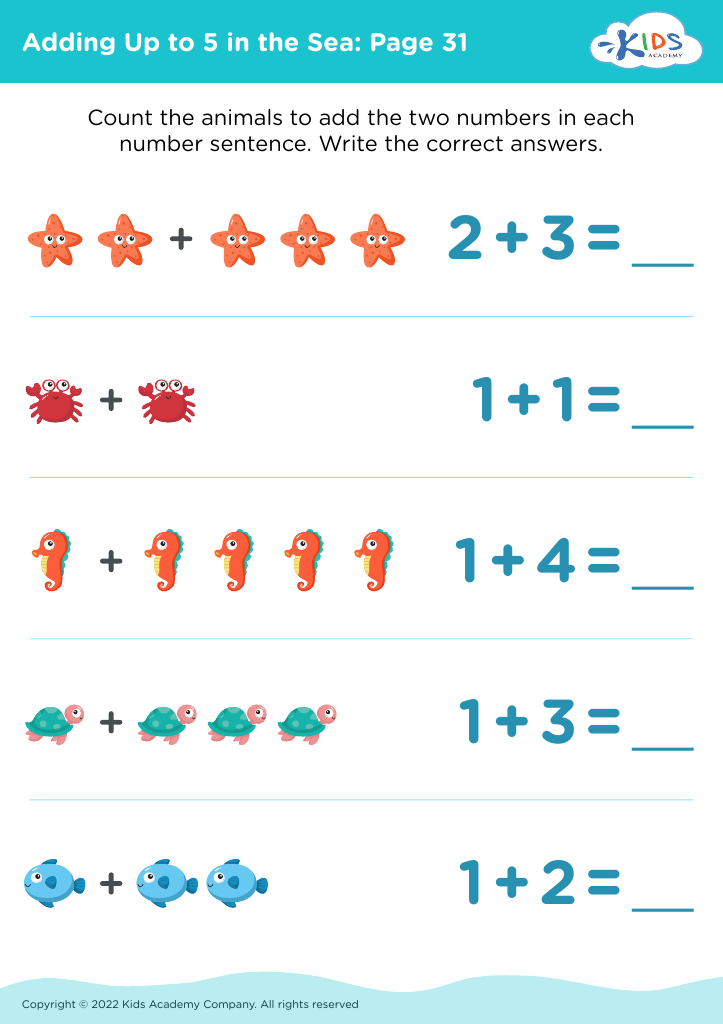



Hand-eye coordination is a critical developmental skill for children, particularly within the ages of 5-7. It involves the synchronization of visual input and motor output, enabling children to perform tasks that require precision and timing. Activities like "Hand-eye Coordination Adding in the Sea," where kids might engage in thematic games involving underwater creatures and numbers, foster this skill in an enjoyable and engaging manner.
For parents and teachers, nurturing hand-eye coordination is essential because it supports a wide range of fundamental abilities. Firstly, it enhances fine motor skills, crucial for writing, cutting, and drawing. Secondly, it promotes cognitive development by integrating sensory and motor activities, thereby improving spatial awareness, problem-solving, and attention span. Children who develop strong hand-eye coordination tend to excel in academic tasks that require focus and the ability to follow patterns.
Moreover, these skills translate beyond academics into everyday activities and future sports or hobbies. A thematic context like the sea can make learning feel like an adventure, keeping children engaged and motivated. This playful yet structured approach ensures that children remain excited about learning, encouraging a lifelong curiosity and love for discovering new skills. Therefore, parents and teachers should ardently support activities that enhance hand-eye coordination, recognizing their integral role in holistic child development.