Underwater animal identification Adding in the Sea Worksheets for Ages 5-7
3 filtered results
-
From - To
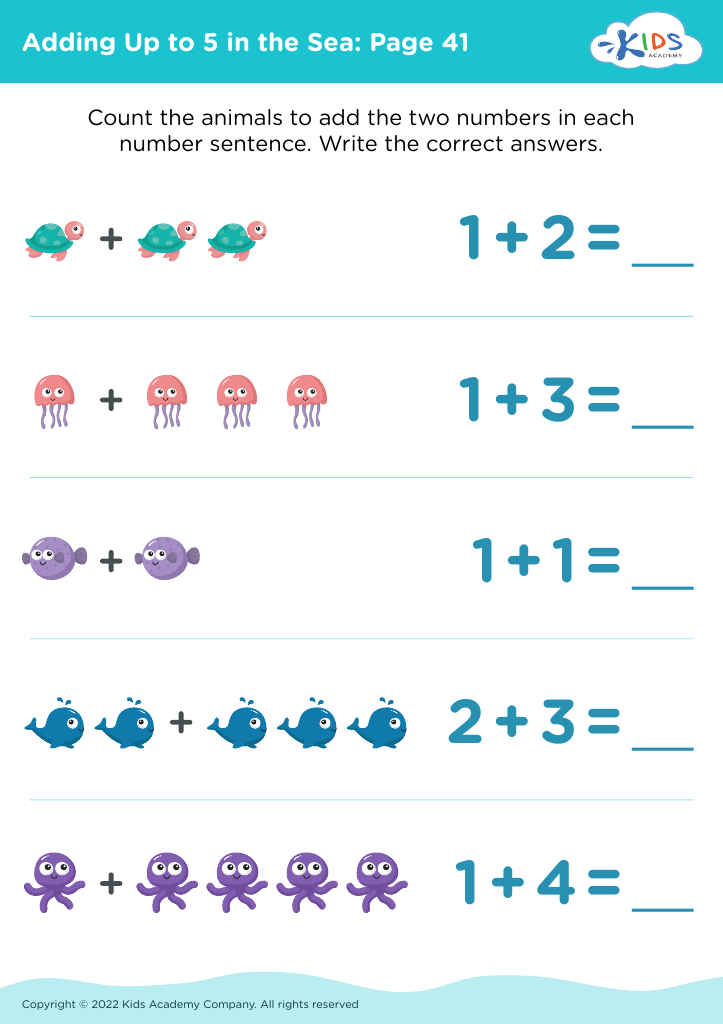
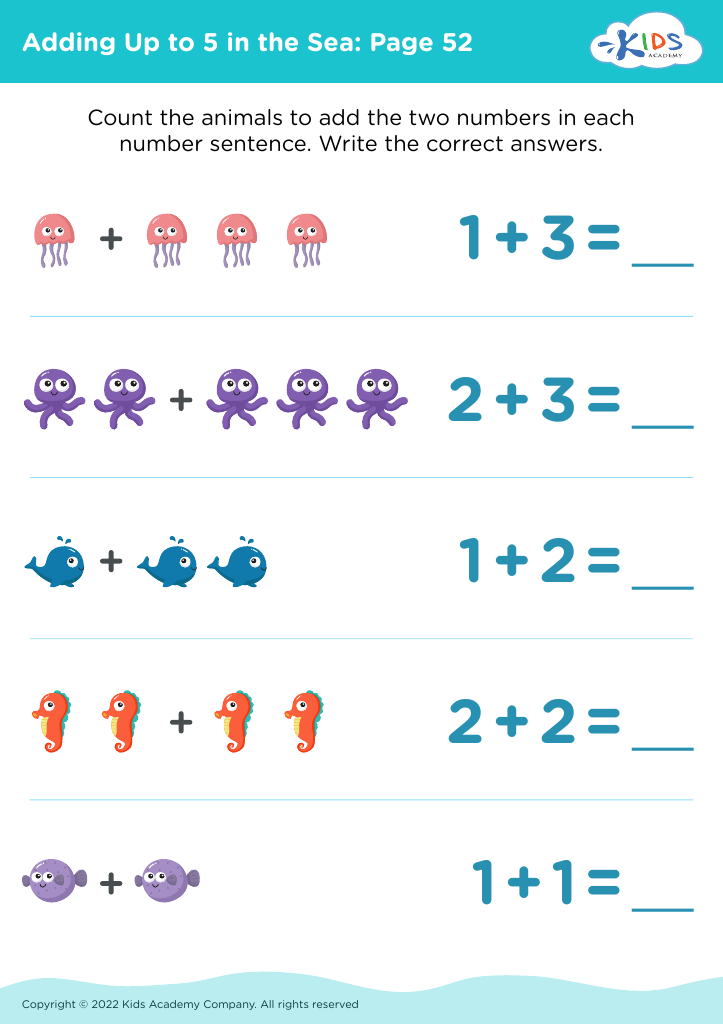
Dive into a world of fun and learning with our "Underwater Animal Identification: Adding in the Sea Worksheets" for children aged 5-7! These engaging worksheets combine the excitement of exploring marine life with essential math skills. Young learners will identify various underwater animals while practicing simple addition, fostering both cognitive development and a love for nature. Perfect for at-home learning or classroom activities, this resource encourages critical thinking and creativity. Whether your child enjoys colorful fish, playful dolphins, or curious octopuses, these worksheets offer a captivating way to enhance their math abilities and appreciation for ocean ecosystems. Get ready to splash into learning!
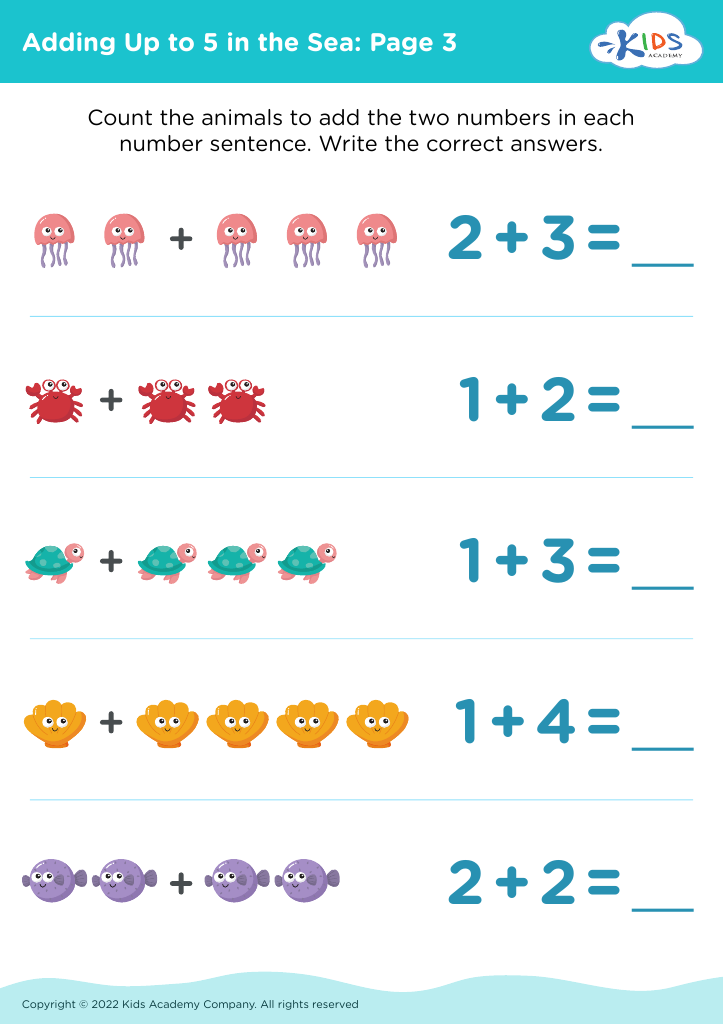



Understanding underwater animal identification is essential for children aged 5-7, as it sparks curiosity about marine life and fosters a connection with nature. When parents and teachers introduce kids to the fascinating world beneath the waves, they are igniting a passion for learning and exploration. This early engagement not only helps children develop critical observation skills but also nurtures their ability to classify and categorize information.
Recognizing different underwater species enhances children's vocabulary and promotes comprehension skills, making learning more interactive and fun. Through activities like identifying various fish and marine animals, children can engage in hands-on learning, reinforcing concepts in a playful manner. This process encourages cooperation and teamwork as they might work together in groups.
Moreover, understanding marine life instills a sense of responsibility and awareness about environmental issues, like the importance of marine conservation and healthy ecosystems. It empowers young learners to feel like their actions can have an impact on the world around them.
By integrating underwater animal identification into educational practices, we can guide children toward becoming informed caretakers of the oceans, sparking a lifelong enthusiasm for science and the environment. This knowledge is foundational for developing compassionate and environmentally-conscious citizens.