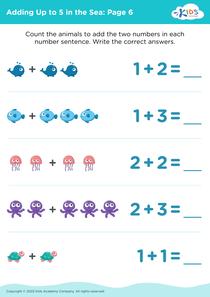
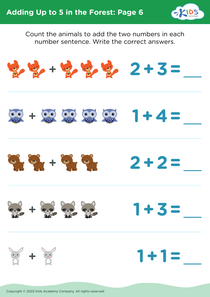
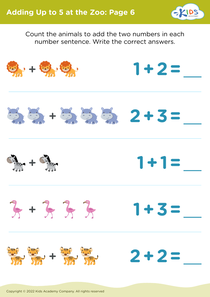
Animal recognition Adding on the Farm Worksheets for Ages 5-7 - Page 2
31 filtered results
-
From - To
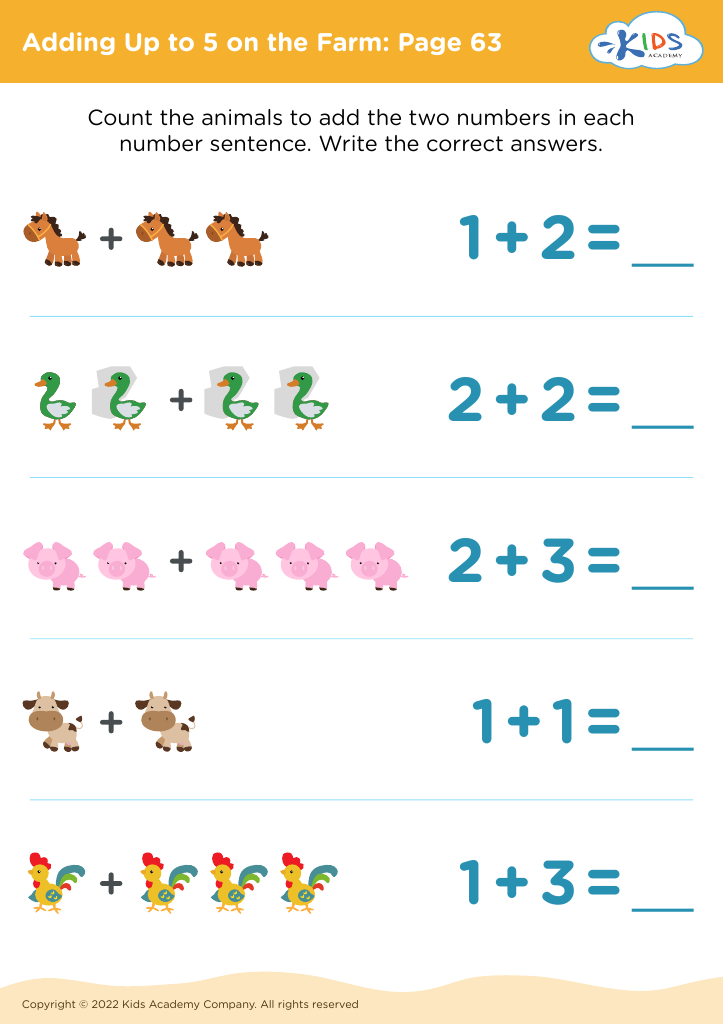
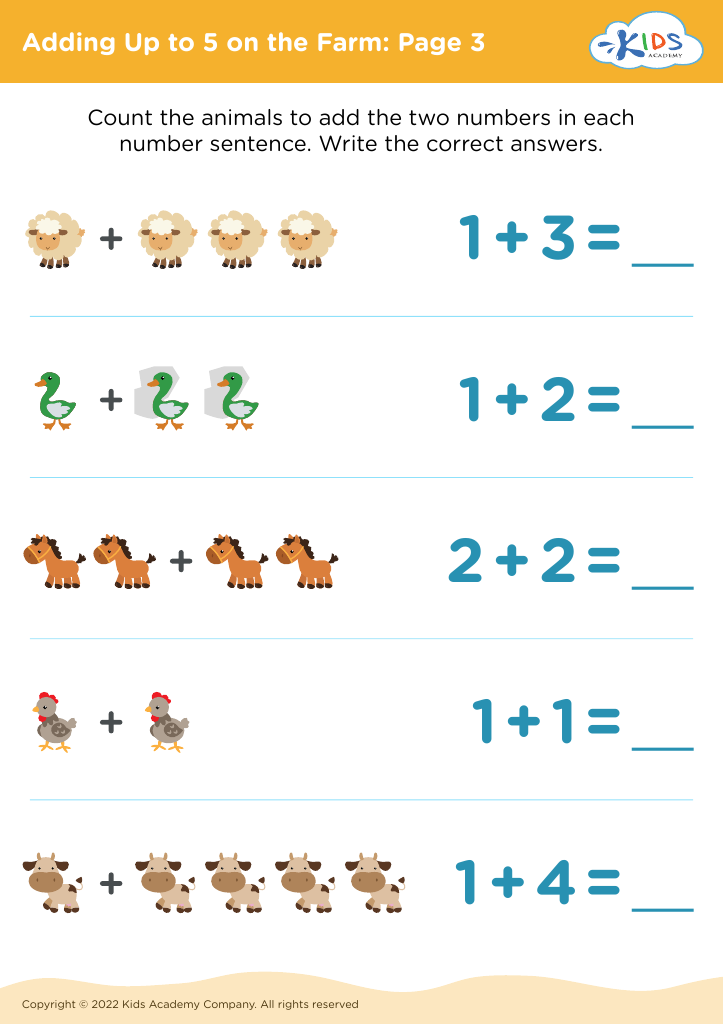
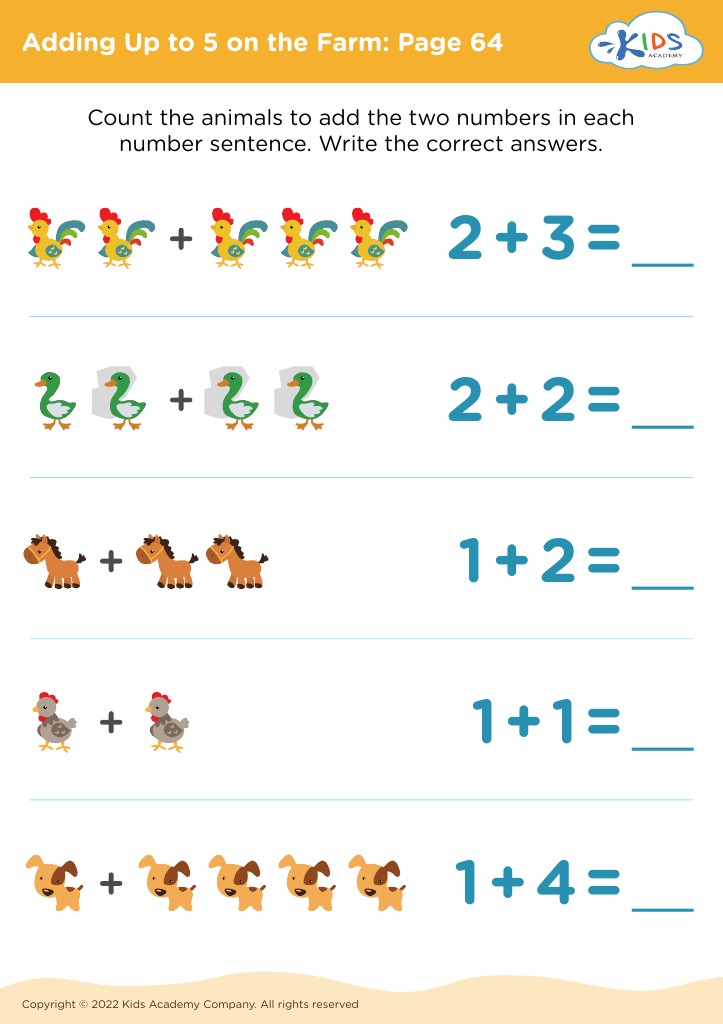
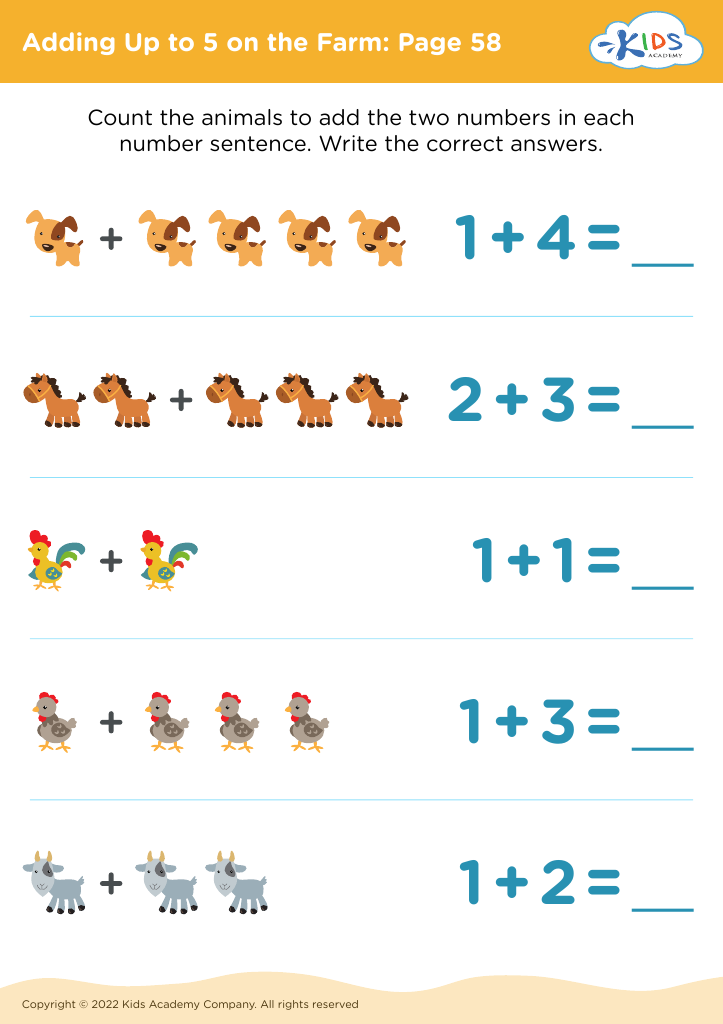
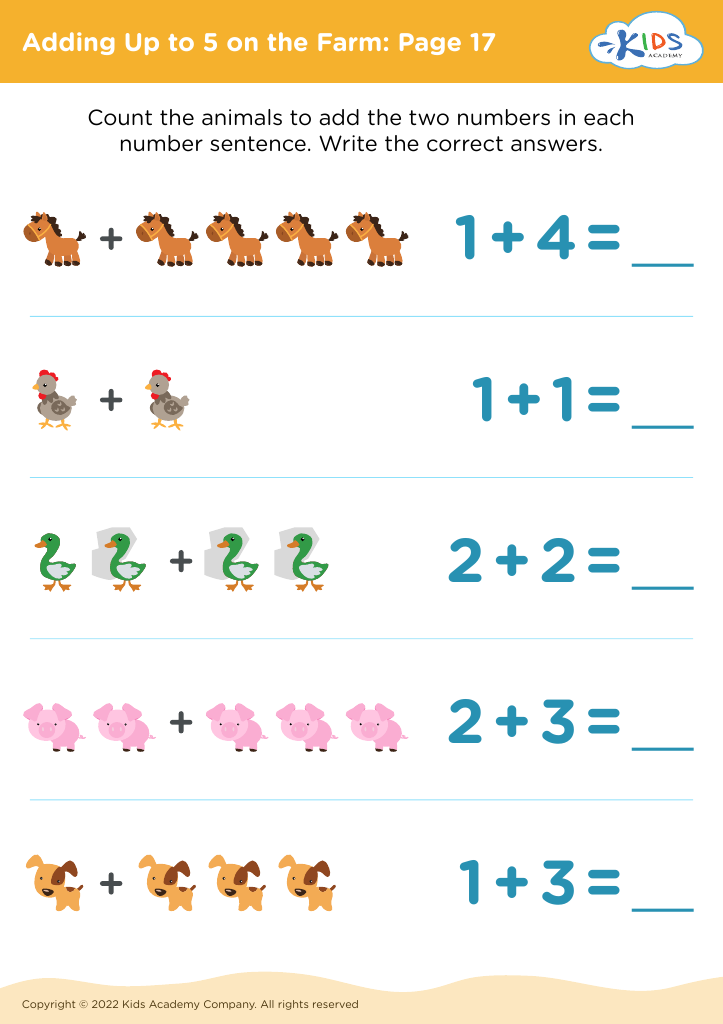
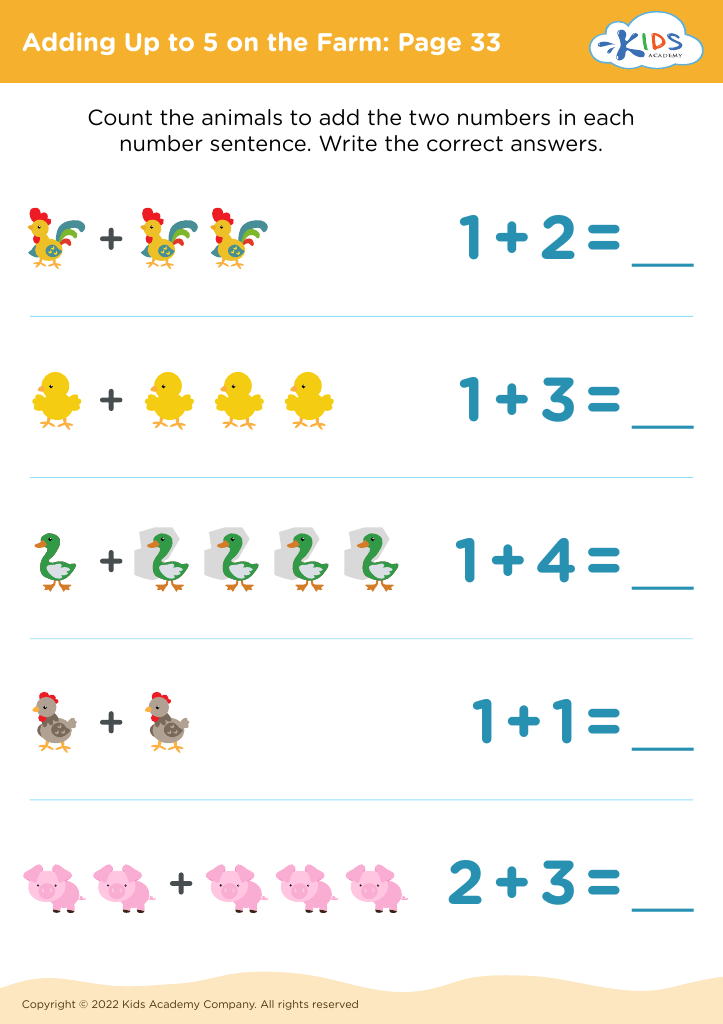
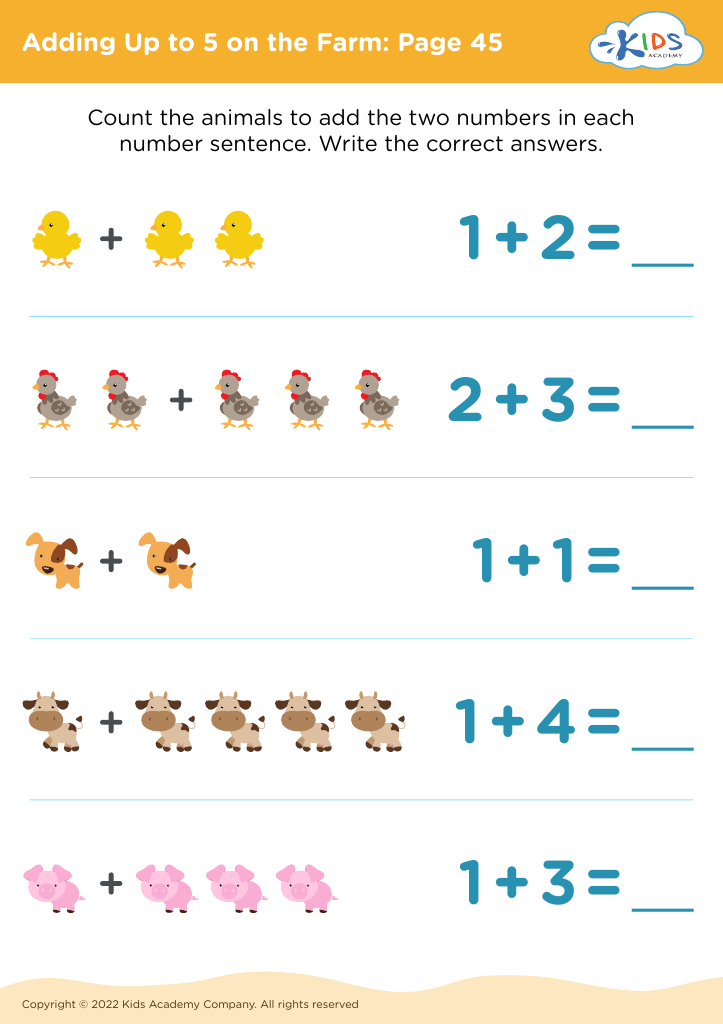



Animal recognition adding on the farm for children ages 5-7 is an engaging educational activity that offers numerous developmental benefits. This activity combines the joy of learning about farm animals with the foundational math skills of addition. For teachers and parents, it's important for several reasons:
-
Cognitive Development: Recognizing and naming animals enhances memory and recall abilities, key components of cognitive development. Combining this with addition helps children practice counting and number association, thus reinforcing basic mathematical concepts in a natural, enjoyable setting.
-
Language Skills: Naming animals and discussing their characteristics boosts vocabulary and language comprehension. It encourages children to articulate their thoughts and engage in conversations, enhancing their communication skills.
-
Brain Cross-Training: By pairing animal recognition with addition, children engage different parts of the brain simultaneously, promoting neural connections and holistic learning.
-
Fostering a Love for Learning: Interactive and theme-based activities like these make learning fun and interesting. Children are more likely to develop a positive attitude toward school subjects when they see them presented in a relatable and enjoyable context.
-
Encouraging Curiosity: Learning about farm animals can spark curiosity about nature, agriculture, and ecosystems, fostering an early interest in science and the environment.
By integrating animal recognition with math activities, parents and teachers offer a well-rounded, enriching learning experience that nurtures multiple aspects of a child's development.