Problem Solving Adding on the Farm Worksheets for Ages 5-7
3 filtered results
-
From - To
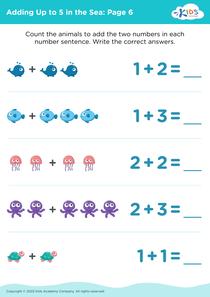
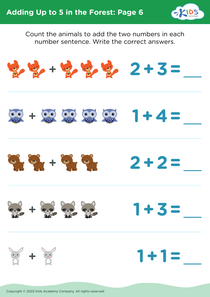
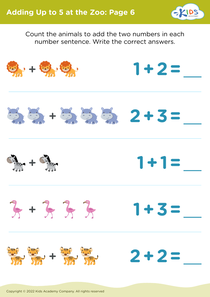
Introduce your little learners to the world of mathematics with our "Problem Solving Adding on the Farm Worksheets" designed specifically for children aged 5-7! These engaging worksheets use a fun farm theme to make addition exciting and relatable. By solving word problems and math tasks featuring adorable animals and farm scenarios, kids will enhance their problem-solving skills and boost their confidence in math. The worksheets promote critical thinking and help kids practice basic addition in a playful environment. Perfect for homeschooling, classrooms, or extra practice, these worksheets are a delightful way to connect math to real-life situations on the farm!
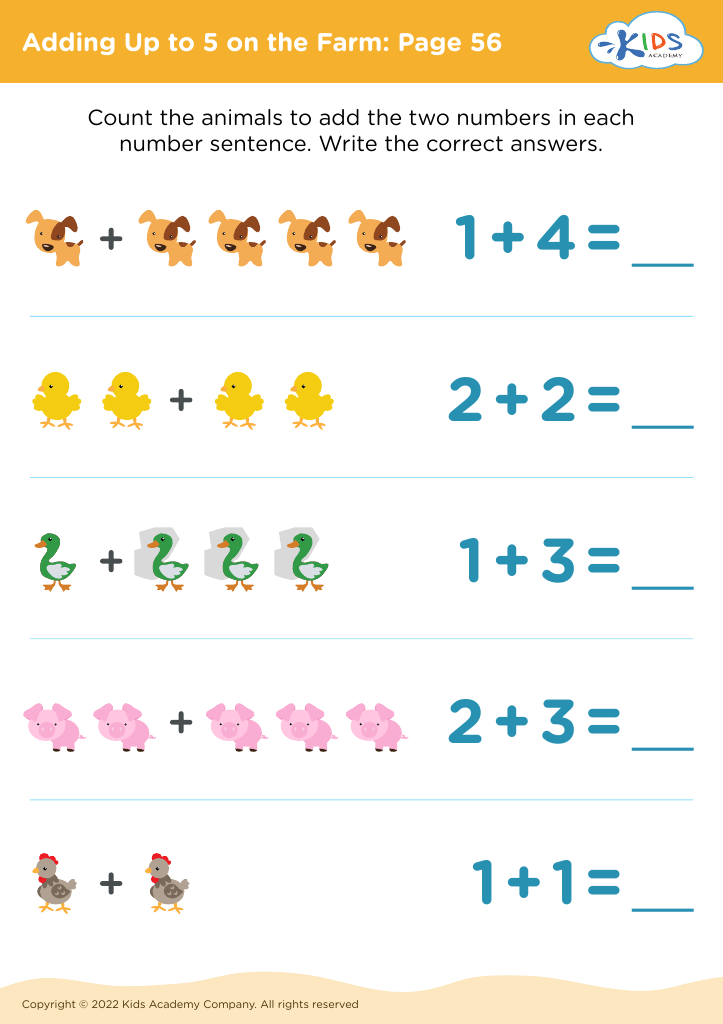
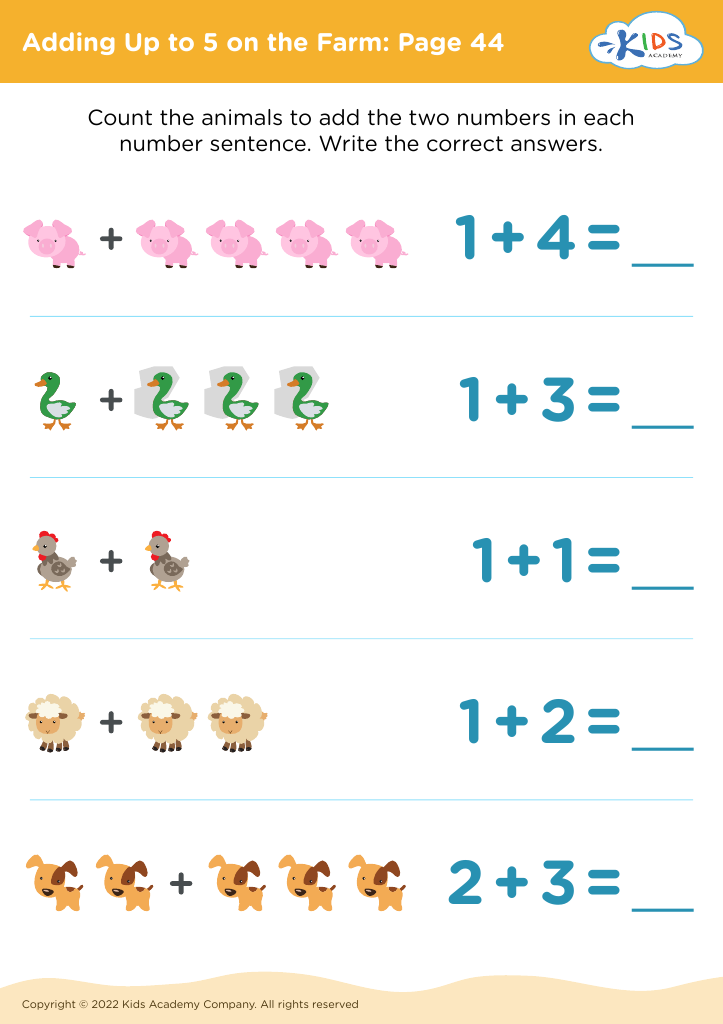
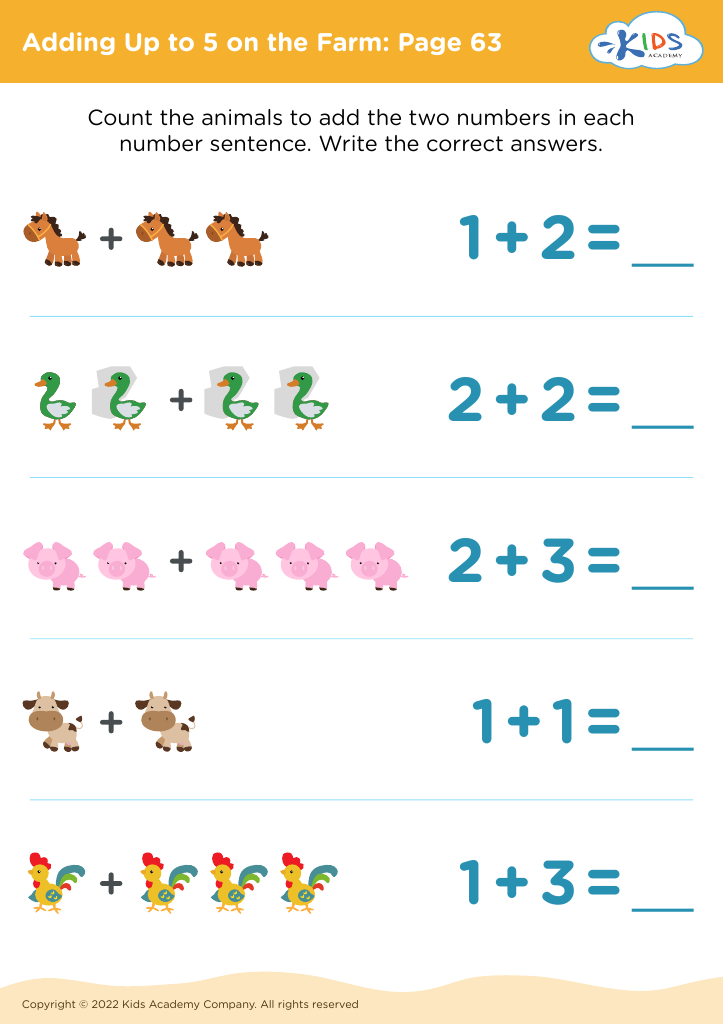



Problem Solving Adding on the Farm is a vital aspect of early childhood education that enhances mathematical understanding in young learners aged 5-7. Engaging with farm-themed addition activities not only makes math relatable but also enriches children’s learning experiences. Farms provide a familiar context; children can visualize animals, crops, and farm activities, making abstract concepts more tangible.
Teaching addition through farm scenarios encourages critical thinking and resilience. For example, adding apples from different trees helps children learn to analyze situations, strategize solutions, and understand real-world applications of math. Moreover, this approach fosters collaboration; students can work in groups, discussing their problem-solving strategies while developing social skills.
Additionally, cultivating a love for math in these early formative years can inspire a lifelong interest in learning. It helps establish foundational skills essential for future success in more complex mathematical concepts, boosting confidence and self-esteem.
Parents and teachers should prioritize such engaging and context-rich problem-solving activities, as they nurture not just mathematical abilities but also cognitive and social development. By integrating fun, meaningful scenarios, children can develop essential skills while enjoying the learning process, laying a solid foundation for their future educational journey.