Visual Learning Adding on the Farm Worksheets for Ages 5-7 - Page 2
25 filtered results
-
From - To
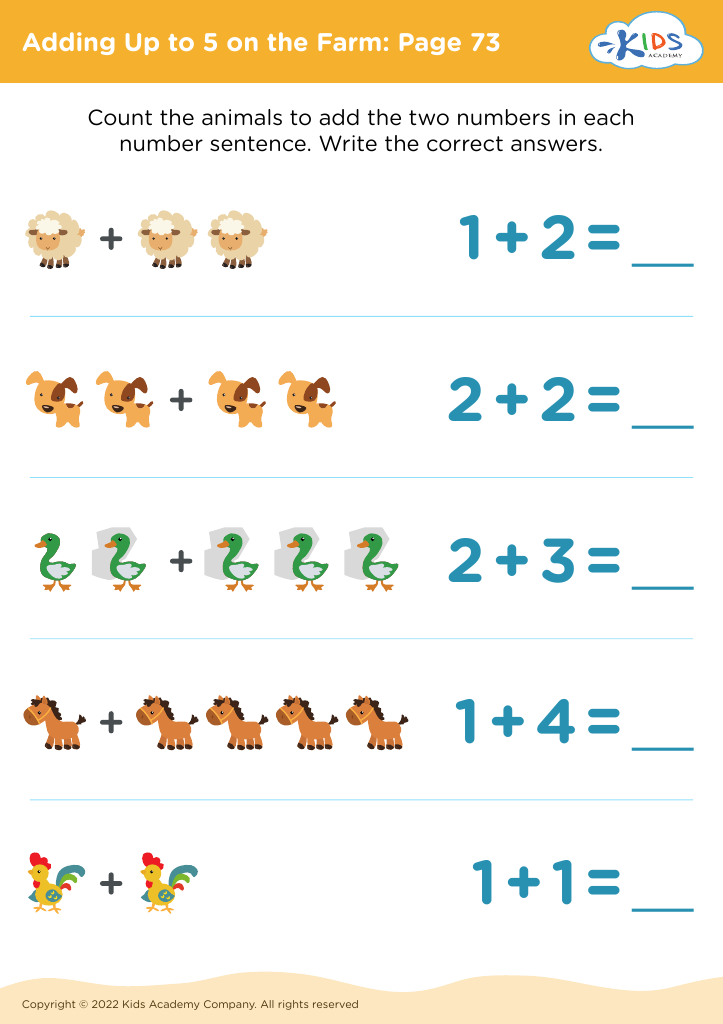



Visual learning is crucial for children aged 5-7, particularly in engaging contexts like the farm. At this developmental stage, children learn best through interactive and sensory experiences. Incorporating visual elements such as pictures, diagrams, and hands-on activities related to farming can significantly enhance their understanding of concepts like the life cycle of plants and animals, the importance of farming in food production, and the environment.
Parents and teachers should care about visual learning on the farm because it not only makes lessons memorable but also fosters creativity and critical thinking. Children are naturally curious, and farm visuals can spark their interest in exploring and asking questions. By using visual aids, educators can simplify complex ideas, making them more relatable and easier to grasp.
Moreover, visual learning supports linguistic development; children describe images and relate them to their experiences. This combination encourages them to communicate effectively, a vital skill for future learning. Ultimately, integrating visual learning on the farm creates a rich educational experience, preparing young learners for more abstract concepts in later years while fostering a lifelong love for learning about nature and food systems. Engaging students visually encourages deeper connection and understanding, essential for their holistic development.