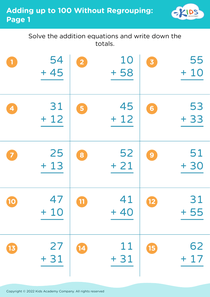
Color Identification Adding up to 100 with Regrouping Worksheets for Ages 5-7
3 filtered results
-
From - To
Help your child master essential math skills with our engaging "Color Identification Adding up to 100 with Regrouping Worksheets" designed for ages 5-7. These fun and educational printables combine the excitement of color recognition with fundamental arithmetic practice, enhancing cognitive development and number sense. Featuring eye-catching visuals and varied exercises, these worksheets provide an excellent way to teach kids how to add numbers within 100 with regrouping. Ideal for both classroom and home use, they build a strong foundation in math while keeping young learners interested and motivated. Keep learning times vibrant, interactive, and effective!
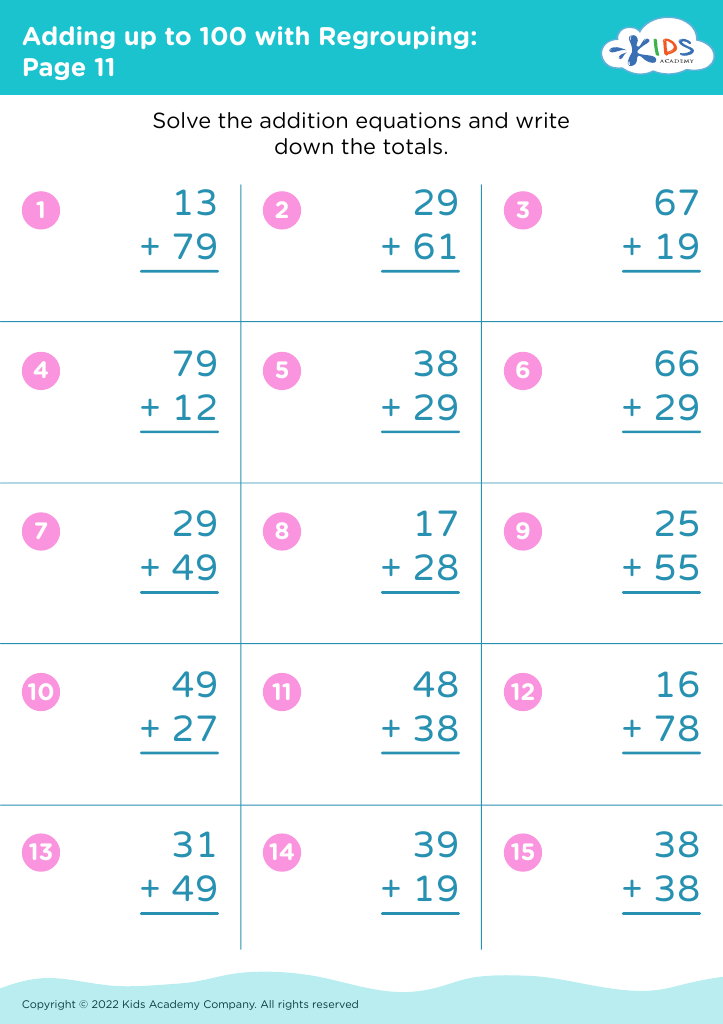
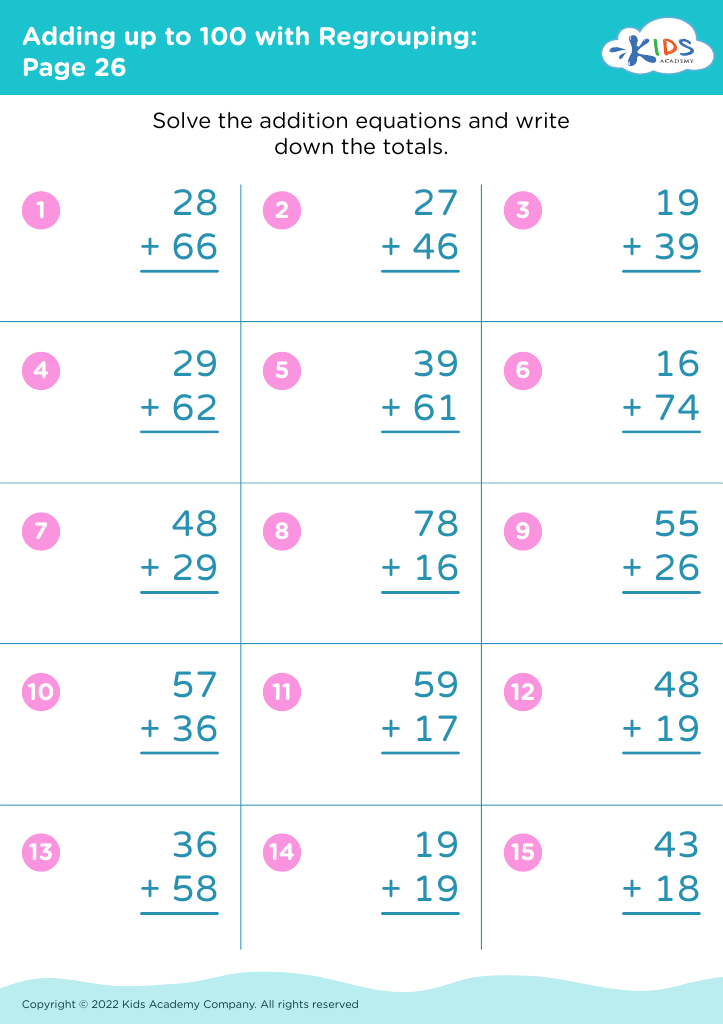
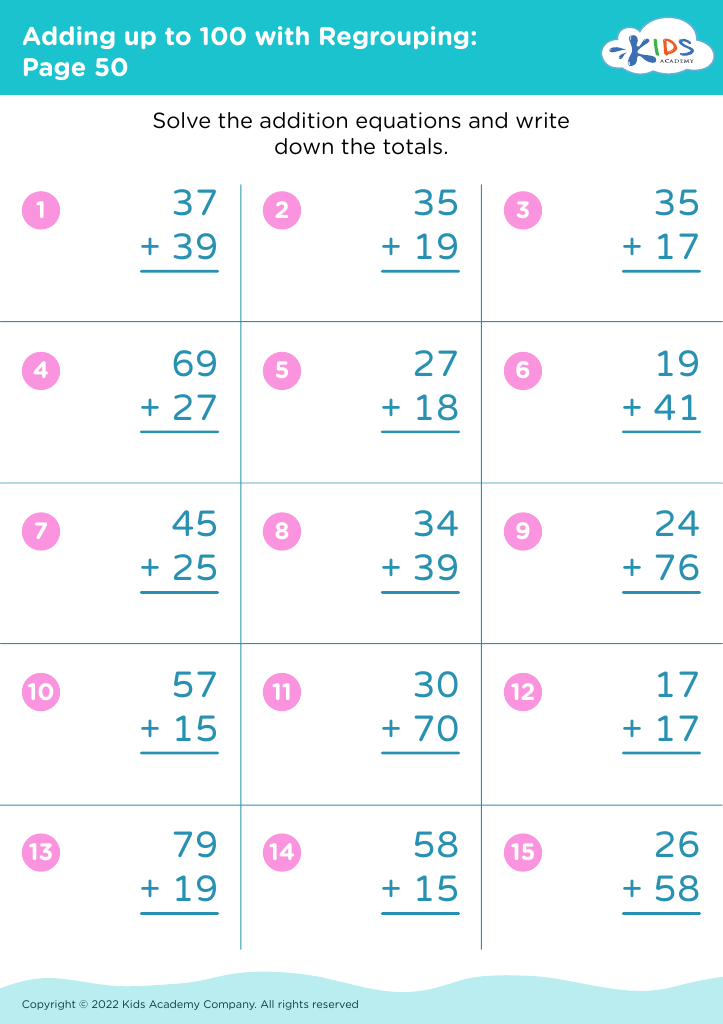




Color Identification and Adding up to 100 with Regrouping (for ages 5-7) are crucial skills that set the foundation for more advanced mathematical learning and cognitive development. At this age, children's brains are highly receptive and form connections quickly. Engaging them in activities that integrate color identification and basic arithmetic fosters both visual and numerical literacy.
Color identification serves as a key cognitive building block, enhancing a child's ability to categorize and compare, fundamental skills in all areas of learning. It also supports fine motor skills and separates different objects, making the world easier to navigate and understand.
Introducing addition with regrouping aids in understanding the place value system, which is vital for comprehending larger numbers and performing more complex operations later on. It enhances problem-solving abilities and promotes logical thinking. When these concepts are combined—for instance, by using color-coded objects or visuals to perform addition—they create a more interactive and engaging learning experience. This, in turn, helps children grasp the concepts more effectively and retain the information longer.
Parents and teachers play a pivotal role in creating a stimulating environment that prompts growth in these areas. Focusing on such integrated educational activities can bolster a child's confidence, eagerness to learn, and academic achievement in future stages.