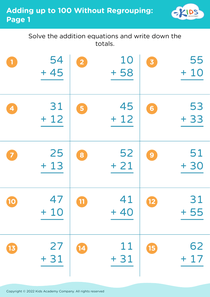
Shape Recognition Adding up to 100 with Regrouping Worksheets for Ages 5-7
5 filtered results
-
From - To
Enhance your child's learning experience with our "Shape Recognition Adding Up to 100 with Regrouping Worksheets" designed for ages 5-7. These engaging worksheets blend math and shape identification, helping young learners develop essential skills in a fun and interactive way. Children will practice adding numbers up to 100 while recognizing and categorizing various shapes. This dynamic approach fosters critical thinking and problem-solving abilities, making math enjoyable! Perfect for classroom or home use, our resources are crafted to support early mathematical foundations and boost confidence. Download today to give your child a head start in their educational journey!
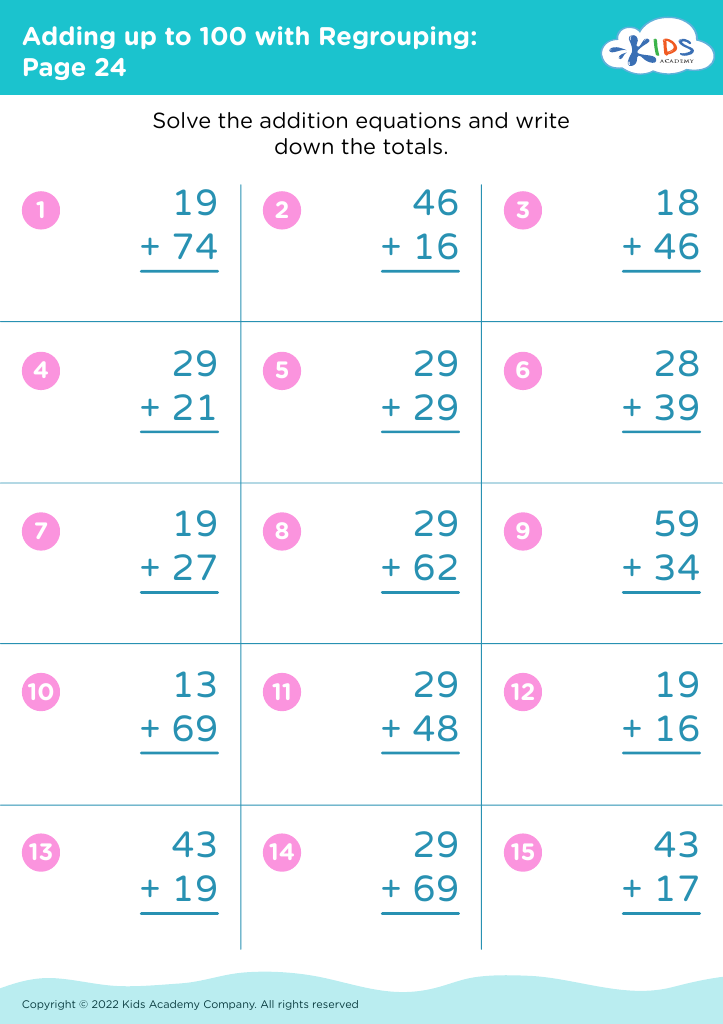
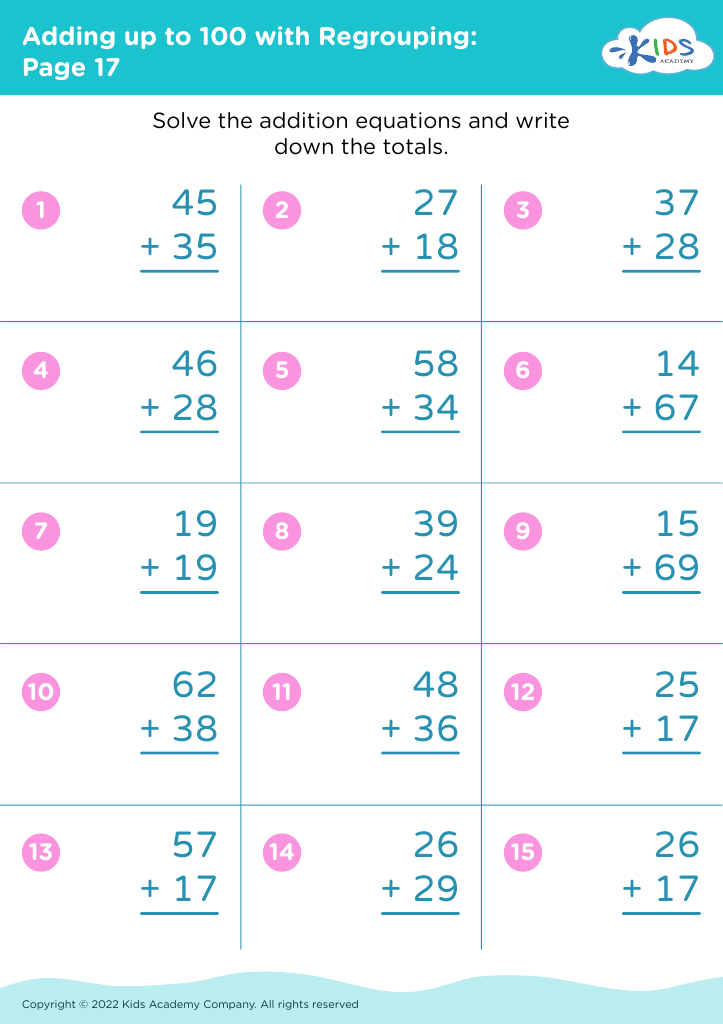
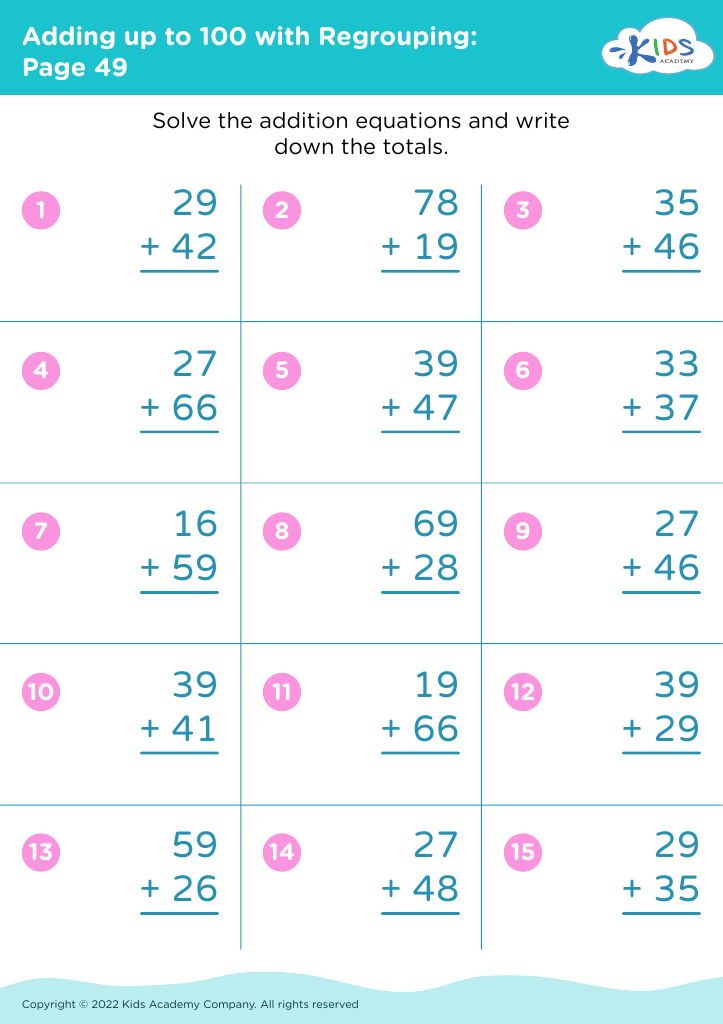
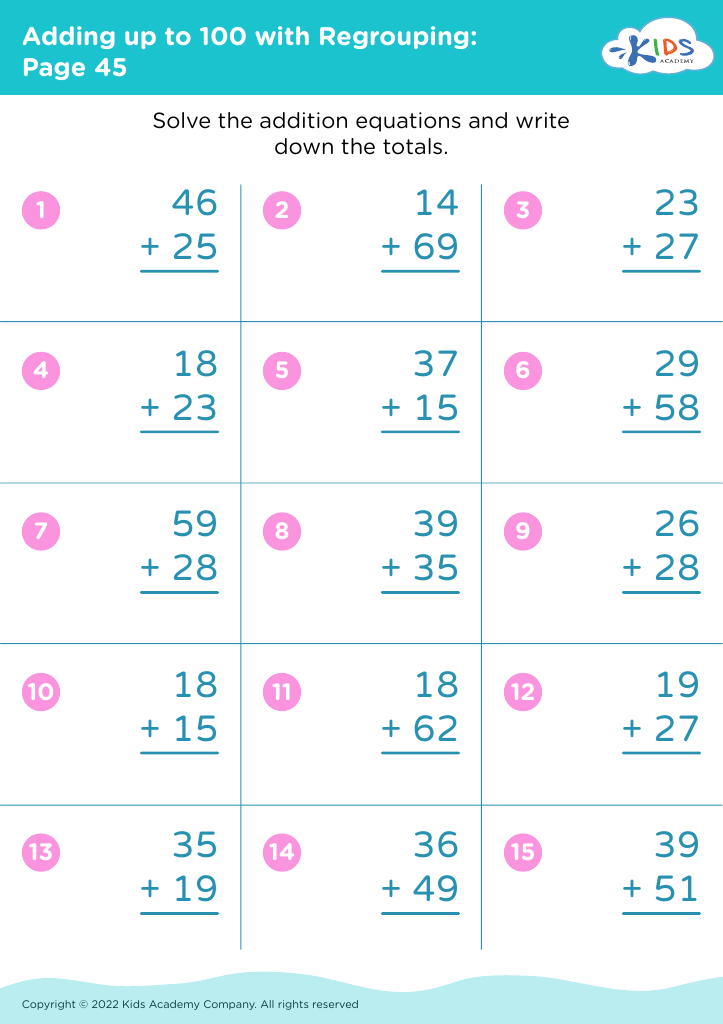
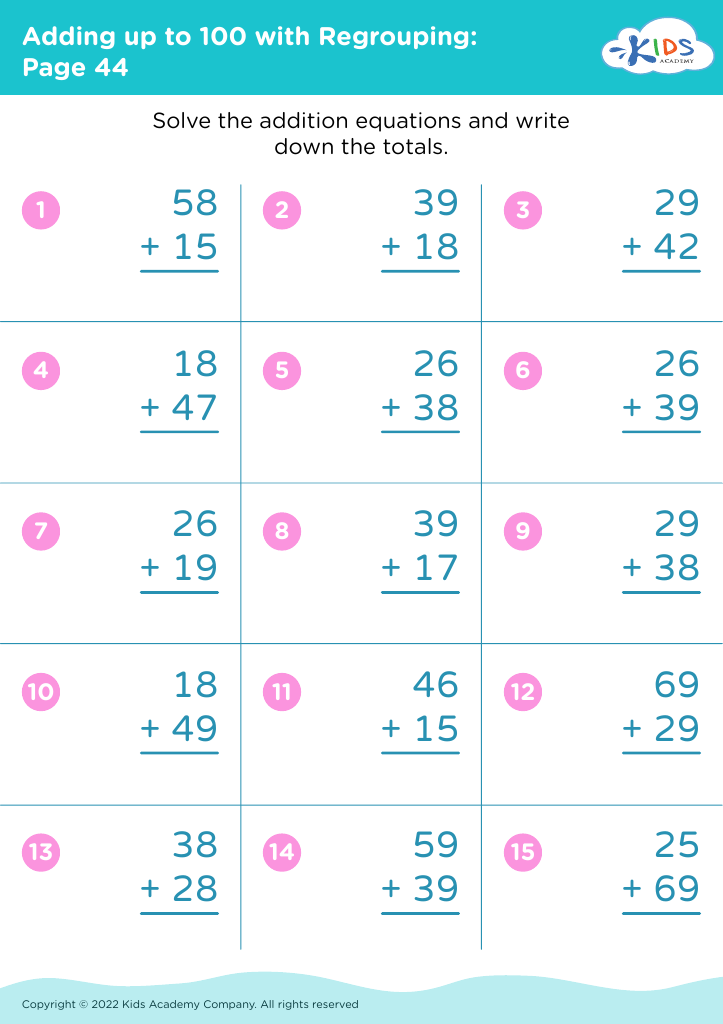




Shape recognition and the ability to add up to 100 with regrouping are foundational skills critical for young learners aged 5-7. First, shape recognition is more than just identifying objects; it fosters geometric understanding that supports later math skills, enhances spatial awareness, and encourages creativity. By recognizing shapes, children develop problem-solving skills that are applicable in real-life situations, such as understanding maps or constructing models.
On the other hand, mastering addition up to 100, especially when introducing regrouping, is essential for numerical fluency. This skill aids children in grasping the concept of carrying over numbers, which forms the basis for more complex arithmetic. Parents and teachers should emphasize regrouping, as it enhances number sense and builds confidence in math. This understanding allows children to tackle larger numbers and challenges as they progress in their education.
Ultimately, these skills contribute to a strong mathematical foundation, promoting success in higher-level math tasks and providing children with crucial tools for logical thinking and reasoning. Investing time and effort in developing these skills at a young age supports lifelong learning and academic achievement. Therefore, fostering shape recognition and addition with regrouping at home and in the classroom is vital for every young learner.