Filters

16 filtered results

Clear all filters
Favorites
With answer key
Interactive

16 filtered results

Difficulty Level

Grade


Discover our "Understanding Fractions: Adding Up to 100 with Regrouping Worksheets” specially designed for young learners aged 5-7. This resource introduces foundational concepts of fractions, helping children grasp how to combine parts while mastering the skill of regrouping. Our engaging worksheets foster a fun learning environment, featuring vibrant illustrations and easy-to-follow problems tailored to inspire creativity and critical thinking. With guided practice, children will build confidence in their mathematical abilities while learning how to break down and add fractions effectively. Perfect for classrooms or home learning, these worksheets make math an enjoyable and interactive experience for early learners!
Check out this FREE Trial Lesson on Adding up to 100 with Regrouping for age 5-7!

X

Favorites
With answer key
Interactive
  • 5-7
  • Understanding fractions
  • Adding up to 100 with Regrouping
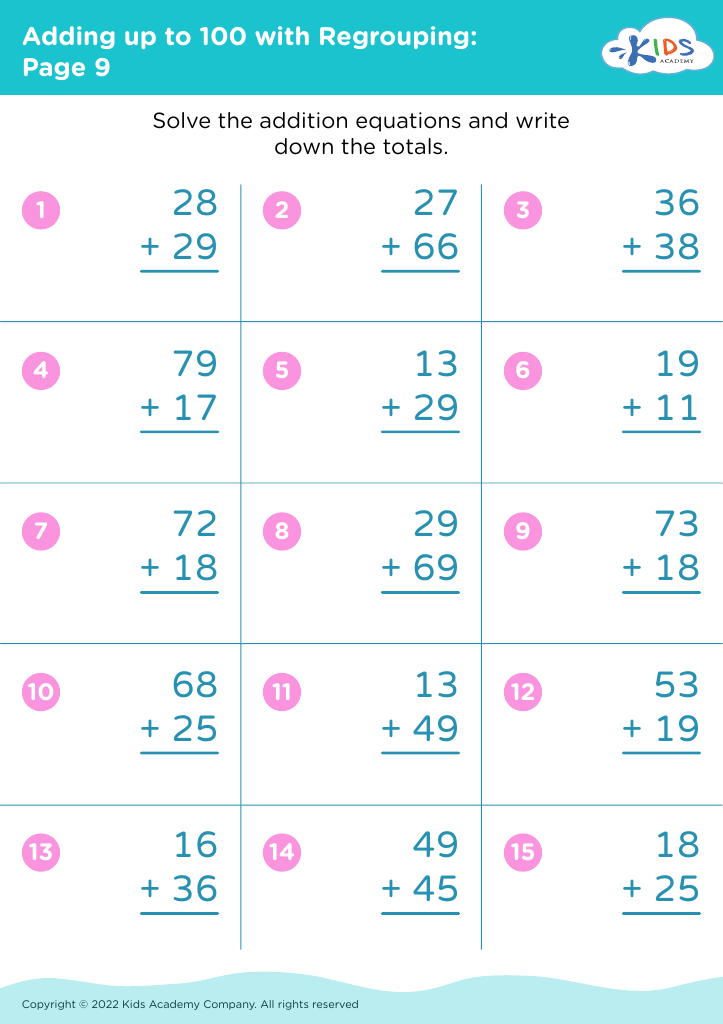
Adding up to 100 with Regrouping: Page 9
Worksheet
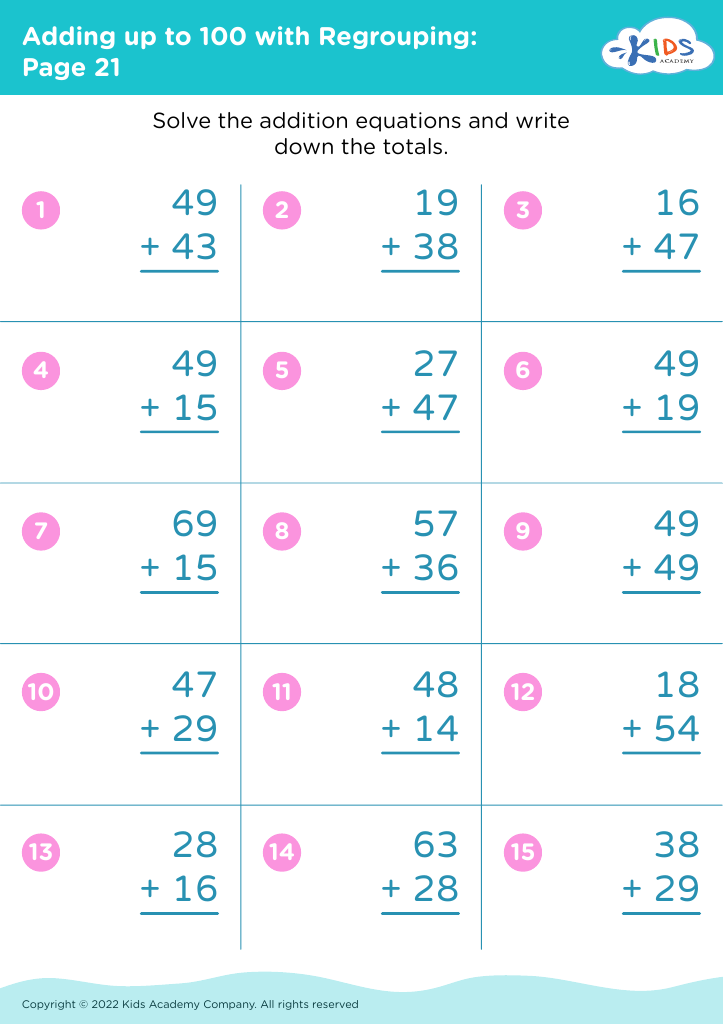
Adding up to 100 with Regrouping: Page 21
Worksheet
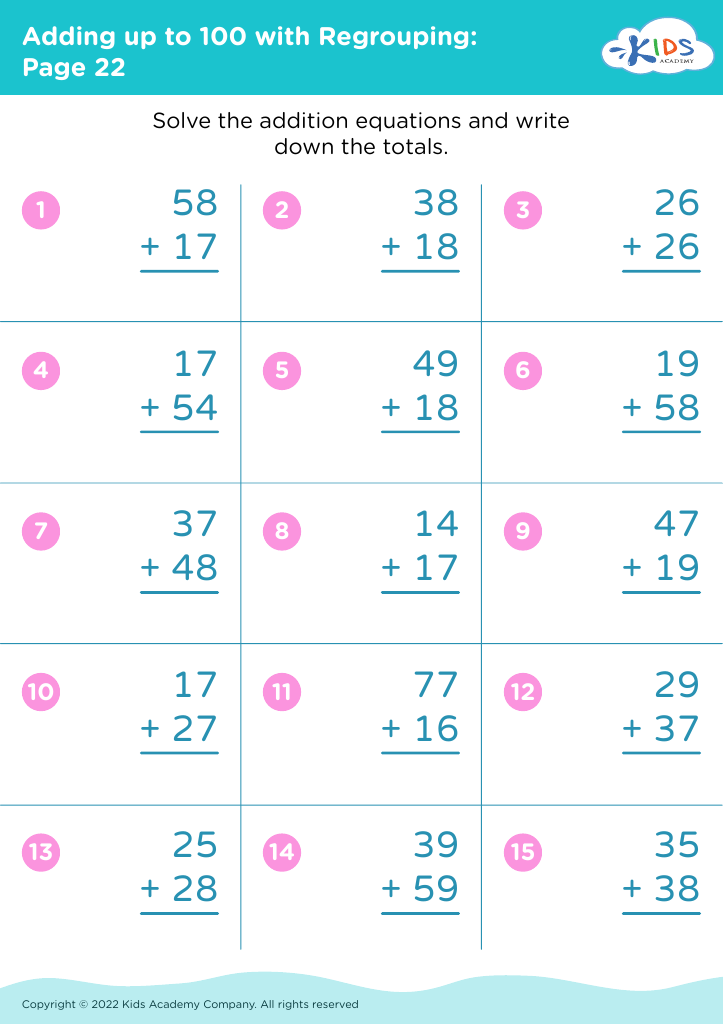
Adding up to 100 with Regrouping: Page 22
Worksheet
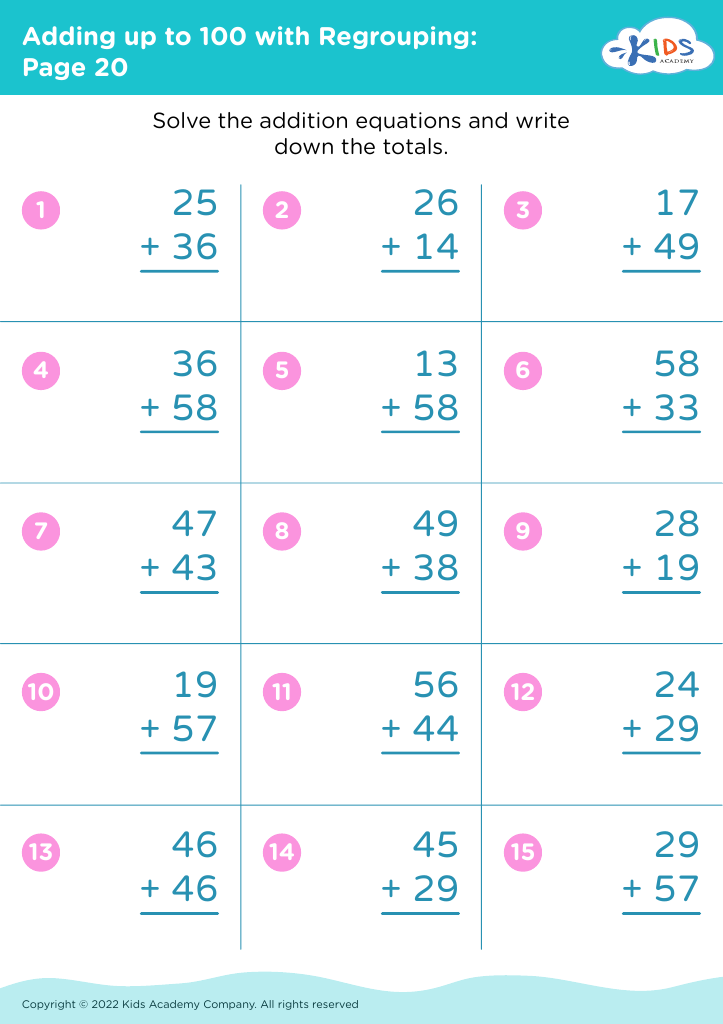
Adding up to 100 with Regrouping: Page 20
Worksheet
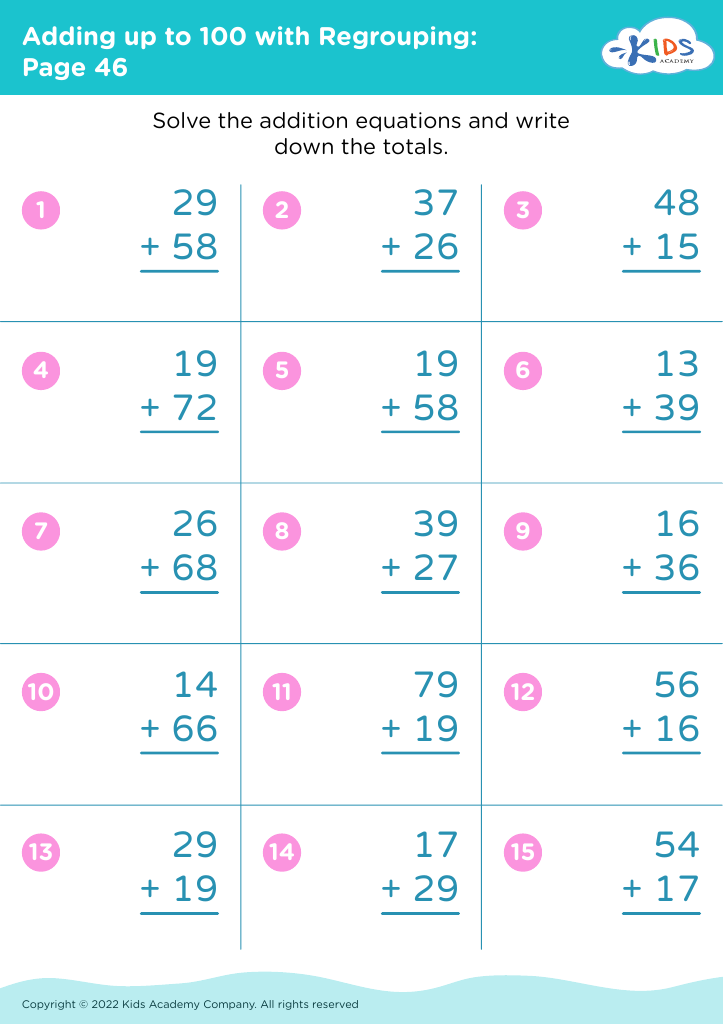
Adding up to 100 with Regrouping: Page 46
Worksheet
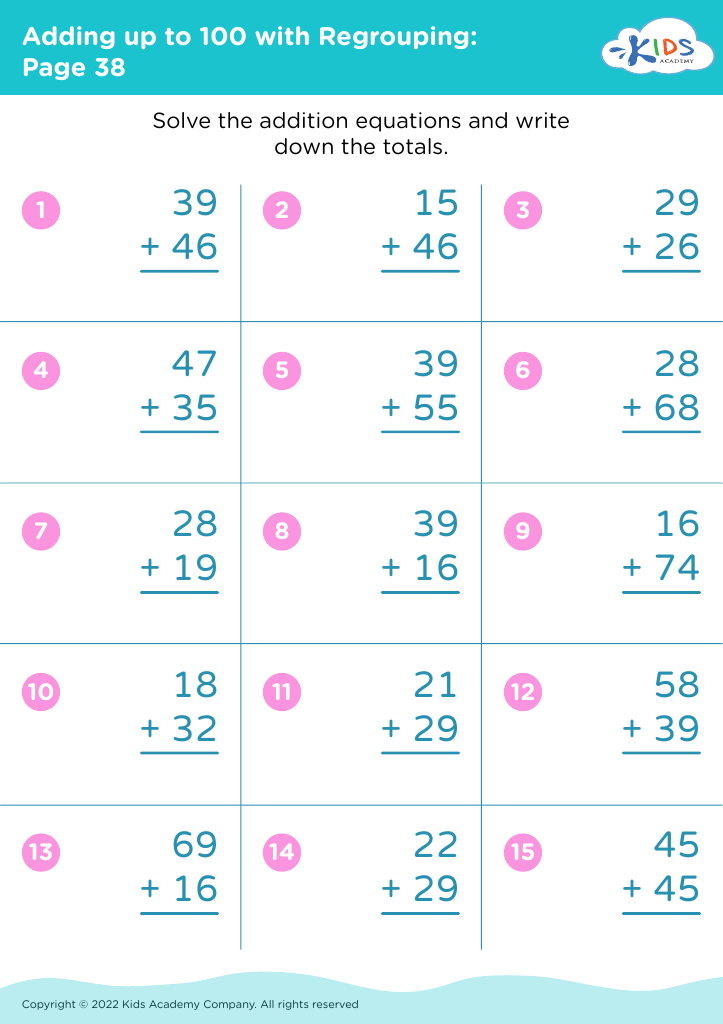
Adding up to 100 with Regrouping: Page 38
Worksheet
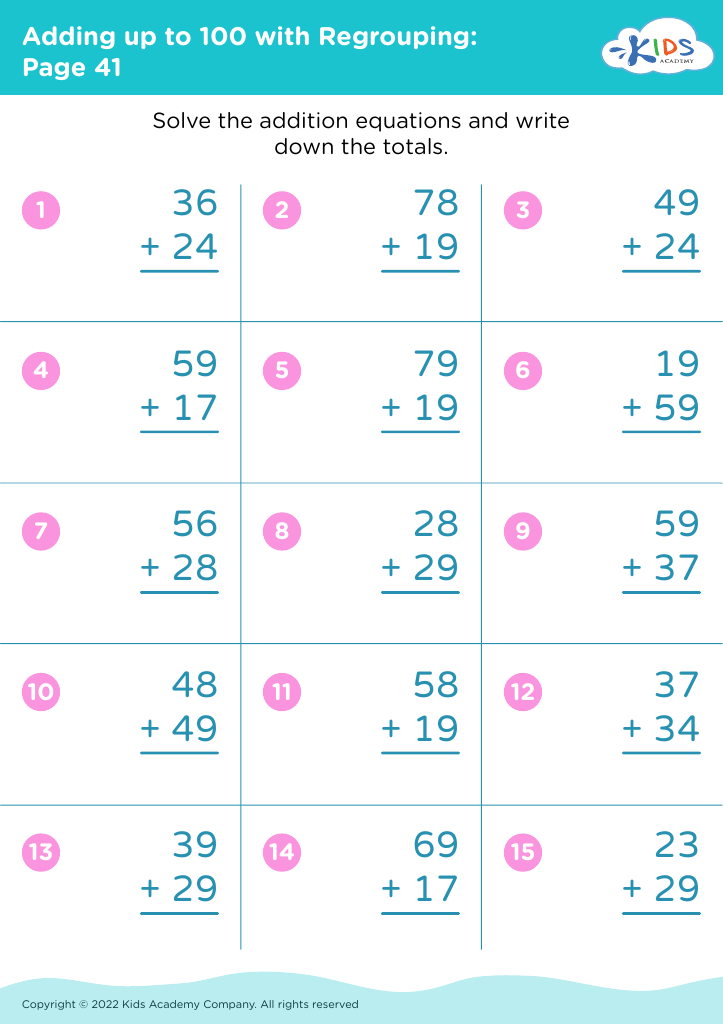
Adding up to 100 with Regrouping: Page 41
Worksheet
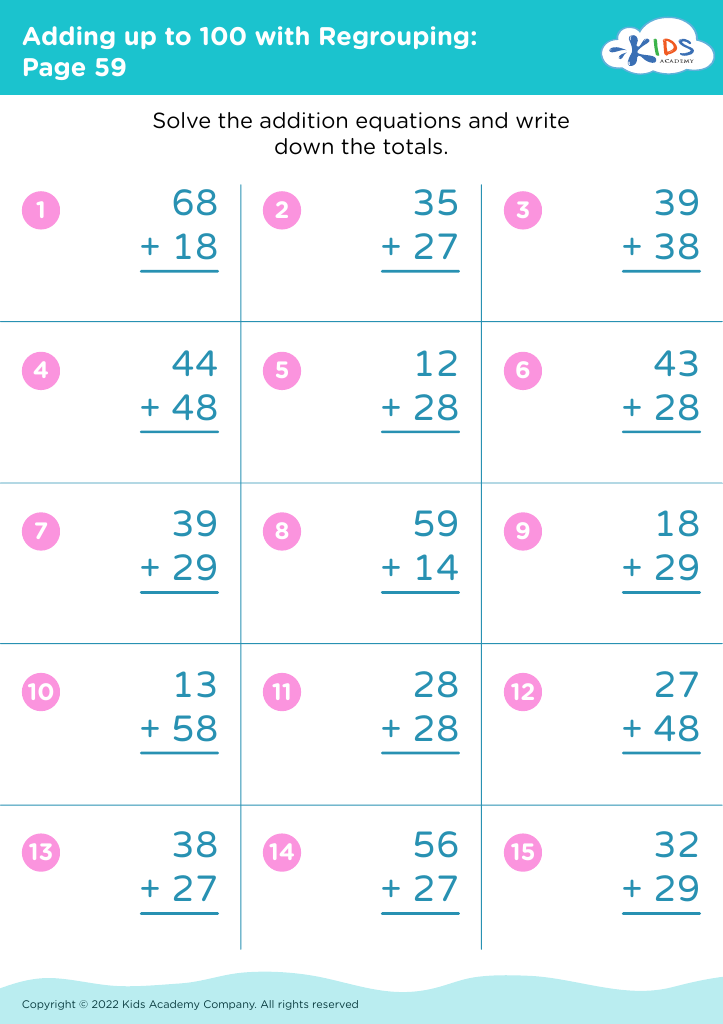
Adding up to 100 with Regrouping: Page 59
Worksheet
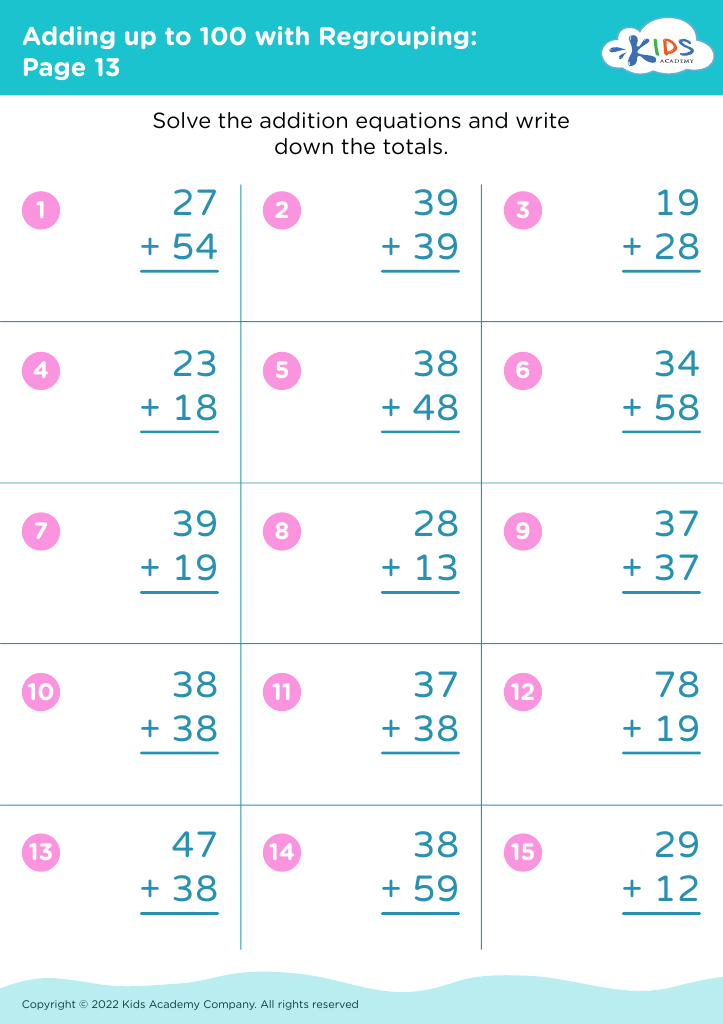
Adding up to 100 with Regrouping: Page 13
Worksheet
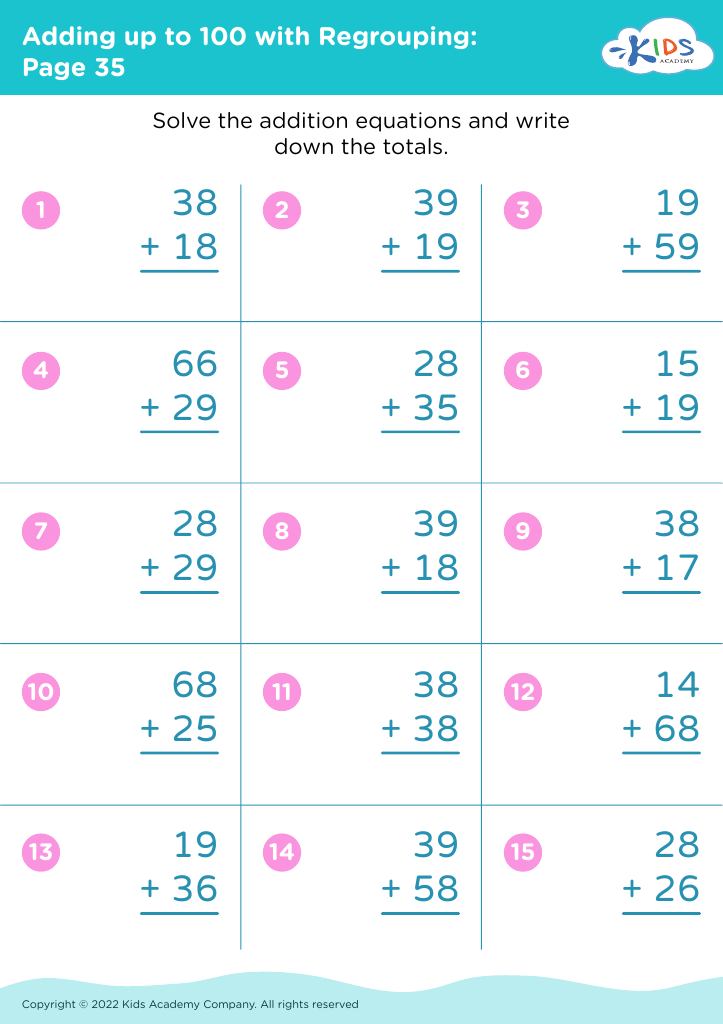
Adding up to 100 with Regrouping: Page 35
Worksheet
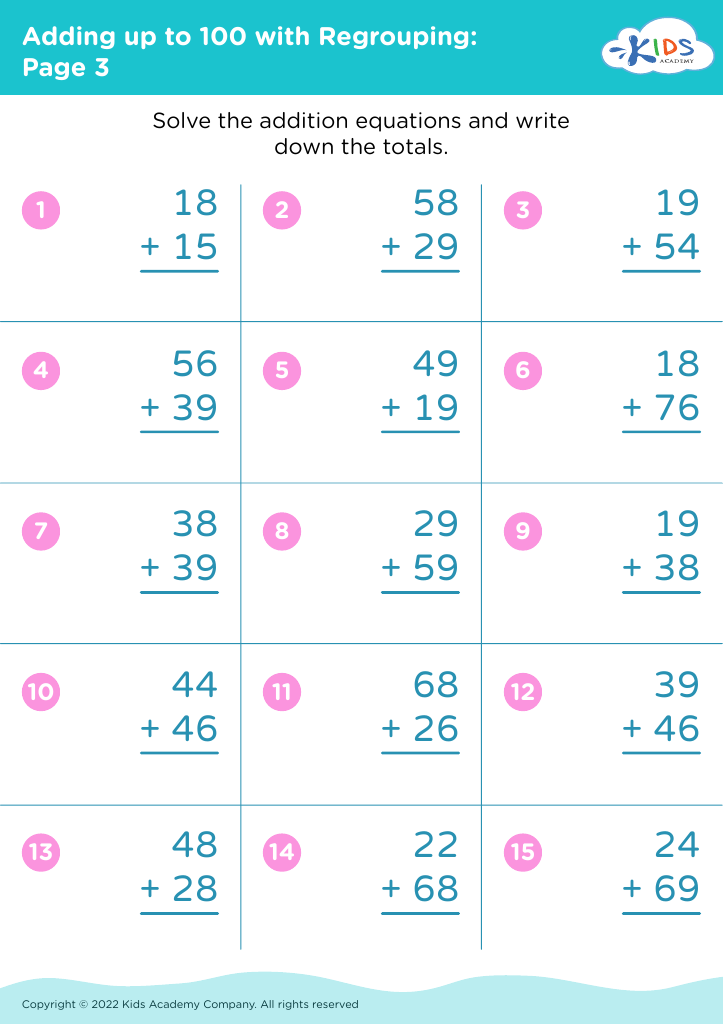
Adding up to 100 with Regrouping: Page 3
Worksheet
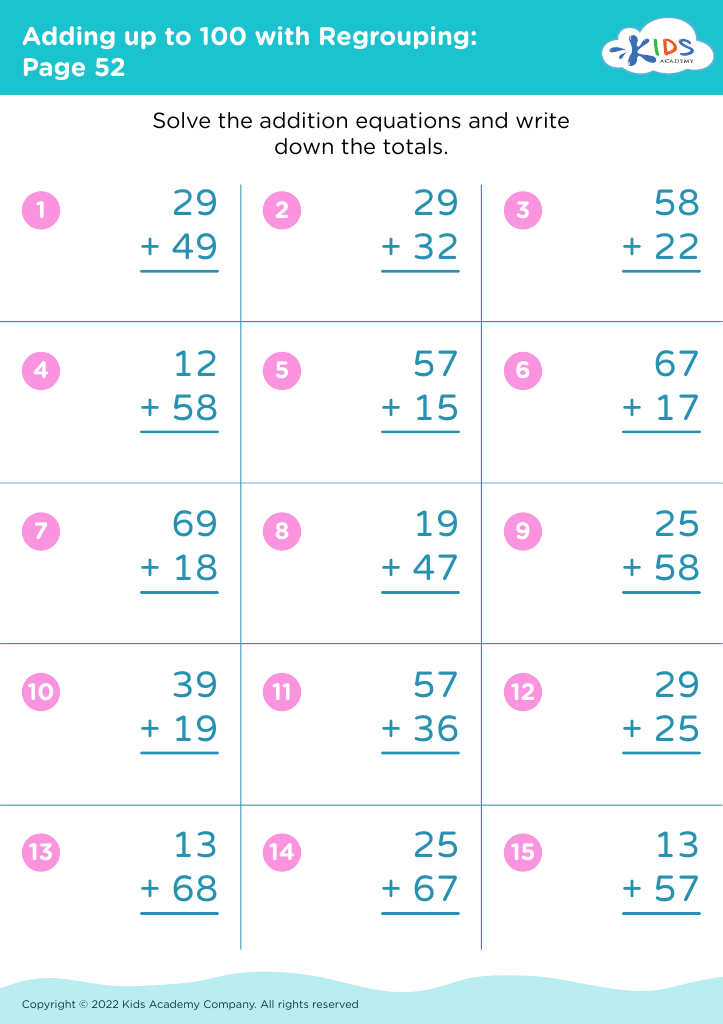
Adding up to 100 with Regrouping: Page 52
Worksheet
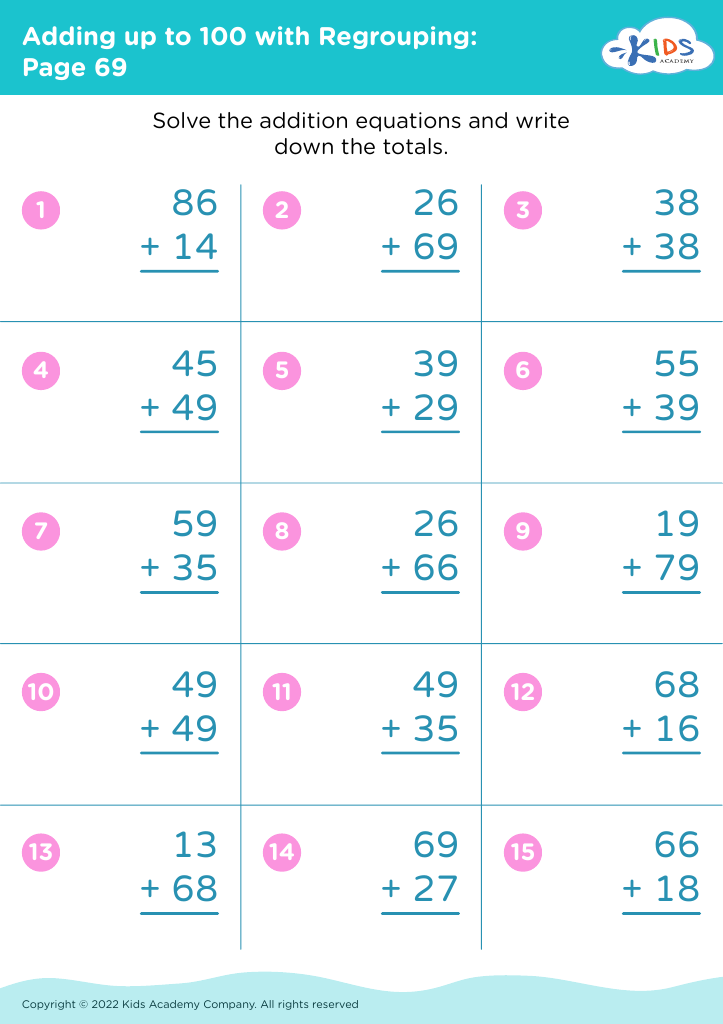
Adding up to 100 with Regrouping: Page 69
Worksheet
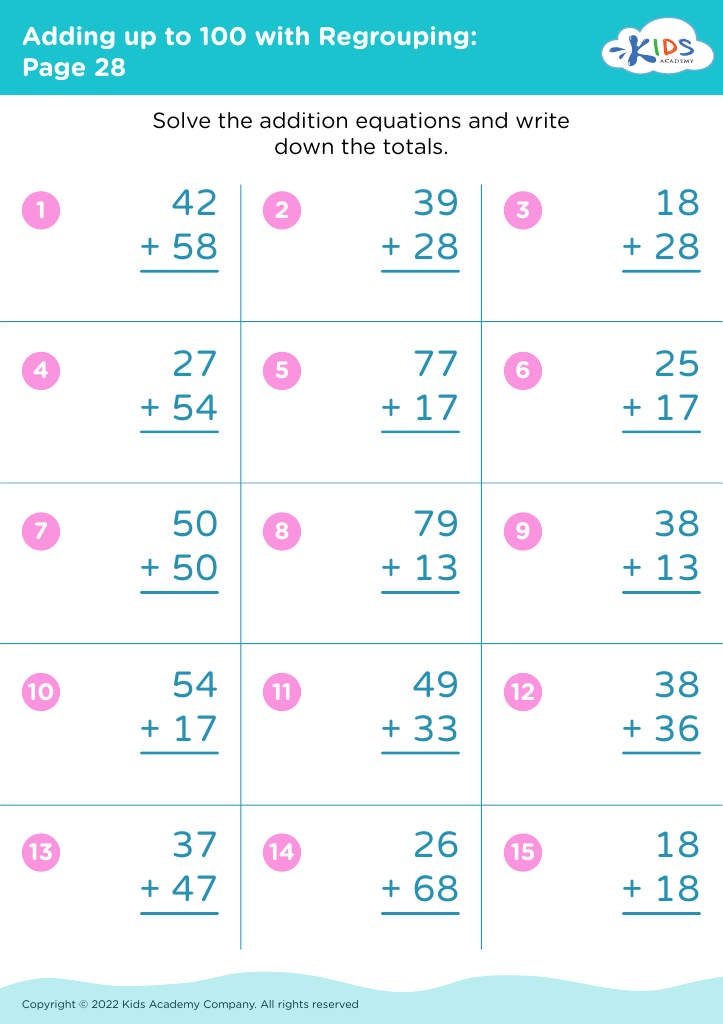
Adding up to 100 with Regrouping: Page 28
Worksheet
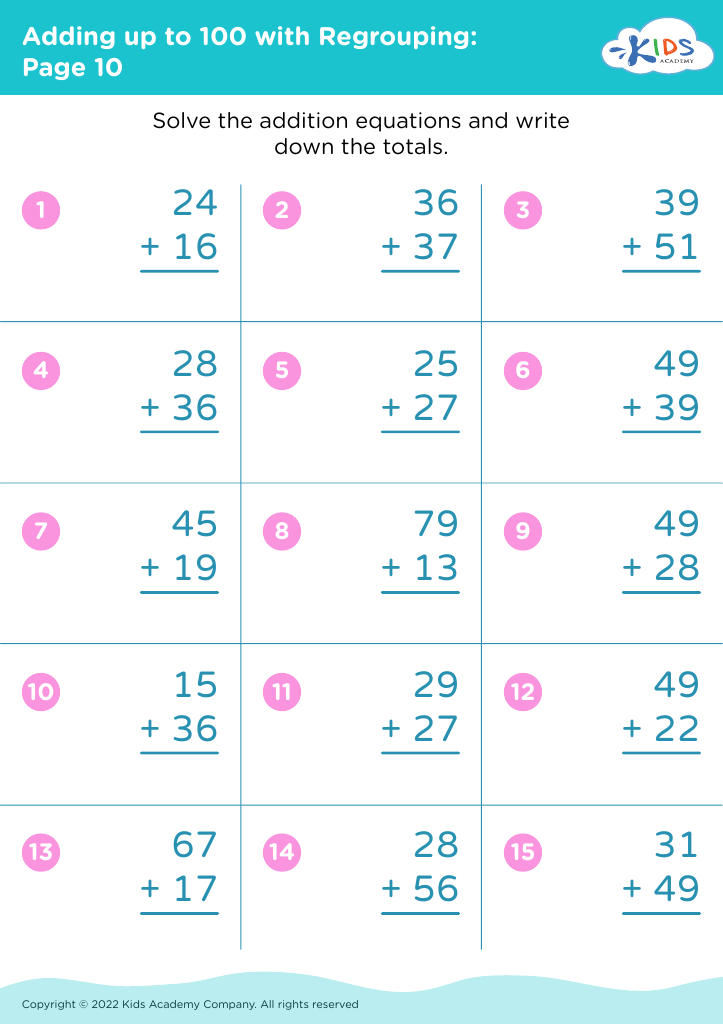
Adding up to 100 with Regrouping: Page 10
Worksheet
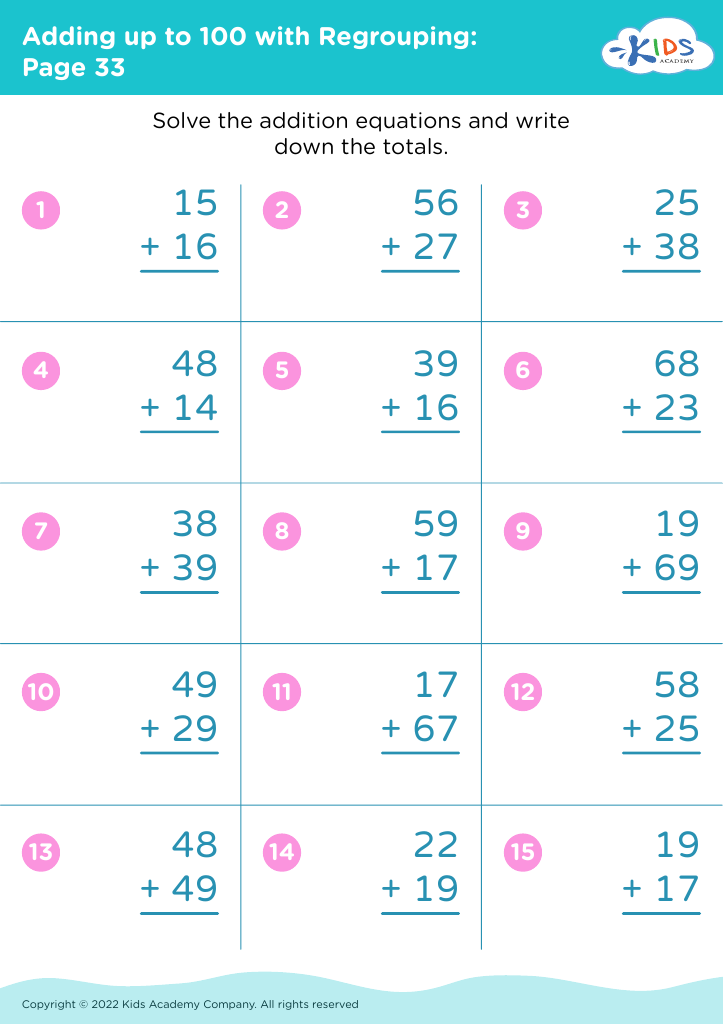
Adding up to 100 with Regrouping: Page 33
Worksheet


Understanding fractions, particularly how they add up to 100 with regrouping, is crucial for children aged 5-7. Early grasp of these concepts builds a solid mathematical foundation, fostering logical thinking and problem-solving skills that are vital as they progress in their education. Fractions introduce children to the idea of parts and wholes, which is fundamental for understanding more complex mathematical concepts later on, such as decimals and percentages.

Engaging with fractions through adding to 100 helps children grasp the concept of equivalence and proportions, as they explore how different fractions can represent the same value. This understanding cultivates critical thinking and encourages children to see relationships in numbers. Moreover, modeling regrouping in fraction addition enhances their number sense, helping them recognize that numbers can be broken down and reassembled, which is essential in all areas of math.

Inviting parents and teachers to prioritize this topic promotes consistent learning coverage at home and in school, reinforcing skills that will be applied in daily activities, such as cooking or measuring. Ultimately, fostering a strong understanding of fractions prepares children for lifelong learning and real-world applications, making these early lessons vital for their math competence and confidence.