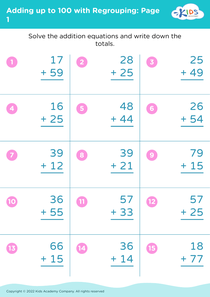
Comparing Fractions Adding up to 100 Without Regrouping Worksheets for Ages 5-7
11 filtered results
-
From - To
Discover our "Comparing Fractions Adding Up to 100 Without Regrouping Worksheets," specially designed for children aged 5-7. This engaging resource enhances young learners' understanding of fractions by allowing them to compare and analyze fractions that together reach a total of 100, all without the complexity of regrouping. Ideal for classroom or home use, these worksheets foster essential math skills through fun and interactive exercises. Children will build confidence in their fraction knowledge while developing critical thinking abilities as they visualize and compare different parts of a whole. Start your child’s math journey today with our age-appropriate, easy-to-follow worksheets!
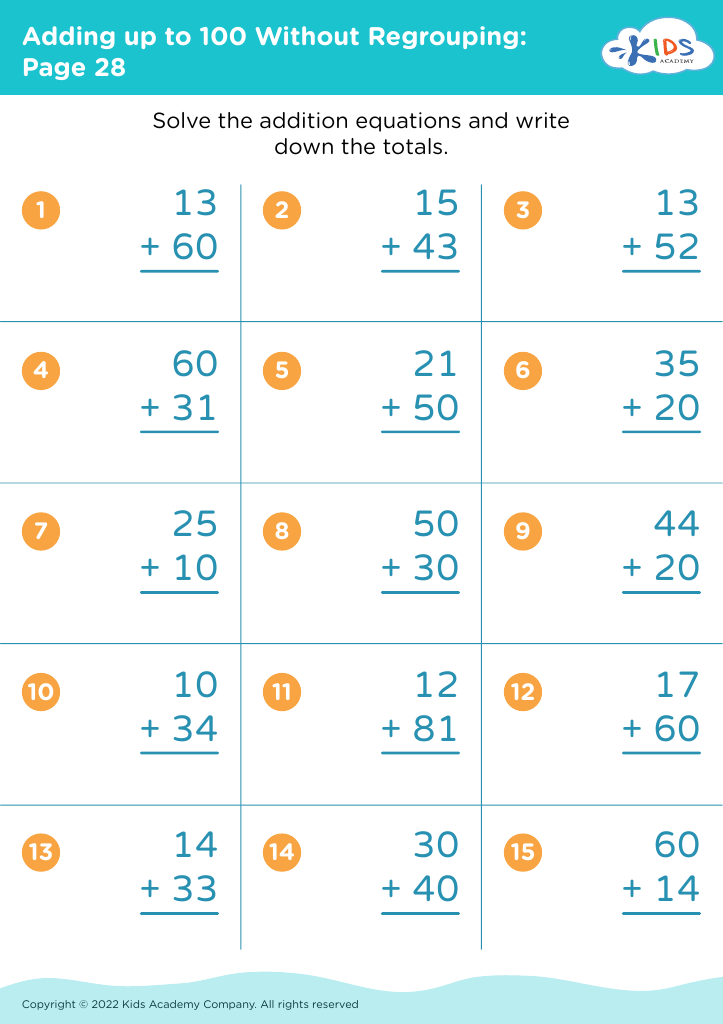
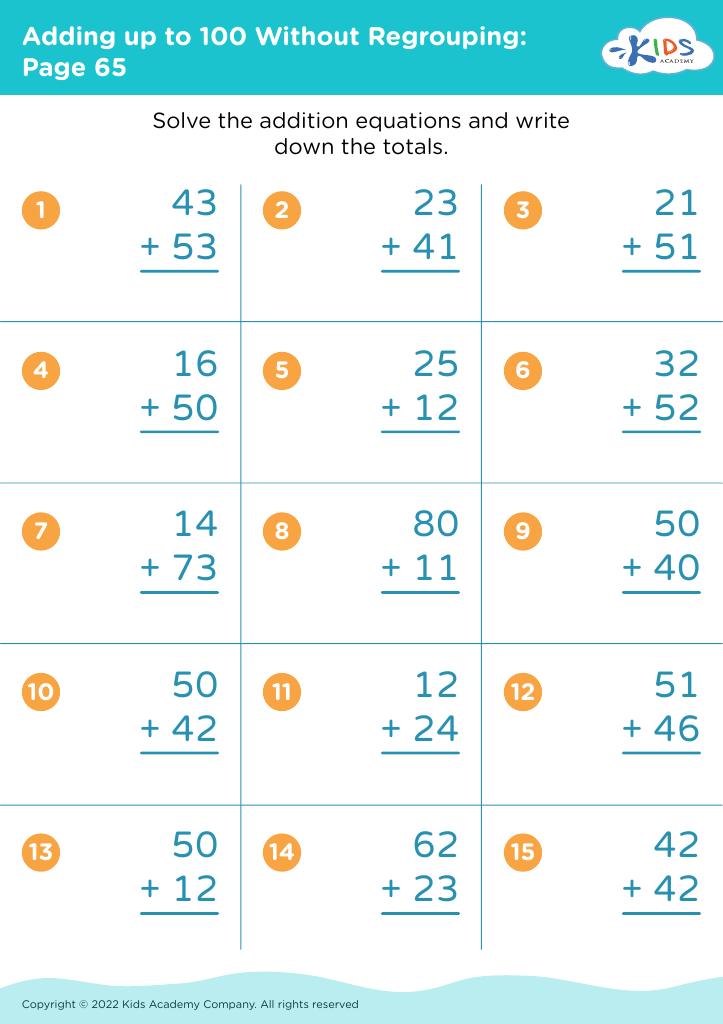
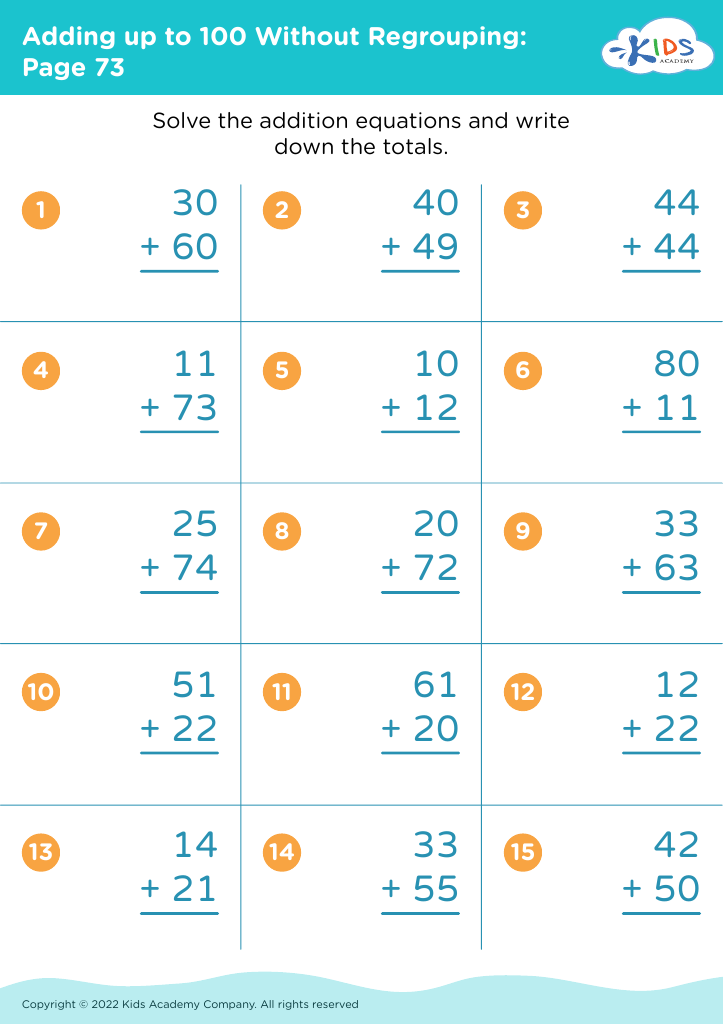
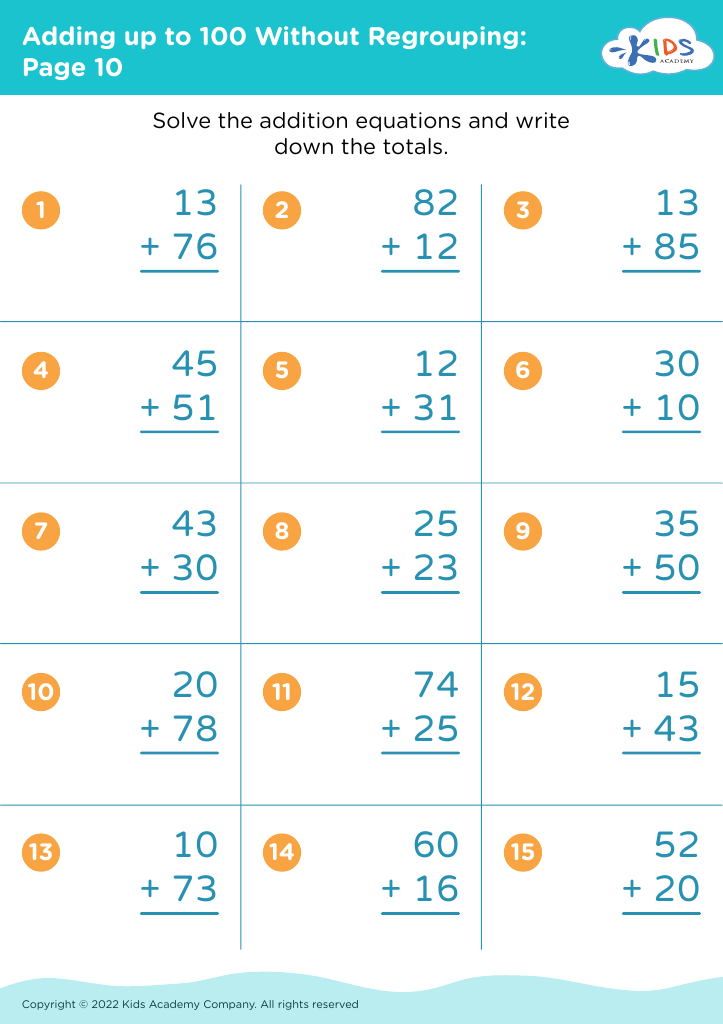
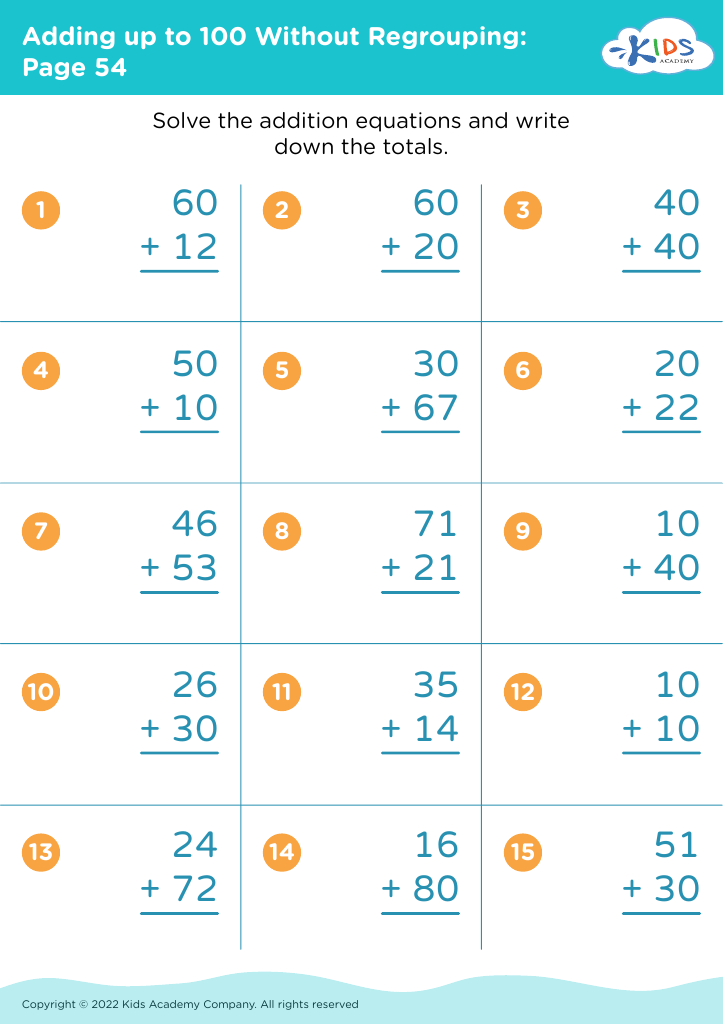
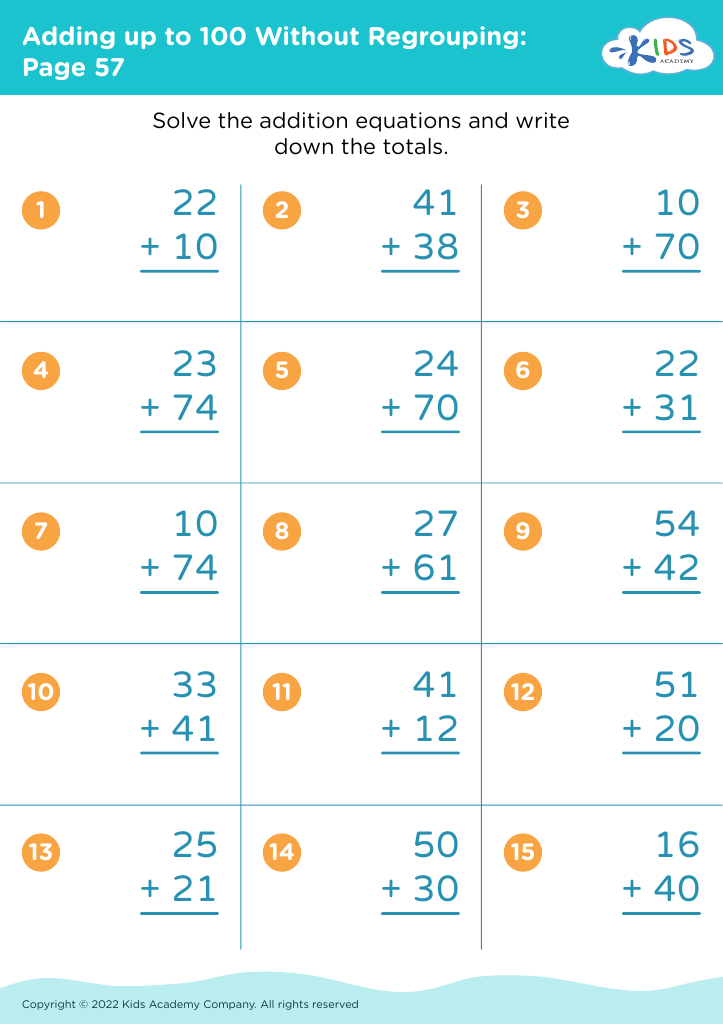
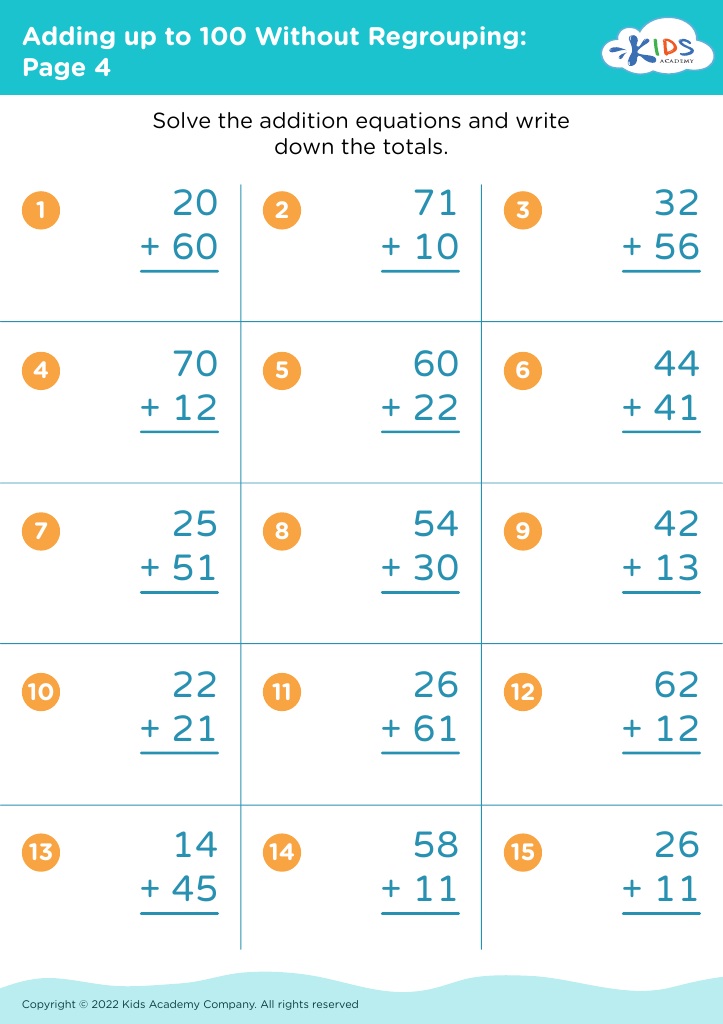
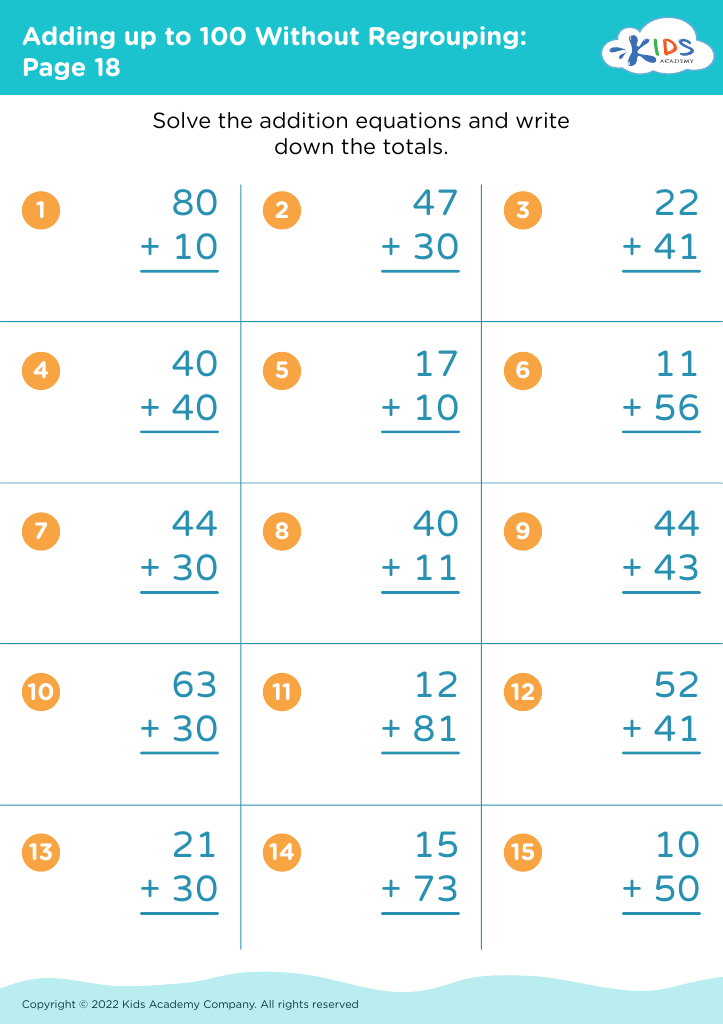
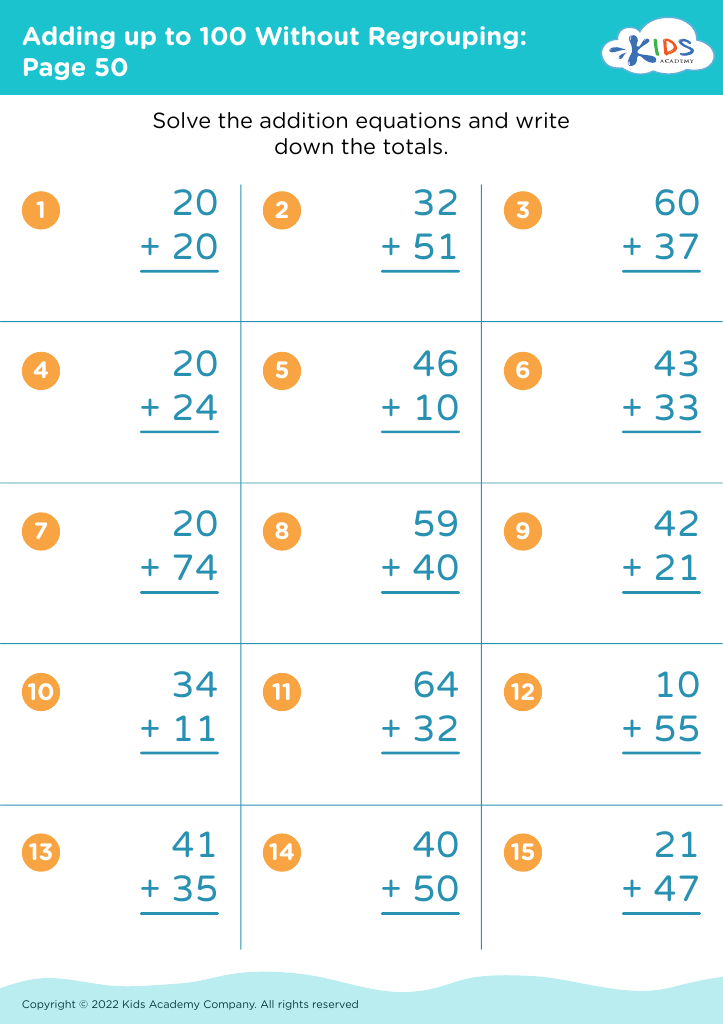
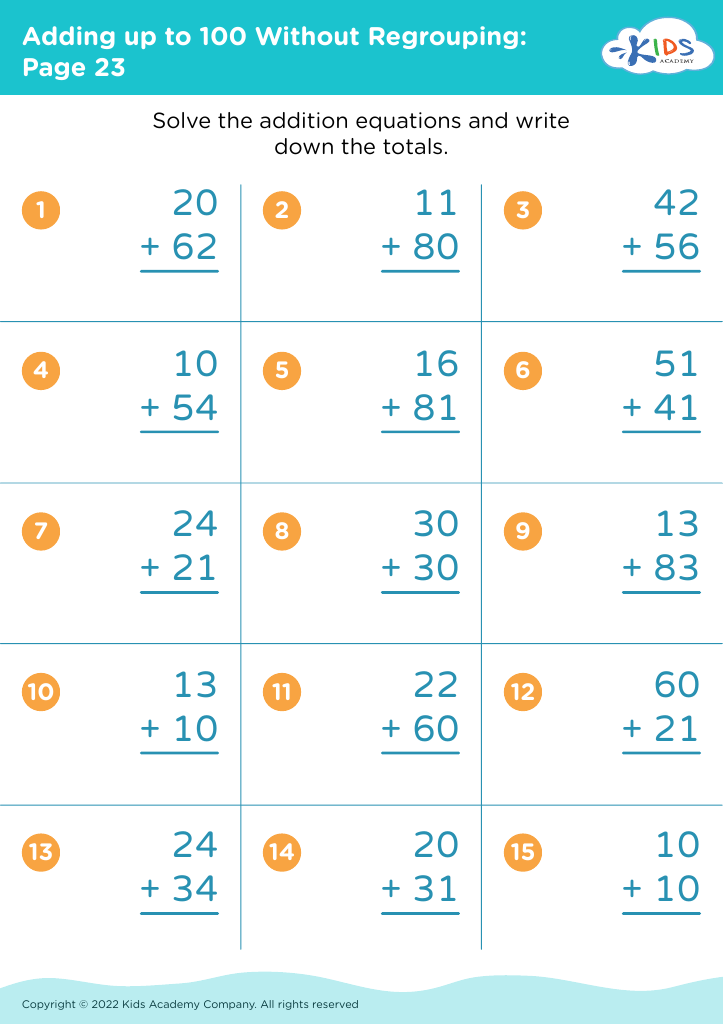
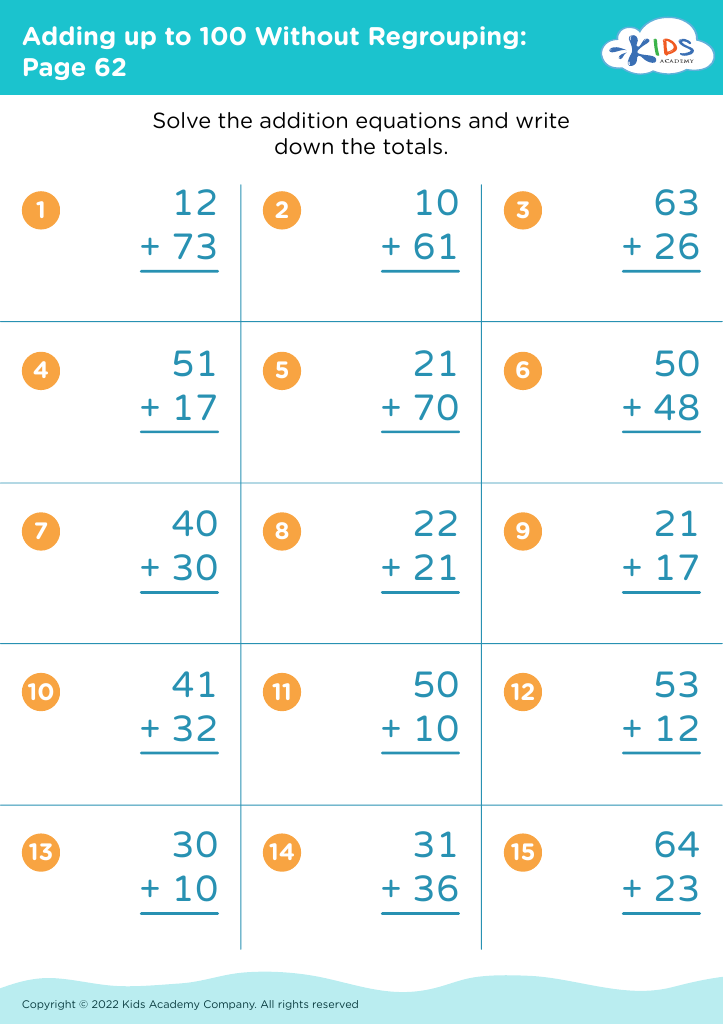




Understanding how to compare fractions and work with numbers that add up to 100 without regrouping is crucial for children ages 5-7. For parents and teachers, mastering these skills builds a strong foundation for logical thinking and mathematical reasoning.
Fractions represent parts of a whole, and grasping how to compare them helps children understand size relationships and proportions. This knowledge encourages them to think critically about quantities in their everyday lives. For instance, whether sharing snacks or understanding recipes, knowing how to work with fractions enhances real-world problem-solving skills.
Additionally, focusing on the concept of numbers that sum to 100 reinforces place value understanding and basic addition skills. By practicing this, children develop fluency in adding and recognizing friendly numbers, which fosters confidence in arithmetic as they progress in school. It also cultivates perseverance, as they learn how to approach and solve math problems systematically.
Furthermore, early success in these areas can spark an interest in mathematics, leading to a more positive attitude towards this subject. Ensuring that children grasp these foundational skills can set them up for future academic success and strong problem-solving abilities. Engaging parents and educators in this learning process also creates a supportive environment for young learners.